How to Introduce Fish Oil to Your Cat Without the Fuss
A step-by-step guide to introducing fish oil — from mixing with food and gradual dosing to watching for reactions.
Cats are suspicious of change, especially when it comes to food. We have all been there: you buy a well-researched supplement, mix it into your cat's meal, and your cat takes one sniff and walks away. Introducing fish oil to a cat does not have to be a battle, though. With a gradual approach and a little patience, most cats will accept it without drama. Here is the step-by-step process we have refined over years of trial and error with our own cats.
Step 1: Start with the Right Product
Before you begin, make sure you have a fish oil product appropriate for cats, with clear EPA and DHA labeling and third-party testing for purity. For most cats starting out, a liquid pump is the best option because you can control the dose precisely and mix it into wet food.
If your cat has a sensitive nose, consider a product labeled as "low odor" or "deodorized." According to a 2023 consumer report by Whole Pet Journal, low-odor fish oil products had a 40 percent higher first-time acceptance rate among cats compared to standard formulations.
Step 2: Begin with a Micro-Dose
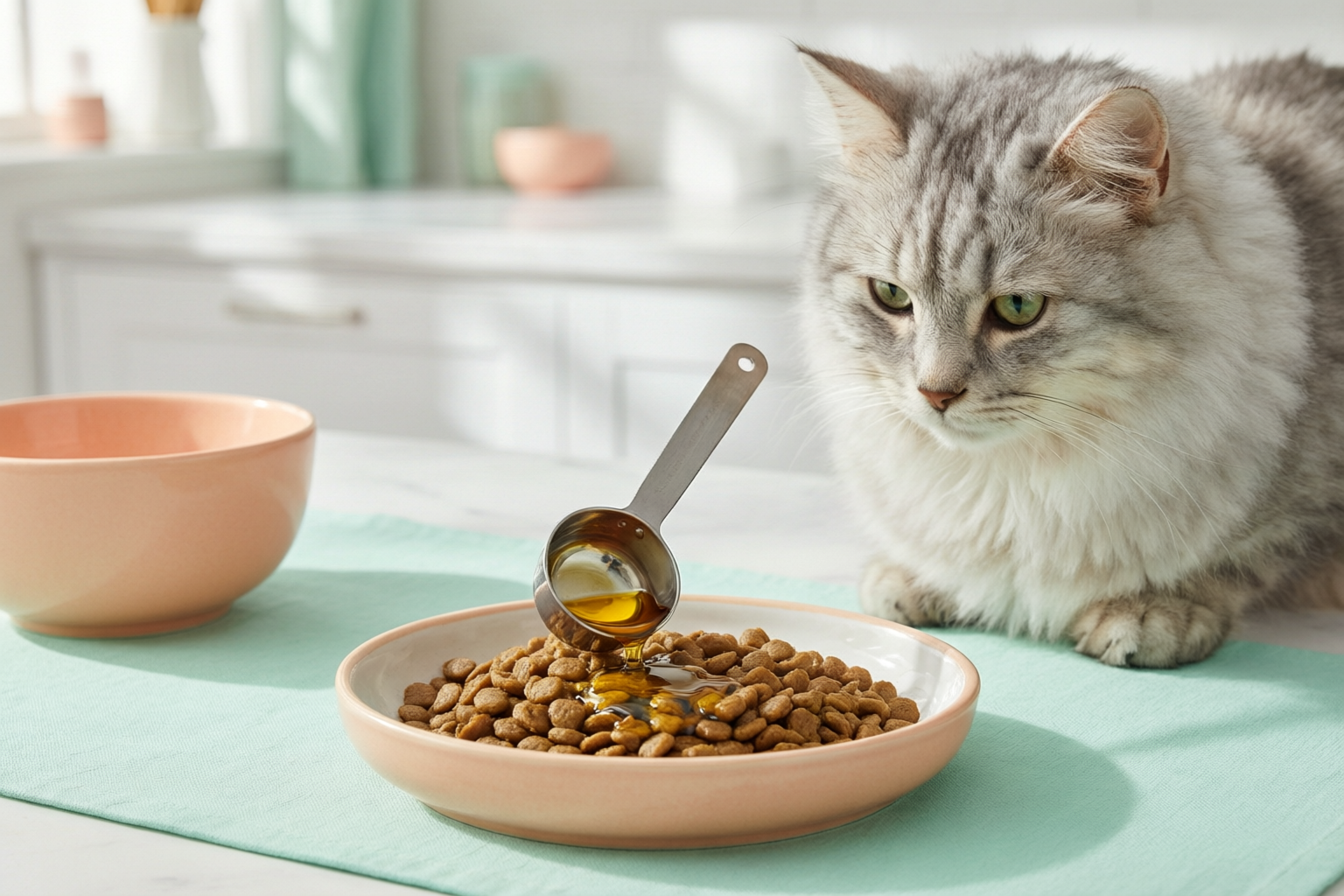
The biggest mistake cat owners make is starting with the full recommended dose. Instead, start with roughly one-quarter of the target dose for the first three to four days. For a 10-pound cat whose target dose is 200 mg of combined EPA and DHA per day, that means starting with about 50 mg — typically a quarter of a pump. The fish oil should be present but not noticeable.
We learned this the hard way with one of our own cats, who refused to eat for the rest of the evening after we started at full dose. Backing off and starting small made all the difference.
Step 3: Mix Thoroughly into Wet Food
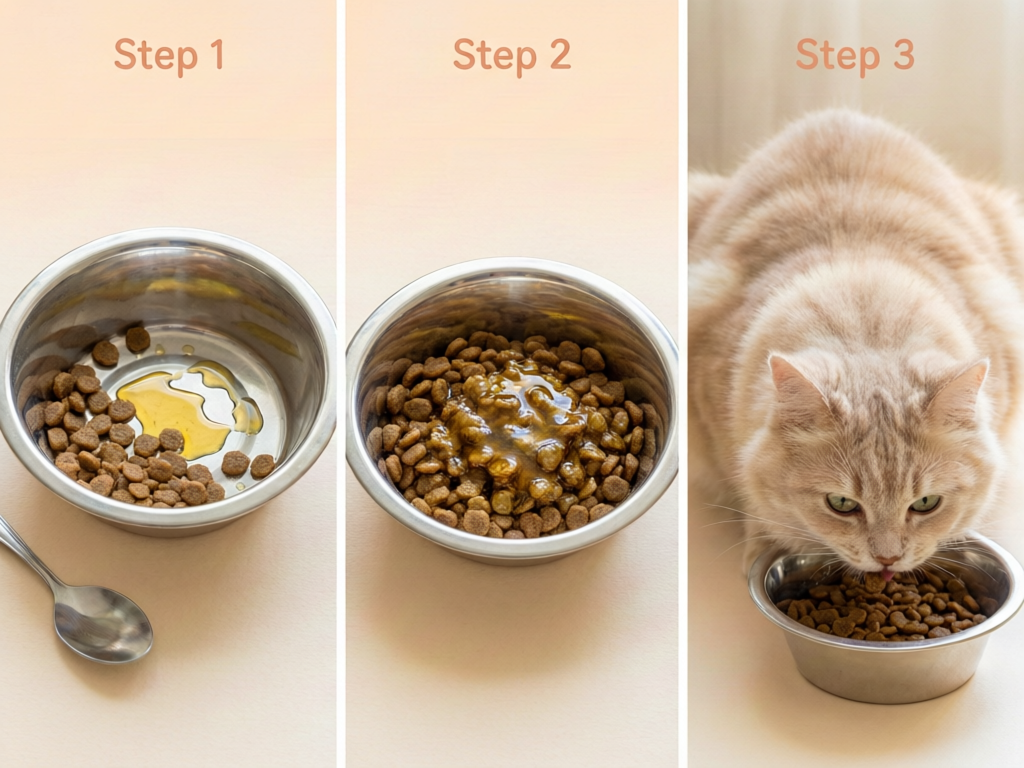
How you mix matters almost as much as how much you give. A quick drizzle on top will not work for cautious cats. Instead, put the fish oil into the bowl first, add the wet food on top, and stir until the oil is fully incorporated.
Wet food works significantly better than dry kibble because moisture and fat help the oil blend in. Pate-style foods are ideal since their uniform texture makes the oil nearly undetectable. Warming the food slightly to about body temperature releases more aroma from the food itself, which helps mask any residual fish oil scent.
Step 4: Gradually Increase the Dose
If your cat has been eating the micro-dose without issue for three to four days, increase to half the target dose. Stay at half dose for another three to four days, then move to the full dose if all is well.
This gradual escalation typically takes about 10 to 14 days. According to a feeding behavior study published in Applied Animal Behaviour Science (2020), cats introduced to new food additives using a gradual escalation protocol over 10 or more days showed a 73 percent long-term acceptance rate, compared to only 31 percent for cats given the full dose from day one. That difference is enormous.
Step 5: Watch for Reactions
During the introduction period, pay attention to how your cat is doing overall. Mild reactions like slightly softer stools are normal and usually resolve on their own. Signs that warrant slowing down or stopping include:
- Diarrhea or vomiting — reduce the dose or pause, then restart at a lower level
- Refusing food entirely — stop the fish oil and wait a few days before trying a different format
- Scratching or skin irritation — rare, but try switching from salmon oil to sardine oil
- Lethargy or behavior changes — discontinue and consult your veterinarian promptly
Troubleshooting: When Your Cat Still Refuses
Even with a careful introduction, some cats will not accept fish oil in their food. Here are strategies that have worked for us:
- Switch the format: If liquid fails, try a flavored treat or food topper
- Change the fish source: Anchovy oil, sardine oil, and salmon oil all taste different
- Use a stronger-flavored food: Fish-based wet foods complement the taste and make it less detectable
A study in the Journal of Feline Medicine and Surgery (2021) found that cats offered omega-3 supplements in a format matching their established food preference were nearly three times more likely to accept supplementation long-term.
Making It a Long-Term Habit
Once your cat accepts the full dose, give it at the same meal each day so it becomes predictable. Store liquid fish oil in the refrigerator after opening and use it within the timeframe on the label, usually 90 to 120 days. If the oil starts to smell rancid or your cat suddenly refuses it, the product may have gone bad.
The bottom line: introducing fish oil is more about patience and technique than finding a magic product. Start small, go slow, mix well, and pay attention to your cat's signals. And as always, check with your veterinarian before starting any new supplement to confirm the appropriate dose and product for your cat's individual health needs.
Frequently Asked Questions
Can I give fish oil on an empty stomach?
It is best to give fish oil with food. Omega-3 fatty acids are fat-soluble and are absorbed more effectively alongside other dietary fats. Giving fish oil with a meal also reduces the chance of stomach upset.
What if my cat vomits after getting fish oil?
A single episode is not necessarily a concern. It may mean the dose was too high or the oil was given on an empty stomach. Wait 24 to 48 hours, then restart with a much smaller dose mixed into a full meal. If vomiting happens repeatedly, consult your veterinarian.
How do I introduce fish oil to a multi-cat household?
Introduce fish oil to each cat individually and at their own pace. Consider separating cats during the introduction period so you can monitor each cat's acceptance. Once all cats are on the full dose, return to your normal routine.
Is it okay to skip days?
Occasional missed days are fine. Omega-3s build up in the body over time, so consistency over weeks matters more than any single day. If skipping becomes frequent, consider switching to a more convenient format like treats or food toppers.
Written by PawLifeWellness Team
Pet Health Writers
Our team creates practical, research-informed pet wellness content for everyday pet parents. Always consult your veterinarian for personalized advice.