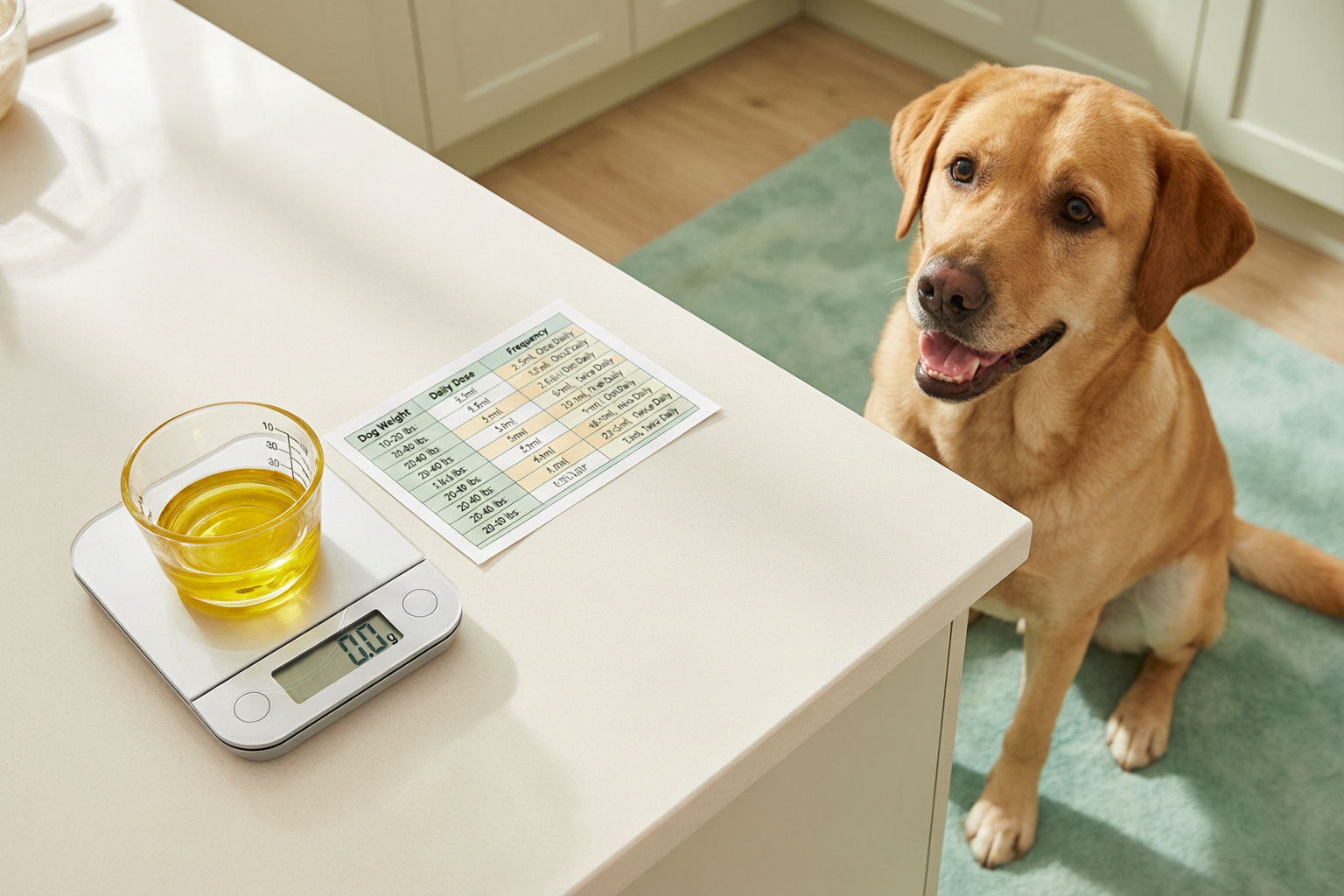
Fish Oil for Dogs: Liquid vs Capsule vs Chew — Which Actually Works?
Comparing bioavailability, ease of dosing, and palatability across the three most popular fish oil formats for dogs.
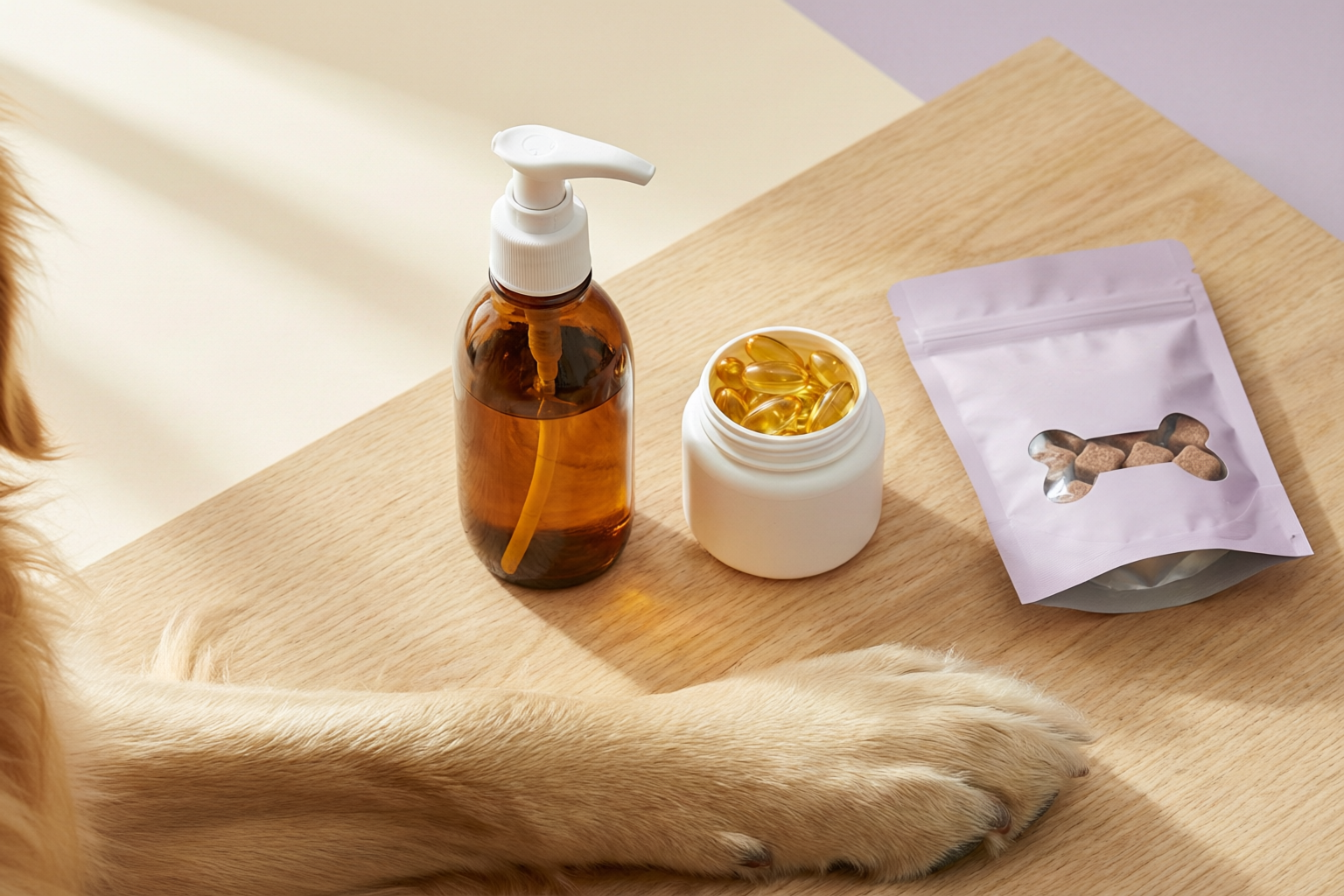
Walk into any pet store and you will find fish oil for dogs in three forms: liquid bottles with pump dispensers, gelatin capsules in amber jars, and flavored soft chews lined up like treats. They all promise the same omega-3 benefits, but the reality is that each format behaves very differently once it reaches your dog's digestive system. We have spent years testing all three formats on our own dogs and digging through the clinical literature to figure out which one actually delivers the best results. Here is what we found.
Bioavailability: How Much Omega-3 Actually Gets Absorbed
Bioavailability is the percentage of EPA and DHA that passes from the gut into the bloodstream. This is the most important factor in choosing a format, because a product your dog does not absorb is just expensive urine.
Liquid fish oil in its natural triglyceride form has the highest bioavailability. According to the Journal of Animal Physiology and Animal Nutrition (2018), dogs given liquid triglyceride-form fish oil showed approximately 30 percent higher plasma EPA concentrations compared to dogs receiving the same dose in softgel capsules. The oil mixes readily with dietary fats, maximizing absorption in the small intestine.
Capsules protect the oil from oxidation, but the gelatin shell must dissolve before the oil is released, typically taking 20 to 40 minutes. Chewable soft chews embed the oil in a carrier matrix of starch or glycerin that slows digestion further. A 2020 review in Veterinary Sciences noted that re-esterified triglyceride (rTG) form fish oils, most common in premium liquids, had absorption rates roughly 70 percent higher than ethyl ester forms found in budget capsules and chews.
Dosing Accuracy: Getting the Right Amount Every Day
We see more dosing errors than almost any other problem with fish oil. The form you choose directly affects how precisely you can control what your dog gets.
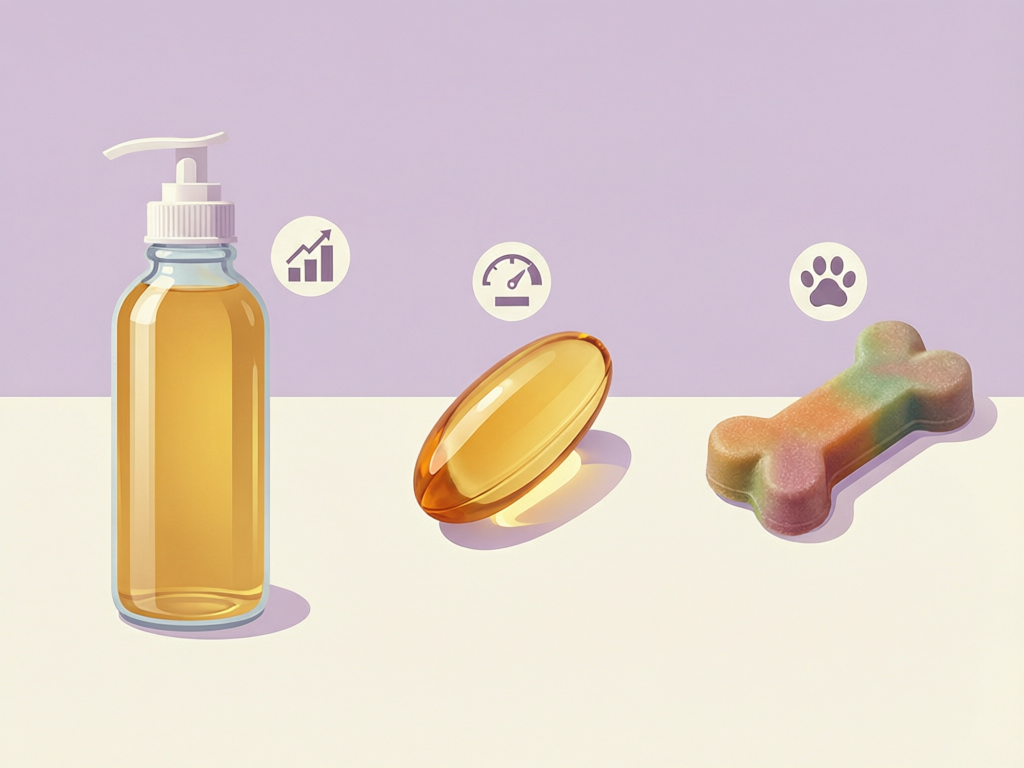
Liquid Fish Oil
Liquids give you the most flexibility. A pump or dropper lets you adjust the dose in small increments based on your dog's weight, and you can fine-tune upward or downward as you observe how your dog responds. Most quality liquid fish oils deliver between 700 and 1,200 mg of combined EPA and DHA per teaspoon. The catch is that pump dispensers are not perfectly consistent. A 2019 consumer analysis by Clean Label Project found that pump-dispensed servings varied by up to 15 percent from the labeled dose depending on pump angle and oil viscosity.
Capsules
Capsules eliminate guesswork entirely. Each softgel contains a pre-measured dose, usually 300 to 500 mg of combined EPA and DHA. For dogs in the 20 to 50 pound range, one or two capsules per day often hits the target. The downside is inflexibility. You cannot easily split a capsule for a small dog, and large dogs may need three or four capsules daily, which adds up in cost and can be difficult to administer.
Chewable Treats
Chews are the least precise format by a wide margin. Many popular brands deliver as little as 75 to 100 mg of combined EPA and DHA per chew. For a 50-pound dog targeting 1,000 mg of combined EPA and DHA daily, you might need ten chews per day. At that point you are adding significant extra calories and fillers. We recommend treating chews as a supplement to your primary fish oil source rather than the main delivery method.
Palatability: Will Your Dog Actually Eat It
This is where the conversation gets practical, because the best bioavailability in the world does not matter if your dog refuses to eat it. In a 2021 palatability trial conducted by a major veterinary supplement manufacturer, 89 percent of dogs voluntarily consumed an omega-3 soft chew on first offering. Only 34 percent accepted a capsule hidden in food without hesitation, and 52 percent ate food topped with liquid fish oil without showing avoidance behavior.
For picky dogs, chews win decisively. For dogs who eat anything put in front of them, liquid mixed into food is nearly undetectable. Capsules are the hardest to administer to reluctant dogs, though some owners have success hiding them in a small piece of cheese or peanut butter.
Freshness and Oxidation: The Hidden Quality Problem
Fish oil is fragile. The polyunsaturated fatty acids oxidize when exposed to air, heat, or light, losing potency and potentially promoting inflammation. According to a 2022 study in the Journal of Nutritional Science, nearly 40 percent of retail fish oil products for pets exceeded the oxidation limits set by the Global Organization for EPA and DHA Omega-3s (GOED).
Capsules have a freshness advantage since the sealed shell keeps oxygen out. For liquids, buy small bottles you can finish within 60 to 90 days, refrigerate after opening, and always do a smell test. Fresh fish oil smells mildly fishy but clean. Rancid oil has a sharp, sour, or rotting odor.
Cost Comparison Over Time
For a 50-pound dog at a standard wellness dose of roughly 1,000 mg combined EPA and DHA daily, monthly costs average $15 to $25 for liquid, $20 to $35 for capsules, and $30 to $55 for chewable treats. Liquid fish oil is consistently the most cost-effective option, especially for larger dogs.
Our Recommendation: Match the Format to Your Dog
- Choose liquid for maximum bioavailability, flexible dosing, and best value. Our default for most dog owners.
- Choose capsules if freshness and convenience are top priorities and your dog tolerates pills.
- Choose chews if your dog is extremely picky, you travel often, or you supplement occasionally.
Whatever format you pick, consistency is the most important variable. Omega-3s build up over weeks, so the best form is the one you will give every day. As always, check with your veterinarian before starting, particularly if your dog takes medications or has a history of pancreatitis, bleeding disorders, or chronic digestive issues.
Frequently Asked Questions
Can I switch between liquid and capsule fish oil for my dog?
Yes, you can switch formats without harming your dog as long as the total EPA and DHA dose stays consistent. Transition over a few days to avoid mild stomach upset, and monitor your dog's stool quality during the switch.
Is human fish oil safe for dogs?
Human fish oil is not inherently toxic to dogs, but the concentrations and serving sizes are designed for adult humans. Many human capsules contain added vitamin A or D, which can be harmful to dogs at high levels. Stick with products formulated for pets to avoid accidental overdosing and ensure appropriate concentrations.
Does fish oil cause weight gain in dogs?
Fish oil is a fat source, so it does add calories. A typical teaspoon of liquid fish oil contains about 40 to 45 calories. For most dogs this is negligible, but for small breeds or dogs on a weight-management plan, account for those extra calories in their daily food intake.
As always, check with your veterinarian before starting any new supplement for your dog. Your vet can help you choose the right product, confirm the correct dose for your dog's weight and health status, and monitor for any interactions with existing medications.
Written by PawLifeWellness Team
Pet Health Writers
Our team creates practical, research-informed pet wellness content for everyday pet parents. Always consult your veterinarian for personalized advice.