How Much Fish Oil Does My Dog Actually Need? A Weight-Based Dosing Guide
A practical weight-based dosing guide for fish oil in dogs, including EPA/DHA calculations and signs of over or under-dosing.
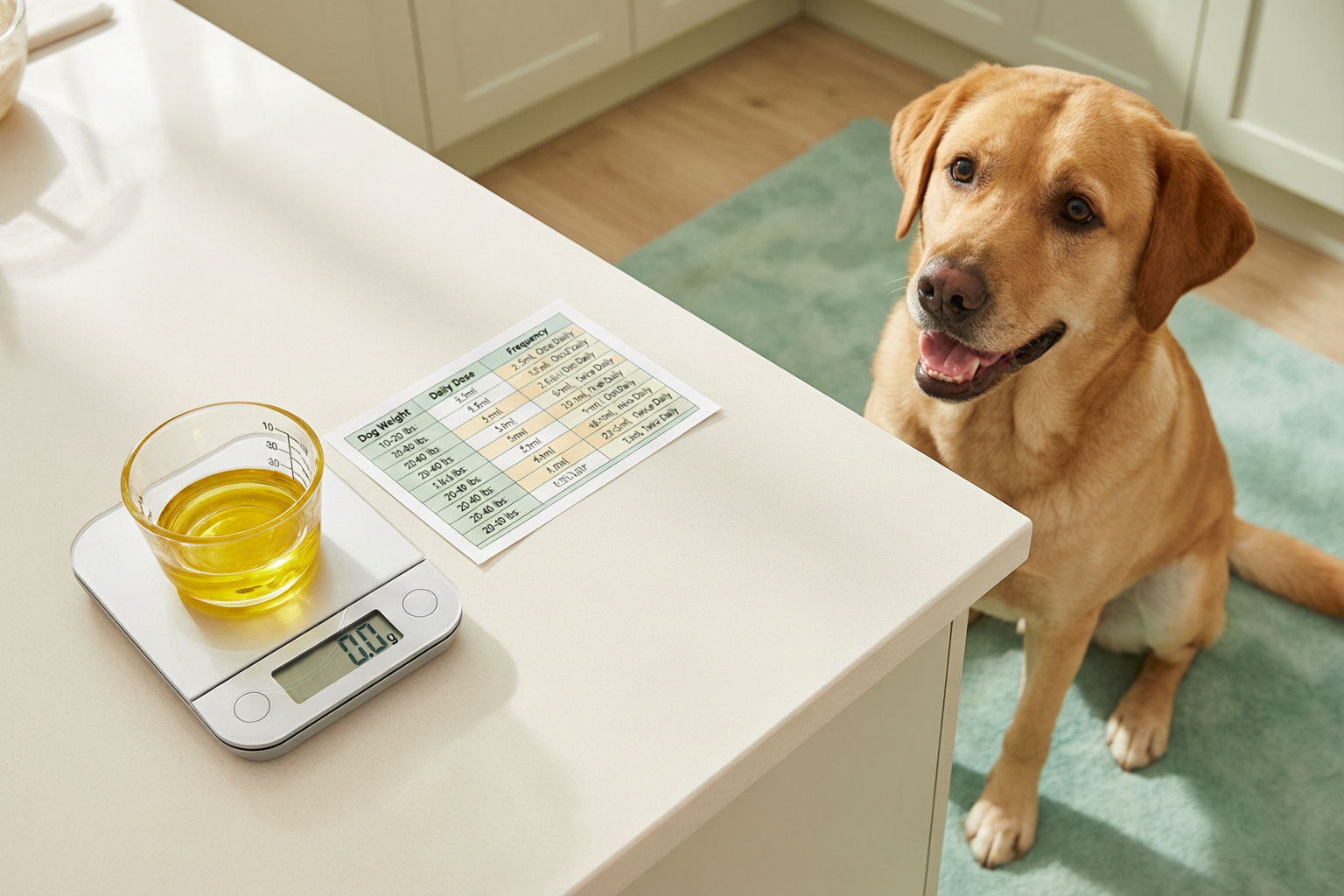
Of all the questions we field about fish oil for dogs, the most common one is also the hardest to answer quickly: how much should I give? The answer depends on your dog's weight, the reason you are supplementing, and the concentration of the product on your counter. Getting it wrong is surprisingly easy, and it happens in both directions.
A 2021 survey by the American Pet Products Association found that fish oil is the second most popular supplement given to dogs, yet fewer than 30 percent of pet owners calculated the dose based on their dog's actual weight. Most simply follow the vague serving suggestion on the label. Here is a practical framework to get this right.
The Numbers That Actually Matter: EPA and DHA
The total milligrams of fish oil on the front of the bottle is largely a marketing number. What matters is the specific amount of EPA (eicosapentaenoic acid) and DHA (docosahexaenoic acid) in each serving. These are the omega-3 fatty acids responsible for the anti-inflammatory, skin-supporting, and joint-protective benefits.
A product might contain 1,000 mg of fish oil per serving but deliver only 300 mg of combined EPA and DHA. Always read the supplement facts panel, find the EPA and DHA lines, and add them together. That sum is your active dose. According to the National Research Council (NRC), the recommended daily intake of combined EPA and DHA for dogs ranges from approximately 50 to 220 mg per kilogram of metabolic body weight, depending on the therapeutic goal.
Weight-Based Dosing Guidelines
The following ranges provide general daily dose targets for combined EPA and DHA based on your dog's weight. These are for wellness maintenance. Therapeutic doses for specific conditions may be higher and should be set by your vet.
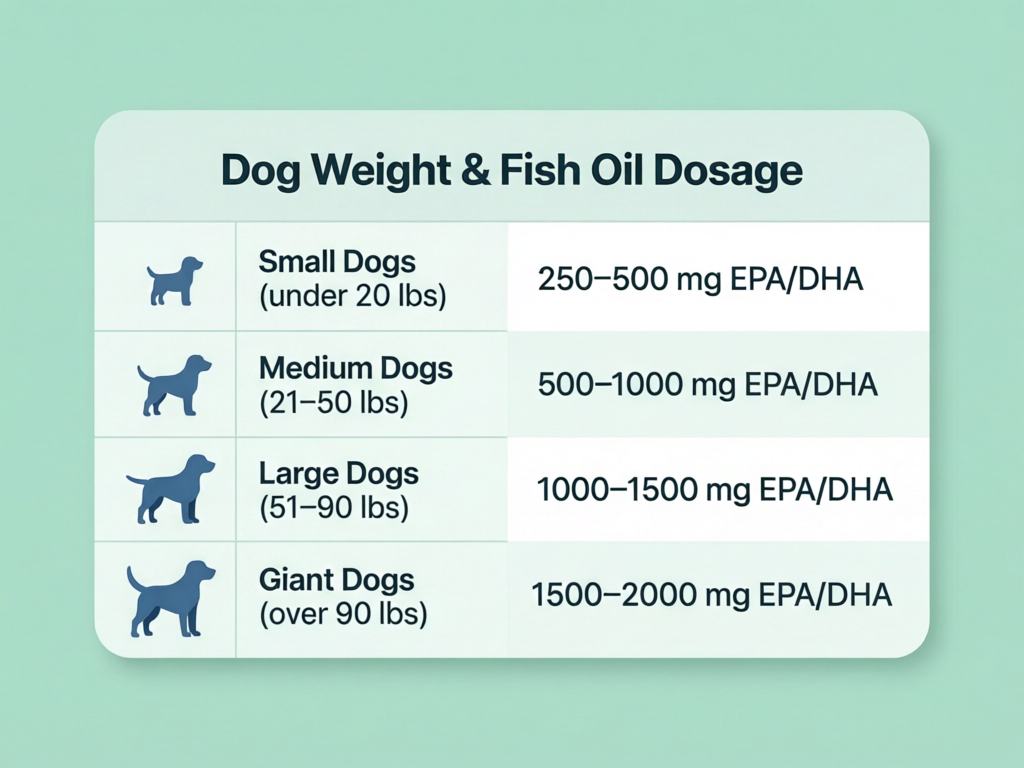
- 5 to 10 lbs (toy and small breeds): 100 to 200 mg combined EPA and DHA per day
- 10 to 20 lbs: 200 to 400 mg combined EPA and DHA per day
- 20 to 40 lbs (medium breeds): 400 to 750 mg combined EPA and DHA per day
- 40 to 60 lbs (medium-large breeds): 750 to 1,000 mg combined EPA and DHA per day
- 60 to 80 lbs (large breeds): 1,000 to 1,500 mg combined EPA and DHA per day
- 80 to 100+ lbs (giant breeds): 1,500 to 2,000 mg combined EPA and DHA per day
A 2017 dosing guideline published in Topics in Companion Animal Medicine suggested that dogs with active inflammatory conditions may benefit from doses at the upper end of these ranges or slightly above, under veterinary supervision.
Calculating the Dose From Your Specific Product
Say you have a 45-pound dog targeting 800 mg of combined EPA and DHA per day. Your liquid bottle says each teaspoon contains 500 mg EPA and 250 mg DHA, totaling 750 mg. Your dog needs roughly one teaspoon daily. Switch to capsules with 180 mg EPA and 120 mg DHA each (300 mg combined) and you need two to three capsules daily. Always do this math.
The Quick Formula
Target mg of combined EPA and DHA divided by mg per serving equals servings per day. Write this on tape and stick it to the bottle.
Therapeutic vs. Wellness Dosing
The doses above target general health maintenance. If your veterinarian has recommended fish oil for a specific condition, the therapeutic dose is often 1.5 to 2 times higher. According to a 2019 clinical review in the Journal of Veterinary Internal Medicine, dogs with osteoarthritis showed significant improvement at approximately 300 mg of combined EPA and DHA per kilogram of body weight daily. Do not increase to therapeutic levels on your own. High doses of omega-3s can affect blood clotting and immune function, and your vet needs to monitor for side effects.
Signs the Dose May Be Too High
More is not always better. Overdosing fish oil can cause real problems. Watch for these warning signs:
- Loose stools or diarrhea: The most common early sign. Fish oil is a fat, and excess fat overwhelms the digestive system.
- Strong fishy breath or body odor: A mild fishy smell is normal. A persistent, overpowering odor often means the dose is too high or the oil is oxidized.
- Lethargy or decreased appetite: Excess omega-3s can alter immune function and cause nausea in some dogs.
- Easy bruising or prolonged bleeding: High doses of EPA can thin the blood. If you notice unusual bruising, reduce the dose and contact your vet.
- Weight gain: Fish oil adds calories. An extra teaspoon per day adds roughly 40 to 45 calories, which matters for small or overweight dogs over time.
Signs the Dose May Be Too Low
If you have been giving fish oil consistently for 8 to 12 weeks and see absolutely no improvement in coat quality, skin condition, or mobility, the dose may be too low. This is a good time to revisit the numbers with your vet rather than increasing the dose on your own.
Special Considerations for Puppies and Senior Dogs
Puppies benefit from DHA for brain and eye development, but doses should be lower and calibrated to their growth stage. A 2015 study in the British Journal of Nutrition found that DHA at approximately 0.14 percent of daily caloric intake supported improved cognitive performance in puppies. Senior dogs often need higher EPA doses for chronic inflammation but process fats less efficiently, so start low and increase gradually.
We recommend keeping a simple log of the product, dose, and any changes you notice. After four to eight weeks, review it with your veterinarian. Give the supplement at the same time every day, always with food, and allow at least four to six weeks before expecting visible improvements. As always, talk to your veterinarian before starting or adjusting fish oil supplementation.
Frequently Asked Questions
Can I give my dog fish oil every day?
Yes, daily supplementation is the standard recommendation. Omega-3 fatty acids work best when they build up consistently in the body over time. Giving fish oil sporadically will not produce the same benefits as a steady daily dose.
Should I adjust the dose if my dog is overweight?
Fish oil itself is not harmful to overweight dogs, and the anti-inflammatory effects may actually help. However, fish oil adds calories, so account for those calories in your dog's daily food budget. Your vet can help you balance the supplement dose with a weight-management feeding plan.
What if I miss a day of fish oil?
Missing one day is not a concern. Just resume the normal dose the next day. Do not double up to compensate. Omega-3 levels in the body fluctuate slowly, so an occasional missed dose will not undo weeks of supplementation.
Written by PawLifeWellness Team
Pet Health Writers
Our team creates practical, research-informed pet wellness content for everyday pet parents. Always consult your veterinarian for personalized advice.