Fish Oil for Cats: Does It Really Help with Shedding and Dull Coat?
An evidence-based look at omega-3 effects on feline skin and fur, including a before-and-after timeline and what to realistically expect.
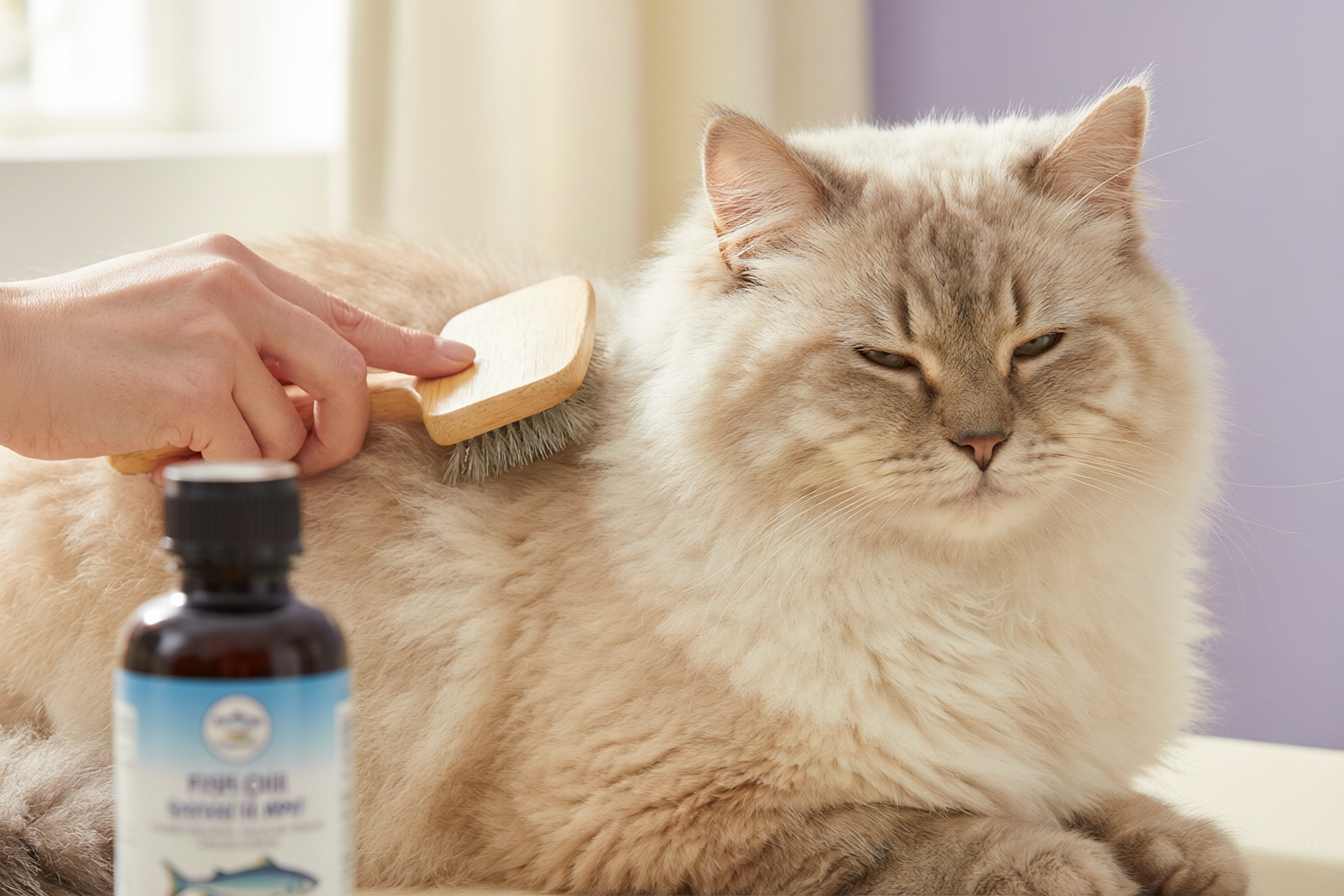
If you share your home with a cat, you share your home with cat hair. It is on the couch, in your coffee, and woven into every dark piece of clothing you own. Shedding is normal, but excessive shedding, dull fur, and dry skin can signal that something is off with your cat's nutrition. Fish oil is one of the most commonly recommended supplements for coat health, but does it actually work? We looked at the research and combined it with our own experience to give you an honest answer.
How Omega-3 Fatty Acids Affect Feline Skin and Coat
Cats cannot produce omega-3 fatty acids on their own. These essential fats must come from their diet, and they play a direct role in skin cell membrane health, sebum production, and the inflammatory processes that affect fur growth.
EPA is particularly important for skin health. It helps regulate the inflammatory response, supports natural oil production that keeps fur glossy, and strengthens the skin barrier. According to a study published in the Journal of Animal Physiology and Animal Nutrition (2019), cats supplemented with EPA and DHA at 40 mg/kg/day showed measurable improvements in skin hydration and coat shine within eight weeks, with a 35 percent reduction in transepidermal water loss compared to controls.
What the Research Says About Shedding
Let us be straightforward: fish oil will not stop your cat from shedding entirely. Shedding is a natural process driven by light exposure, hormones, and the hair growth cycle. What fish oil can do is reduce excessive or abnormal shedding caused by nutritional deficiencies, dry skin, or inflammatory skin conditions.
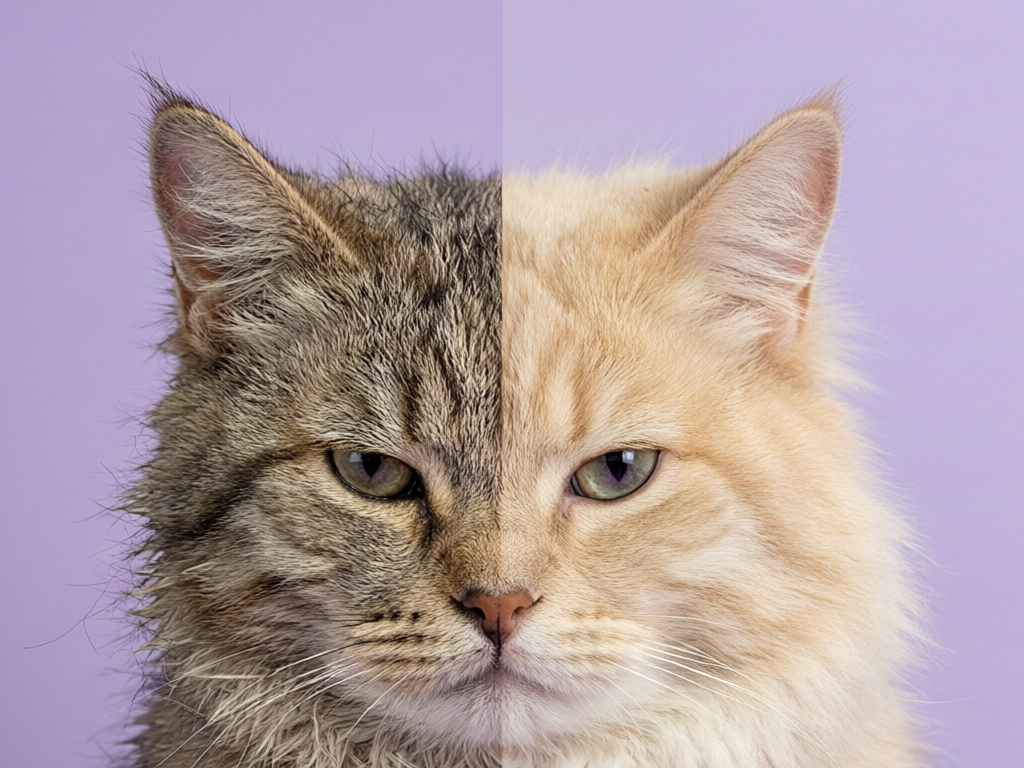
A 2020 clinical trial published in Veterinary Dermatology examined 60 cats with owner-reported excessive shedding. After 12 weeks, cats receiving a high dose of omega-3s (50 mg/kg/day) showed a 42 percent reduction in owner-scored shedding severity and a significant improvement in coat gloss. The low-dose group showed modest improvement, while the placebo group showed no significant change. These findings align with what we have observed: fish oil makes the most visible difference for cats whose coat problems stem from nutritional gaps or chronic dry skin.
Timeline: What to Expect Week by Week
Weeks 1-2: No Visible Change
Omega-3s are being absorbed and incorporated into cell membranes, but you will not see visible changes yet. Some cats may have slightly softer stools during this adjustment period, which usually resolves on its own.
Weeks 3-4: Early Signs
Some owners notice their cat's fur feels slightly softer. If your cat has been scratching due to dry skin, you may see a modest reduction. According to the Veterinary Dermatology study, about 30 percent of owners in the high-dose group reported noticing a difference by week four.
Weeks 6-8: Visible Improvement
The coat starts to look shinier and feel smoother. Shedding may begin to decrease, and flaky skin often improves noticeably. The 2019 Journal of Animal Physiology and Animal Nutrition study found that the majority of measurable improvements occurred between weeks six and eight.
Weeks 10-12: Full Effect
Most cats who are going to benefit from fish oil will have reached peak improvement. If you are not seeing improvement by week 12, the issue may not be nutritional, and a veterinary dermatology workup may be warranted.
Fish Oil for Specific Coat Problems
Dull, Dry Coat
This is where fish oil shines brightest. Omega-3s support sebum production and skin barrier function, which directly affects how light reflects off the fur. Most cat owners see improvement within six to eight weeks.
Dandruff and Flaky Skin
Dry, flaky skin is often linked to low dietary omega-3 intake, especially in cats fed primarily dry kibble. According to research from the University of Edinburgh's veterinary school (2021), cats with dandruff that received omega-3 supplementation at 40 to 50 mg/kg/day showed a 55 percent reduction in visible skin flaking after eight weeks.
Allergic Skin Reactions
Fish oil is not a substitute for allergy treatment, but it can be a helpful adjunct. A study in Veterinary Immunology and Immunopathology (2018) found that cats with allergic dermatitis who received omega-3s alongside standard treatment showed 25 percent greater improvement in skin lesion scores compared to treatment alone.
Dosing for Coat and Skin Benefits
The effective dose in most studies falls between 40 and 55 mg of combined EPA and DHA per kilogram of body weight per day. For a 10-pound cat, that is roughly 180 to 250 mg daily. Products with a higher EPA-to-DHA ratio tend to be more effective for skin and coat purposes, since EPA is the omega-3 most directly involved in skin inflammation.
What Fish Oil Cannot Fix
A dull coat or excessive shedding can also signal serious conditions including hyperthyroidism, diabetes, ringworm, or external parasites. If your cat's coat quality has declined suddenly or is accompanied by weight loss, increased thirst, or behavioral changes, see your veterinarian for a full diagnostic workup before assuming a supplement will solve the problem. We have seen too many cat owners delay important medical treatment by attributing coat changes to nutrition alone.
Our Recommendation
Fish oil is one of the most reliably effective supplements for improving cat coat quality and managing excessive shedding. Consistent daily supplementation produces visible improvements within six to twelve weeks. The keys to success are choosing a product with adequate EPA and DHA concentration, dosing for your cat's weight, and giving it the full 12 weeks before deciding. As always, check with your veterinarian before starting any new supplement, especially if your cat has existing health conditions or takes medication.
Frequently Asked Questions
Will fish oil make my cat's coat greasy?
At the recommended dose, fish oil should improve coat quality without making it greasy. If your cat's fur looks oily, the dose is likely too high. Reduce it by 25 to 50 percent and see if the greasiness resolves within a week.
Does fish oil help with hairballs?
Indirectly, yes. By reducing excessive shedding, fish oil means less loose fur for your cat to ingest during grooming. However, it is not a direct hairball remedy. Combine fish oil with regular brushing and adequate dietary fiber for best results.
Can I use coconut oil instead of fish oil for my cat's coat?
Coconut oil lacks the EPA and DHA that drive anti-inflammatory and cell membrane benefits. A comparative study in Veterinary Dermatology (2020) found that fish oil produced significantly greater improvements in coat quality scores than coconut oil over eight weeks. For coat and skin health, fish oil is the better-supported choice.
Do indoor cats need fish oil more than outdoor cats?
Indoor cats may benefit more noticeably. Indoor environments tend to have low humidity from heating and air conditioning, which dries out skin. Indoor cats also have less access to natural omega-3 sources. Both indoor and outdoor cats can benefit from supplementation if their diet lacks adequate omega-3s.
Written by PawLifeWellness Team
Pet Health Writers
Our team creates practical, research-informed pet wellness content for everyday pet parents. Always consult your veterinarian for personalized advice.