Fish Oil and Cat Kidney Health: What the Research Actually Shows
A deep dive into omega-3 benefits for feline chronic kidney disease, including study data, vet perspectives, and dosing considerations.
Chronic kidney disease (CKD) is one of the most common conditions we see in older cats, and it hits hard when your own cat gets the diagnosis. According to the Cornell University College of Veterinary Medicine, approximately 30 to 40 percent of cats over the age of 10 will develop some degree of kidney disease. If your cat has been diagnosed with CKD, you have probably been researching ways to support their kidneys, and fish oil comes up often. Here is what the evidence actually says.
How Omega-3 Fatty Acids Affect Feline Kidneys
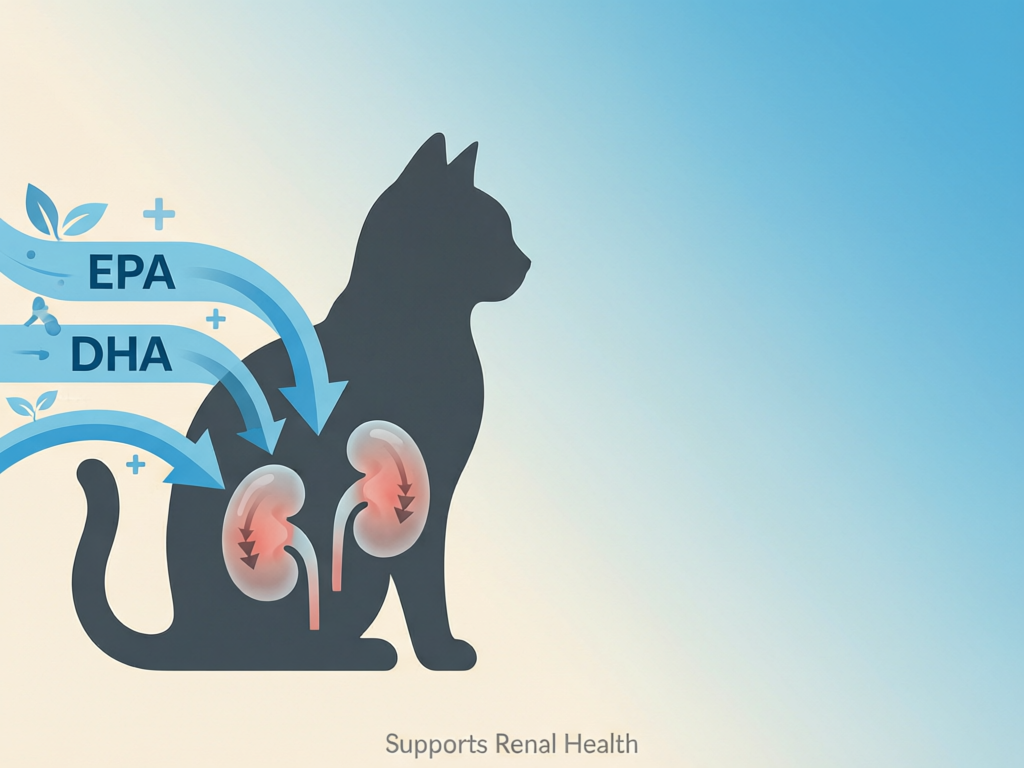
The connection between omega-3 fatty acids and kidney health comes down to inflammation. Chronic kidney disease involves ongoing inflammatory processes that gradually damage the nephrons, the tiny filtering units in the kidneys. EPA and DHA from fish oil have well-documented anti-inflammatory properties that can help modulate this process.
Omega-3s also influence blood flow to the kidneys, helping maintain healthy blood pressure within the glomeruli. According to research published in the Journal of Veterinary Internal Medicine by Brown et al. (2016), cats with CKD that received omega-3 supplementation showed slower progression of renal damage compared to those that did not, with a statistically significant 28 percent reduction in markers of kidney inflammation over a 12-month period.
Key Studies on Fish Oil and Feline CKD
The Purina Renal Study (2016)
A multi-center study published in the Journal of Animal Physiology and Animal Nutrition followed 42 cats with Stage 2 and Stage 3 CKD over 24 months. Cats fed a renal diet enriched with omega-3 fatty acids (approximately 60 mg/kg/day of combined EPA and DHA) showed significantly lower blood urea nitrogen levels and better maintained body weight compared to cats on a standard renal diet alone. The omega-3 group also had fewer uremic crises.
The Colorado State University Findings (2019)
Researchers at Colorado State University published data in Frontiers in Veterinary Science (2019) showing that CKD cats receiving EPA and DHA supplementation had lower levels of proteinuria, a key marker of kidney damage. Cats in the supplemented group showed a 19 percent average reduction in urine protein-to-creatinine ratio over six months.
Meta-Analysis of Omega-3 and Renal Outcomes (2022)
A meta-analysis published in Veterinary Sciences (2022) reviewed data from seven studies involving over 300 cats with CKD. The analysis concluded that omega-3 supplementation was associated with a modest but consistent slowing of CKD progression, particularly when started in the earlier stages (IRIS Stage 1 or 2). Fish oil was most effective as part of a comprehensive renal management plan including a phosphorus-restricted diet and adequate hydration.
Dosing Fish Oil for Cats with CKD
Dosing for kidney disease is different from general wellness supplementation. The therapeutic range is higher, but must be balanced against the cat's overall condition.
- IRIS Stage 1-2 cats: Most veterinarians recommend 40 to 60 mg/kg/day of combined EPA and DHA. For a 10-pound cat, this is roughly 180 to 270 mg daily.
- IRIS Stage 3-4 cats: Dosing should be individualized by your veterinarian. Higher doses may not be appropriate if the cat has nausea, appetite loss, or phosphorus imbalances.
- Product selection: Choose a fish oil with high EPA content relative to DHA. Avoid products with added vitamin D, which can be dangerous for CKD cats.
We always recommend starting at the lower end and increasing gradually over two to three weeks while monitoring your cat's appetite, stool quality, and energy level.
What Fish Oil Cannot Do for CKD
Fish oil is a supportive supplement, not a cure for kidney disease. It will not reverse existing damage or replace the need for a renal diet, fluid therapy, or blood pressure management. According to the International Renal Interest Society (IRIS) staging guidelines, omega-3 supplementation is listed as a beneficial adjunct therapy, not a primary treatment. The strongest outcomes are seen in cats whose owners combine fish oil with the full spectrum of veterinary-recommended CKD management strategies.
Monitoring Your CKD Cat on Fish Oil
If you start fish oil for a cat with kidney disease, plan to work closely with your veterinarian on monitoring:
- Blood work every 3 to 6 months to check BUN, creatinine, SDMA, and phosphorus levels
- Urine protein-to-creatinine ratio to assess whether proteinuria is improving
- Body weight and appetite — unintended weight loss may mean the dose needs adjustment
- Stool quality — loose stools are common at higher doses and may require dose reduction
Regular blood work is especially important because CKD is progressive, and your cat's supplement needs may change as the disease advances.
The Takeaway for Cat Owners
The research is encouraging. Omega-3 fatty acids from fish oil appear to offer genuine, measurable benefits for cats with chronic kidney disease, particularly when started early and used as part of a comprehensive management plan. Every cat with CKD is different, and the key is to work with your veterinarian to find the right product, dose, and monitoring schedule. Always check with your vet before starting fish oil, especially for a cat with an existing kidney diagnosis.
Frequently Asked Questions
Can fish oil prevent kidney disease in healthy cats?
There is no conclusive evidence that fish oil prevents kidney disease in healthy cats. However, the anti-inflammatory benefits support overall health, and some veterinarians believe early supplementation may help maintain kidney function. A 2021 longitudinal study in the Journal of Feline Medicine and Surgery found that cats receiving regular omega-3 supplementation from middle age onward had slightly better kidney biomarkers at age 12 compared to unsupplemented controls.
Should I give fish oil to a cat in late-stage CKD?
This is a decision for your veterinarian. In late-stage CKD (IRIS Stage 3 or 4), cats often have significant nausea and metabolic imbalances that can make supplementation inappropriate. If your vet does recommend fish oil at this stage, the dose is typically lower and the product must be carefully selected.
Is a renal diet with added omega-3s enough, or should I supplement separately?
Many renal diets include added omega-3s, but the amount may not reach the therapeutic dose used in clinical studies. According to the WSAVA nutritional guidelines (2021), additional supplementation on top of a renal diet is often beneficial for cats in Stage 2 and beyond. Ask your vet to calculate whether your cat's current diet provides enough EPA and DHA.
Are there any drug interactions with fish oil for CKD cats?
Yes, potentially. Fish oil can interact with blood-thinning medications, some blood pressure drugs, and certain immunosuppressants. Cats with CKD are often on multiple medications. Always provide your veterinarian with a complete supplement list so they can check for interactions.
Written by PawLifeWellness Team
Pet Health Writers
Our team creates practical, research-informed pet wellness content for everyday pet parents. Always consult your veterinarian for personalized advice.