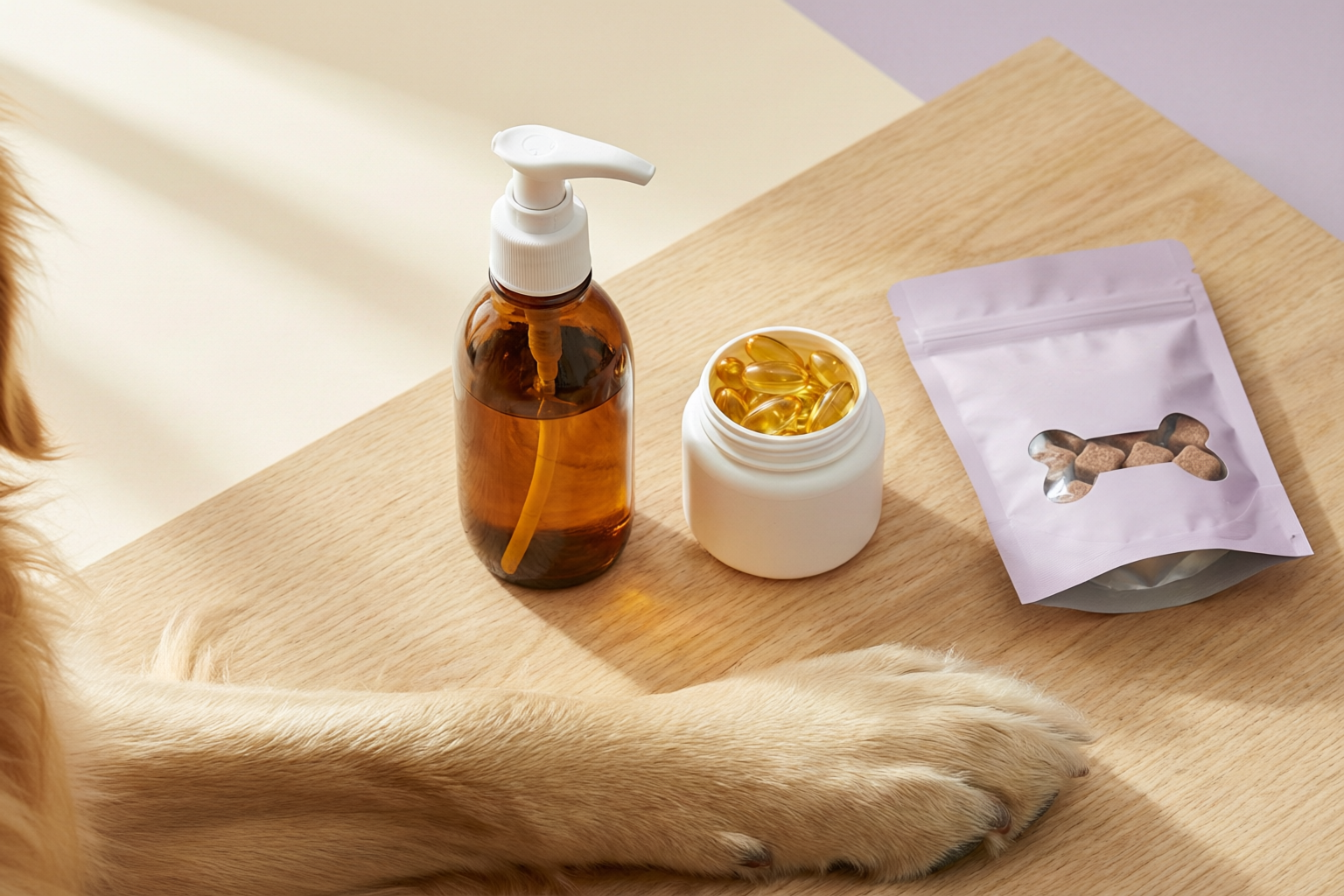
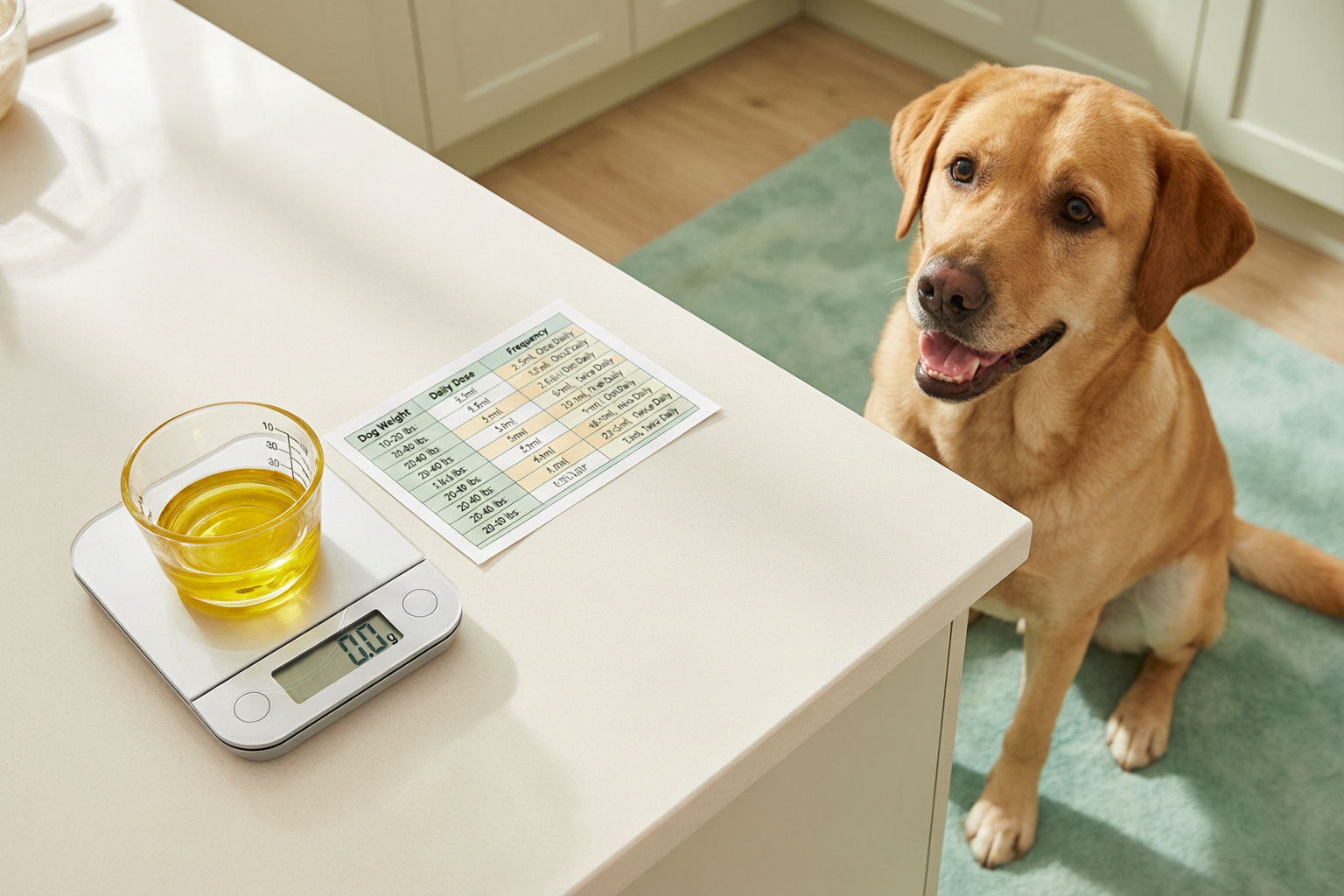
The Best Fish Oil Forms for Picky Cats: What Actually Gets Eaten
A practical comparison of liquid pumps, flavored treats, capsules, and food toppers — and which formats picky cats actually accept.
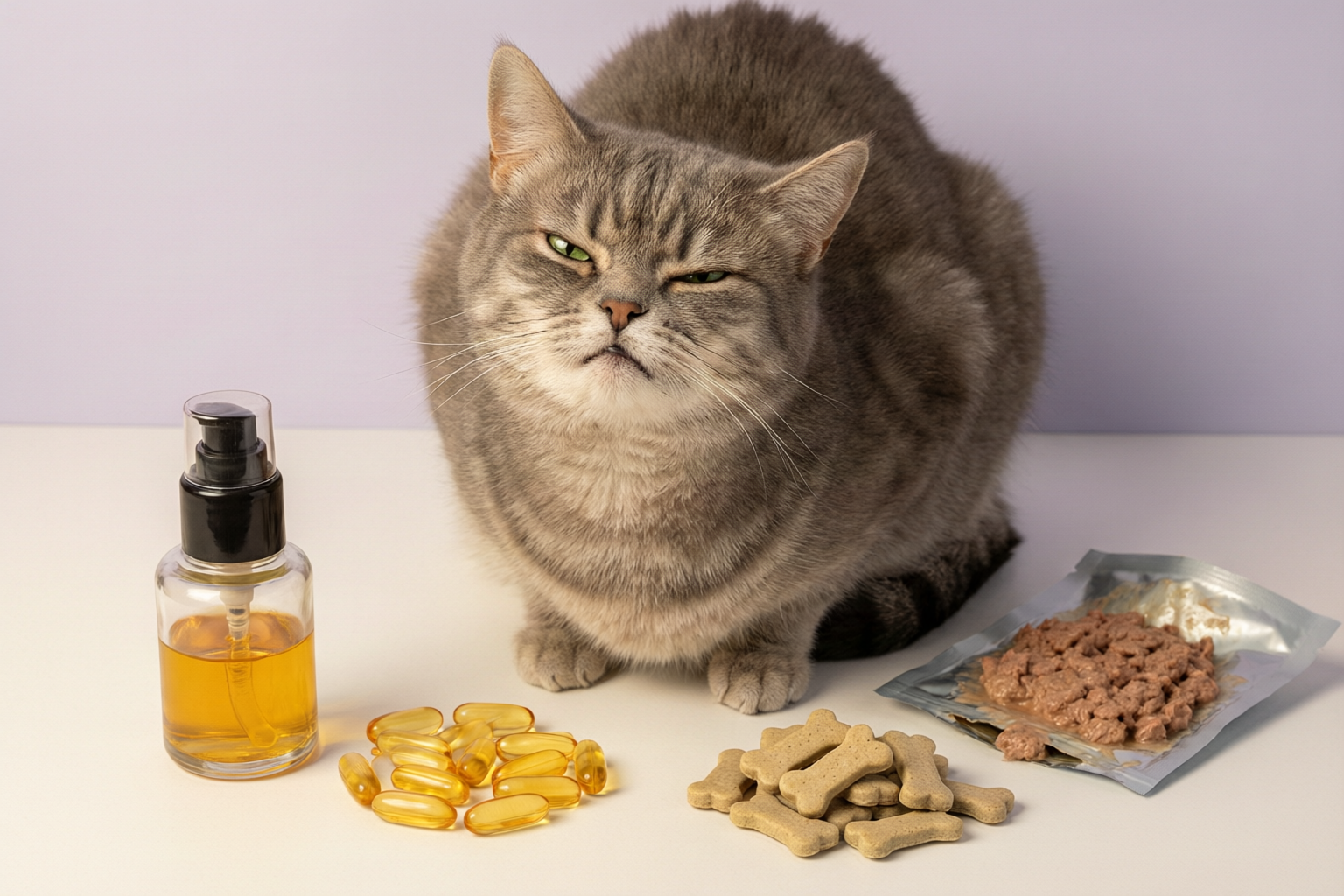
Here is something every cat owner learns quickly: the best supplement in the world does not work if your cat refuses to eat it. We have spent years testing different fish oil formats on our own cats, and the gap between what looks good on paper and what a picky cat will actually accept is wider than you might think. If you have ever watched your cat sniff a bowl once and walk away in disgust, this article is for you.
Liquid Fish Oil with Pump Dispensers
Liquid fish oil is the most versatile form and the one most veterinary nutritionists recommend for precise dosing. A pump bottle lets you adjust the dose drop by drop, which is especially helpful when introducing fish oil for the first time.
What Works Well
The pump format lets you mix the oil directly into wet food, where it becomes nearly undetectable to most cats. According to a 2022 survey by the American Animal Hospital Association (AAHA), 68 percent of cat owners who used liquid fish oil reported their cats accepted it readily when mixed with food. Dosing accuracy is another major advantage, since a typical pump delivers about 500 mg of fish oil per full press.
Where It Falls Short
Liquid fish oil has a shorter shelf life once opened, typically 90 to 120 days, and needs refrigeration to slow oxidation. Some cat owners find the smell unpleasant, and a pump bottle can be messy if your cat is a vigorous eater.
Flavored Fish Oil Treats and Chews
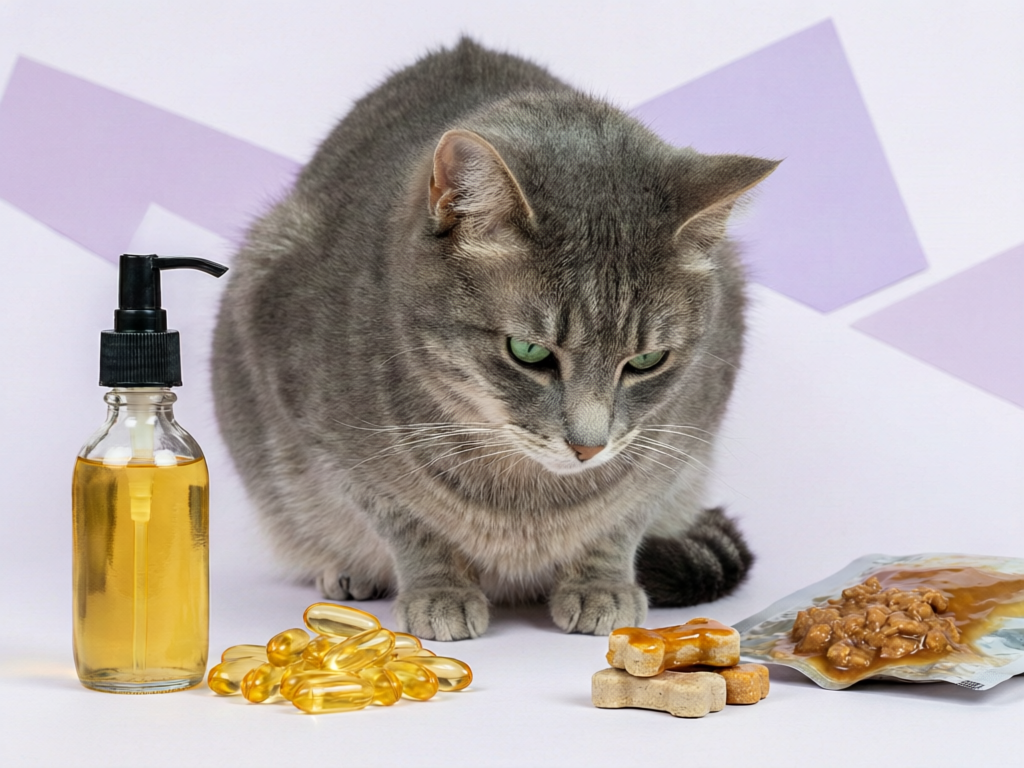
Fish oil treats and soft chews are convenient, pre-dosed, and many cats genuinely enjoy them. If your cat loves treats, this can be the easiest delivery method by far.
What Works Well
Palatability is the main selling point. In a 2023 consumer study published by Pet Product News, flavored omega-3 chews ranked as the highest-accepted supplement format among cats, with 74 percent of cats willingly eating them on the first offering. Treats are also great for travel, boarding, or multi-cat households where measuring individual doses would be chaotic.
Where It Falls Short
The omega-3 concentration in treats is usually much lower than in liquid or capsule forms. A typical soft chew might contain 50 to 100 mg of combined EPA and DHA, while a therapeutic dose could require 200 mg or more. According to the Association for Pet Obesity Prevention (2023), over 60 percent of pet cats are already overweight, so extra treat calories genuinely matter.
Fish Oil Capsules and Softgels
Capsules are the gold standard for freshness and potency. The sealed gelatin shell protects the oil from oxidation, giving capsules the longest shelf life of any format.
What Works Well
Each capsule contains a precise, pre-measured dose with no guesswork. You can puncture the capsule and squeeze the oil onto food. According to a stability study published in the Journal of Nutritional Science (2021), encapsulated fish oil retained over 95 percent of its original EPA and DHA content after 18 months of storage, compared to about 75 percent for opened liquid bottles.
Where It Falls Short
Getting a cat to swallow a capsule whole is nearly impossible in our experience. Puncturing and squeezing is more practical but messier. Capsules also tend to come in human-sized doses of 1,000 mg or more, so look for pet-specific capsules in the 250 to 500 mg range.
Food Toppers and Freeze-Dried Fish Oil Blends
This newer category combines fish oil with a palatable base such as freeze-dried chicken, bonito flakes, or broth, creating a meal enhancement that doubles as a supplement.
What Works Well
For the pickiest cats, food toppers are often the breakthrough solution. We have had success with freeze-dried toppers for cats who refused every other format. A 2024 market analysis by Pet Industry News reported that fish oil food toppers were the fastest-growing supplement subcategory in the cat market, with sales increasing 34 percent year over year, driven largely by owners of finicky eaters.
Where It Falls Short
Food toppers are typically the most expensive option on a per-dose basis. They also add calories and dosing can be imprecise since the oil is pre-mixed into the topper. Some products contain added sodium or flavoring agents you will want to check with your vet about.
Our Practical Recommendation
For most cat owners, we suggest starting with a liquid pump mixed into regular wet food. If your cat accepts it, great — you have the most cost-effective and adjustable option. If your cat refuses, try a flavored treat or food topper as a backup. The best format is genuinely the one your cat will eat consistently. Whatever form you choose, check the label for actual EPA and DHA content per serving, and check with your vet before starting supplementation.
Frequently Asked Questions
Can I mix liquid fish oil into dry kibble?
You can, but the oil tends to sit on the surface of kibble rather than absorbing, making it more noticeable to picky cats. We have had better success mixing liquid fish oil into wet food or pate-style meals where it blends in completely.
Do fish oil treats lose potency over time?
Yes, treats and chews tend to lose potency faster than sealed capsules because the oil is exposed during manufacturing. Check expiration dates carefully and store treats in a cool, dry place. If the treats develop an unusually strong or rancid smell, discard them.
Is krill oil a good alternative to fish oil for picky cats?
Krill oil is an option and some cats prefer its taste, but it typically has a lower EPA and DHA concentration per serving. Research published in Comparative Biochemistry and Physiology (2019) found that while both oils raised blood omega-3 levels in cats, fish oil achieved higher concentrations at equivalent doses.
My cat licks the oil off but leaves the food. What should I do?
This usually means the dose is too concentrated or not mixed in thoroughly enough. Try reducing the amount, warming the wet food slightly to help the oil blend, or switching to a food topper format. Adding a small amount of warm water or low-sodium broth can create a gravy that distributes the oil evenly.
Written by PawLifeWellness Team
Pet Health Writers
Our team creates practical, research-informed pet wellness content for everyday pet parents. Always consult your veterinarian for personalized advice.