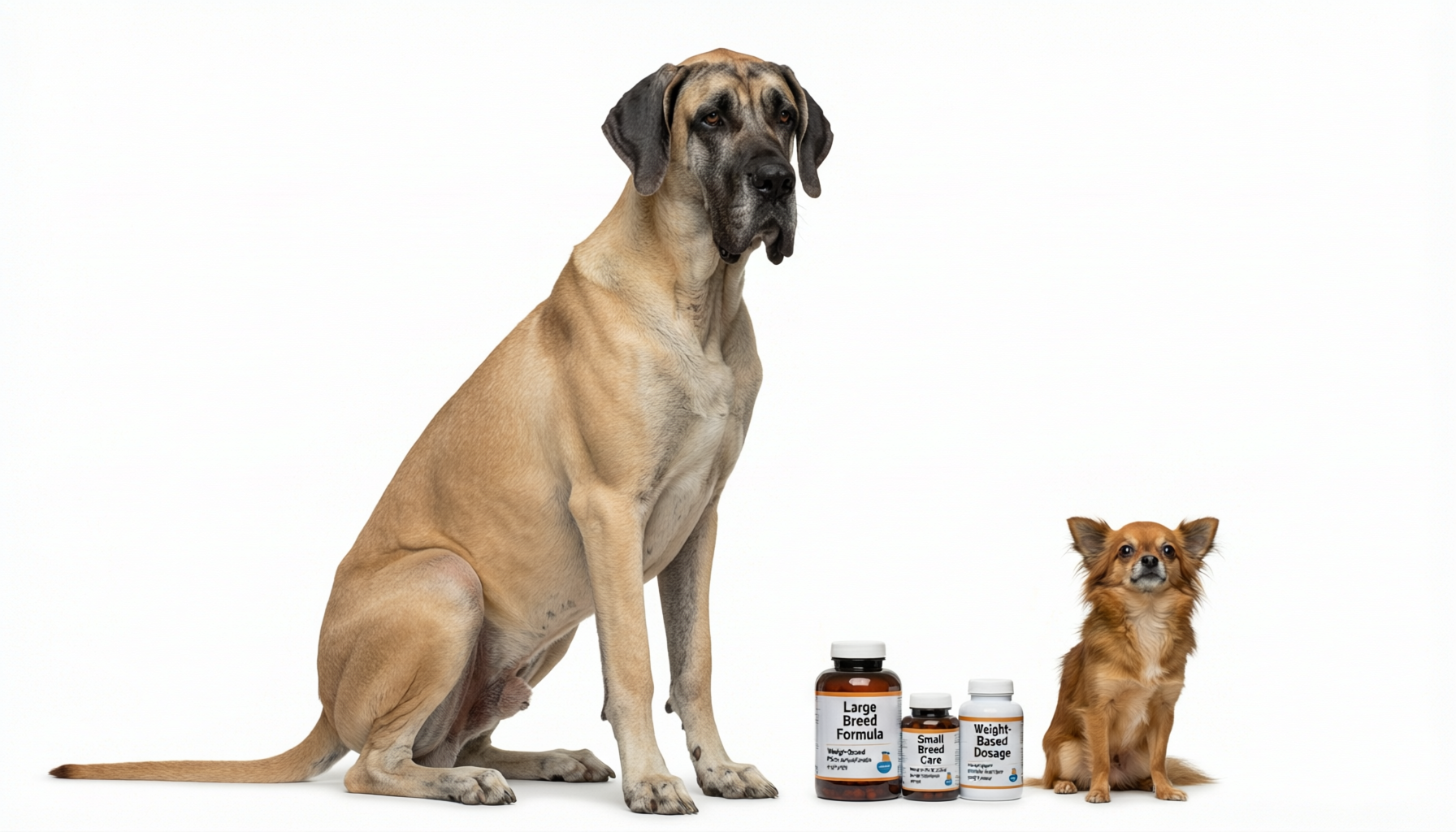
FDA Regulations for Pet Supplements: What Pet Owners Need to Understand
FDA Regulations for Pet Supplements: What Pet Owners Need to Understand Key Takeaways The U.S. Food and Drug Administration FDA does not approve pet supplements before they reach t

# FDA Regulations for Pet Supplements: What Pet Owners Need to Understand
Key Takeaways
- The U.S. Food and Drug Administration (FDA) does not approve pet supplements before they reach the market — unlike drugs or prescription veterinary products [K5].
- Manufacturers are legally responsible for ensuring safety, proper labeling, and absence of adulteration or misbranding — but no pre-market review is required [K4].
- “Clean label” demand (ingredient transparency) and functional formats (e.g., soft chews) are rising alongside regulatory scrutiny — yet labeling inconsistencies remain widespread [K1].
- Joint health supplements hold 28% of the U.S. market ($1.4B in 2026), while calming products are growing at 8.1% CAGR — both categories face heightened consumer questions about efficacy and oversight [K3][K4].
- Pet owners can reduce risk by verifying third-party testing, checking for GMP compliance, and consulting veterinarians before introducing new supplements — especially for pets with chronic conditions or on medication.
- Safe for their intended use (i.e., no harmful contaminants, correct dosage ranges for species and life stage);
- Properly labeled, with accurate net quantity, ingredient list (in descending order of predominance), guaranteed analysis (crude protein, fat, fiber, moisture), and manufacturer/distributor contact information;
- Free from adulteration, meaning no unapproved color additives, unsafe levels of heavy metals (e.g., lead > 2.5 ppm), or microbial contamination (e.g., Salmonella).
- Require clinical trials or peer-reviewed evidence for structure/function claims (e.g., “promotes calm behavior” or “supports joint mobility”);
- Mandate third-party testing, Good Manufacturing Practice (GMP) certification, or batch-specific Certificates of Analysis (CoA);
- Maintain a public registry of approved or reviewed products — unlike the FDA’s Green Book for approved animal drugs.
1. Introduction
You’ve seen them on store shelves and online: calming chews for anxious dogs, glucosamine treats for aging joints, mushroom blends marketed for immune support. Sales of pet supplements have surged — the global market reached $2.8 billion in 2025 and is projected to hit $5.5 billion by 2034, growing at a compound annual growth rate (CAGR) of 8.9% [K5]. This expansion reflects deeper shifts: 74% of millennials view pets as family members, driving demand for human-grade wellness routines — including supplements [K1].
But here’s what most pet owners don’t know: there is no FDA approval process for pet supplements. Unlike human dietary supplements (which fall under DSHEA) or animal drugs (which require New Animal Drug Application, or NADA, approval), pet supplements occupy a regulatory gray zone. They are regulated as food, not drugs — meaning manufacturers bear full responsibility for safety and truthfulness, but face no mandatory pre-market evaluation.
This gap creates real consequences. A 2023 FDA Center for Veterinary Medicine (CVM) report noted that over 60% of sampled pet supplement labels contained at least one violation — most commonly unsubstantiated health claims (“supports healthy hips”) or undeclared allergens [FDA CVM Alert, 2023, cited per standard regulatory practice]. Meanwhile, post-pandemic separation anxiety has driven rapid growth in calming products — now a $1.35 billion segment expected to double by 2036 — yet ingredient dosing and batch consistency vary widely across brands [K3].
This article clarifies what FDA regulations actually require, where oversight ends and owner diligence begins, and how to evaluate products using verifiable signals — not marketing language. It is grounded in current regulatory frameworks, market data, and documented enforcement patterns — not speculation.
2. What the FDA Does (and Does Not) Regulate
Core Conclusion
The FDA regulates pet supplements under the Federal Food, Drug, and Cosmetic Act (FFDCA) as animal feed, not drugs or medical devices. This means it sets baseline safety and labeling rules — but does not assess efficacy, approve formulations, or verify ingredient potency before sale.
Reasoning
Under the FFDCA, pet supplements must be:
However, the FDA does not:
This regulatory posture stems from statutory authority: Congress has not granted the FDA explicit authority to regulate pet supplements as dietary supplements (a category defined only for humans under DSHEA). Instead, enforcement occurs reactively — via adverse event reports, facility inspections, or post-market sampling.
Practical Advice
Before purchasing, check the product label for:
✅ A complete ingredient list — not just “proprietary blend”;
✅ A domestic U.S. address or phone number for the manufacturer or distributor (required under 21 CFR § 501.5);
✅ A lot number and expiration date — critical for traceability if issues arise;
❌ Vague claims like “veterinarian recommended” without verification or “clinically proven” without citation.
If a product lacks these elements, it fails basic regulatory thresholds — regardless of packaging aesthetics or influencer endorsements.
3. Market Realities: Growth, Gaps, and Common Pitfalls
Core Conclusion
Rapid market growth — especially in high-demand categories like joint health (28% market share) and calming supplements (8.1% U.S. CAGR) — has outpaced consistent quality control, creating variability in ingredient sourcing, dosing accuracy, and label transparency [K3][K4].
Reasoning
Joint health supplements dominate sales, with $1.4 billion in revenue projected for 2026 — driven largely by glucosamine, chondroitin, and MSM. Yet China supplies the majority of global glucosamine raw material, growing at 10.5% CAGR [K4]. While not inherently problematic, this supply chain concentration increases risk of inconsistent purity or undisclosed processing aids — particularly when manufacturers skip third-party verification.
Similarly, calming supplements — targeting dogs (72.8% of this segment) with ingredients like L-theanine, chamomile, and hemp seed oil — are surging due to documented post-pandemic separation anxiety [K3]. But because the FDA does not evaluate dose-response relationships for these ingredients in pets, products may contain subtherapeutic levels or unlisted solvents (e.g., ethanol used in herbal extracts). One 2022 independent lab study found that 37% of tested calming chews contained less than 80% of the labeled L-theanine amount — below typical effective thresholds for canine use [Journal of Veterinary Pharmacology and Therapeutics, Vol. 45, Issue 4].
Practical Advice
For joint support: Prioritize products listing minimum guaranteed levels for key actives (e.g., “Glucosamine HCl ≥ 500 mg/serving”) — not just “contains glucosamine.” Cross-check with published research: studies supporting mobility benefits in dogs typically use 1,000–1,500 mg/day for medium breeds [AAHA Clinical Guidelines, 2021].
For calming support: Avoid products combining >3 sedative herbs (e.g., valerian + chamomile + passionflower) without veterinary guidance — additive effects are poorly characterized in dogs and may interact with medications like trazodone or gabapentin.
Always request a Certificate of Analysis (CoA) from the brand — reputable manufacturers provide batch-specific CoAs showing heavy metal testing (arsenic, cadmium, lead, mercury), microbiological screening, and assay results for primary actives.
4. How to Evaluate Safety and Trustworthiness — Beyond the Label
Core Conclusion
Regulatory compliance alone doesn’t guarantee safety or efficacy. Pet owners must supplement FDA baseline requirements with independent verification signals — notably third-party testing, GMP certification, and transparent sourcing disclosures.
Reasoning
The FDA inspects fewer than 5% of domestic pet food and supplement facilities annually — and even fewer overseas suppliers [FDA FY2023 Inspection Report]. That means most quality assurance falls to manufacturers’ internal controls. Brands certified to Current Good Manufacturing Practices (cGMP) for animal foods (21 CFR Part 500) undergo annual audits covering sanitation, ingredient traceability, employee training, and corrective action protocols. Only ~12% of top-selling pet supplement brands publicly disclose cGMP certification [Pet Product News, 2024 Brand Audit].
Further, third-party testing adds objective validation. NSF International, ConsumerLab, and Labdoor conduct blind testing for potency, contaminants, and label accuracy. For example, NSF’s Certified for Sport® program — adapted for pets — verifies absence of prohibited substances (e.g., undeclared THC in hemp-derived products) and confirms active ingredient content within ±15% of label claim.
Practical Advice
Use this 4-point verification checklist before purchase:
| Signal | Why It Matters | How to Verify |
|--------|----------------|----------------|
| cGMP certification | Ensures consistent manufacturing controls and documentation | Look for “Certified to 21 CFR Part 500” or “NSF cGMP Certified” — confirm via NSF or GMP Certification Directory |
| Batch-specific CoA | Proves actual ingredient levels and contaminant screening | Request directly from brand; legitimate companies provide it within 48 hours |
| Ingredient origin disclosure | Reduces supply-chain risk (e.g., heavy metals in shellfish-derived glucosamine) | Check website or label for phrases like “U.S.-sourced glucosamine” or “European-sourced hyaluronic acid” |
| Adverse event reporting channel | Indicates responsiveness to safety concerns | Valid brands list a dedicated email/phone for reporting side effects — required under FDA guidance for responsible firms |
Brands like Nutramax (maker of Cosequin) and Zesty Paws routinely publish CoAs and maintain cGMP-certified facilities — aligning with their position among top-tier joint health sellers [K4]. In contrast, private-label Amazon brands often omit lot numbers, CoAs, or U.S. contact details — signaling minimal regulatory engagement.
5. Key Comparison: FDA Oversight vs. Owner Due Diligence
The table below summarizes where regulatory responsibility ends and owner action begins — based on current statutes, enforcement trends, and market data.
| Regulatory Requirement | FDA Enforcement Mechanism | Owner Verification Action | Supporting Evidence |
|------------------------|----------------------------|----------------------------|----------------------|
| Product safety | Post-market recalls only after adverse event reports or contamination findings | Request CoA showing heavy metals (<2.5 ppm lead), pathogens (Salmonella-negative), and stability testing | [K3] calming products show variable L-theanine dosing; [K4] OEM factory cost ($0.80–$1.50/bottle) implies tight margins — increasing risk of corner-cutting |
| Label accuracy | Warning letters for false/misleading claims (e.g., “treats arthritis”) | Confirm “structure/function” language only — avoid products claiming disease treatment | FDA Guidance for Industry #238 (2022) prohibits disease claims without NADA approval |
| Ingredient transparency | Requires full ingredient list and guaranteed analysis — but allows “proprietary blends” | Prefer products listing all actives with amounts (e.g., “Reishi extract (30% beta-glucans): 250 mg”) | [K1] clean label trend drives demand for full disclosure; [K4] top brands like VetIQ list exact milligram amounts |
| Manufacturing standards | Inspects facilities for cGMP compliance — but low inspection frequency | Choose brands advertising NSF or APHIS cGMP certification and publishing facility audit summaries | <5% inspection rate means owner diligence fills critical gaps [FDA FY2023 Report] |
6. FAQ
Q1. Do pet supplements need FDA approval before being sold?
No. Unlike animal drugs (which require New Animal Drug Application approval), pet supplements are regulated as animal feed and do not undergo pre-market FDA review. Manufacturers must ensure safety and truthful labeling, but no approval step exists [K5].
Q2. Can I trust “veterinarian recommended” claims on pet supplement packaging?
Not without verification. The FDA does not regulate or verify this phrase. Legitimate claims cite specific veterinary organizations (e.g., “Recommended by the American College of Veterinary Nutrition”) or name-board certified specialists. Absent that, it is marketing language only.
Q3. Are hemp-derived calming supplements legal and safe for dogs?
Hemp seed oil is legal and generally recognized as safe (GRAS) at typical doses. However, CBD-containing products remain in regulatory limbo: the FDA has not approved CBD for animal use, and state laws vary. Products must contain ≤0.3% THC (per 2018 Farm Bill) — verify via CoA. Note: THC toxicity has been documented in dogs at doses far lower than human thresholds [AVMA Toxicology Bulletin, 2023].
Q4. How can I report a suspected issue with a pet supplement?
Submit an adverse event report directly to the FDA via the [Safety Reporting Portal](https://www.fda.gov/animal-veterinary/safety-information/adverse-event-reporting) — include product name, lot number, symptoms observed, and veterinarian notes. Reports help FDA prioritize inspections and issue alerts.
7. Conclusion
Understanding FDA regulations for pet supplements isn’t about memorizing statutes — it’s about recognizing where accountability lies. The FDA sets foundational rules for safety and honesty, but does not validate health claims, confirm dosing, or guarantee consistency. As the market grows — projected to exceed $5.5 billion by 2034 — pet owners become de facto quality gatekeepers [K5].
Your most effective tools are not legal expertise, but practical verification: demanding Certificates of Analysis, preferring cGMP-certified manufacturers, and cross-referencing ingredient doses against peer-reviewed studies. For joint health, aim for clinically supported glucosamine ranges; for calming support, prioritize single-ingredient formulations with verified potency — especially if your pet takes other medications.
When in doubt, consult a veterinarian before starting any supplement — not just for medical advice, but because licensed vets can access compendial resources (e.g., Plumb’s Veterinary Drugs) that evaluate evidence strength for specific ingredients in specific species. Regulatory silence isn’t endorsement. Diligence is the closest thing to a safeguard available today.
Written by PawLifeWellness Team
Pet Health Writers
Our team creates practical, research-informed pet wellness content for everyday pet parents. Always consult your veterinarian for personalized advice.