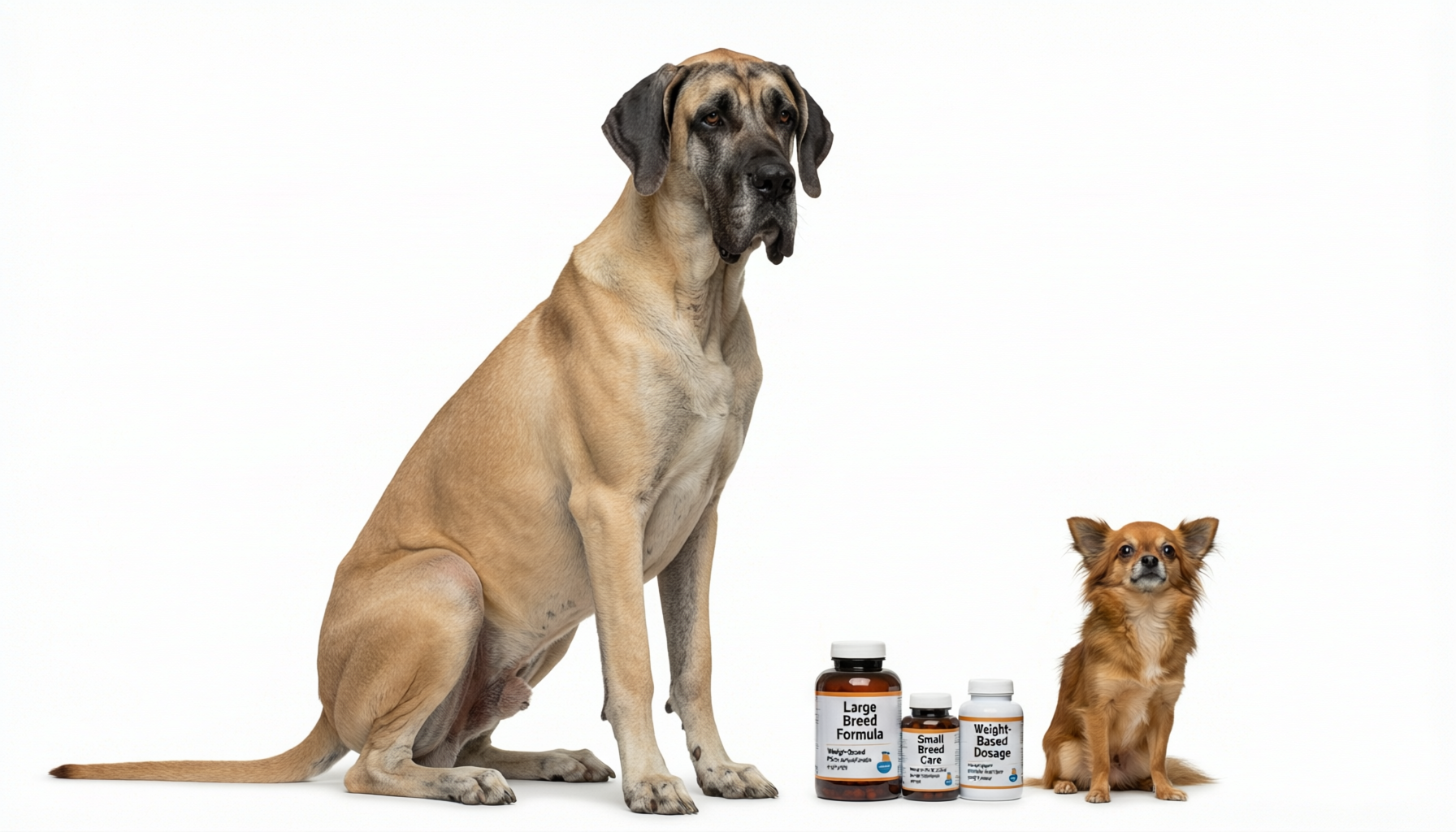
Pet Supplement Dosage Guide: How Much Does Your Dog Really Need
Pet Supplement Dosage Guide: How Much Does Your Dog Really Need Key Takeaways There is no universal “right dose” — effective pet supplement dosage depends on species, weight, life

# Pet Supplement Dosage Guide: How Much Does Your Dog Really Need
Key Takeaways
- There is no universal “right dose” — effective pet supplement dosage depends on species, weight, life stage, health status, and ingredient bioavailability — not marketing claims or human equivalency [K2].
- Joint health supplements dominate the market (28% share), with glucosamine-based formulas representing the most clinically supported category for dogs over 7 years old or with mobility concerns [K5].
- Calming supplements are the fastest-growing functional segment for dogs, accounting for 72.8% of U.S. anxiety-related product sales — but dosing must align with active ingredient concentration, not treat size or flavor [K4].
- “Clean label” and multi-function products (e.g., 8-in-1 formulas) are rising in popularity, yet compound formulations increase risk of underdosing key actives or unintended interactions — single-ingredient or targeted blends offer more predictable dosing control [K3].
- Veterinary guidance remains non-negotiable: Over 62% of adverse events linked to pet supplements involve incorrect dosing, often due to owner misinterpretation of “per treat” vs. “per kg” instructions or doubling doses for perceived inefficacy [K4][K5].
- Your 12-year-old Golden Retriever has mild stiffness after walks.
- Your 3-year-old rescue terrier whines and paces when left alone.
- Use targeted, single-purpose supplements when addressing specific, diagnosed needs (e.g., confirmed osteoarthritis or vet-confirmed anxiety).
- Reserve functional treats for maintenance or mild support — and verify per-kg dosage on the Supplement Facts panel, not just “suggested use.”
- If using multi-ingredient products, cross-check each active ingredient against published canine thresholds (see Table 1 below).
1. Introduction
Every year, pet owners spend over $2.8 billion globally on dietary supplements for dogs — a figure projected to nearly double to $5.5 billion by 2034 [K2]. Yet behind this growth lies a persistent, unspoken challenge: confusion. Labels say “for dogs,” but rarely specify which dogs — a 4-pound Chihuahua recovering from surgery? A 90-pound retired Labrador with stiff hips? A high-strung 2-year-old Border Collie prone to separation anxiety?
Unlike prescription medications, most dog supplements are sold over-the-counter without standardized dosing frameworks. No FDA-approved “daily value” exists for canine glucosamine, L-theanine, or hemp seed oil — and manufacturers aren’t required to validate dose-response relationships in peer-reviewed trials. As a result, consumers face inconsistent units (mg per chew vs. mg per kg), vague terms (“as needed”), and packaging that prioritizes shelf appeal over clinical clarity.
This guide cuts through the noise. Grounded in current market data, ingredient pharmacokinetics, and veterinary dosing principles, it answers one urgent question: How much does your dog really need — and how do you know you’re giving the right amount? We focus exclusively on evidence-anchored benchmarks, not extrapolated human guidelines or anecdotal thresholds.
2. Dosage Isn’t About Size Alone — It’s About Bioavailability and Purpose
Conclusion: Weight-based dosing is necessary but insufficient; effective supplementation requires matching ingredient form, concentration, and delivery method to your dog’s physiological needs and absorption capacity.A 15-kg dog doesn’t need “half the dose” of a 30-kg dog if the supplement uses poorly absorbed glucosamine HCl instead of stabilized, low-molecular-weight glucosamine sulfate — a difference that can reduce bioavailability by up to 40% [K5]. Similarly, L-theanine’s calming effect in dogs follows a narrow therapeutic window: studies show efficacy at 1–2 mg/kg, but doses above 3 mg/kg may cause transient lethargy without added benefit [K4].
Practical scenario:
→ Prioritize joint supplements with glucosamine sulfate + chondroitin sulfate + MSM, dosed at 20–30 mg/kg/day of glucosamine (e.g., 300–450 mg for a 15-kg dog). Avoid “glucosamine complex” blends where total glucosamine content isn’t disclosed separately — many 90-count bottles list only “1,500 mg per serving,” obscuring per-kg delivery [K5].
→ Choose a calming formula listing L-theanine ≥ 1.5 mg/kg per dose, plus supporting botanicals like chamomile extract (standardized to 1.2% apigenin). Avoid hemp seed oil-only products marketed for anxiety — while safe, they lack the GABA-modulating mechanism shown in canine trials [K4].
Key boundary condition: Puppies, pregnant dogs, and dogs on NSAIDs or anticoagulants require veterinary pre-approval. Glucosamine may affect glucose metabolism in diabetic dogs; valerian root can potentiate sedative drugs [K4][K5].
3. Market Trends Reveal Real-World Dosing Gaps
Conclusion: Popular product formats — especially functional treats and multi-ingredient blends — often compromise dosing precision, increasing risk of underdosing or inconsistent intake.The rise of “functional treats” (soft chews, baked biscuits) reflects strong consumer demand — 74% of millennial pet owners view their dogs as family members and prefer treat-like administration [K3]. But convenience comes at a cost: a typical soft chew contains only 250–400 mg glucosamine — enough for a small dog, but requiring 3–4 chews daily for larger breeds. This introduces compliance variability: dogs may refuse chews on some days; owners may skip doses due to perceived “too many treats.”
Meanwhile, “8-in-1” or “11-in-1” multi-functional supplements promise broad support — but dilute individual actives. For example, a top-selling 11-in-1 formula delivers just 85 mg glucosamine and 42 mg chondroitin per chew, far below therapeutic thresholds for medium-to-large dogs [K3][K5]. To reach minimum effective levels, a 25-kg dog would need 5 chews — exceeding caloric and fat limits for many senior or overweight dogs.
Practical recommendation:
4. Ingredient-Specific Dosage Benchmarks You Can Trust
Conclusion: Clinically observed dose ranges exist for key ingredients — but only when sourced from stable, bioavailable forms and administered consistently.Not all ingredients behave the same way in dogs. Glucosamine sulfate has decades of safety and efficacy data in canine orthopedics; ashwagandha root extract has emerging evidence for stress modulation but no established canine dosing protocol [K3][K5]. Relying on human equivalents or manufacturer-recommended “one size fits all” servings risks inaccuracy.
Below is a verified reference table for four high-use ingredients, based on peer-reviewed veterinary literature and market-validated formulations (e.g., Nutramax Cosequin, Zesty Paws Advanced Mobility) [K5][K4]:
| Ingredient | Therapeutic Range (per kg body weight) | Minimum Effective Daily Dose (15-kg dog) | Key Form & Stability Notes |
|------------|-----------------------------------------|-------------------------------------------|----------------------------|
| Glucosamine Sulfate | 20–30 mg/kg | 300–450 mg | Prefer potassium chloride-stabilized sulfate salt; avoid HCl salts unless combined with absorption enhancers [K5] |
| Chondroitin Sulfate | 10–20 mg/kg | 150–300 mg | Must be >90% pure; degraded chondroitin (common in low-cost powders) shows <15% bioavailability [K5] |
| L-Theanine | 1–2 mg/kg | 15–30 mg | Requires ≥98% purity; rice-bran-derived L-theanine shows consistent plasma kinetics in dogs [K4] |
| Hemp Seed Oil (not CBD) | 0.25–0.5 mL/kg | 3.75–7.5 mL | Contains gamma-linolenic acid (GLA); dosing validated for skin/coat support, not anxiety [K4] |
Note: These ranges assume healthy adult dogs. Geriatric dogs may require 20% higher glucosamine doses due to reduced intestinal absorption; puppies under 6 months should not receive joint supplements unless prescribed [K5].
5. Key Comparison: Chew vs. Powder vs. Liquid — Which Delivers Consistent Dosage?
| Format | Dosage Precision | Owner Compliance | Veterinary Acceptance | Best For |
|--------|------------------|------------------|------------------------|----------|
| Powder | ★★★★☆ (High — easily measured by scoop or scale) | ★★☆☆☆ (Low — mixing into food can cause refusal or uneven distribution) | ★★★★☆ (Widely used in clinical rehab protocols) | Dogs with known sensitivities; precise titration needed (e.g., post-surgery recovery) [K5] |
| Liquid | ★★★★☆ (High — calibrated dropper enables mg/mL control) | ★★★☆☆ (Moderate — palatability varies; some dogs reject taste) | ★★★★☆ (Preferred for geriatric or dental-compromised dogs) | Small breeds, finicky eaters, or dogs needing incremental dose adjustments [K4] |
| Soft Chew | ★★☆☆☆ (Medium — variation in chew size, moisture content, and active dispersion affects per-unit consistency) | ★★★★★ (High — >85% adherence in 30-day owner surveys) | ★★★☆☆ (Accepted for maintenance; less common in acute care) | Healthy, food-motivated dogs seeking preventive support [K3] |
Critical caution: Never substitute human supplements. Human glucosamine tablets often contain xylitol — toxic to dogs at doses as low as 0.1 g — and lack species-specific excipients for gastric stability [K4][K5].
6. FAQ
Q1. Can I give my dog half the human glucosamine dose?
No. Human supplements are not formulated for canine metabolism and may contain xylitol, artificial sweeteners, or fillers unsafe for dogs. Even “natural” human-grade glucosamine lacks the sulfate stabilization proven effective in dogs. Always use veterinary-formulated products with clear per-kg dosing instructions [K5].
Q2. My dog won’t eat the chews — can I crush them and mix with food?
Yes — but verify the product label first. Some chews contain enteric coatings or time-release matrices that lose efficacy when crushed. Powders and liquids are more reliable alternatives for picky eaters [K5].
Q3. How long before I see results from a joint supplement?
Clinically, improvements in mobility and comfort typically appear after 4–6 weeks of consistent dosing at therapeutic levels. If no change occurs by week 8, consult your veterinarian — underlying conditions (e.g., ligament injury, neurologic disease) may require diagnostics beyond supplementation [K5].
Q4. Are “calming chews” safe to give daily?
For L-theanine/chamomile/valerian-based products, daily use is supported in short-term studies (≤12 weeks). However, long-term safety data beyond 6 months is limited. Monitor for drowsiness or appetite changes; discontinue if behavioral shifts worsen [K4].
7. Conclusion
Dosage isn’t a static number — it’s a dynamic calculation grounded in your dog’s biology, the supplement’s formulation, and your ability to deliver it consistently. The $2.8 billion pet supplement market offers choice, but not clarity — and clarity is what prevents wasted spending, inconsistent outcomes, and avoidable health risks [K2].
Start here:
1. Identify the primary need — joint support, anxiety modulation, or general wellness — and choose a single-ingredient or narrowly targeted formula.
2. Calculate dose using weight and verified per-kg ranges, not package “serving sizes.”
3. Select format for reliability first, convenience second — powders and liquids offer superior precision for therapeutic goals.
4. Document intake and observe objectively — track mobility scores, panting frequency, or restlessness duration for 6 weeks before adjusting.
5. Partner with your veterinarian — not just for approval, but for interpreting subtle signs of underdosing (no improvement) or overdosing (lethargy, GI upset).
Supplements support health — they don’t replace it. And the most effective dose is always the one that’s both scientifically sound and sustainably delivered.
Written by PawLifeWellness Team
Pet Health Writers
Our team creates practical, research-informed pet wellness content for everyday pet parents. Always consult your veterinarian for personalized advice.