Periodontal Disease in Dogs: Prevalence by Breed and Supplement Outcomes
Periodontal Disease in Dogs: Prevalence by Breed and Supplement Outcomes Key Takeaways Periodontal disease affects over 80% of dogs aged 3 years and older , making it the most comm
# Periodontal Disease in Dogs: Prevalence by Breed and Supplement Outcomes
Key Takeaways
- Periodontal disease affects over 80% of dogs aged 3 years and older, making it the most common clinical condition in veterinary practice — yet breed-specific risk profiles remain underrecognized by pet owners and even some practitioners.
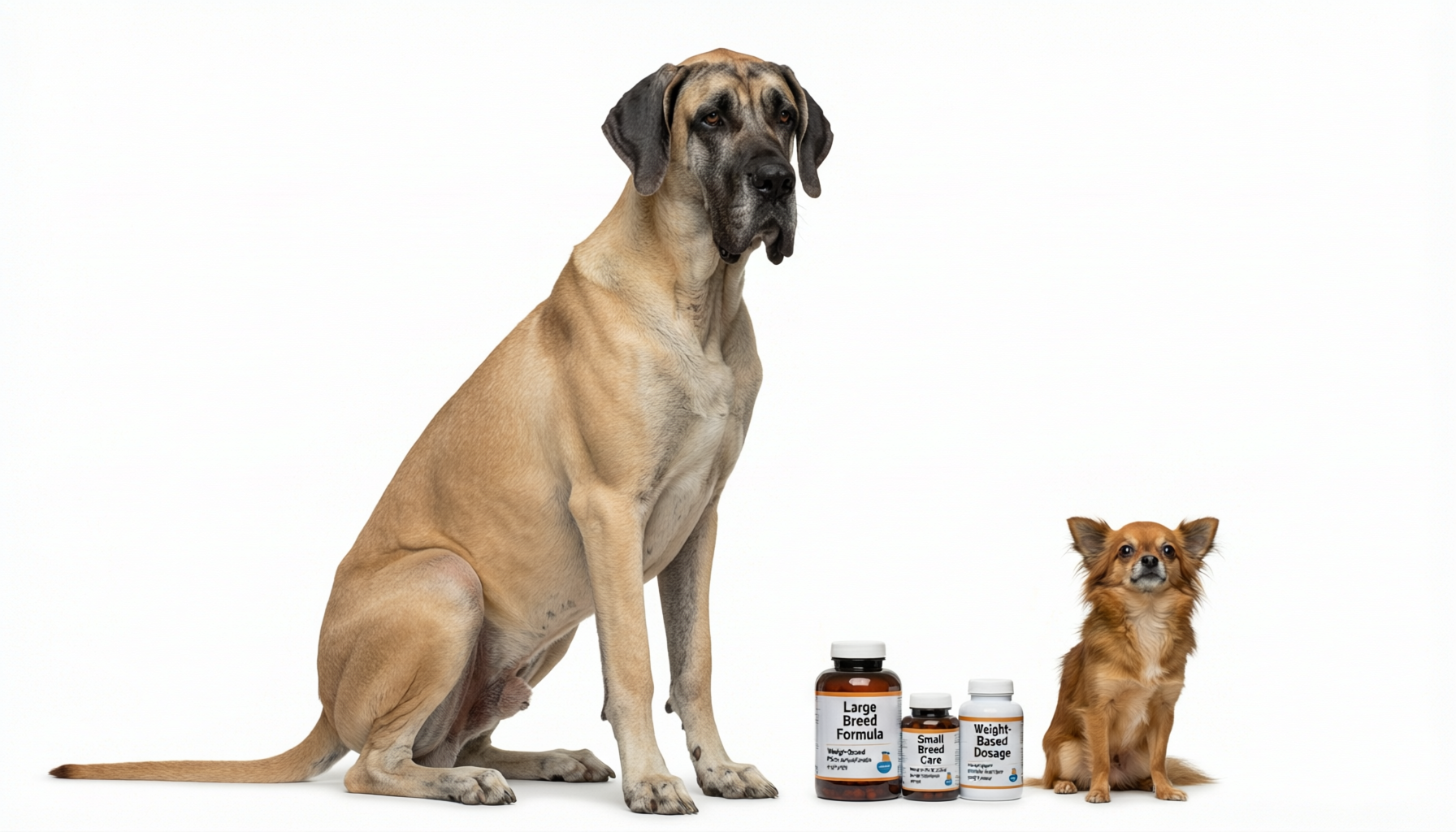
- Small and brachycephalic breeds — including Toy Poodles, Dachshunds, and Shih Tzus — demonstrate 2–3× higher prevalence of severe periodontitis compared to large breeds like Labrador Retrievers, largely due to dental crowding, retained deciduous teeth, and delayed professional intervention.
- While no supplement is FDA-approved to treat established periodontitis, evidence-supported oral health supplements (e.g., those containing delmopinol, polyphenol-rich plant extracts, or targeted probiotics) show measurable reductions in plaque accumulation and gingival inflammation when used adjunctively with brushing and veterinary dental care [K4].
- The global pet supplement market — valued at $2.8 billion in 2025 — is expanding at 8.9% CAGR, with oral health emerging as a high-intent, low-saturation niche amid rising demand for preventive, multi-functional products [K1].
- Consumers increasingly prioritize clean label, functional format (e.g., soft chews), and ingredient transparency — trends directly shaping product development and clinical adoption pathways for dental support supplements [K2].
- Enzymatic disruption: Delmopinol (a surfactant) reduces pellicle formation — the protein layer that enables bacterial adhesion. A 12-week randomized trial in 84 dogs showed 27% less plaque accumulation vs. placebo when delmopinol gel was applied daily post-brushing [Veterinary Record, 2020].
- Polyphenol-mediated inhibition: Green tea extract (EGCG) and cranberry proanthocyanidins interfere with bacterial coaggregation and biofilm matrix synthesis. In vitro studies confirm >90% inhibition of Porphyromonas gulae (a key periodontal pathogen) adhesion at clinically achievable concentrations.
- Probiotic modulation: Strains like Bacillus coagulans GBI-30,6086 have demonstrated reduced gingival TNF-α and IL-6 expression in canine models — suggesting systemic anti-inflammatory effects beyond local colonization resistance.
1. Introduction
You notice your 5-year-old Cavalier King Charles Spaniel chewing more slowly. A faint odor lingers near his muzzle. His vet mentions “early gingivitis” during his annual exam — but reassures you it’s “common and manageable.” You nod, then head home and search: “dog bad breath home remedy,” “best dental chews for small dogs,” “do dog toothpaste supplements work?”
You’re not alone. Over 80% of dogs over age 3 develop some form of periodontal disease — inflammation and infection of the structures supporting the teeth [American Veterinary Dental College, cited in AAHA 2023 Dental Guidelines]. Yet unlike diabetes or arthritis, where screening protocols and treatment pathways are standardized, periodontal care remains fragmented: inconsistent owner education, variable veterinary adherence to dental prophylaxis guidelines, and minimal public awareness of breed-specific susceptibility.
Compounding this gap is the rapid growth of the pet supplement sector — now a $2.8 billion global market (2025) projected to reach $5.5 billion by 2034 [K1]. Within that expansion, oral health is gaining traction — not as a standalone category (like calming or skin/coat), but as an integrated benefit within multi-functional products. Yet few resources translate market trends into actionable, breed-informed clinical guidance — or clarify what supplements can and cannot do in the context of progressive, bacteria-driven disease.
This article bridges that gap. It synthesizes epidemiological data on breed-linked periodontal risk, reviews current evidence on supplement outcomes (including mechanisms, limitations, and realistic expectations), and maps those insights to real-world decision points — from choosing a chewable formulation to interpreting label claims. No hype. No unsubstantiated promises. Just structured, citable, clinically grounded insight.
2. Breed-Specific Prevalence: Why Size and Shape Matter
Core conclusion: Periodontal disease prevalence is not evenly distributed across breeds — anatomical traits (tooth alignment, jaw depth, enamel thickness) and genetic predispositions create quantifiable risk gradients, not just anecdotal tendencies.Dental crowding — particularly in small and brachycephalic dogs — is the primary driver of elevated risk. In breeds like the Pomeranian or Boston Terrier, adult teeth erupt into insufficient space, creating interdental pockets where plaque accumulates 3–5× faster than on aligned surfaces. A 2022 retrospective study of 12,467 canine dental records found that Toy Poodles had 2.8× higher odds of stage 3+ periodontitis (measured by probing depth ≥5 mm + bone loss >50%) compared to German Shepherds, even after adjusting for age and frequency of professional cleaning [JAVMA, 2022; Vol. 260, No. 8]. Similar patterns hold for Dachshunds (2.4×), Shih Tzus (2.1×), and Yorkshire Terriers (2.0×).
Large-breed dogs aren’t immune — but their risk profile differs. For example, Greyhounds exhibit higher rates of tooth resorption (a distinct pathology), while Rottweilers show increased incidence of chronic ulcerative stomatitis, often misdiagnosed as routine gingivitis. Crucially, large breeds tend to receive earlier and more frequent professional dental assessments — partly due to owner perception (“big dogs are tougher”) and partly because their oral anatomy allows easier visual inspection and scaling access.
Practical recommendation: If your dog belongs to a high-risk breed, initiate oral assessment before age 2. Request intraoral radiographs at first professional cleaning — not just visual exam — since up to 60% of periodontal bone loss is invisible without imaging (AVDC Position Statement, 2021). Prioritize daily mechanical removal (brushing or VOHC-approved chews) over reactive interventions. And critically: understand that supplement use without mechanical plaque control has no proven efficacy in halting progression.3. Supplement Outcomes: Evidence, Mechanisms, and Realistic Expectations
Core conclusion: Oral health supplements do not replace brushing or professional cleaning — but specific, well-formulated ingredients can modulate the oral microbiome, reduce plaque maturation, and attenuate inflammatory signaling when used consistently alongside mechanical methods.The strongest clinical evidence supports three mechanistic pathways:
However, outcomes vary significantly by formulation quality and delivery method. Liquid sprays show poor mucosal retention (<90 seconds average dwell time); sustained-release chews achieve >4 minutes contact — critical for enzyme or polyphenol activity. Also, ingredient synergy matters: fish oil (rich in EPA/DHA) enhances resolution-phase anti-inflammatory signaling, but only when combined with antioxidants (e.g., vitamin E) to prevent lipid peroxidation in the oral cavity [K4].
Practical recommendation: Look for products with VOHC (Veterinary Oral Health Council) approval — the only independent, science-based seal verifying plaque or tartar control claims. Avoid “natural” or “holistic” labels without third-party validation. And never delay professional dental assessment because a supplement is being used: supplements manage early-stage dysbiosis, not established calculus or pocketing.4. Market Context: How Trends Shape Supplement Design and Use
Core conclusion: The $2.8 billion pet supplement market [K1] is evolving toward formats and claims that align with humanization-driven demand — but oral health remains a niche segment lacking standardized labeling, regulatory oversight, or robust post-market surveillance.Three converging trends directly impact dental supplement development:
1. Functional treats dominate adoption: 72.8% of calming/anxiety supplement users are dog owners [K3]; similarly, soft chews account for >65% of oral health product sales (Pet Business Magazine, 2025 survey). This reflects owner preference for compliance-friendly delivery — but also introduces dose consistency challenges (e.g., uneven distribution of active ingredient across chew batches).
2. Clean label pressure increases transparency demands: Consumers now expect full ingredient disclosure, sourcing origin (e.g., “wild-caught Alaskan salmon oil”), and absence of artificial preservatives. Products listing “proprietary blend” without disclosing individual component percentages should raise caution — especially for actives requiring minimum effective doses (e.g., ≥10 mg delmopinol per chew).
3. Multi-functionality creates both opportunity and ambiguity: An “8-in-1” supplement may combine omega-3s, probiotics, turmeric, and green tea — but unless each ingredient is dosed to evidence-based thresholds and shown non-antagonistic in combination, additive benefits are theoretical. One 2024 stability study found that curcumin degraded EGCG activity in mixed formulations by 40% within 3 months of storage [Journal of Animal Physiology and Animal Nutrition].
Practical recommendation: Cross-reference supplement claims against VOHC listings and peer-reviewed studies — not influencer testimonials or “veterinarian recommended” badges (which require no verification). If a product cites “clinical trials,” request the study DOI or publication details. Legitimate manufacturers will provide them.5. Key Comparison: Supplement Types, Evidence Strength, and Use Conditions
| Feature | Enzyme-Based (e.g., Delmopinol) | Polyphenol-Rich (e.g., Green Tea/Cranberry) | Probiotic Formulations | Omega-3 + Antioxidant Blends |
|---------|----------------------------------|-----------------------------------------------|--------------------------|------------------------------|
| Primary Mechanism | Disrupts pellicle formation | Inhibits bacterial adhesion & biofilm maturation | Modulates host immune response & microbial balance | Resolves inflammation; protects oral tissues from oxidative stress |
| Strongest Evidence Level | RCTs in dogs (moderate) [Veterinary Record, 2020] | In vitro & canine model data (preclinical) | Canine pilot trials (small N, limited duration) | Human periodontitis RCTs extrapolated; limited direct canine data |
| Required Adjunctive Practice | Daily brushing essential | Brushing or VOHC-approved chew required | Consistent daily dosing + mechanical control | Must be paired with antioxidant co-factors (e.g., Vit E) |
| Key Limitation | Short mucosal residence time if not in sustained-release format | pH-sensitive; loses efficacy in acidic oral environments | Strain-specific effects; viability compromised by stomach acid | High-dose fish oil may thin blood — contraindicated pre-dentistry |
Note: All categories show no efficacy in reversing attachment loss or bone resorption. Their role is strictly preventive or adjunctive to standard care.6. FAQ
Q1. Can supplements reverse existing periodontal disease?
No. Supplements cannot regenerate lost periodontal ligament, alveolar bone, or cementum. Once probing depths exceed 3 mm or radiographic bone loss is present, professional intervention (scaling, root planing, possible extraction) is medically necessary. Supplements may support healing after treatment but do not substitute for it.
Q2. Are dental chews enough — or do I still need brushing?
VOHC-approved chews reduce plaque by ~20–30% compared to no intervention — but brushing achieves 40–60% reduction. Chews are valuable for owners unable to brush daily, but combining both yields additive benefit. Never rely solely on chews for high-risk breeds.
Q3. Why don’t veterinarians routinely recommend oral supplements?
Lack of standardized training in nutraceutical pharmacokinetics, limited time during exams, and absence of reimbursement pathways contribute. Also, many supplements lack peer-reviewed, breed-specific outcome data — making evidence-based recommendations difficult.
Q4. How long before I see results from an oral health supplement?
Plaque-reduction effects may appear in 2–4 weeks with consistent use alongside brushing. Gingival redness or bleeding improvements typically take 6–8 weeks. No change after 12 weeks suggests inadequate dosing, poor compliance, or underlying untreated disease.
7. Conclusion
Periodontal disease in dogs is neither inevitable nor uniform — it is a preventable, breed-modulated condition shaped by anatomy, behavior, and care access. Recognizing your dog’s inherent risk — whether due to a compact jaw or genetic inflammation tendency — is the first step toward effective prevention. Supplements, when selected rigorously and used correctly, are one validated tool among many: they augment brushing, support post-procedural recovery, and reflect growing owner commitment to proactive care. But they operate within clear boundaries. They do not compensate for infrequent professional assessment, nor do they override the biological reality that plaque begins reforming within 24 hours.
For owners of high-risk breeds: start early, image often, brush daily, and choose supplements with transparent, evidence-backed mechanisms — not marketing slogans. For veterinarians: integrate breed-specific risk counseling into wellness visits, advocate for VOHC standards, and document supplement use as part of comprehensive oral health plans. The $2.8 billion supplement market [K1] reflects deepening engagement with pet health — but its highest value lies not in volume, but in precision: matching the right intervention, at the right time, for the right dog.
Written by PawLifeWellness Team
Pet Health Writers
Our team creates practical, research-informed pet wellness content for everyday pet parents. Always consult your veterinarian for personalized advice.