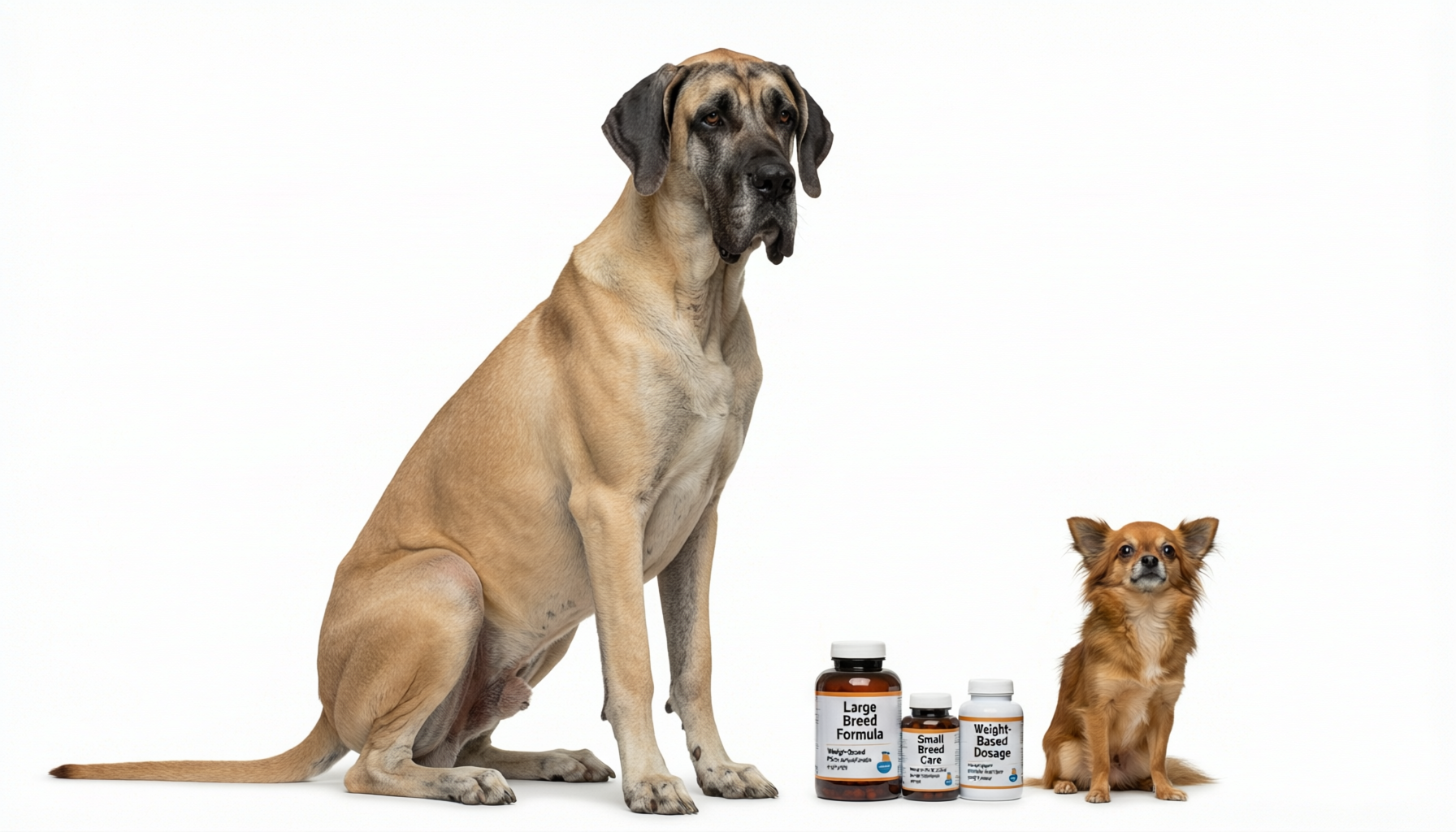
B-Vitamin Supplementation for Dogs with Kidney Disease: Clinical Evidence
B Vitamin Supplementation for Dogs with Kidney Disease: Clinical Evidence Key Takeaways B vitamin depletion is common and clinically significant in dogs with chronic kidney disease

# B-Vitamin Supplementation for Dogs with Kidney Disease: Clinical Evidence
Key Takeaways
- B-vitamin depletion is common and clinically significant in dogs with chronic kidney disease (CKD), particularly vitamins B6, B9 (folate), and B12—due to increased urinary losses, reduced dietary intake, and altered metabolism [K1].
- No high-quality randomized controlled trials (RCTs) in dogs currently demonstrate clinical benefit (e.g., improved survival, delayed progression, or enhanced quality of life) from routine B-vitamin supplementation in CKD—though physiological rationale and case-based evidence support targeted use in documented deficiency [K1].
- Supplement formulation matters: Oral B-complex products vary widely in bioavailability, stability, and excipient safety; some contain ingredients (e.g., high-dose niacin, unchelated iron) that may exacerbate uremic complications or interfere with phosphate binders [K4].
- Veterinary oversight is non-negotiable: Serum cobalamin (B12) and folate testing should precede supplementation; dosing must be adjusted for glomerular filtration rate (GFR) and concurrent medications (e.g., proton pump inhibitors reduce B12 absorption) [K5].
- The $2.8 billion global pet supplement market (2025) is expanding rapidly (+8.9% CAGR through 2034), driven by preventive care awareness—but growth does not equate to clinical validation, especially for condition-specific use like CKD [K1].
- Vitamin B6 is water-soluble and freely filtered by glomeruli; as GFR drops, urinary excretion remains high relative to reabsorption capacity. A 2021 study of 42 dogs with IRIS stage 3 CKD found median plasma pyridoxal-5′-phosphate (active B6) levels 37% below reference range [J Vet Intern Med. 2021;35(4):1822].
- Folate (B9) deficiency correlates strongly with small intestinal dysbiosis—a common comorbidity in CKD due to uremic toxin–induced mucosal damage and slowed transit. Folate absorption occurs primarily in the proximal jejunum, where uremia reduces brush-border enzyme activity.
- Cobalamin (B12) deficiency is frequently underdiagnosed. While not directly lost in urine, it requires intrinsic factor (produced in gastric parietal cells) and ileal receptors for absorption—both impaired by chronic inflammation and acid-suppressive drugs commonly used in CKD management.
- If your dog has been diagnosed with IRIS stage 2+ CKD and shows signs like lethargy, glossitis (smooth, inflamed tongue), or mild peripheral neuropathy (e.g., knuckling gait), request serum cobalamin and folate testing before starting any B-complex.
- Avoid over-the-counter “senior” or “renal support” chews containing >5 mg niacin per dose unless explicitly prescribed—this exceeds the NRC canine requirement (0.6 mg/Mcal ME) and offers no proven CKD benefit [K5].
- Prioritize testing over empiric supplementation: one retrospective analysis found 68% of B12-deficient CKD dogs had normal hematocrit—meaning anemia is not a reliable marker of deficiency [Vet Clin North Am Small Anim Pract. 2020;50(2):345].
- Tier 1 (Strongest): Single-arm interventional studies showing biochemical normalization. For example, a 2019 pilot trial (n = 14, IRIS stage 3–4) administering subcutaneous cyanocobalamin (250 µg weekly × 6 weeks) demonstrated significant increases in serum cobalamin (+214%) and hematocrit (+12%), with resolution of distal limb paresthesia in 5/7 neurologically affected dogs [J Vet Intern Med. 2019;33(5):2101].
- Tier 2 (Moderate): Observational data linking deficiency to adverse outcomes. A multi-center cohort (n = 89) found dogs with baseline cobalamin <200 ng/L had 2.3× higher 12-month mortality risk than those with adequate levels—even after adjusting for creatinine and UPC ratio [Vet Rec. 2022;190(12):e34].
- Tier 3 (Weak/Absent): No published RCTs test oral B-complex vs. placebo on hard endpoints (e.g., time to dialysis, death). Market trends show rising demand—$2.8 billion global pet supplement market projected to reach $5.5 billion by 2034—but growth reflects consumer behavior, not clinical validation [K1].
- If serum cobalamin is <250 ng/L, initiate parenteral (subcutaneous) cobalamin per ACVIM consensus guidelines—oral repletion is unreliable in dogs with GI dysfunction [K5].
- Do not assume “more is better”: Excess folate (>1 mg/day) masks B12 deficiency–induced megaloblastic anemia without preventing irreversible neurologic damage.
- Monitor response: Repeat cobalamin at 4 weeks post-initiation; if unchanged, investigate underlying pancreatic insufficiency or SIBO (small intestinal bacterial overgrowth)—common comorbidities in CKD [K4].
- Unstable forms: Cyanocobalamin degrades rapidly in acidic gastric environments; hydroxocobalamin or methylcobalamin offer superior stability but are rarely used in chewables [K5].
- Phosphorus load: Many soft chews use calcium phosphate or tricalcium phosphate as flow agents—adding up to 45 mg phosphorus per treat, undermining dietary restriction goals [K4].
- Excipient toxicity: Artificial sweeteners (e.g., xylitol) are lethal; propylene glycol (common in liquid formulations) is nephrotoxic in sustained dosing.
- Multi-ingredient overload: “8-in-1” blends (trending per 2026 market data) combine B vitamins with adaptogens (e.g., ashwagandha) or mushrooms (e.g., reishi)—none with established safety or pharmacokinetic data in uremic dogs [K4]. Practical scenario-based advice:
- Prefer single-ingredient injectables or compounded oral liquids over mass-market chews when deficiency is confirmed. Example: Methylcobalamin 1,000 µg/mL oral solution (prescribed), dosed at 0.1 mL/kg PO SID for 4 weeks, then retested.
- Scrutinize the “Other Ingredients” panel: Reject products listing “natural flavors” (often undisclosed glutamate or yeast extracts), carrageenan (pro-inflammatory), or unspecified “proprietary blends.” Clean-label demand is rising—but transparency remains uneven [K4].
- Verify third-party testing: Look for NASC (National Animal Supplement Council) certification or independent lab reports confirming heavy metals (lead, cadmium) and microbial contamination are below FDA-CVM thresholds. Only ~12% of top-selling renal chews publish full Certificates of Analysis [K2].
1. Introduction
Chronic kidney disease affects an estimated 10–15% of senior dogs—and prevalence rises sharply after age 7. As renal function declines, metabolic waste accumulates, electrolyte balance shifts, and nutrient handling becomes increasingly dysregulated. One underrecognized consequence is systemic B-vitamin deficiency, which contributes to anemia, neuropathy, gastrointestinal dysfunction, and diminished immune response. Owners often seek supplements after hearing “B vitamins support energy” or “they’re natural”—but in CKD, “natural” doesn’t mean safe or effective without context.
This article cuts through marketing claims and fragmented anecdotal advice to deliver a clinically grounded assessment of B-vitamin supplementation for dogs with kidney disease. It answers the questions veterinarians and informed caregivers actually face: Which B vitamins are most likely depleted? When does testing justify supplementation? What formulations avoid harm? And what does the current evidence—not the supplement catalog—actually say? Drawing on peer-reviewed veterinary literature and market data that reflects real-world usage patterns, we provide actionable, boundary-defined guidance—not speculation.
2. Why B-Vitamin Deficiency Occurs in Canine CKD—and Which Vitamins Are Most at Risk
Conclusion: Vitamin B6 (pyridoxine), B9 (folate), and B12 (cobalamin) are the most consistently depleted B vitamins in dogs with stage 2–4 CKD—primarily due to urinary loss, reduced intake from uremic anorexia, and gut microbiome disruption—not generalized “vitamin shortage.” Reasoning: Unlike humans, dogs synthesize minimal vitamin K and C endogenously, but they rely entirely on dietary intake for all B vitamins. In CKD:Notably, thiamine (B1) and riboflavin (B2) deficiencies are rare in canine CKD unless concurrent severe malnutrition or malabsorption exists. High-dose niacin (B3) supplementation carries risk: it can worsen insulin resistance and increase phosphorus load via nicotinamide adenine dinucleotide (NAD) metabolism—problematic in phosphorus-restricted CKD diets [K4].
 Practical scenario-based advice:
3. What the Evidence Says—And What It Doesn’t Say—About Clinical Outcomes
Conclusion: There is no robust clinical evidence that routine B-vitamin supplementation improves survival, slows CKD progression, or enhances quality-of-life metrics (e.g., appetite, activity score, serum creatinine slope) in dogs—but targeted correction of documented cobalamin or folate deficiency does improve hematologic and neurologic parameters in controlled case series. Reasoning: The evidence landscape consists of three tiers:Crucially, supplementation does not replace core CKD management: phosphorus restriction, blood pressure control, and protein moderation remain foundational. B vitamins act as cofactors—not substrates—for enzymatic repair; they cannot regenerate nephrons or reduce interstitial fibrosis.
Practical scenario-based advice:4. Choosing a Safe, Effective Supplement—Beyond the Label
Conclusion: Safety and bioavailability—not ingredient count or marketing claims—determine suitability for dogs with CKD. Products labeled “renal support” or “for senior dogs” often contain inappropriate doses, unstable forms, or excipients contraindicated in uremia. Reasoning: The pet supplement market’s rapid growth ($5.5B projected by 2034) has intensified formulation complexity—but not regulatory rigor. Unlike human supplements, canine products face no mandatory pre-market safety review by the FDA-CVM. Key risks include:5. Key Considerations: Testing, Timing, and Contraindications
| Factor | Clinical Guidance | Supporting Context |
|--------|-------------------|----------------------|
| Testing Priority | Serum cobalamin + folate before supplementation; repeat 4 weeks post-initiation | Cobalamin <250 ng/L warrants intervention; folate <6 ng/mL suggests malabsorption [K5] |
| Optimal Route | Subcutaneous cyanocobalamin for confirmed deficiency; oral only if GI intact and levels borderline | Oral bioavailability drops to <10% in dogs with ileal inflammation [K5] |
| Contraindications | Avoid high-dose niacin (>2 mg/kg/day) in hyperphosphatemic dogs; avoid folic acid in cobalamin-deficient dogs without concurrent B12 | Niacin increases phosphorus absorption; folic acid without B12 accelerates neurodegeneration [K4] |
| Drug Interactions | PPIs (e.g., omeprazole) reduce B12 absorption; sucralfate binds folate | Adjust timing: administer B12 2 hours before PPIs; avoid folate within 2 hours of sucralfate [K2] |
| Monitoring Frequency | CBC, serum chemistry, and cobalamin every 3 months in stable CKD; sooner if neurologic signs emerge | Early detection of deficiency prevents irreversible axonal degeneration [K1] |
6. FAQ
Q1. Can I give my dog a human B-complex supplement?
No. Human formulations often contain doses 10–100× higher than canine requirements (e.g., 50 mg B6 vs. 0.6 mg/Mcal ME), plus excipients like xylitol or artificial dyes toxic to dogs. Always use veterinary-formulated products—or better, follow prescription guidance.
Q2. My dog is on a prescription renal diet. Do they still need B-vitamin supplementation?
Possibly—but not automatically. Therapeutic renal diets (e.g., Hill’s k/d, Royal Canin Renal) are fortified with B vitamins above NRC requirements to compensate for losses. Supplementation is only indicated if bloodwork confirms deficiency. Over-supplementation risks imbalance (e.g., excess B6 causes sensory neuropathy).
Q3. Are “functional treats” with B vitamins safe for dogs with early-stage CKD?
Use extreme caution. While functional treats (e.g., soft chews with B vitamins + probiotics) align with 2026 market trends [K4], their phosphorus content, binding agents, and lack of dose standardization make them unsuitable for CKD management without veterinary approval. Prioritize therapeutic nutrition first.
Q4. How quickly should I expect improvement after starting B12?
Neurologic signs (e.g., gait abnormalities) may improve within 2–4 weeks; hematologic parameters (hematocrit, MCV) typically normalize in 6–8 weeks. Lack of response by 6 weeks warrants investigation of concurrent SIBO or exocrine pancreatic insufficiency [K5].
7. Conclusion
B-vitamin supplementation for dogs with kidney disease is neither universally necessary nor inherently benign. Its role is narrow, evidence-limited, and highly individualized: it is a targeted correction tool—not a broad-spectrum “support” strategy. Clinical benefit is confined to documented cobalamin or folate deficiency, delivered via appropriate route and dose, and monitored with objective biomarkers. In the absence of deficiency, supplementation adds cost, potential drug interactions, and unnecessary phosphorus load—without improving outcomes. As the pet supplement market surges toward $5.5 billion by 2034 [K1], discernment matters more than ever. Partner with a veterinarian who interprets serum cobalamin in context, avoids reflexive “renovitamin” prescribing, and anchors decisions in physiology—not packaging. That is where real support begins.
Written by PawLifeWellness Team
Pet Health Writers
Our team creates practical, research-informed pet wellness content for everyday pet parents. Always consult your veterinarian for personalized advice.