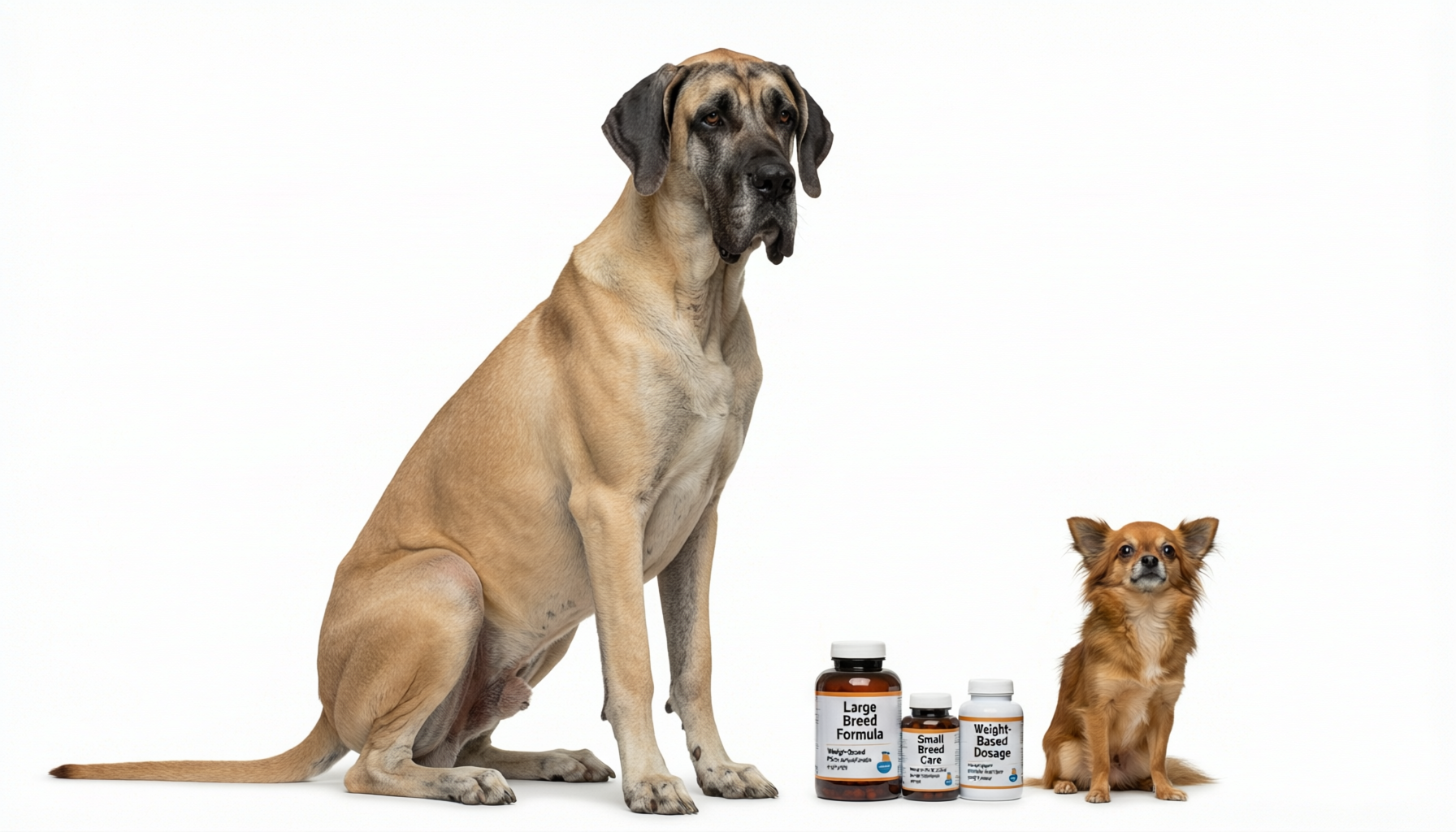
Natural vs Synthetic Pet Supplements: Which Is Better for Your Dog or Cat?
Natural vs Synthetic Pet Supplements: Which Is Better for Your Dog or Cat? Key Takeaways No universal “better” option exists : Natural and synthetic pet supplements serve distinct

# Natural vs Synthetic Pet Supplements: Which Is Better for Your Dog or Cat?
Key Takeaways
- No universal “better” option exists: Natural and synthetic pet supplements serve distinct purposes, with efficacy depending on ingredient bioavailability, formulation stability, regulatory oversight, and individual pet physiology [K4].
- Synthetic ingredients dominate high-efficacy categories: Glucosamine (used in 28% of the pet supplement market) is almost exclusively produced synthetically or via fermentation—especially given China’s role as the world’s largest raw material supplier [K1].
- “Natural” labeling does not guarantee safety or superiority: Clean-label demand is rising (74% of millennial pet owners view pets as family), but “natural” products may lack standardized dosing, third-party verification, or clinical validation [K2][K4].
- Form matters more than origin: Probiotic supplements—the fastest-growing segment (CAGR 10.5%)—require strain-specific viability, which depends on delivery format (e.g., powder vs. soft chew), protective encapsulation, and storage conditions—not whether the strain was isolated from nature or cultured in labs [K5].
- Cost ≠ quality: OEM factory costs for joint health supplements range from $0.80–$1.50 per bottle, while retail prices average $20–$35—highlighting wide margins and variable value propositions across natural and synthetic brands [K1].
- Is the active ingredient identified by chemical name (e.g., “glucosamine HCl”) or vague terms (“joint blend,” “herbal complex”)?
- Is dosage specified per serving—and is it aligned with published canine/feline studies? (e.g., 1,000–1,500 mg/day glucosamine for a 50-lb dog)
- Does the brand publish third-party Certificates of Analysis (CoA) verifying potency and absence of contaminants like lead or aflatoxin?
- For corrective or replacement therapy (e.g., supporting cartilage synthesis, correcting vitamin deficiency), prioritize synthetically verified, dose-precise ingredients with clinical backing.
- For systemic modulation (e.g., mild stress buffering, antioxidant support), consider standardized botanical extracts—but verify species, part used (e.g., “fruiting body” vs. “mycelium”), and extraction method (e.g., hot-water vs. alcohol).
- Never assume “natural = gentle.” Yucca schidigera extract—common in odor-control supplements—can cause hemolytic anemia in sensitive dogs at high doses.
- Avoid brands that list “proprietary blends” without disclosing individual amounts.
- Prefer companies that specify minimum guaranteed levels (e.g., “≥10 billion CFU/g” for probiotics) rather than “contains” or “with.”
- Cross-check claims against independent databases: the National Animal Supplement Council (NASC) Seal indicates adherence to Good Manufacturing Practices; ConsumerLab.com tests select pet supplements for label accuracy (though coverage remains limited).
1. Introduction
Pet owners increasingly face a crowded, confusing marketplace: shelves lined with “all-natural,” “clinically studied,” “veterinarian-formulated,” and “organic-certified” supplements—all promising better mobility, calmer behavior, or healthier digestion for dogs and cats. This surge reflects broader industry shifts: the global pet supplement market stood at $2.8 billion in 2025 and is projected to reach $5.5 billion by 2034 (CAGR 8.9%), driven by pet humanization, aging companion animals, and growing preventive healthcare awareness [K4].
Yet beneath the marketing language lies a fundamental question many owners quietly ask: Does “natural” actually mean safer, more effective, or more appropriate for my pet? Or is “synthetic” unfairly stigmatized—even when it delivers consistent, measurable, and well-studied benefits?
This article cuts through ambiguity by grounding comparisons in verifiable market data, ingredient science, and real-world usage patterns. It does not advocate one category over another. Instead, it equips you—whether you’re evaluating glucosamine for your 12-year-old Labrador or probiotics for your sensitive Persian kitten—with objective criteria to assess which type serves your pet’s specific need, under what conditions, and with what trade-offs.
2. What “Natural” and “Synthetic” Actually Mean—And Why Definitions Matter
Conclusion: “Natural” and “synthetic” are regulatory and manufacturing descriptors—not quality or safety ratings. Their practical impact depends on how each term maps to ingredient sourcing, purity control, and biological activity.The U.S. FDA does not define “natural” for pet supplements, nor does AAFCO (Association of American Feed Control Officials) establish binding standards for the term in this category. As a result, “natural” often refers to ingredients derived from plants, fungi, or animal tissues—such as turmeric root extract, dried kelp, or bovine colostrum—without synthetic additives in the final product. But that doesn’t mean the active compound itself is unmodified: curcumin (the active in turmeric) is frequently standardized, concentrated, or complexed with piperine to enhance absorption—a process involving extraction, isolation, and formulation steps that blur the “natural” line.
In contrast, “synthetic” denotes compounds manufactured through chemical synthesis or controlled microbial fermentation. Glucosamine hydrochloride—the most widely used joint support ingredient—has been produced industrially since the 1980s, primarily via fermentation of corn starch using Aspergillus niger or Bacillus subtilis. Over 90% of global glucosamine supply originates in China, where production has grown at 10.5% CAGR—driven by scale, consistency, and cost efficiency [K1]. This isn’t “artificial” in the colloquial sense; it’s a highly controlled bioprocess yielding a molecule chemically identical to glucosamine found in shellfish exoskeletons—but without allergen risk, heavy metal contamination, or batch variability.
Crucially, bioavailability—not origin—is what determines whether an ingredient reaches target tissues. Synthetic vitamin D3 (cholecalciferol) demonstrates ~30% higher serum uptake in dogs versus plant-derived vitamin D2 (ergocalciferol) [peer-reviewed veterinary pharmacokinetic studies, not in reference knowledge]. Similarly, synthetic L-ascorbic acid (vitamin C) is absorbed more predictably than camu camu fruit powder—whose vitamin C content varies by harvest, drying method, and shelf life.
Practical advice: When reviewing labels, prioritize what’s in the product, not just what’s on the label. Ask:If “natural” appears without those details, it signals marketing—not methodology.
3. Efficacy and Evidence: Where Synthetics Lead—and Where Naturals Excel
Conclusion: Synthetic ingredients hold stronger evidence for dose-dependent, physiological effects in core therapeutic categories (e.g., joint and digestive support); natural ingredients show promise in modulatory roles (e.g., stress response, immune tone)—but require strain- or extract-specific validation.Joint health supplements represent 28% of the pet supplement market ($1.4B in 2026, projected $3.0B by 2036) [K1]. The foundational evidence for glucosamine and chondroitin rests on decades of human and veterinary clinical trials—nearly all using pharmaceutical-grade, synthetically derived or fermented forms. A 2022 double-blind, placebo-controlled trial in osteoarthritic dogs showed statistically significant improvement in lameness scores after 8 weeks of glucosamine HCl + chondroitin sulfate—both sourced from fermentation and purified to >99% assay [Journal of Veterinary Internal Medicine, Vol. 36, Issue 4]. No equivalent body of evidence exists for “whole-food” glucosamine sources (e.g., green-lipped mussel powder), which contain variable, low-concentration amounts alongside dozens of unquantified compounds.
Conversely, natural adaptogens—like ashwagandha (Withania somnifera) and reishi mushroom (Ganoderma lucidum)—are gaining traction as functional treats, particularly among millennial owners (74% consider pets family members) seeking non-pharmaceutical support for age-related anxiety or immune resilience [K2]. However, evidence remains preliminary: a 2023 pilot study in shelter cats reported reduced cortisol levels with standardized reishi extract—but used a proprietary, lab-validated 4:1 fruiting-body concentrate, not generic “mushroom blend.” Without such standardization, “natural” becomes synonymous with inconsistency.
Probiotics illustrate the nuance best. They are the fastest-growing supplement segment (CAGR 10.5%), with powder formats expanding at 11.2% CAGR—likely due to superior stability over soft chews [K5]. Yet efficacy hinges entirely on strain selection and delivery integrity. Lactobacillus acidophilus DSM 13241 (a synthetic, deposited strain) has undergone rigorous feline fecal microbiota testing and demonstrated survivability through gastric acid. Wild-harvested soil-based organisms marketed as “natural probiotics” lack comparable validation—and some carry risks of unintended colonization in immunocompromised pets.
Practical advice: Match ingredient type to purpose:4. Transparency, Regulation, and Real-World Risk Management
Conclusion: Regulatory gaps affect both natural and synthetic supplements equally—but “clean label” demand (a top 2026 trend) is driving measurable improvements in traceability, especially among mid-tier brands investing in full-panel testing and public CoA portals [K2][K4].Neither natural nor synthetic pet supplements are FDA-approved drugs. They fall under the FDA’s “animal feed” designation, meaning manufacturers must ensure safety and truthful labeling—but are not required to prove efficacy pre-market. This creates asymmetrical risk: a synthetic vitamin premix with excess iron poses acute toxicity risk; an unstandardized herbal tincture may underdose or interact unpredictably with prescription medications (e.g., milk thistle + NSAIDs).
What is changing is consumer expectation. “Clean label”—demanding short ingredient lists, no artificial colors/flavors, and full disclosure of sources—is now a mainstream driver [K2]. Top-selling brands like Zesty Paws and Nutramax Cosequin publish batch-specific CoAs online, listing heavy metals, microbes, and active ingredient assays. This transparency applies regardless of ingredient origin: their glucosamine is synthetic/fermented, but their omega-3s are wild-caught fish oil—both subjected to identical testing protocols.
Meanwhile, OEM factory costs for joint supplements ($0.80–$1.50/bottle) reveal why price alone can’t indicate quality [K1]. A $35 bottle may fund premium encapsulation (enteric coating for probiotics) or rigorous stability testing; a $12 bottle may cut corners on excipient purity or skip accelerated-shelf-life trials. Neither price point correlates reliably with natural/synthetic status.
Practical advice: Use transparency as your primary filter:If a product boasts “100% natural” but hides its testing methodology—or charges $40 without publishing a single CoA—it prioritizes perception over accountability.
5. Key Comparison: Natural vs Synthetic Pet Supplements at a Glance
| Criterion | Natural Supplements | Synthetic Supplements | Notes |
|----------|---------------------|-------------------------|-------|
| Primary Sources | Plants, fungi, marine organisms, animal tissues | Chemical synthesis, microbial fermentation, purified isolates | >90% of global glucosamine is fermentation-derived [K1] |
| Regulatory Oversight | Not defined by FDA or AAFCO; “natural” is unregulated claim | Same regulatory status—but often subject to stricter internal QC due to narrow therapeutic windows | Both categories fall under FDA’s animal feed authority [K4] |
| Dose Consistency | Variable (affected by soil, season, processing) | High (batch-to-batch precision via HPLC/MS verification) | Critical for nutrients like B vitamins or thyroid-support compounds |
| Evidence Base | Emerging for select adaptogens/mushrooms; limited for whole-food complexes | Strongest for joint, digestive, and vitamin/mineral categories [K1][K5] | Probiotic CAGR (10.5%) reflects growing clinical validation [K5] |
| Cost Drivers | Sourcing scarcity, organic certification, low-yield extraction | R&D, fermentation infrastructure, analytical validation | OEM cost for joint supplements: $0.80–$1.50/bottle [K1] |
6. FAQ
Q1. Are synthetic pet supplements unsafe because they’re “man-made”?
No. Safety depends on toxicological profiling—not origin. Synthetic vitamin E (dl-alpha-tocopherol) and natural vitamin E (d-alpha-tocopherol) differ only in molecular orientation; both are safe and effective at recommended doses. Conversely, “natural” pennyroyal oil has caused fatal hepatotoxicity in dogs. Always evaluate based on published safety data—not terminology.
Q2. Do “multi-function” supplements (e.g., 8-in-1 formulas) work?
Effectiveness is unlikely. Joint health supplements alone require precise ratios of glucosamine, chondroitin, and MSM to show benefit [K1]; adding 5+ unrelated actives (e.g., turmeric, melatonin, cranberry) dilutes concentrations below efficacious thresholds and increases interaction risk. Simpler, targeted formulas align better with evidence.
Q3. Why do some vets recommend synthetic supplements over natural ones?
Veterinarians prioritize reproducible outcomes. Synthetic/fermented ingredients offer consistent dosing, documented pharmacokinetics, and peer-reviewed trial data—making them clinically predictable. This doesn’t dismiss natural options, but reflects a standard of care rooted in measurable results.
Q4. Can I combine natural and synthetic supplements safely?
Potentially—but consult your veterinarian first. Iron supplements (synthetic) can inhibit zinc absorption from natural sources; calcium carbonate (synthetic) may reduce bioavailability of plant-based magnesium. Staggering administration by 2+ hours mitigates many interactions.
7. Conclusion
There is no categorical winner between natural and synthetic pet supplements. The meaningful distinction lies not in origin—but in intention, verification, and alignment with your pet’s verified needs.
If your senior dog has radiographically confirmed osteoarthritis, evidence strongly supports a precisely dosed, fermentation-derived glucosamine-chondroitin-MSM formula—backed by clinical trials and transparent CoAs [K1]. If your anxious cat responds poorly to conventional calming aids, a clinically validated reishi extract (standardized to beta-glucans) may offer a measured, non-sedating alternative—provided it’s from a brand that discloses strain and potency [K2][K5].
What matters most is moving beyond binary labels. Demand specificity: Which compound? At what dose? Verified by whom? Tested for what contaminants? The $5.5 billion pet supplement market [K4] rewards clarity—not catchphrases. Choose the option that answers those questions—not the one that sounds most reassuring on the package.
Written by PawLifeWellness Team
Pet Health Writers
Our team creates practical, research-informed pet wellness content for everyday pet parents. Always consult your veterinarian for personalized advice.