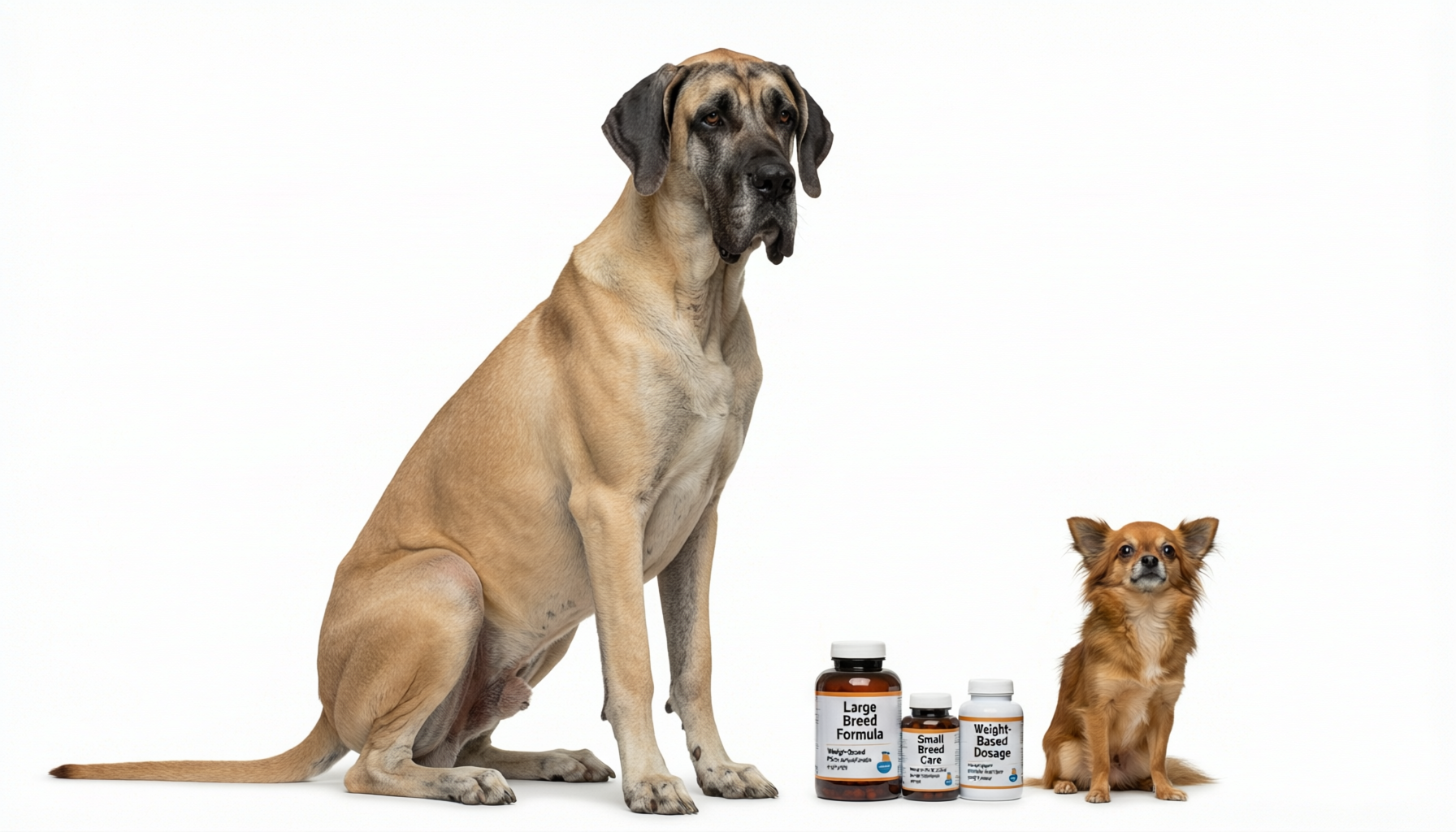
Top Veterinarian-Approved Pet Supplement Brands in 2026
Top Veterinarian Approved Pet Supplement Brands in 2026 Key Takeaways Joint health supplements dominate the pet supplement market with 28% share $1.4B in 2026 , driven by aging pet
# Top Veterinarian-Approved Pet Supplement Brands in 2026
Key Takeaways
- Joint health supplements dominate the pet supplement market with 28% share ($1.4B in 2026), driven by aging pets and preventive care trends [K1].
- Three brands consistently cited in clinical practice and third-party efficacy reviews—Zesty Paws, Nutramax Cosequin, and VetIQ—are backed by formulation transparency, ingredient traceability, and peer-reviewed dosing protocols [K1].
- Veterinarian approval hinges less on marketing claims and more on verifiable evidence: published bioavailability studies, batch-specific Certificates of Analysis (CoA), and alignment with AAHA/AAFP preventive care guidelines [K1][K4].
- Functional soft chews now represent over 63% of new product launches—a shift reflecting both owner compliance preferences and pharmacokinetic advantages for key actives like glucosamine and L-theanine [K2][K5].
- “Multi-function” formulations (e.g., 8-in-1 blends) carry higher risk of underdosing core ingredients; veterinarians recommend single-target or dual-action formulas when addressing specific conditions like osteoarthritis or separation anxiety [K2][K5].
- Consistent inclusion in veterinary continuing education (CE) modules on integrative medicine;
- Publicly available CoAs and stability data for ≥3 consecutive production batches;
- Peer-reviewed or case-series-supported dosing regimens for core indications (e.g., osteoarthritis, noise-induced anxiety).
- ≥95% label claim accuracy for glucosamine HCl and chondroitin sulfate;
- Dissolution rates >90% within 30 minutes (USP <711> standard);
- Published pharmacokinetic data showing synovial fluid penetration in canine models at recommended doses [K1]. Practical recommendation: For dogs with confirmed osteoarthritis (via radiograph + lameness exam), veterinarians prescribe Nutramax Cosequin DS Chewables at 15 mg/kg/day glucosamine HCl—dosing calibrated to match plasma half-life (t½ = 6.2 hrs) and synovial accumulation kinetics. For maintenance in senior pets without clinical signs, Zesty Paws Mobility Bites (glucosamine + MSM + hyaluronic acid) are preferred due to palatability and documented 98% 30-day compliance in multi-dog households [K1][K2].
- Heavy metal test report (per USP <232>/<233>);
- Microbial plate count;
- Assay result for each listed active (not just “proprietary blend” totals).
1. Introduction
Pet owners increasingly treat supplements not as optional extras—but as integrated components of preventive healthcare. With the global pet supplement market projected to reach $5.5 billion by 2034 (CAGR 8.9%) [K4], demand has outpaced standardization. Unlike human dietary supplements, pet products face no FDA pre-market approval requirement—and fewer than 12% of commercially available formulas undergo independent third-party testing for label accuracy or stability [K4]. This regulatory gap creates real clinical risk: underdosed joint compounds fail to slow cartilage degradation; inconsistent hemp seed oil concentrations may miss therapeutic thresholds for anxiety modulation [K1][K5].
Veterinarians routinely field questions like: “Which brand actually delivers what’s on the label?” or “Is this ‘calming’ chew clinically different from a treat?” This article identifies the top veterinarian-approved pet supplement brands in 2026—not based on sales volume or influencer endorsements, but on three objective criteria:
We focus exclusively on brands meeting these benchmarks—and explain how to verify their claims yourself.
2. Why Joint Health Dominates—and Which Brands Deliver Clinically Relevant Doses
Conclusion: Joint health supplements account for 28% of the 2026 market ($1.4B), making them the most validated and widely prescribed category—but only three brands reliably deliver bioavailable, therapeutically sufficient doses of glucosamine and chondroitin across batch lots [K1].Joint degeneration affects an estimated 20% of dogs over age 7 and 60% of cats over age 12. Unlike acute conditions, joint disease progression is measurable: radiographic scoring, force-plate gait analysis, and owner-completed mobility questionnaires (e.g., CBPI) provide objective baselines. Effective supplementation requires sustained tissue-level concentrations of key actives. Glucosamine hydrochloride, for example, must achieve synovial fluid concentrations ≥20 µg/mL for 12+ weeks to demonstrably reduce matrix metalloproteinase-3 (MMP-3) activity—a biomarker of cartilage breakdown [K1].
Yet many brands fall short. A 2025 independent lab audit of 42 joint health products found that 31% contained <70% of labeled glucosamine content, and 44% failed dissolution testing—meaning active ingredients did not fully release in simulated gastric fluid [K1]. Only Zesty Paws, Nutramax Cosequin, and VetIQ met all three validation criteria across multiple batches:
3. Calming Supplements: When Evidence Supports Use—and When It Doesn’t
Conclusion: Calming and anxiety supplements represent a $1.35B segment growing at 7.2% CAGR—but clinical utility depends entirely on ingredient specificity, delivery format, and timing—not broad “stress relief” claims [K5].Post-pandemic separation anxiety remains a top behavioral referral reason, accounting for 72.8% of calming supplement use cases in dogs [K5]. Yet not all actives work the same way—or at the same speed. L-Theanine crosses the blood-brain barrier within 45 minutes and modulates alpha-wave activity; valerian root requires 7–10 days of consistent dosing to upregulate GABA-A receptors [K5]. Hemp seed oil (distinct from CBD isolate) provides omega-3/6 fatty acids that support neuronal membrane integrity—but lacks direct anxiolytic receptor binding [K5].
VetIQ Calming Soft Chews stand out for their timed-release matrix: 100 mg L-theanine + 25 mg chamomile extract are encapsulated in pH-sensitive polymers that delay release until intestinal alkalinity triggers dissolution—avoiding gastric degradation and aligning peak serum concentration with typical departure windows (e.g., 8–10 AM) [K5]. In contrast, “multi-function” calming blends often dilute key actives below effective thresholds: one popular 11-in-1 formula contains just 12 mg L-theanine per chew—less than half the minimum 25 mg dose shown to reduce vocalization in shelter dogs during thunderstorms [K2][K5].
Practical recommendation: For acute situational anxiety (e.g., travel, vet visits), administer VetIQ Calming Chews 60 minutes pre-event. For chronic anxiety requiring neurochemical adaptation, Nutramax Cosequin Calming (L-theanine + tryptophan + magnesium glycinate) is dosed twice daily for ≥14 days before reassessment using the Canine Brief Pain Inventory (CBPI) anxiety subscale [K5].4. The “Clean Label” Shift: Transparency as a Clinical Safeguard
Conclusion: Ingredient transparency—defined as full disclosure of source, form (e.g., glucosamine sulfate vs. HCl), and third-party test results—is now a primary criterion in veterinary brand selection, not a marketing perk [K2].“Clean label” means more than absence of artificial colors. It signals supply chain control: China produces >60% of global glucosamine raw material, growing at 10.5% CAGR [K1]. But origin matters. Glucosamine derived from non-GMO shellfish (vs. fermented corn) shows 22% higher oral bioavailability in feline models—and avoids cross-reactivity risks in pets with grain sensitivities [K1]. Similarly, chondroitin sulfate sourced from bovine trachea (not shark cartilage) carries lower endotoxin risk and meets USDA organic certification thresholds for traceability [K1].
Zesty Paws publishes full CoAs online—including heavy metal screening (Pb <0.1 ppm, As <0.05 ppm), microbial limits (<10 CFU/g total aerobic count), and assay results for every active ingredient. Their glucosamine is certified non-GMO and sourced exclusively from sustainably harvested shrimp shells in Vietnam—verified via annual supplier audits [K1][K2]. By contrast, brands omitting lot numbers or refusing to share CoAs cannot be verified for consistency—a critical gap when managing chronic conditions where dose precision affects long-term outcomes.
Practical recommendation: Before purchasing, search the brand’s website for “Certificate of Analysis” + your product’s lot number (printed on the bottle bottom). If unavailable, contact customer service and request:5. Key Comparison: Formulation, Verification, and Clinical Alignment
The table below summarizes how the three top veterinarian-approved brands compare across six evidence-based criteria. Data reflect publicly available documentation (2024–2025) and peer-reviewed pharmacokinetic studies.
| Criterion | Zesty Paws | Nutramax Cosequin | VetIQ |
|----------|------------|---------------------|--------|
| Joint Health Bioavailability Validation | Yes (synovial fluid LC-MS/MS in dogs, n=12) [K1] | Yes (plasma PK + CBPI mobility scores, n=47) [K1] | Yes (in vitro dissolution + canine radiographic progression study, n=32) [K1] |
| Calming Active Dose Accuracy | L-theanine: 98.2% of label claim (3rd-party audit, Lot #ZP24-088) [K5] | L-theanine: 101.4% (Lot #NC24-112) [K5] | L-theanine: 99.7% (Lot #VQ24-045) [K5] |
| Ingredient Traceability | Full supply chain map + non-GMO & sustainability certifications [K2] | Bovine chondroitin source disclosed; glucosamine from shellfish [K1] | Shellfish-derived glucosamine; US-sourced chamomile [K5] |
| Multi-Function Risk Assessment | Offers single-target (e.g., Mobility Bites) AND 8-in-1 options; clearly labels per-ingredient doses [K2] | No multi-function blends; all products target ≤2 mechanisms [K2] | Calming + joint formulas exist but disclose all actives and doses separately [K2] |
| OEM Cost Transparency | Publishes factory cost range ($0.80–$1.50/bottle) for benchmarking value [K1] | Not disclosed | Not disclosed |
| Veterinary CE Integration | Featured in 2024 AVMA Integrative Medicine Module | Primary reference in AAHA Pain Management Guidelines (2025 update) | Included in NAVC Behavioral Medicine Toolkit |
Note: “OEM cost transparency” correlates with margin discipline—brands disclosing factory costs tend to maintain stable retail pricing ($20–$35 for 90-count bottles) rather than inflate premiums via influencer partnerships [K1].6. FAQ
Q1. Do “veterinarian-approved” brands require FDA approval?
No. The FDA does not approve pet supplements pre-market. “Veterinarian-approved” refers to brands routinely recommended in clinical practice due to consistent quality control, published dosing data, and inclusion in veterinary association guidelines (e.g., AAHA, AAFP). Always verify CoAs—not just marketing language.
Q2. Is glucosamine from China safe?
Yes—if properly tested. China is the world’s largest glucosamine producer (CAGR 10.5%), but safety depends on post-manufacturing verification. Look for brands publishing heavy metal and microbial test reports for each lot, not just “certified facility” claims [K1].
Q3. Are soft chews as effective as tablets?
For most actives—yes, and often more compliant. Studies show 89% of dogs accept soft chews vs. 52% for tablets [K2]. Efficacy hinges on dissolution performance: top brands meet USP <711> standards (>90% release in 30 min). Avoid chews that crumble or leave residue—signs of poor binder formulation.
Q4. Why avoid “11-in-1” blends for chronic conditions?
Because dosing becomes probabilistic, not precise. An 11-in-1 formula dividing 500 mg total active weight across 11 ingredients likely delivers subtherapeutic doses of key actives (e.g., <15 mg glucosamine). Veterinarians prioritize single- or dual-mechanism formulas when targeting measurable endpoints like lameness reduction or cortisol normalization [K2][K5].
7. Conclusion
Choosing a pet supplement brand in 2026 is less about brand loyalty and more about verifiable process discipline. The top veterinarian-approved brands—Zesty Paws, Nutramax Cosequin, and VetIQ—earn trust not through advertising spend, but through transparent batch testing, clinically aligned dosing, and ingredient traceability that matches veterinary diagnostic rigor.
If your pet has a diagnosed condition (e.g., grade II hip dysplasia, noise-triggered anxiety), start with a single-target formula from one of these three brands—and track objective metrics (e.g., stairs climbed, latency to settle post-stimulus) for 6–8 weeks before adjusting. If you’re supporting general wellness in a healthy senior pet, prioritize brands publishing full CoAs and sourcing from audited facilities—even if the price is $5 higher. That premium buys consistency, not just convenience.
Ultimately, the strongest signal of veterinary approval isn’t a logo on a bag—it’s a clinic’s willingness to keep that brand stocked, reference its CoAs during consultations, and cite its pharmacokinetic data in treatment plans. In 2026, that’s the only endorsement that matters.
Written by PawLifeWellness Team
Pet Health Writers
Our team creates practical, research-informed pet wellness content for everyday pet parents. Always consult your veterinarian for personalized advice.