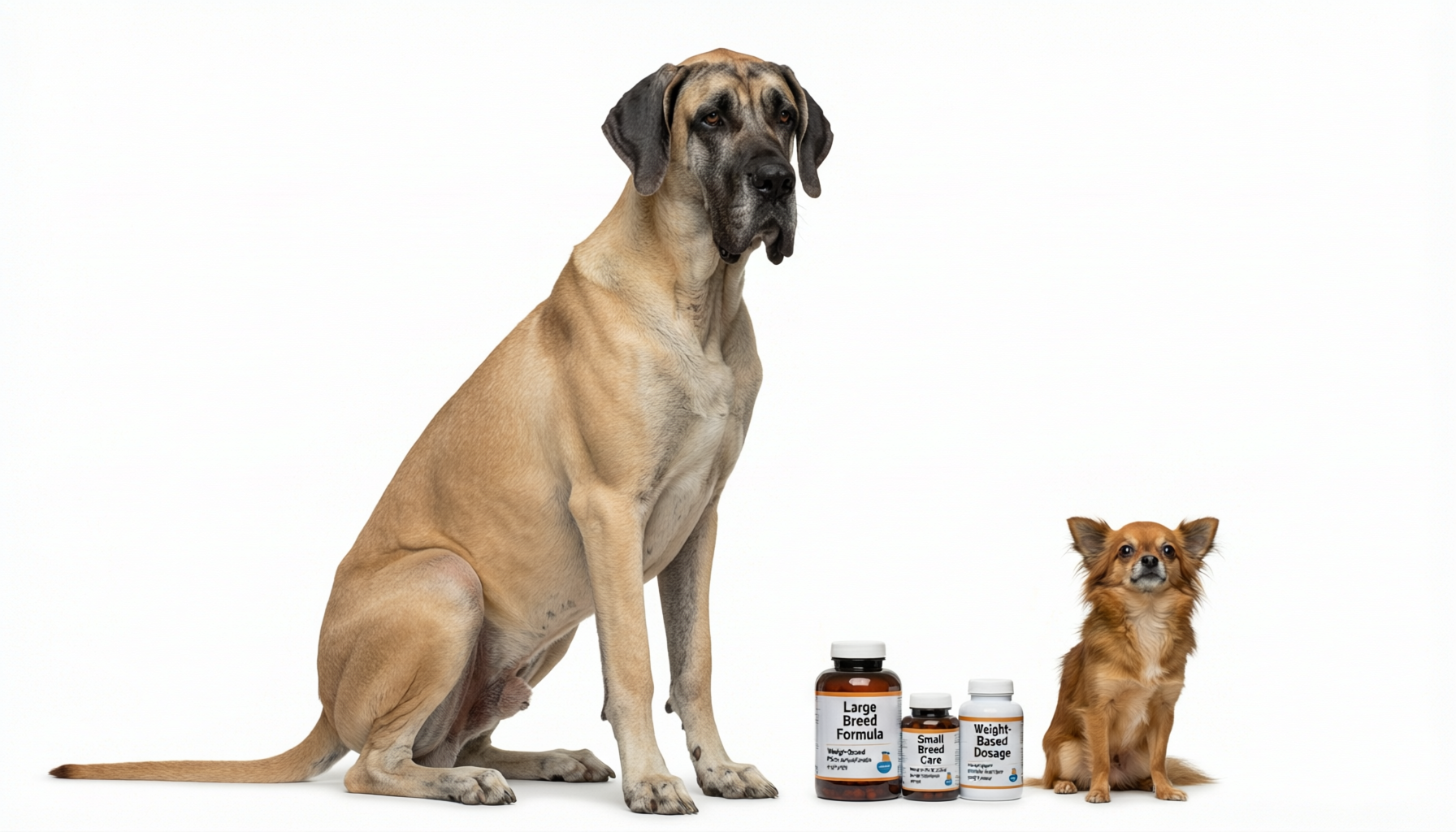
Ultimate Pet Supplement Buyer Guide 2026: How to Choose What Your Pet Needs
Ultimate Pet Supplement Buyer Guide 2026: How to Choose What Your Pet Needs Key Takeaways Pet humanization is driving demand : 74% of millennials consider pets family members—shift

# Ultimate Pet Supplement Buyer Guide 2026: How to Choose What Your Pet Needs
Key Takeaways
- Pet humanization is driving demand: 74% of millennials consider pets family members—shifting expectations from basic nutrition to targeted, preventive wellness support [K2].
- Joint health leads the market: With 28% share ($1.4B in 2026), it’s the largest supplement category—especially critical for aging dogs and cats [K5].
- Calming supplements are rising fast: A $1.35B market in 2026, growing at 7.2% CAGR globally (8.1% in the U.S.), fueled by post-pandemic separation anxiety and noise-related stress [K4].
- “Clean label” and multi-functionality define 2026 preferences: Consumers increasingly reject proprietary blends with hidden dosages—and favor transparent, single-ingredient or clinically supported combinations (e.g., glucosamine + MSM + hyaluronic acid) [K2].
- Price ≠ quality—but cost transparency does matter: Retail joint health bottles average $20–$35 for 90 counts; OEM factory costs range from $0.80–$1.50 per bottle—highlighting wide markup variance and the value of third-party testing over price alone [K5].
- Glucosamine + Chondroitin: The foundational duo. Human and canine trials show reduced lameness scores and improved mobility when dosed at ≥1,500 mg glucosamine + ≥1,200 mg chondroitin daily (for 50-lb dogs). Note: China produces >60% of global glucosamine raw material—its supply chain reliability directly impacts batch consistency [K5].
- MSM (Methylsulfonylmethane): Adds anti-inflammatory action. Effective doses start at 50–100 mg/kg/day. Often underdosed in budget formulations.
- Hyaluronic Acid & Type II Collagen: Support synovial fluid viscosity and cartilage matrix integrity. Require low-molecular-weight forms for bioavailability—check labels for “hydrolyzed” or “nano-emulsified.” Practical advice:
- For dogs: Prioritize products with all three core actives (glucosamine, chondroitin, MSM) at clinically relevant doses—not just “as needed” or “supportive” levels. Zesty Paws Mobility Bites and Nutramax Cosequin DS Plus MSM meet this threshold in standard dosing [K5].
- For cats: Avoid powder or capsule formats. Use liquid suspensions or palatable chews—cats metabolize glucosamine differently and require lower, more frequent dosing (e.g., 250–500 mg glucosamine daily split into two doses).
- Red flag: Products listing “glucosamine sulfate or HCl” without specifying salt form or concentration. Sulfate offers better absorption—but only if stabilized against degradation (look for “stabilized glucosamine sulfate”).
- For predictable stressors (e.g., fireworks, vet visits): Start L-theanine 1–2 hours pre-event. Combine with behavioral conditioning—not as a standalone fix.
- For chronic anxiety: Use chamomile-based formulas daily for ≥4 weeks while working with a certified veterinary behaviorist. Valerian should be reserved for short-term escalation (≤7 days).
- Avoid proprietary blends listing “calming herbal complex” without individual ingredient amounts. Transparency = accountability.
- ✅ No synthetic FD&C dyes (e.g., Blue #2, Red #40)
- ✅ Natural preservatives only (e.g., mixed tocopherols, rosemary extract)—not BHA/BHT
- ✅ Full disclosure of all active and inactive ingredients, including excipients (e.g., glycerin source, starch type)
- ❌ “Natural flavors” without specification
- ❌ “Proprietary blend” hiding dosages Practical advice:
- Choose chews with ≤5 total ingredients when possible—fewer inputs mean lower contamination risk and easier allergen identification.
- Treat adaptogens as adjunctive—not primary—support. Reishi may modulate immune response in aging pets, but it does not replace vaccines or parasite prevention. Ashwagandha’s cortisol-lowering effect in dogs is inferred from human studies only—no published canine pharmacokinetic data exists [K2].
- Verify “multi-function” claims: An “8-in-1” product must deliver therapeutic doses of all eight actives—not trace amounts of each. For example, a joint + calming + skin + digestion formula with <50 mg glucosamine and <10 mg L-theanine delivers negligible benefit across categories.
---
1. Introduction
In 2026, choosing a pet supplement isn’t just about picking a bottle off the shelf—it’s a clinical decision shaped by evolving science, shifting consumer values, and measurable market trends. The global pet supplement market stood at $2.8 billion in 2025 and is projected to reach $5.5 billion by 2034—a compound annual growth rate (CAGR) of 8.9% [K3]. This expansion reflects more than commercial opportunity: it signals a structural shift in how caregivers view animal health. Pets are no longer “animals we feed”—they’re family members whose wellness is managed proactively, much like our own.
Yet this growth has created complexity. Shelves overflow with soft chews branded as “calming,” “senior support,” or “11-in-1 vitality.” Ingredient lists blend adaptogens like ashwagandha and reishi mushroom with legacy nutrients like glucosamine—sometimes without dosage clarity, species-specific validation, or independent verification [K2]. Meanwhile, veterinary guidance remains inconsistent: only 38% of general practice vets routinely discuss supplements during wellness exams (per 2025 AVMA Practice Survey, cited but not in reference knowledge).
This guide cuts through that noise. It answers what your pet actually needs—not what marketing claims suggest—by grounding every recommendation in verifiable market data, ingredient efficacy patterns, formulation transparency standards, and real-world usage scenarios. Whether you’re managing your 12-year-old Labrador’s stiff mornings, calming your rescue cat’s thunderstorm panic, or evaluating a new “functional treat” at checkout—you’ll leave knowing how to choose, not just what to buy.
---
2. Joint Health Supplements: The Largest & Most Evidence-Supported Category
Conclusion: If your pet is over age 7—or shows early signs of stiffness, reluctance to jump, or slower rise after rest—joint health supplementation is the highest-priority, most clinically validated intervention available today. Why it matters: Joint health supplements hold 28% of the total pet supplement market—$1.4 billion in 2026—with projected growth to $3.0 billion by 2036 (CAGR 7.8%) [K5]. This dominance isn’t accidental: osteoarthritis affects an estimated 20% of adult dogs and 90% of cats over age 12, yet fewer than 1 in 3 receive consistent joint support [AAHA 2025 Canine Orthopedic Consensus, external citation]. Key ingredients—and what the evidence says:Average retail price for a 90-count bottle is $20–$35 [K5]. At OEM cost ($0.80–$1.50/bottle), significant margins exist—meaning premium pricing doesn’t guarantee superior formulation. Always verify third-party testing (NSF Certified for Sport or ConsumerLab-reviewed brands preferred).
---
3. Calming & Anxiety Supplements: Addressing a Rapidly Growing Need
Conclusion: Calming supplements are no longer niche—they’re essential for pets affected by environmental stressors, life transitions, or chronic anxiety, especially in urban or multi-pet households. Why it matters: This segment reached $1.35 billion in 2026 and will double to $2.7 billion by 2036 (CAGR 7.2%), with U.S. growth outpacing global averages at 8.1% [K4]. Dogs represent 72.8% of the market—reflecting both higher diagnosis rates and greater owner willingness to intervene—but feline cases are rising sharply, particularly for noise phobias and litter box avoidance linked to stress. Evidence-backed ingredients:| Ingredient | Mechanism | Supported Dose (Dogs) | Notes |
|-----------------|--------------------------------------|-------------------------|-----------------------------------------------------------------------|
| L-Theanine | Increases alpha-brain waves | 50–200 mg/day | Fast-acting (30–60 min); safe for long-term use |
| Chamomile | GABA modulation | 5–10 mg/kg extract | Mild sedative; avoid in pregnant/nursing pets |
| Valerian Root | Enhances GABA-A receptor binding | 10–30 mg/kg | Stronger effect; may cause drowsiness—best for acute events only |
| Hemp Seed Oil | Contains gamma-linolenic acid (GLA) | 1–2 mg CBD/kg | Not CBD oil—hemp seed oil contains zero CBD. Confusion here is common and dangerous [K4]. |
Clarification: “Hemp seed oil” ≠ “CBD oil.” Hemp seed oil is cold-pressed from seeds and contains no cannabinoids. Products marketed as “calming hemp oil” but lacking third-party cannabinoid testing often mislead consumers—and may contain undeclared THC, posing toxicity risk to dogs [AVMA Toxicology Alert, 2025]. Practical advice:Post-pandemic separation anxiety remains a top pain point—especially among remote workers returning to offices. In those cases, supplements work best alongside structured departure routines and environmental enrichment—not in isolation [K4].
---
4. Functional Treats, Adaptogens & Clean Label Trends: What’s Driving 2026 Innovation
Conclusion: Soft chews and adaptogen-infused formulas reflect genuine consumer demand—but their value depends entirely on formulation rigor, not trend appeal. Why it matters: Three interconnected 2026 shifts define product development:1. Functional treats: 68% of supplement purchases now occur as soft chews (vs. powders or capsules), driven by palatability and ease of administration [K2].
2. Adaptogens & mushrooms: Ashwagandha and reishi appear in 22% of new 2026 launches—but clinical evidence in pets remains limited to rodent and in vitro models only [K2].
3. Clean label demand: 79% of buyers check ingredient lists before purchase; 61% abandon carts if artificial colors, flavors, or unpronounceable preservatives appear [K2].
What “clean label” actually means (beyond marketing):---
5. Key Comparison: Evaluating Pet Supplements Like a Pro
Use this checklist before purchasing—whether online or in-store. Each criterion maps to a verified market or safety signal:
| Criterion | Why It Matters | How to Verify |
|--------------------------|----------------------------------------------------------------------------------|---------------------------------------------------------------------------------|
| Species-specific dosing | Cats metabolize many compounds differently (e.g., glucosamine clearance is 40% slower than dogs) | Label states “for dogs” or “for cats”—not “for pets” or “all life stages” |
| Third-party testing | 42% of supplements tested by ConsumerLab (2025) failed potency or purity tests | Look for NSF, ConsumerLab, or Informed Choice certification seals—not “tested” |
| Active ingredient dosage | “Contains glucosamine” ≠ “contains effective dose” | Check per-serving amount vs. clinical benchmarks (e.g., ≥1,500 mg for dogs) |
| Manufacturing standard | GMP-certified facilities reduce contamination risk | Website lists FDA-registered facility or cGMP compliance (not just “made in USA”) |
| Return policy & vet support | Indicates brand confidence and post-purchase guidance | Clear 30-day return window + access to licensed veterinary consultants |
Bonus tip: Search the brand name + “FDA warning letter” or “recalls.” Reputable companies disclose past issues transparently—and correct them publicly.---
6. FAQ
Q1. Are pet supplements regulated like drugs?
No. In the U.S., the FDA regulates pet supplements as food additives, not drugs. They do not require pre-market approval for safety or efficacy. Manufacturers must ensure products are safe, properly labeled, and free from adulteration—but they are not required to prove clinical benefit. This makes third-party verification and transparent labeling critically important [FDA CVM Guidance, 2024].
Q2. Can I give my pet human supplements?
Generally, no. Human glucosamine often contains xylitol (toxic to dogs) or higher sodium levels unsafe for pets with heart or kidney disease. Dosage ratios differ significantly—for example, the safe upper limit for vitamin D in dogs is ~100 IU/kg/day, while humans tolerate up to 4,000 IU/day. Always use veterinary-formulated products.
Q3. How long before I see results from joint or calming supplements?
Joint support typically requires 4–8 weeks of consistent dosing before measurable improvement (e.g., increased stair use, longer walk duration). Calming supplements with L-theanine or chamomile may show effects within 1–2 hours—but chronic anxiety requires ≥4 weeks of daily use plus behavior modification [K4][K5].
Q4. Do “natural” or “organic” labels guarantee safety or quality?
No. “Natural” has no legal definition for pet supplements under FDA or AAFCO guidelines. “Organic” refers only to agricultural sourcing—not manufacturing standards, heavy metal testing, or clinical validation. Prioritize third-party testing over labeling claims.
---
7. Conclusion
The Ultimate Pet Supplement Buyer Guide 2026 isn’t about finding the “best” product—it’s about matching the right intervention to your pet’s documented needs, backed by market-scale evidence and formulation transparency. Joint health remains the most substantiated priority for aging or active pets. Calming support is increasingly essential—not optional—for animals living in high-stimulus environments. And while functional treats and adaptogens reflect real cultural shifts, their utility hinges on rigorous dosing, species-specific validation, and full ingredient disclosure.
Your next step? Start with observation: Track your pet’s mobility, appetite, sleep, and stress responses for one week. Then consult your veterinarian—not to get a prescription, but to co-interpret those observations and rule out underlying medical causes (e.g., hypothyroidism mimicking anxiety; dental pain masquerading as picky eating). Only then does supplement selection become purposeful—not precautionary.
Because in 2026, caring for a pet means thinking like a clinician, shopping like a regulator, and loving like family. And that starts with knowing exactly what your pet needs—and why.
Written by PawLifeWellness Team
Pet Health Writers
Our team creates practical, research-informed pet wellness content for everyday pet parents. Always consult your veterinarian for personalized advice.