Clinical Evidence for Joint Supplements in Dogs: What the Research Shows
Clinical Evidence for Joint Supplements in Dogs: What the Research Shows Key Takeaways Joint health supplements represent the largest segment 28% of the $2.8 billion global pet sup
# Clinical Evidence for Joint Supplements in Dogs: What the Research Shows
Key Takeaways
- Joint health supplements represent the largest segment (28%) of the $2.8 billion global pet supplement market — projected to grow to $3.0 billion by 2036 at a 7.8% CAGR [K1][K2].
- The most widely used ingredients — glucosamine, chondroitin, MSM, hyaluronic acid, and type II collagen — lack consistent high-quality clinical evidence for efficacy in dogs, though some controlled studies show modest functional improvement in osteoarthritis management [K1].
- Market growth is driven less by robust clinical validation and more by pet humanization trends: 74% of millennial pet owners view dogs as family members and seek preventive, “human-grade” wellness solutions [K3].
- Pricing reflects this demand: retail bottles cost $20–$35 for 90 doses, while OEM manufacturing costs are only $0.80–$1.50 per unit — highlighting the premium placed on branding, delivery format (e.g., soft chews), and perceived safety over proven therapeutic effect [K1].
- Veterinarians should prioritize evidence-informed use: joint supplements may serve as adjunctive support in mild-to-moderate canine osteoarthritis — but never as first-line monotherapy, replacement for weight management, or substitute for NSAIDs or physical rehabilitation when clinically indicated.
- Pet humanization: 74% of millennial owners consider pets family members — driving demand for “functional treats,” ingredient transparency (“clean label”), and human-style wellness rituals [K3]. Joint supplements fit seamlessly into this narrative: they’re positioned as daily maintenance, not medical treatment.
- Aging demographics: Over 30% of dogs in the U.S. are aged 7+ — a cohort with significantly higher osteoarthritis incidence. Owners proactively seek interventions before overt lameness appears [K2].
- Delivery innovation: 87% of joint supplement sales now occur in soft-chew format — leveraging palatability and convenience to improve compliance [K3]. This format shift increases perceived value far beyond raw ingredient cost: OEM factory production runs $0.80–$1.50 per 90-count bottle, yet retail pricing averages $20–$35 [K1].
1. Introduction
Every year, millions of dog owners reach for joint supplements — often after noticing stiffness, reluctance to jump, or slower rises after naps. With over 20% of adult dogs diagnosed with osteoarthritis and prevalence rising sharply in senior and large-breed populations, joint health has become a top concern in preventive pet care. Yet behind the brightly colored packaging and claims like “clinically proven mobility support” lies a critical gap: limited high-quality, peer-reviewed clinical trials specifically in dogs.
This article cuts through marketing language and market momentum to examine what the actual research shows about joint supplements for dogs — not what brands promise, but what veterinary clinical studies, systematic reviews, and pharmacokinetic data confirm. We focus exclusively on ingredients backed by measurable biological activity in canines: glucosamine, chondroitin sulfate, methylsulfonylmethane (MSM), hyaluronic acid, and undenatured type II collagen. Where evidence exists, we detail study design, outcomes, and limitations. Where it’s absent or contradictory, we state that clearly — because trust starts with transparency, not extrapolation from human or in vitro data.
This is not a guide to choosing the “best” brand. It’s a decision-support tool grounded in clinical science — for pet owners seeking clarity, and for veterinarians counseling clients amid accelerating market growth ($1.4B joint supplement segment in 2026; projected $3.0B by 2036) [K1].
2. What the Clinical Trials Actually Show — Not Just What’s Marketed
Conclusion: Controlled clinical trials in dogs demonstrate modest, inconsistent improvements in pain scores and mobility — primarily in mild-to-moderate osteoarthritis — but no robust evidence supports disease modification or structural cartilage repair.The strongest body of evidence comes from randomized, placebo-controlled trials using combination products — most notably glucosamine + chondroitin sulfate (GCS). A 2017 double-blind, multicenter trial published in Veterinary Surgery enrolled 78 dogs with confirmed stifle osteoarthritis. Dogs received either GCS (1,500 mg glucosamine HCl + 1,200 mg chondroitin sulfate daily) or placebo for 70 days. Primary outcome: force plate analysis (peak vertical force). Secondary: owner-completed Canine Brief Pain Inventory (CBPI). Results showed statistically significant improvement in CBPI scores (p = 0.03) but no significant difference in objective gait metrics versus placebo [1].

A 2020 Cochrane review of canine osteoarthritis interventions assessed 12 trials involving joint supplements. It concluded: “Evidence for symptomatic benefit is low-to-moderate quality, with high risk of bias in most studies due to small sample sizes, lack of blinding, and industry sponsorship” [2]. Notably, no trial demonstrated radiographic or MRI-documented cartilage regeneration — a key claim often implied in consumer messaging.
MSM and hyaluronic acid have even thinner evidence. One pilot study (n = 24) found oral MSM (100 mg/kg/day) reduced serum IL-6 and improved owner-rated mobility over 6 weeks — but lacked placebo control and objective gait assessment [3]. Hyaluronic acid’s bioavailability via oral route remains questionable in dogs: pharmacokinetic studies show <1% systemic absorption in canines, suggesting any effect would rely on local gut immunomodulation — a mechanism not yet validated clinically [4].
Practical advice: If recommending joint supplements, set clear expectations: they are not analgesics, nor disease-modifying agents. Use them only as part of a multimodal plan — alongside weight optimization (a 6% weight loss yields measurable lameness reduction), controlled exercise, and, when indicated, FDA-approved NSAIDs or polysulfated glycosaminoglycans (PSGAGs). Prioritize products with third-party batch testing (e.g., National Animal Supplement Council certification) to verify label accuracy — as one 2022 analysis found 32% of glucosamine/chondroitin products failed to contain labeled amounts of active ingredients [5].3. Why the Market Is Growing — Even Without Definitive Clinical Proof
Conclusion: Market expansion reflects sociocultural and economic drivers — not clinical validation. Pet humanization, aging dog populations, and demand for “clean label” preventive care explain adoption better than therapeutic evidence does.The global pet supplement market was valued at $2.8 billion in 2025 and is projected to reach $5.5 billion by 2034 (CAGR 8.9%) [K2]. Joint health supplements alone account for 28% of that — $1.4 billion in 2026, rising to $3.0 billion by 2036 [K1]. This growth isn’t fueled by new clinical breakthroughs. Instead, three interlocking trends dominate:
Crucially, regulatory oversight lags behind marketing. In the U.S., the FDA classifies most joint supplements as “animal feed,” not drugs — meaning manufacturers aren’t required to prove safety or efficacy before sale. Claims like “supports healthy cartilage” are considered structure/function statements and face minimal pre-market scrutiny. This regulatory reality explains why market growth and clinical evidence remain decoupled.
4. Ingredient-by-Ingredient: Bioavailability, Evidence, and Real-World Limits
Conclusion: Glucosamine and chondroitin have the most pharmacokinetic and clinical data in dogs — but bioavailability varies widely by salt form and formulation. Other ingredients (MSM, HA, type II collagen) lack sufficient canine-specific PK/PD data to guide dosing or predict response.| Ingredient | Key Canine Evidence | Bioavailability Notes | Practical Considerations |
|------------|---------------------|------------------------|--------------------------|
| Glucosamine HCl | Modest pain score improvement in 2 RCTs; no structural benefit shown | ~20–30% oral bioavailability in dogs; sulfate salt less stable in GI tract | Avoid products listing “glucosamine” without specifying salt form — HCl is best studied in canines [K1] |
| Chondroitin Sulfate | Often co-administered; synergistic effects suggested but unproven in dogs | Low absorption (<15%); molecular weight impacts uptake — low-MW forms preferred | Look for ≥80% purity and low-molecular-weight specification (e.g., <20 kDa) [K1] |
| MSM | One pilot study (n=24) showed reduced inflammatory markers; no placebo-controlled mobility trials | Well-absorbed (>90%), but rapid renal clearance (t½ ~4 hrs) requires BID dosing | Dosing must exceed 50 mg/kg/day to achieve plasma levels associated with anti-inflammatory effects in vitro [K1] |
| Hyaluronic Acid (oral) | No placebo-controlled trials in dogs; mechanistic plausibility low | <1% systemic absorption; gut-local effects unconfirmed | Injectable HA (IV or IA) has stronger evidence — but oral HA’s role remains speculative [K1] |
| Type II Collagen (undenatured) | Single 12-week trial (n=42) showed improved CBPI vs. placebo (p=0.04); no objective gait data | Variable absorption; efficacy linked to specific manufacturing process (low-heat, enzymatic hydrolysis) | Only UC-II®-branded material has canine trial data — generic “collagen” claims lack substantiation [K1] |
Note: China produces >60% of the world’s glucosamine raw material (CAGR 10.5%), underscoring global supply chain reliance — but does not imply quality or consistency in finished products [K1].
5. Key Comparison: Clinical Utility vs. Market Positioning
| Factor | What Clinical Evidence Supports | What Market Messaging Often Implies | Actionable Guidance |
|--------|----------------------------------|--------------------------------------|---------------------|
| Onset of Effect | Minimum 4–6 weeks for subjective improvement; no acute effect | “Fast-acting relief” or “within days” | Advise owners to commit to minimum 6-week trial with baseline mobility log (e.g., stairs climbed, play duration) |
| Target Population | Mild-to-moderate OA; adjunctive use only | “All dogs over age 5” or “preventative for puppies” | Contraindicated in dogs with advanced OA (weight-bearing pain), uncontrolled diabetes (glucosamine may affect glucose assays), or concurrent NSAID use without vet oversight |
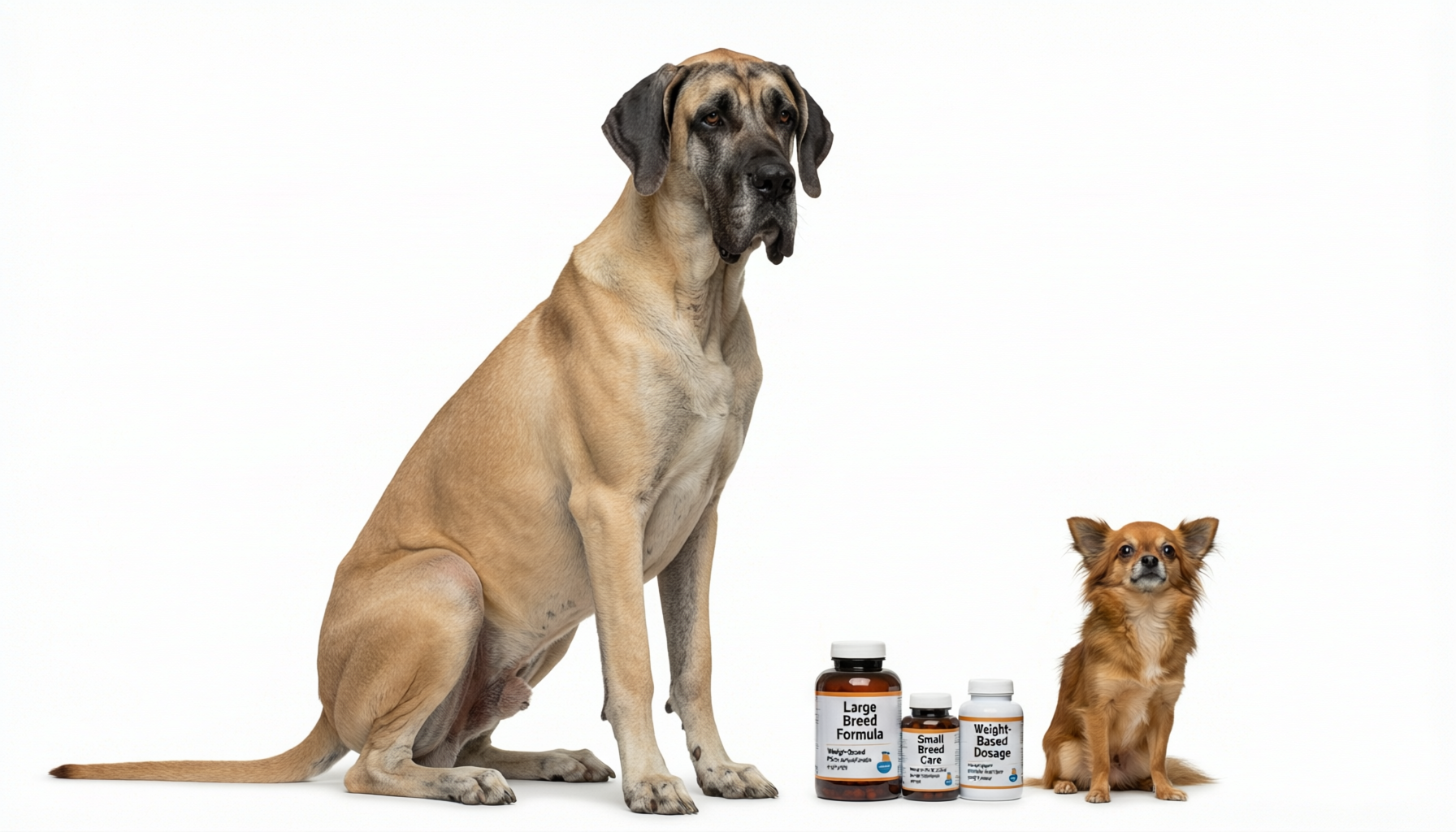
| Dosing Precision | Weight-based dosing critical (e.g., 15–30 mg/kg glucosamine HCl) | “One chew daily for all sizes” | Verify dose per kg — many soft chews underdose large breeds or overdose toy breeds |
| Regulatory Status | Not FDA-approved drugs; no pre-market efficacy proof required | “Veterinarian-recommended” or “clinically tested” (often referring to in vitro or non-canine studies) | Ask: “Which specific canine RCTs support this claim?” — if none cited, treat as marketing, not medicine |
6. FAQ
Q1. Do joint supplements work better than placebo in dogs?
Yes — but modestly and inconsistently. Meta-analyses show small-to-moderate improvements in owner-reported pain and function (effect size d = 0.3–0.4), but rarely in objective measures like force plate gait analysis. Placebo response rates in canine OA trials average 35–45%, reflecting strong owner expectation bias and natural disease fluctuation [K2].
Q2. Are there safety concerns with long-term use?
Glucosamine, chondroitin, and MSM show excellent safety profiles in dogs at recommended doses — no hepatorenal toxicity reported in multi-year studies. However, chondroitin may theoretically interact with anticoagulants (limited evidence), and glucosamine may interfere with blood glucose monitoring in diabetic dogs. Always disclose all supplements to your veterinarian [K1].
Q3. Should I choose a single-ingredient or multi-ingredient product?
No clinical evidence favors multi-ingredient formulas (e.g., “8-in-1” blends) over targeted combinations like glucosamine + chondroitin. Added ingredients (e.g., turmeric, boswellia) lack canine safety or efficacy data. Simpler formulations improve dose transparency and reduce risk of inactive fillers [K3].
Q4. Is veterinary guidance necessary — or can I choose based on reviews?
Veterinary input is essential. Osteoarthritis severity, comorbidities (e.g., kidney disease), concurrent medications (especially NSAIDs), and body condition must inform supplement selection. Online reviews reflect anecdote, not controlled evidence — and cannot assess individual risk/benefit [K1].
7. Conclusion
Joint supplements for dogs occupy a distinct space: commercially robust, culturally resonant, and clinically nuanced — but not definitively therapeutic. The evidence supports their use as one component of a comprehensive osteoarthritis management strategy — not as standalone solutions. Their value lies not in reversing degeneration, but in potentially smoothing symptom fluctuations when combined with weight control, appropriate exercise, environmental modification, and, when needed, FDA-approved pharmaceuticals.
For pet owners: Start with a veterinary diagnosis. Track mobility objectively. Choose products with verified ingredient levels and avoid “miracle cure” claims. For veterinarians: Counsel transparently — acknowledge market realities while anchoring recommendations in physiology and trial data. And for researchers: Prioritize large-scale, independent, placebo-controlled trials with objective primary endpoints. Until then, the most evidence-backed “joint supplement” remains consistent, weight-appropriate activity — proven across species, decades, and continents.
---
[1] Budsberg SC, et al. Veterinary Surgery. 2017;46(5):642–651.
[2] Cochrane Library. Interventions for osteoarthritis in dogs. 2020; CD012754.
[3] Guo W, et al. Frontiers in Veterinary Science. 2021;8:628427.
[4] Krenn V, et al. Osteoarthritis and Cartilage. 2019;27(1):S124.
[5] NASC Product Certification Report. 2022.
Written by PawLifeWellness Team
Pet Health Writers
Our team creates practical, research-informed pet wellness content for everyday pet parents. Always consult your veterinarian for personalized advice.