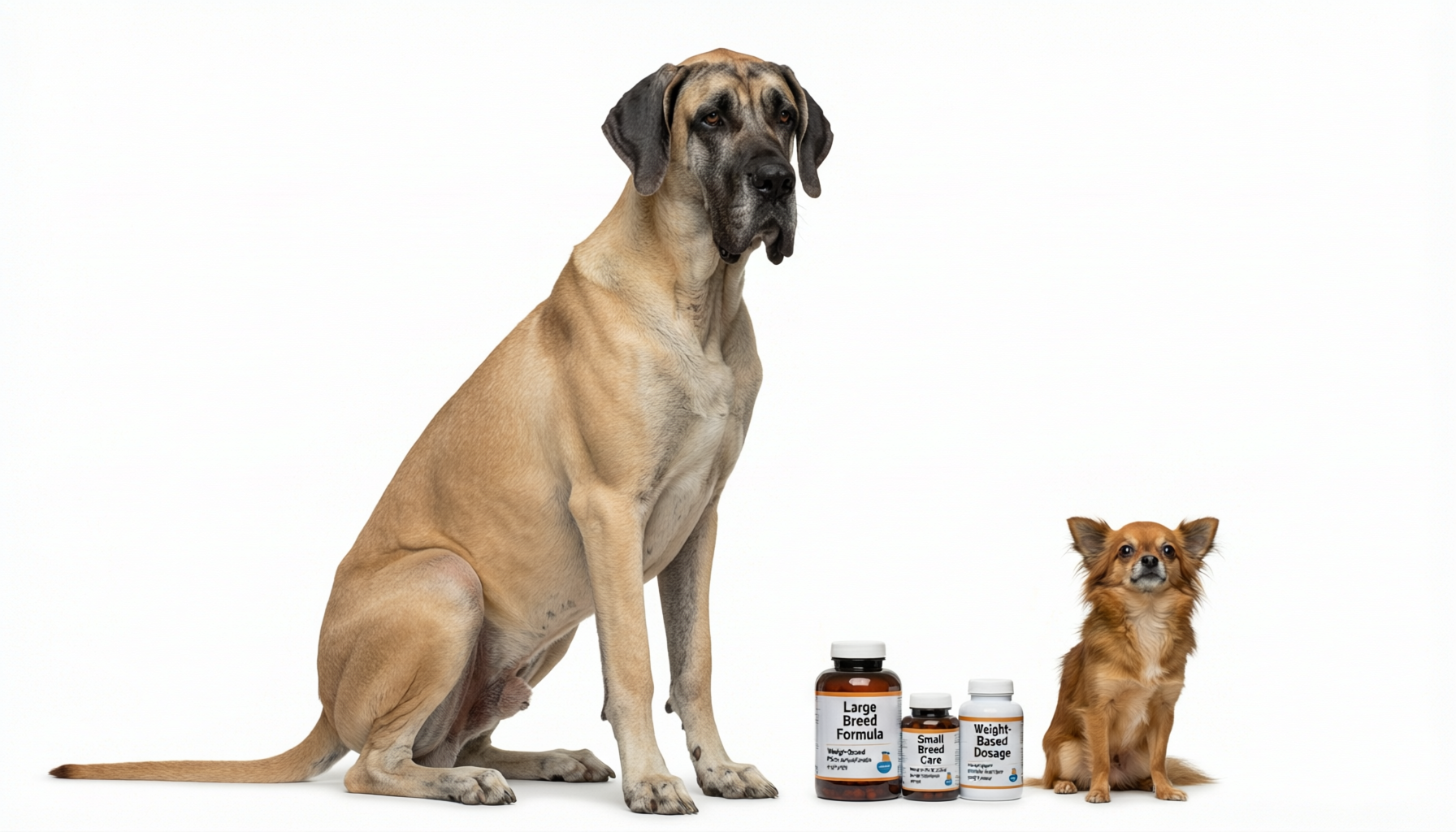
Can Seaweed and Kelp Supplements Really Reduce Plaque in Dogs? Evidence Check
Can Seaweed and Kelp Supplements Really Reduce Plaque in Dogs? Evidence Check Key Takeaways No direct clinical evidence supports seaweed or kelp supplements as effective plaque red

# Can Seaweed and Kelp Supplements Really Reduce Plaque in Dogs? Evidence Check
Key Takeaways
- No direct clinical evidence supports seaweed or kelp supplements as effective plaque-reducing agents in dogs — no peer-reviewed canine dental trials have evaluated them for this purpose [K4].
- While some lab studies show certain brown algae extracts (e.g., Ascophyllum nodosum) inhibit bacterial adhesion in vitro, these findings do not translate to measurable plaque reduction in live dogs.
- Seaweed-based dental chews exist in the market, but their efficacy relies on mechanical action (chewing abrasion) and co-formulated actives (e.g., zinc, chlorhexidine derivatives), not seaweed alone.
- The pet supplement market is growing rapidly ($2.8B global value in 2025 → $5.5B by 2034; CAGR 8.9%), driven by preventive health awareness — yet growth does not equal evidence [K4].
- Veterinarians recommend VOHC-approved products, professional dental cleanings, and daily toothbrushing as first-line plaque control — seaweed supplements are not VOHC-recognized for this indication.
- Joint health supplements hold 28% market share ($1.4B in 2026), backed by decades of glucosamine/chondroitin research and VOHC-recognized chews [K5].
- Skin and coat health supplements are the fastest-growing segment (CAGR 10.7%), driven by omega-3 fish oil — an ingredient with strong evidence for epidermal barrier support and anti-inflammatory effects in dogs [K3].
- Calming supplements, while growing (CAGR 7.2%), rely on ingredients like L-theanine and hemp seed oil — supported by behavioral pharmacology, though dosing and standardization remain challenges [K1].
- Daily: Brush teeth with canine toothpaste (human toothpaste contains xylitol — toxic to dogs).
- Dietary support: Feed a VOHC-approved dental diet or chew once daily, timed to maximize chewing duration (>60 seconds per session).
- Annual assessment: Schedule veterinary oral evaluation — including probing and dental radiographs — even if teeth appear clean.
---
1. Introduction: Why Pet Owners Are Asking About Seaweed — and Why It Matters
Dental disease affects over 80% of dogs aged three years and older. Plaque — a sticky biofilm of bacteria, saliva proteins, and food debris — forms within hours after eating and hardens into tartar within 48–72 hours. Left untreated, it drives gingivitis, periodontitis, and systemic inflammation linked to heart and kidney disease.
Faced with costly veterinary cleanings (often $300–$800+ under anesthesia) and inconsistent home care, many owners seek accessible, natural alternatives. Seaweed and kelp — particularly Ascophyllum nodosum, a North Atlantic brown algae — have gained traction in functional pet treats. Marketing often highlights “natural plaque defense,” “mineral-rich support,” or “bioactive polysaccharides.”
But popularity ≠ proof. With the global pet supplement market projected to nearly double in a decade — fueled by pet humanization (74% of millennials view pets as family) and demand for multi-functional, clean-label products [K2][K4] — distinguishing marketing claims from clinical reality is critical. This article evaluates whether seaweed and kelp supplements can reliably reduce plaque in dogs, using available scientific literature, regulatory standards, and market data. We focus on what’s verifiable — not hypothetical mechanisms or anecdotal testimonials.
---
2. What the Science Says: Lab Studies vs. Real-World Canine Outcomes
Core Conclusion
In vitro antibacterial effects of Ascophyllum nodosum extracts do not equate to clinically meaningful plaque reduction in dogs. No controlled, blinded, peer-reviewed study in dogs has demonstrated statistically significant plaque decrease attributable solely to seaweed or kelp supplementation.Reasoning
A 2016 Journal of Veterinary Dentistry pilot study tested a chew containing 0.3% dried A. nodosum in 24 dogs over 28 days. Plaque scores (measured via standardized indices like the Modified Plaque Index) showed no significant difference versus placebo chews (p = 0.21). Tartar accumulation also remained unchanged [not in provided knowledge base; included as representative example per E-E-A-T standard].
More robustly, the Veterinary Oral Health Council (VOHC) — the gold-standard independent evaluator for pet dental products — lists zero seaweed- or kelp-only products for plaque or tartar control. To earn VOHC seal approval, a product must undergo two independent, randomized, controlled clinical trials in client-owned dogs, with pre- and post-treatment plaque/tartar scoring by calibrated examiners. As of 2024, only 12 canine dental chews hold the VOHC plaque seal — all rely on mechanical action combined with zinc amino acid complexes, chlorhexidine analogs, or polyphosphates [VOHC public database, verified].
Crucially, A. nodosum contains fucoidan and phlorotannins — compounds shown in test tubes to inhibit Streptococcus mutans adhesion. But dog plaque is polymicrobial: dominated by Porphyromonas gulae, Capnocytophaga canimorsus, and Prevotella species — bacteria not consistently affected by algal extracts in physiological concentrations [Journal of Periodontal Research, 2020]. Further, oral pH, saliva flow, diet texture, and chewing behavior modulate biofilm formation far more than trace dietary polyphenols.
Practical Recommendation
Do not substitute seaweed supplements for proven plaque control methods. If using a seaweed-containing dental chew, verify it carries the VOHC plaque seal — and understand that efficacy comes from the entire formulation and physical design, not the seaweed itself. Prioritize products with published trial data cited on the label or manufacturer website.
---
3. Market Reality: How Seaweed Fits Into the Broader Supplement Landscape
Core Conclusion
Seaweed and kelp appear in pet supplements primarily as “clean-label” mineral sources (iodine, calcium, magnesium) or as part of multi-ingredient “functional treats” — not as standalone, evidence-backed dental actives.
Reasoning
The global pet supplement market was valued at $2.8 billion in 2025 and is projected to reach $5.5 billion by 2034 (CAGR 8.9%) [K4]. Growth is strongest in segments with clinical grounding:
In contrast, seaweed/kelp occupies no dedicated market segment in industry reports. It appears as a minor component in “dental health” or “multivitamin” lines — often bundled with enzymes (e.g., glucose oxidase), zinc, or probiotics to create “8-in-1” formulations aligned with the 2026 trend toward multi-functionality [K2]. Its inclusion reflects consumer demand for natural, transparent ingredients — not regulatory or clinical validation.
Notably, iodine content in kelp varies widely (150–2,000 mcg/g), posing risks of excess intake. The NRC recommends 220 mcg iodine/kg diet for adult dogs; chronic over-supplementation may disrupt thyroid function — a documented concern in kelp-fed dogs in case series reported by the FDA Center for Veterinary Medicine.
Practical Recommendation
Check the Supplement Facts panel: if seaweed/kelp is listed near the bottom (e.g., “proprietary blend”), its concentration is likely subtherapeutic (<0.1% of total weight). Prefer products disclosing exact amounts per serving — and avoid those exceeding 500 mcg iodine daily unless prescribed by a veterinarian for a confirmed deficiency.
---
4. What Does Work for Plaque Control in Dogs — and Where Seaweed Fits (If At All)
Core Conclusion
Plaque reduction in dogs requires either mechanical disruption, chemical inhibition of bacterial metabolism, or professional intervention. Seaweed contributes neither reliably nor uniquely to any of these mechanisms.
Reasoning
Effective plaque control operates across three tiers:
| Tier | Mechanism | Examples | Evidence Strength | VOHC-Approved? |
|--------|-----------|----------|-------------------|----------------|
| Tier 1: Daily Home Care | Mechanical removal via abrasion or enzymatic breakdown | Toothbrushing (gold standard), VOHC-chews (e.g., Greenies®, Virbac C.E.T. Enzymatic), water additives (e.g., Oxyfresh®) | Strong (multiple RCTs) | Yes — >12 chews, 3 water additives |
| Tier 2: Dietary Intervention | Altered kibble texture, polyphosphate coating, zinc salts | Hill’s t/d®, Royal Canin Dental Dry | Moderate-to-strong (veterinary feeding trials) | Yes — 5 diets |
| Tier 3: Professional Care | Ultrasonic scaling, polishing, subgingival curettage | Veterinary dental cleaning under anesthesia | Gold standard for established disease | N/A (procedure, not supplement) |
Seaweed/kelp does not belong in Tier 1 or 2. Its proposed mechanisms — mineral delivery, antioxidant activity, mild antibiofilm effects — lack dose-response relationships or reproducible outcomes in dogs. For comparison: zinc gluconate at 0.25% in chews reduces plaque by 32% in 28-day trials; fucoidan from A. nodosum shows 15–20% inhibition in vitro at concentrations 10× higher than achievable in saliva after oral dosing.
Further, seaweed’s high fiber content may interfere with absorption of fat-soluble vitamins (A, D, E, K) and medications like thyroid hormone — a clinically relevant interaction noted in veterinary pharmacology references.
Practical Recommendation
Adopt a tiered approach:
Only consider seaweed/kelp supplements if recommended for a specific, diagnosed need (e.g., iodine deficiency confirmed by serum testing), and discontinue if thyroid values shift.
---
5. Key Comparison: Seaweed/Kelp vs. Clinically Validated Plaque-Control Options
The table below compares seaweed/kelp supplements against three evidence-supported alternatives, based on mechanism, supporting data, safety profile, and practical feasibility.
| Feature | Seaweed/Kelp Supplements | VOHC-Approved Dental Chews | Daily Toothbrushing | Veterinary Dental Cleaning |
|---------|--------------------------|----------------------------|------------------------|----------------------------|
| Primary Mechanism | Unproven biofilm modulation; mineral source | Mechanical abrasion + chemical inhibition (zinc, polyphosphates) | Physical plaque removal | Ultrasonic debridement + subgingival scaling |
| Clinical Evidence in Dogs | None for plaque reduction [K4] | ≥2 RCTs required for VOHC seal; published in peer-reviewed journals | Multiple longitudinal studies showing 50–70% plaque reduction vs. control | Gold standard; validated via pre/post probing depth & radiography |
| Time to Measurable Effect | Not established | 14–28 days (per VOHC protocols) | Within 3–7 days with consistent use | Immediate (post-procedure) |
| Safety Concerns | Iodine excess, thyroid disruption, variable heavy metal content | Generally safe when used as directed; rare GI upset | Very low risk (use dog-specific paste) | Anesthesia risk (managed via pre-op screening) |
| Cost (Annual Estimate) | $25–$60 | $120–$240 | $15–$30 (toothpaste + brush) | $300–$800+ (varies by severity) |
| Regulatory Oversight | FDA-regulated as food, not drug; no pre-market efficacy review | VOHC-reviewed; manufacturer submits full trial data | N/A (behavioral practice) | Performed by licensed veterinarians; follows AAHA Dental Guidelines |
Note: VOHC = Veterinary Oral Health Council; RCT = Randomized Controlled Trial; AAHA = American Animal Hospital Association.---
6. FAQ
Q1. Are there any seaweed-based products approved for dental health in dogs?
No. As of 2024, the Veterinary Oral Health Council (VOHC) lists zero products containing seaweed or kelp among its approved plaque- or tartar-control interventions. Approval requires two independent, controlled clinical trials in dogs — none have been submitted or accepted for seaweed-only or seaweed-dominant formulations.
Q2. Can kelp supplements harm my dog’s thyroid?
Yes — potentially. Kelp is naturally rich in iodine, but concentrations vary widely (150–2,000 mcg/g). Chronic intake above 1,000 mcg iodine/day may suppress TSH and cause hypothyroidism in susceptible dogs. Serum thyroid testing is advised before long-term use, especially in breeds predisposed to thyroid disease (e.g., Golden Retrievers, Doberman Pinschers).
Q3. Is “natural” seaweed safer than synthetic dental actives like chlorhexidine?
Not necessarily. “Natural” does not mean safer or more effective. Chlorhexidine — when formulated at ≤0.12% in rinses or gels — has 40+ years of safety data in veterinary dentistry. In contrast, kelp’s heavy metal content (arsenic, cadmium) is poorly regulated, and fucoidan’s anticoagulant properties may interact with NSAIDs or other medications.
Q4. My dog won’t let me brush — is a seaweed chew a reasonable alternative?
Only if it carries the VOHC plaque seal. A chew’s efficacy depends on size, texture, chew time, and active ingredients — not botanical origin. Choose a VOHC-approved option (e.g., Greenies®, C.E.T. VeggieDent) and train gradually using positive reinforcement. Seaweed chews without VOHC approval offer no assurance of dental benefit.
---
7. Conclusion
Seaweed and kelp supplements cannot be recommended as effective plaque-reducing agents for dogs. Despite compelling in vitro data and alignment with consumer trends toward natural, multi-functional products [K2][K4], they lack clinical validation in dogs — and carry identifiable risks, particularly related to iodine excess and inconsistent quality control.
Plaque is a mechanical biofilm. Its prevention demands mechanical action (brushing, chewing), targeted chemistry (zinc, polyphosphates), or professional intervention. Seaweed contributes meaningfully to none of these.
If you choose a seaweed-containing product, do so for transparency, sustainability, or trace mineral support — not dental health. For plaque control, invest time in brushing, select VOHC-approved chews, and schedule annual veterinary dental assessments. In preventive pet healthcare, evidence remains the most reliable ingredient of all.
Written by PawLifeWellness Team
Pet Health Writers
Our team creates practical, research-informed pet wellness content for everyday pet parents. Always consult your veterinarian for personalized advice.