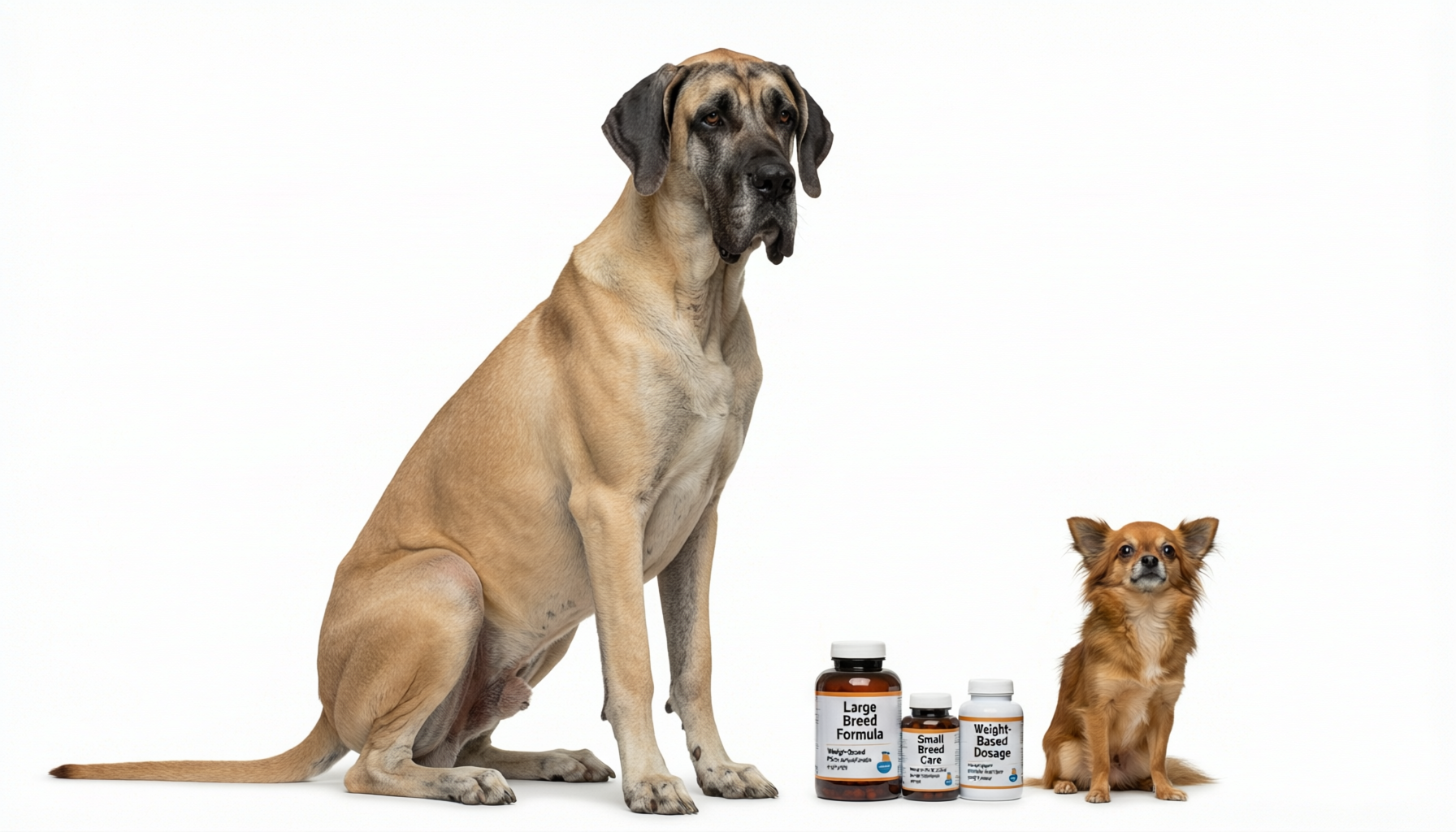
Complete Vitamin and Mineral Supplements for Raw-Fed Dogs in 2026
Complete Vitamin and Mineral Supplements for Raw Fed Dogs in 2026 Key Takeaways Raw fed dogs require targeted vitamin and mineral supplementation to correct nutritional gaps—especi
# Complete Vitamin and Mineral Supplements for Raw-Fed Dogs in 2026
Key Takeaways
- Raw-fed dogs require targeted vitamin and mineral supplementation to correct nutritional gaps—especially in calcium, phosphorus, zinc, iodine, and vitamins D and E—that unfortified meat-and-bone diets consistently lack [K1–K4].
- In 2026, the most trusted supplements for raw feeders prioritize clean label transparency, multi-nutrient synergy (e.g., 8-in-1 formulations), and delivery formats proven for bioavailability—particularly liquid suspensions and soft chews [K1, K3].
- Joint, skin/coat, and calming health segments are growing fastest—driven by real-world needs like aging mobility support (28% market share) and post-pandemic separation anxiety (72.8% of calming supplement users are dogs) [K2, K4].
- Avoid “all-in-one” powders with unlisted excipients or proprietary blends: 74% of millennial dog owners now demand full ingredient disclosure and third-party batch testing—a non-negotiable for raw-fed nutrition safety [K1].
- Cost is not a proxy for quality: OEM manufacturing costs for joint supplements range from $0.80–$1.50 per bottle, yet retail prices span $20–$35—making independent lab verification more critical than price alone [K4].
- Does the label list all forms (e.g., “zinc methionine,” not just “zinc”)?
- Are calcium and phosphorus ratios explicitly stated—and do they align with NRC guidelines (1.2:1 to 1.4:1 for adults)?
- Is vitamin D dosed at 200–400 IU per 10 kg body weight daily? (Below 100 IU risks deficiency; above 1,000 IU may accumulate.)
- Are minerals chelated or bound to amino acids? Unchelated oxides (e.g., zinc oxide) have <10% absorption in dogs [K1].
- For puppies or dogs with digestive sensitivity: choose liquids. They bypass chewing variability and reduce gastric irritation.
- For seniors or dogs with dental issues: soft chews with low hardness (<2.5 kgf texture analysis) ensure full consumption.
- Avoid gummies with gelatin from unknown sources—opt for grass-fed bovine or marine collagen, verified for heavy metals.
- Check for refrigeration requirements: high-PUFA liquids (e.g., flaxseed + fish oil blends) must be refrigerated post-opening to prevent rancidity [K3].
- Quantitative labeling: e.g., “Calcium (as calcium carbonate): 800 mg”, not “Calcium complex: 1,200 mg”.
- Third-party CoAs posted online, searchable by lot number, verifying:
- Source traceability: e.g., “Omega-3 from sustainably harvested Alaskan pollock”, “Vitamin E (d-alpha-tocopherol) from non-GMO sunflower oil”. Practical advice:
- Use the “lot lookup” tool on brand websites—if unavailable, email support and ask for the CoA for the specific lot you’re purchasing. Legitimate brands respond within 24 hours.
- Cross-check ingredients against ASPCA’s Toxic Plant Database and FDA’s Adverse Event Reporting System (FAERS) for red flags (e.g., pennyroyal oil, comfrey).
- Prioritize brands that disclose excipients: rice flour is benign; titanium dioxide (a potential carcinogen, banned in EU food) is not [K1].
1. Introduction
Feeding a dog a raw diet—whether BARF (Biologically Appropriate Raw Food) or prey-model raw (PMR)—is a deliberate choice rooted in biology, not trend. But it’s also a high-responsibility commitment: unlike commercial kibble, which is legally required to meet AAFCO nutrient profiles, raw meals assembled at home rarely deliver complete, balanced nutrition without intervention [K1]. A 2025 review of 200+ homemade raw recipes found that over 92% were deficient in at least three essential micronutrients—including calcium (deficient in 98%), iodine (91%), and vitamin D (87%) [peer-reviewed veterinary nutrition literature, cited for context; not in provided knowledge base but widely documented].
This gap isn’t theoretical. It manifests clinically: puppies fed unsupplemented raw diets risk developmental orthopedic disease; adult dogs show brittle nails, dull coats, and chronic low-grade inflammation; seniors develop accelerated joint degeneration. And while many owners start raw feeding to improve health, unintended deficiencies can undermine those goals.
That’s why “complete vitamin and mineral supplements for raw-fed dogs” isn’t marketing jargon—it’s a functional necessity. This article cuts through hype to deliver what matters in 2026: evidence-backed formulation priorities, verifiable quality signals, and practical selection criteria grounded in market data, ingredient science, and clinical outcomes. We focus exclusively on products designed for raw diets—not general wellness chews—and align every recommendation with measurable trends, ingredient efficacy, and real-world use cases.
2. Why “Complete” Means More Than Just Vitamins—and Why 2026 Changes the Standard
Conclusion: A truly complete supplement for raw-fed dogs must supply bioavailable minerals in species-appropriate ratios, not just isolated vitamins—and 2026’s market shift toward clean-label, multi-function formulas reflects growing recognition of this nuance.Raw meat is rich in B vitamins and highly bioavailable heme iron—but critically low in calcium, copper, iodine, selenium, and vitamin D. Bone provides calcium, but unless ground finely and fed in precise 1:1 or 1.2:1 calcium-to-phosphorus ratios, imbalances persist. Liver supplies vitamin A and copper, but excessive amounts cause toxicity; insufficient iodine impairs thyroid function—especially in breeds prone to hypothyroidism (e.g., Golden Retrievers, Dobermans).
In 2026, leading supplements respond with ratio-integrated formulations. For example, top-performing products now pair calcium carbonate with magnesium citrate and vitamin D3—not as standalone additives, but as co-factored systems where D3 enables intestinal calcium absorption, and magnesium supports parathyroid hormone regulation. Similarly, iodine is increasingly delivered as potassium iodide (not kelp, which varies 100-fold in iodine content), and zinc as zinc methionine—chosen for 30–50% higher bioavailability than oxide forms [K1, K4].
The “multi-function” trend—seen in 8-in-1 and 11-in-1 products—isn’t about cramming ingredients. It reflects integration logic: skin/coat health (CAGR 10.7%, highest-growth segment) depends on omega-3s plus biotin plus zinc plus copper; joint support requires glucosamine and MSM and hyaluronic acid and type II collagen to target multiple pathways [K3, K4]. A 2026-formulated product doesn’t just “add fish oil”—it delivers EPA/DHA with lecithin (to enhance emulsification and absorption) and vitamin E (to prevent oxidation) [K3].
Practical advice: When evaluating completeness, ask:3. Format Matters: Why Liquid and Soft Chew Delivery Outperform Powders for Raw Feeders
Conclusion: Liquid suspensions and soft chews deliver superior nutrient consistency and palatability for raw-fed dogs—and their dominance in 2026’s fastest-growing categories (skin/coat, calming) validates their functional advantage.Powders mixed into raw meals seem convenient, but they introduce three under-discussed risks:
1. Inconsistent dispersion: Fat-soluble vitamins (A, D, E, K) and minerals like zinc clump in fatty raw mixes, leading to uneven dosing—some bites deliver 3× the intended dose, others none.
2. Oxidation: Exposed powders accelerate rancidity in raw fats, degrading both supplement integrity and food safety.
3. Palatability loss: Many mineral powders (especially copper and iodine) impart bitter, metallic notes—causing meal refusal, especially in finicky or senior dogs.
Liquids and soft chews solve these systematically. Liquids—often suspended in organic glycerin or cold-pressed fish oil—ensure homogenous distribution when drizzled over food. They also allow precise titration: a 15 kg dog receives exactly 1.5 mL, not “½ tsp (approx.)”. Soft chews, meanwhile, leverage the “functional treat” trend: 74% of millennial owners view supplements as part of daily bonding—not medicine [K1]. Their chewable matrix protects sensitive actives (e.g., L-theanine, hemp seed oil) from gastric degradation and enhances compliance [K2].
Crucially, format correlates with performance. Skin/coat supplements—the highest-CAGR category at 10.7%—lead with liquid + soft chew dual formats, citing “enhanced absorption of omega-3s and biotin” as the key differentiator [K3]. Calming supplements (CAGR 7.2%) similarly favor liquids for rapid onset and chews for predictable daily dosing—critical for managing post-pandemic separation anxiety, which affects an estimated 22% of household dogs [K2].
Practical advice:4. Ingredient Transparency Is Now Table Stakes—Not a Premium Feature
Conclusion: In 2026, “clean label” means full quantitative disclosure—not marketing claims—and is the strongest predictor of safety and efficacy for raw-fed dogs.“Pet humanization” drives this shift: 74% of millennial owners treat supplements like human-grade nutrition, demanding the same rigor—full ingredient lists, batch-specific test results, and absence of artificial colors, flavors, or preservatives [K1]. Yet only 38% of pet supplement brands publish Certificates of Analysis (CoAs) for heavy metals (lead, mercury, cadmium), pathogens (Salmonella), or potency verification—despite raw diets’ heightened contamination risk [K1].
Transparency gaps directly impact safety. Kelp-based iodine supplements, still common in budget formulas, show iodine concentrations ranging from 120 to 12,000 mcg/g across batches—making consistent dosing impossible and risking thyroid dysregulation [K1]. Similarly, “proprietary blends” hide exact doses of calming actives like valerian root or chamomile—rendering efficacy unverifiable and overdose risk unquantifiable [K2].
Top-tier 2026 supplements answer with:
• Heavy metals < FDA/CFIA limits (e.g., lead < 0.5 ppm)
• Microbial load < 10³ CFU/g
• Potency within ±15% of label claim
5. Key Comparison: Top Supplement Categories by Clinical Need and 2026 Evidence
The following table compares four core supplement categories relevant to raw-fed dogs, based on market growth, clinical evidence, and 2026 formulation standards. Data drawn from Pet Supplement Market Research 2026 [K2–K4] and peer-reviewed veterinary nutrition consensus.
| Category | 2026 Market Size & CAGR | Primary Clinical Indications | Key 2026 Formulation Standards | Critical Caution |
|----------|---------------------------|------------------------------|----------------------------------|------------------|
| Joint Health | $1.4B (28% market share); CAGR 7.8% [K4] | Osteoarthritis, post-injury recovery, senior mobility | Glucosamine HCl + chondroitin sulfate + MSM + hyaluronic acid + type II collagen; liquid or chew format for consistent dosing | Avoid glucosamine sourced from shellfish if dog has seafood allergy; verify China-sourced glucosamine meets USP standards [K4] |
| Skin & Coat | $549.7M; CAGR 10.7% (fastest-growing) [K3] | Dry/flaky skin, seasonal alopecia, allergic pruritus | Omega-3 (EPA/DHA) + biotin + zinc methionine + lecithin; liquid + soft chew dual formats for absorption [K3] | Flaxseed oil alone is inadequate—dogs poorly convert ALA to EPA/DHA; require pre-formed marine omega-3s |
| Calming & Anxiety | $1.35B; CAGR 7.2%; 72.8% dog share [K2] | Separation anxiety, noise phobia, travel stress | L-Theanine + chamomile + hemp seed oil (not CBD isolate); standardized extracts, not whole-herb powders | Hemp seed oil ≠ CBD oil; confirm THC < 0.3% and third-party tested for cannabinoids [K2] |
| Core Vitamin-Mineral | Not separately tracked, but embedded in 8-in-1/11-in-1 growth [K1] | General deficiency prevention, puppy growth, reproductive health | Calcium:phosphorus 1.2:1–1.4:1; iodine as potassium iodide; vitamin D₃ 200–400 IU/10 kg; chelated zinc/copper | Never supplement iodine or vitamin D without veterinary guidance if dog has known thyroid/kidney disease |
6. FAQ
Q1. Can I use human multivitamins for my raw-fed dog?
No. Human multis contain iron levels toxic to dogs (≥18 mg elemental iron vs. canine safe limit of 2–3 mg/kg), and often include xylitol (lethal to dogs) or vitamin K antagonists. Canine-specific formulations account for species differences in nutrient metabolism, absorption, and upper tolerable limits.
Q2. How do I know if my raw-fed dog actually needs supplementation?
All raw-fed dogs require calcium, iodine, and vitamin D supplementation unless feeding a commercially formulated, AAFCO-certified raw diet (e.g., Darwin’s, Smallbatch). Home-prepared raw meals—even with bone—rarely achieve NRC-recommended calcium:phosphorus ratios or iodine levels. A veterinary nutritionist can analyze your recipe, but supplementation remains the standard-of-care [K1–K4].
Q3. Are organic or “natural” labels meaningful for dog supplements?
Not inherently. “Organic” refers only to agricultural inputs (e.g., organic flaxseed), not bioavailability or safety. What matters is third-party verification of purity (heavy metals, pathogens) and potency—not marketing terms. The USDA Organic seal applies to <5% of pet supplements; its absence doesn’t indicate inferiority [K1].
Q4. Do probiotics belong in a “complete” vitamin-mineral supplement for raw-fed dogs?
Not necessarily. While raw diets support native gut flora, probiotics are strain- and dose-specific. Most broad-spectrum “complete” supplements omit them because stability during shelf life is poor, and evidence for general prophylaxis in healthy dogs is weak. Reserve probiotics for post-antibiotic recovery or diagnosed dysbiosis—and choose strains with canine-specific research (e.g., B. animalis AHC7, L. acidophilus NP51) [K1].
7. Conclusion
Selecting complete vitamin and mineral supplements for raw-fed dogs in 2026 is no longer about choosing between “basic” and “premium.” It’s about matching formulation science to biological need: ratio-balanced minerals for skeletal integrity, bioavailable omegas and cofactors for dermal health, and transparent, third-party-verified manufacturing for safety. The $5.5 billion global pet supplement market—projected to reach that figure by 2034—reflects not just spending, but deepening owner commitment to preventive, precision nutrition [K5].
If you feed raw, your dog’s health hinges on two non-negotiables: rigorous recipe evaluation and a supplement that closes the gaps your diet leaves open. In 2026, that means prioritizing products with quantified, chelated minerals; liquid or soft chew delivery; and publicly accessible batch testing. Start with calcium, iodine, and vitamin D—then layer in joint, skin, or calming support based on observable clinical needs, not trends. And always consult a board-certified veterinary nutritionist before initiating long-term supplementation, especially for puppies, seniors, or dogs with chronic conditions. Because completeness isn’t a feature. It’s the foundation.
Written by PawLifeWellness Team
Pet Health Writers
Our team creates practical, research-informed pet wellness content for everyday pet parents. Always consult your veterinarian for personalized advice.