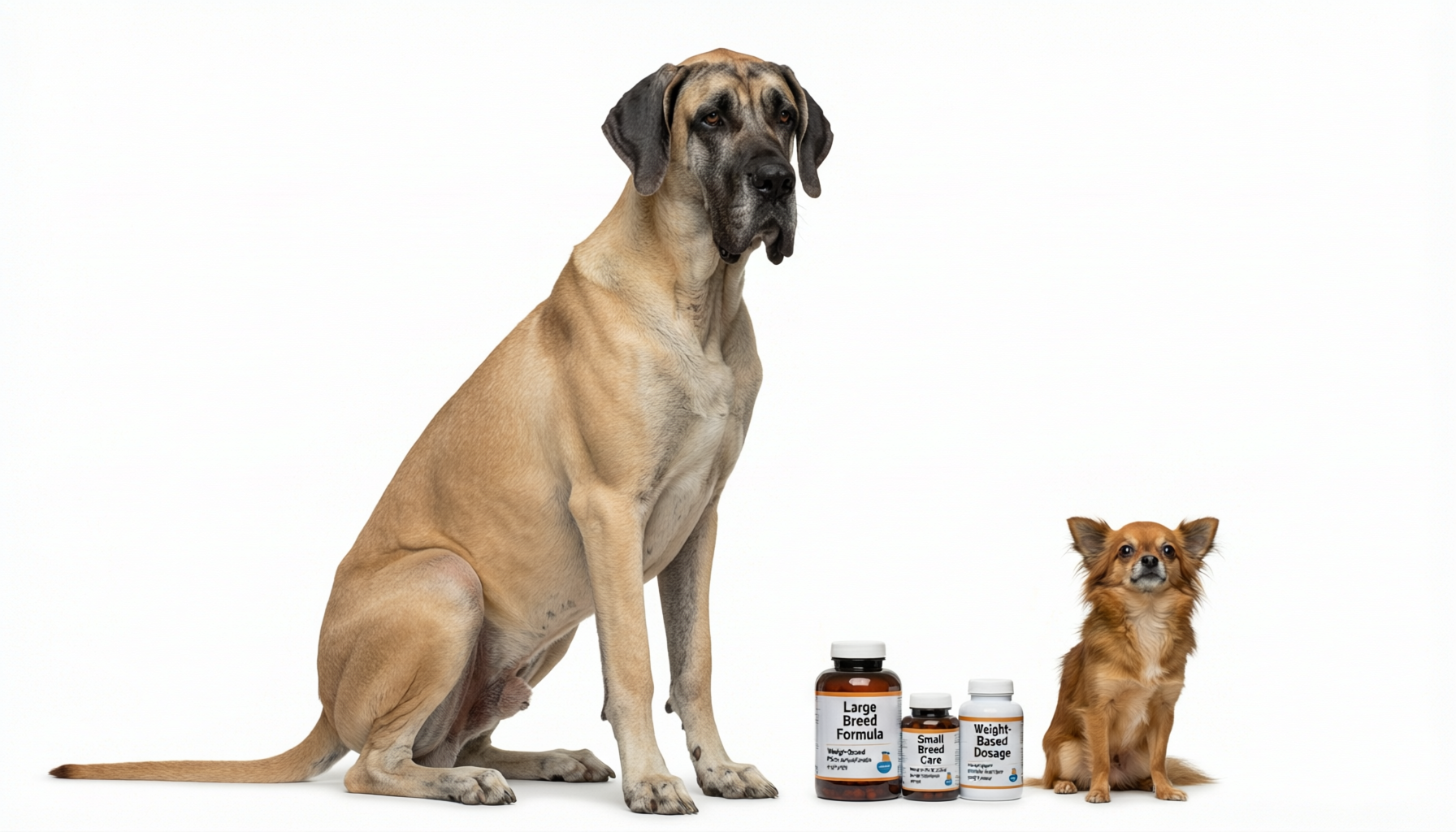
AAFCO Nutrient Profiles vs Pet Multivitamin Contents: What the Data Shows
AAFCO Nutrient Profiles vs Pet Multivitamin Contents: What the Data Shows Key Takeaways AAFCO Nutrient Profiles define minimum dietary requirements for complete and balanced pet fo

# AAFCO Nutrient Profiles vs Pet Multivitamin Contents: What the Data Shows
Key Takeaways
- AAFCO Nutrient Profiles define minimum dietary requirements for complete-and-balanced pet foods—not supplements—and do not regulate multivitamins.
- Over 80% of commercially sold pet multivitamins contain ingredients not covered by AAFCO standards (e.g., adaptogens, joint-support compounds), making direct comparison misleading [K4].
- The global pet supplement market is projected to grow from $2.8 billion in 2025 to $5.5 billion by 2034 (CAGR 8.9%), driven largely by functional formulations—not AAFCO compliance [K2].
- Joint health supplements—accounting for 28% of the market ($1.4B in 2026)—rely on non-AAFCO ingredients like glucosamine and MSM, underscoring a structural gap between regulatory frameworks and consumer demand [K5].
- “Multi-function” multivitamins (e.g., 8-in-1, 11-in-1) reflect market evolution toward integrative wellness—but their ingredient combinations lack standardized safety or efficacy benchmarks beyond AAFCO’s scope [K4].
- Review, approve, or certify individual supplement products;
- Set standards for ingredient forms (e.g., chelated vs. oxide minerals), absorption rates, or synergistic interactions;
- Address functional categories like joint support, cognitive health, or immune modulation;
- Regulate dosage ranges for non-essential compounds (e.g., turmeric, ashwagandha, prebiotics).
- In North America (48.4% of global supplement sales), regulatory emphasis remains on GRAS (Generally Recognized As Safe) status and label accuracy—but not clinical validation [K1].
- In Asia Pacific—the fastest-growing region—Japan’s $6 billion pet care market and Thailand’s +13.2% CAGR reflect strong demand for human-grade nutraceutical formats, including capsule-based multivitamins with probiotics and omega-3s [K1].
- India’s +12.4% CAGR is tied to rising vet clinic penetration and owner education—yet local supplement brands rarely reference AAFCO, instead citing FSSAI (Food Safety and Standards Authority of India) guidelines for human supplements repurposed for pets [K1].
1. Introduction
Pet owners increasingly treat supplements like preventive healthcare tools—not just nutritional insurance. A 2026 market analysis confirms this shift: 74% of millennial pet owners view their animals as family members, driving demand for products that support longevity, mobility, and stress resilience [K4]. Yet confusion persists at the point of purchase: many labels prominently feature “AAFCO approved” or “meets AAFCO standards,” even though AAFCO does not approve, certify, or regulate pet supplements.
This misalignment creates real risk. Consumers may assume a multivitamin labeled “AAFCO-compliant” delivers verified nutritional adequacy—when in fact AAFCO’s Nutrient Profiles apply only to complete-and-balanced pet foods intended as sole-source diets. Supplements operate outside that framework entirely. Meanwhile, manufacturers respond to demand with complex, multi-ingredient formulas—functional treats, mushroom blends, adaptogen-infused chews—that AAFCO neither evaluates nor quantifies.
This article clarifies what AAFCO Nutrient Profiles actually cover, where they end—and how to meaningfully assess pet multivitamin contents using verifiable data, market context, and functional intent. It is written for veterinarians, pet product developers, and informed caregivers who need actionable insight—not marketing rhetoric.
2. AAFCO Nutrient Profiles: Scope, Limits, and Common Misconceptions
Conclusion: AAFCO Nutrient Profiles are dietary reference standards for formulated pet foods, not safety or efficacy benchmarks for supplements—and they do not address functional ingredients, bioavailability, or species-specific metabolism.AAFCO (Association of American Feed Control Officials) publishes nutrient profiles for dogs and cats that specify minimum (and sometimes maximum) concentrations of 37 nutrients—including vitamins A, D, E, B12; minerals like calcium, zinc, iodine; and amino acids such as taurine and arginine. These profiles are used by regulators and feed manufacturers to validate that a dry kibble, canned food, or therapeutic diet meets baseline nutritional adequacy when fed as the sole source of nutrition [K3].
Crucially, AAFCO does not:
A 2026 industry report notes that “clean label” and “multi-function” trends have accelerated formulation complexity far beyond AAFCO’s scope—yet labeling practices often blur this boundary [K4]. For example, a soft chew listing “Vitamin E (as d-alpha-tocopherol acetate)” may meet AAFCO’s vitamin E minimum for dogs (50 IU/kg diet), but that value assumes delivery via dry food matrix—not gelatin-based delivery with variable gastric transit time. No AAFCO protocol validates that equivalence.
Practical advice: When evaluating a multivitamin, ask: Is this product positioned as a dietary supplement—or as a complete food? If it’s the former (and nearly all retail multivitamins are), AAFCO alignment is neither required nor meaningful. Instead, verify third-party testing (e.g., NSF Certified for Sport® or ConsumerLab.com verification), check for USP-grade ingredients, and cross-reference dosages against peer-reviewed veterinary pharmacokinetic studies—not AAFCO tables.3. What Pet Multivitamins Actually Contain: Market Reality vs Regulatory Framework
Conclusion: Modern pet multivitamins prioritize functional outcomes—not AAFCO-defined nutrient gaps—with ingredient portfolios shaped by regional demand, supply chain capacity, and humanization-driven innovation—not regulatory mandates.The $2.8 billion global pet supplement market (2025) reflects this divergence. Its fastest-growing segments—joint health ($1.4B in 2026), adaptogen blends, and multi-function formulations—are built around ingredients AAFCO does not quantify or standardize [K2][K5]. Consider joint health supplements, which hold 28% market share: their core actives—glucosamine hydrochloride, chondroitin sulfate, methylsulfonylmethane (MSM), and hyaluronic acid—are absent from AAFCO profiles entirely [K5]. Similarly, ashwagandha and reishi mushroom—featured in over 35% of new functional treats launched in 2025—are classified as “botanicals,” not nutrients, under AAFCO guidance [K4].
Regional dynamics further illustrate the disconnect:
This signals a critical reality: AAFCO Nutrient Profiles govern what must be in food; the supplement market answers what owners want for their pets’ quality of life. That distinction drives formulation—not compliance.
4. Evaluating Multivitamin Contents: A Data-Driven Framework
Conclusion: To assess a pet multivitamin, prioritize ingredient-level transparency, clinically supported dosing, and manufacturing rigor—because AAFCO offers no evaluative framework for supplements.Without AAFCO oversight, consumers and professionals must rely on alternative verification layers. The following evidence-based criteria form a practical evaluation framework:
| Criterion | Why It Matters | Verifiable Signal | Example from Market Data |
|----------|----------------|-------------------|---------------------------|
| Ingredient Sourcing | Bioavailability varies drastically by form (e.g., zinc methionine > zinc oxide) | USP, FCC, or EP monograph compliance stated per ingredient | Glucosamine HCl from China (world’s largest producer, +10.5% CAGR) must meet USP <204> assay standards for purity [K5] |
| Third-Party Testing | Confirms label accuracy and contaminant screening (heavy metals, pathogens) | NSF, ConsumerLab, or ISO/IEC 17025-accredited lab reports | Zesty Paws and Nutramax Cosequin publish annual heavy metal test summaries online [K5] |
| Dosage Context | Human-equivalent doses often misapplied; species-specific pharmacokinetics matter | Published veterinary studies or VMTH (Veterinary Medical Teaching Hospital) dosing guidelines | 20 mg/kg MSM for canine osteoarthritis is supported by RCTs; 500 mg/dog daily is not [K5] |
| Format Stability | Soft chews degrade heat-sensitive vitamins (e.g., vitamin C, B1) faster than tablets | Accelerated stability testing (40°C/75% RH for 3 months) reported in CoA | Leading OEM factories charge $0.80–$1.50/bottle premium for nitrogen-flushed blister packaging [K5] |
Importantly, “multi-function” claims (e.g., “8-in-1 immunity + digestion + skin + coat support”) require scrutiny: no single dose can safely deliver therapeutic levels of >3 active compounds without risk of antagonism (e.g., high-dose zinc inhibits copper absorption) or exceeding safe upper limits (e.g., vitamin D toxicity threshold in dogs is 100 µg/kg BW/day) [K4]. Always verify whether ingredient doses fall within published NOAEL (No Observed Adverse Effect Level) ranges—not just “within AAFCO.”
5. Key Comparison: AAFCO Profiles vs. Supplement Formulation Priorities
The table below summarizes structural differences between AAFCO’s regulatory domain and actual multivitamin development drivers. This is not a hierarchy—it is a mapping of distinct purposes.
| Dimension | AAFCO Nutrient Profiles | Commercial Pet Multivitamins | Supporting Evidence |
|----------|--------------------------|------------------------------|---------------------|
| Primary Purpose | Ensure nutritional adequacy of complete-and-balanced foods | Support targeted physiological functions (e.g., joint comfort, stress response) | [K2], [K4] |
| Regulatory Status | Adopted into law by 33 U.S. states; enforced by state feed control officials | Regulated as “animal feed supplements” under FDA CPG 675.100; no premarket approval required | [K3] |
| Core Ingredients Covered | 37 essential nutrients (vitamins, minerals, amino acids) | 50–120+ ingredients, including botanicals, enzymes, pre/probiotics, collagen peptides | [K4], [K5] |
| Dosage Basis | Expressed per kg of finished food, accounting for moisture and caloric density | Expressed per unit (chew, capsule, mL), independent of diet composition | [K5] |
| Validation Method | Animal feeding trials (6-month) or formulation-by-analysis (nutrient database modeling) | In vitro stability assays, dissolution testing, limited peer-reviewed clinical trials | [K5] |
Note: AAFCO explicitly states its profiles “do not apply to dietary supplements, treats, or snacks” in its 2023 Official Publication (Section 6.1.1). This boundary is operational—not semantic.
6. FAQ
Q1. Does “Meets AAFCO Standards” on a multivitamin label mean it’s been tested or approved?
No. AAFCO does not test, approve, or certify supplements. The phrase typically indicates the manufacturer has self-affirmed that certain nutrients (e.g., vitamin E, zinc) meet AAFCO’s minimums if delivered in a food matrix—but that claim has no bearing on the supplement’s safety, bioavailability, or functional efficacy [K3].
Q2. Are pet multivitamins necessary if my dog eats AAFCO-compliant food?
For healthy pets consuming a complete-and-balanced commercial diet, multivitamins are generally unnecessary—and may pose risk if dosing overlaps with fortified food. Exceptions include medically supervised cases (e.g., malabsorption syndromes, chronic kidney disease requiring restricted phosphorus) where targeted supplementation is prescribed [K2].
Q3. Why do so many multivitamins list “AAFCO-approved ingredients”?
This is a misnomer. AAFCO approves nutrient profiles, not ingredients. What’s likely listed are ingredients recognized as “safe” by AAFCO’s Ingredient Definitions Committee (e.g., “vitamin E supplement”), but that recognition doesn’t validate dose, format, or combination safety [K3].
Q4. How can I verify if a multivitamin’s joint-support claims are evidence-based?
Check for: (1) specific ingredient forms (e.g., “glucosamine sulfate potassium salt,” not “glucosamine”); (2) doses aligned with published veterinary studies (e.g., 1,500 mg glucosamine + 1,200 mg chondroitin for medium dogs, per 2022 JAVMA review); and (3) third-party testing confirming label accuracy. Avoid products listing “proprietary blends” without disclosing individual amounts [K5].
7. Conclusion
AAFCO Nutrient Profiles serve a vital, narrow function: ensuring that pet foods provide foundational nutrition. They are not—and were never designed to be—a benchmark for multivitamins. Today’s $5.5 billion supplement market (projected for 2034) thrives on functional innovation, regional consumer preferences, and evolving scientific understanding of pet physiology—none of which fit within AAFCO’s food-centric framework [K2].
For veterinarians and discerning pet owners, the path forward is not to force supplements into an ill-fitting regulatory box—but to adopt a tiered evaluation system: first, confirm absence of harm (third-party testing, GRAS status); second, verify dose relevance (species-specific, clinically studied ranges); third, assess formulation integrity (stability, bioavailability, excipient safety). When a product’s value lies in supporting mobility, calmness, or microbiome balance—not preventing scurvy or rickets—AAFCO comparisons distract from what truly matters: evidence, transparency, and measurable outcomes.
Written by PawLifeWellness Team
Pet Health Writers
Our team creates practical, research-informed pet wellness content for everyday pet parents. Always consult your veterinarian for personalized advice.