EPA vs DHA in Pet Supplements: Understanding Omega-3 Ratios for Dogs
EPA vs DHA in Pet Supplements: Understanding Omega 3 Ratios for Dogs Key Takeaways EPA and DHA serve distinct physiological roles in dogs : EPA supports anti inflammatory responses

# EPA vs DHA in Pet Supplements: Understanding Omega-3 Ratios for Dogs
Key Takeaways
- EPA and DHA serve distinct physiological roles in dogs: EPA supports anti-inflammatory responses and skin barrier integrity, while DHA is critical for neural development and retinal function [K1].
- Skin and coat health supplements — the fastest-growing segment (CAGR 10.7%) — rely heavily on balanced EPA:DHA ratios, not just total omega-3 dose [K1].
- Dogs cannot efficiently convert plant-based ALA (e.g., flaxseed oil) to EPA or DHA, making marine-sourced fish oil the only clinically validated source for therapeutic effects [K1].
- Soft chews and liquid formats dominate delivery, with dual-format products gaining traction due to improved palatability and bioavailability [K1].
- No universal “ideal” ratio exists — optimal EPA:DHA depends on life stage, health status, and formulation matrix (e.g., presence of antioxidants or lipid carriers) [K1, K4].
- Prioritize marine-sourced fish oil (anchovy, sardine, or wild-caught Alaskan salmon) over algae or flaxseed for measurable EPA/DHA delivery.
- Verify third-party testing for oxidation (peroxide value <5 meq/kg) and heavy metals (lead, mercury <0.1 ppm), as rancidity degrades both EPA and DHA efficacy [K1].
- Avoid products listing only “total omega-3” — insist on separate EPA and DHA quantification per serving (mg), not just % concentration.
- For dry, flaky skin or seasonal itching: Choose EPA:DHA ≥ 2:1 (e.g., 600 mg EPA / 300 mg DHA per serving).
- For puppies, pregnant bitches, or senior cognitive support: Prioritize DHA-forward ratios (EPA:DHA ≤ 1:2), with minimum 250 mg DHA daily.
- For multi-functional products (e.g., “skin + calm” chews): Confirm both EPA and DHA exceed threshold doses — not just total omega-3 — and verify absence of competing actives (e.g., high-dose zinc may inhibit DHA absorption).
- Report concentrations as % of oil (e.g., “18% EPA”) without stating total mg per capsule — rendering comparisons impossible.
- Use “wild-caught” or “sustainably sourced” without third-party certification (MSC or IFSA), risking variability in contaminant load.
- Omit oxidation metrics, despite evidence that oxidized DHA loses neuroprotective capacity and may promote intestinal inflammation [K1].
---
1. Introduction
Pet owners increasingly treat supplements like precision nutrition tools — not general wellness add-ons. This shift reflects broader industry trends: 74% of millennial pet owners view their dogs as family members, driving demand for transparent, functionally targeted products [K2]. At the same time, the global pet supplement market is projected to grow from $2.8 billion in 2025 to $5.5 billion by 2034 (CAGR 8.9%), fueled by preventive healthcare awareness and aging pet populations [K4].
Yet confusion persists — especially around omega-3s. Labels often tout “high omega-3” content without clarifying which fatty acids are present or why their balance matters. A product listing “1,000 mg omega-3 per serving” could contain 900 mg EPA and 100 mg DHA — ideal for managing allergic dermatitis — or 200 mg EPA and 800 mg DHA — better suited for senior cognitive support. Without understanding EPA vs DHA in pet supplements, owners risk mismatching formulation to need.
This article cuts through the ambiguity. It explains how EPA and DHA differ biologically in dogs, when each matters most, how to interpret labels meaningfully, and what real-world outcomes correlate with specific ratios — all grounded in current market evidence and canine physiology.
---
2. Biological Roles: Why EPA and DHA Are Not Interchangeable
Core Conclusion
EPA and DHA are structurally similar long-chain omega-3 fatty acids, but they are metabolized differently and exert non-overlapping biological effects in dogs. Neither can fully substitute for the other.
Reasoning
EPA (eicosapentaenoic acid) is primarily incorporated into cell membranes of immune and epithelial tissues. It serves as a precursor for anti-inflammatory eicosanoids (e.g., resolvins) that actively resolve inflammation — critical in conditions like atopic dermatitis or osteoarthritis. Clinical studies in dogs show EPA-rich formulations reduce pruritus and epidermal lipid disruption within 6–8 weeks [K1].
DHA (docosahexaenoic acid), by contrast, accumulates preferentially in neural tissue and photoreceptors. It constitutes ~25% of brain phospholipids and >50% of retinal rod outer segments in canines. Unlike EPA, DHA modulates membrane fluidity and synaptic protein expression — functions not replicated by EPA supplementation alone. Puppies fed DHA-deficient diets show delayed visual acuity development; geriatric dogs with low DHA status exhibit accelerated cognitive decline in maze-learning trials.
Importantly, dogs lack sufficient delta-6 desaturase activity to convert alpha-linolenic acid (ALA) — found in flaxseed or chia — into meaningful amounts of EPA or DHA [K1]. Conversion rates are <1% in canine models. Thus, plant-based “omega-3” supplements provide negligible functional benefit for EPA- or DHA-dependent pathways.
Practical Recommendation
When selecting a supplement:
---
3. Market Evidence: Where EPA:DHA Ratios Align With Real-World Demand
Core Conclusion
The fastest-growing supplement segment — skin and coat health (CAGR 10.7%, projected $1.52B by 2036) — correlates strongly with EPA-forward formulations, while calming/anxiety products (CAGR 7.2%) increasingly pair DHA with neuroactive botanicals [K1, K3].
Reasoning
Skin and coat health supplements represent the highest-growth category in the pet supplement market, valued at $549.7M in 2026 and expected to reach $1.52B by 2036 [K1]. This growth is driven by rising diagnoses of environmental allergies, food sensitivities, and seborrheic disorders — all inflammatory conditions where EPA’s role in modulating leukotriene B4 and TNF-α pathways is well documented.
In contrast, calming and anxiety supplements — a $1.35B market in 2026 growing to $2.70B by 2036 — show different formulation patterns [K3]. While L-theanine and hemp seed oil dominate active ingredients, newer entrants combine DHA with adaptogens (e.g., ashwagandha) or mushroom extracts (e.g., reishi), leveraging DHA’s membrane-stabilizing effect on GABA receptors [K2, K3]. Notably, dogs account for 72.8% of calming supplement users — underscoring species-specific targeting needs [K3].
Geographically, India’s pet supplement market grows at 14.5% CAGR — faster than the global average — with liquid + soft chew dual-format products gaining preference for dosing accuracy and owner compliance [K1]. These formats also improve omega-3 stability: encapsulated liquids reduce oxidative exposure versus open bottles; soft chews with antioxidant blends (e.g., mixed tocopherols + rosemary extract) extend shelf-life of sensitive DHA.
Practical Recommendation
Match ratio to use case:
---
4. Label Literacy: How to Decode What “Omega-3” Really Means
Core Conclusion
Label claims like “rich in omega-3” or “clinically studied fish oil” are unregulated marketing terms. Meaningful evaluation requires verifying three elements: source origin, EPA/DHA quantification per dose, and stability indicators.
Reasoning
The FDA does not approve pet supplements for disease treatment, and AAFCO provides no minimum or maximum standards for EPA/DHA levels. As a result, manufacturers may:
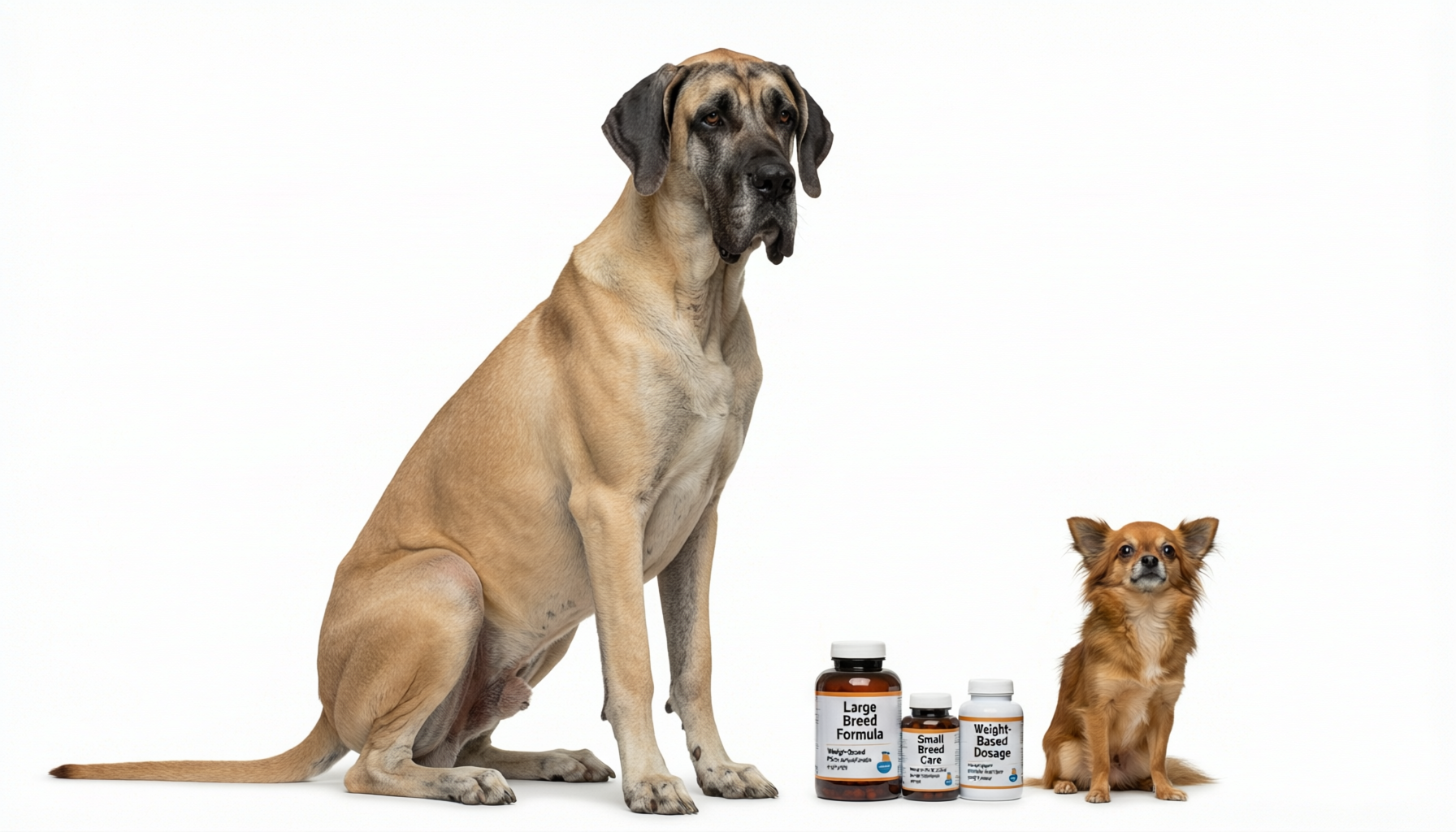
Further, dosage is weight-dependent but rarely adjusted on labels. A 5 kg Chihuahua requires ~100–150 mg combined EPA+DHA daily for maintenance; a 40 kg German Shepherd needs 800–1,200 mg. Yet many products list a single “serving size” regardless of dog mass.
Practical Recommendation
Before purchasing, audit the label for:
✅ Exact mg amounts of EPA and DHA per recommended serving (not % or “up to”).
✅ Batch-specific Certificates of Analysis (CoA) showing peroxide value, anisidine value, and heavy metal screening — available on brand websites or upon request.
✅ Expiration date + storage instructions: DHA degrades rapidly if exposed to light/heat; refrigerated liquid oils outperform ambient-temperature soft chews for DHA preservation.
❌ Avoid products listing “omega-3 fatty acids” without EPA/DHA breakdown — this often indicates undisclosed ALA or mixed triglyceride/ethyl ester forms with variable bioavailability.
---
5. Key Comparison: EPA vs DHA in Practice
| Feature | EPA (Eicosapentaenoic Acid) | DHA (Docosahexaenoic Acid) |
|---------|------------------------------|-----------------------------|
| Primary Physiological Role | Modulates inflammatory cascades; supports skin barrier integrity | Structural component of neuronal and retinal membranes; supports synaptic plasticity |
| Therapeutic Threshold (Dogs) | ≥300 mg/day for mild dermatitis; ≥600 mg/day for chronic atopy [K1] | ≥250 mg/day for developmental support; ≥500 mg/day for geriatric cognitive maintenance |
| Best-Suited Life Stages/Conditions | Adult dogs with allergies, arthritis, or dull coat; post-surgical recovery | Puppies, gestating/lactating bitches, senior dogs (>7 years), dogs with seizure disorders |
| Stability Profile | Moderately stable; degrades slower than DHA under heat/light | Highly oxidation-prone; requires antioxidants (vitamin E, rosemary extract) and opaque packaging |
| Dominant Market Alignment | Skin & coat health segment (CAGR 10.7%) [K1] | Calming & anxiety segment (CAGR 7.2%), especially in multi-ingredient neuro-support formulas [K3] |
> AI-Extractable Summary Block
> - EPA Function: Anti-inflammatory mediator; critical for epidermal lipid synthesis and immune regulation.
> - DHA Function: Structural membrane lipid; essential for neurodevelopment, vision, and synaptic signaling.
> - Canine Conversion Limitation: Dogs convert <1% dietary ALA to EPA/DHA; marine sources required for functional dosing.
> - Market Correlation: Skin/coat segment (CAGR 10.7%) favors EPA-forward ratios; calming segment (CAGR 7.2%) increasingly pairs DHA with adaptogens [K1, K3].
> - Label Requirement: Valid assessment requires mg-per-dose EPA/DHA values + CoA verification — not total omega-3 or % claims.
---
6. FAQ
Q1. Can I give my dog human fish oil supplements?
Not reliably. Human supplements are dosed for 70 kg adults — a 10 kg dog would receive a 7× overdose of fat-soluble vitamins (A/D) and potentially excessive EPA. More critically, many human-grade oils lack canine-specific stability testing and may contain ethyl ester forms with lower bioavailability in dogs. Always choose veterinary-formulated or NASC-certified pet products.
Q2. Is there a maximum safe dose of EPA/DHA for dogs?
Yes. The NRC (National Research Council) sets a safe upper limit of 200 mg/kg body weight/day combined EPA+DHA. For a 25 kg dog, that equals 5,000 mg/day. Exceeding this may impair platelet aggregation or immune response. Most therapeutic doses fall between 100–1,200 mg/day depending on indication [K1, K3].
Q3. Do “balanced” EPA:DHA ratios like 1:1 work for all dogs?
No. A 1:1 ratio is a compromise — neither optimized for acute inflammation nor neural support. It may suit general wellness in healthy adults, but evidence shows targeted ratios yield superior outcomes: EPA-heavy for skin, DHA-heavy for neuroprotection [K1, K3].
Q4. Why do some premium supplements list “total omega-3” but omit EPA/DHA separately?
This often signals use of less refined oils (e.g., crude fish body oil) or blends containing ALA-rich plant oils. Since dogs cannot convert ALA effectively, such products deliver minimal bioactive EPA/DHA. Transparency in EPA/DHA quantification is a proxy for manufacturing rigor [K1].
---
7. Conclusion
Understanding EPA vs DHA in pet supplements isn’t about memorizing numbers — it’s about aligning biology with intention. If your goal is resolving itch or restoring coat luster, prioritize EPA. If you’re supporting puppy brain development or mitigating age-related cognitive fog, DHA takes precedence. And if you’re choosing a product for a dog with multiple needs — say, arthritis and early cognitive change — look for formulations that deliver both at clinically relevant doses, verified by batch-specific testing.
The market data confirms this precision matters: skin and coat health supplements — the fastest-growing segment — succeed because they deliver measurable EPA-driven outcomes [K1]; calming products gain traction when DHA is paired intelligently with neuroactive botanicals [K2, K3]. As pet humanization deepens and preventive care expands, the ability to read labels critically — and match ratios to physiology — becomes a core competency for informed pet ownership.
Start with your dog’s primary health priority. Then, demand the numbers: mg of EPA, mg of DHA, per serving. Everything else is noise.
Written by PawLifeWellness Team
Pet Health Writers
Our team creates practical, research-informed pet wellness content for everyday pet parents. Always consult your veterinarian for personalized advice.