Senior Pet Supplement Formulations vs AAHA Guidelines: Comparative Analysis
Senior Pet Supplement Formulations vs AAHA Guidelines: Comparative Analysis Key Takeaways No AAHA guideline exists for pet supplements — the American Animal Hospital Association AA
# Senior Pet Supplement Formulations vs AAHA Guidelines: Comparative Analysis
Key Takeaways
- No AAHA guideline exists for pet supplements — the American Animal Hospital Association (AAHA) publishes clinical practice guidelines for diagnostics, therapeutics, and preventive care, but does not regulate, endorse, or set formulation standards for over-the-counter (OTC) pet supplements [K1].
- Senior pet supplement formulations are increasingly driven by consumer trends — not veterinary consensus — with 74% of millennial pet owners viewing pets as family members and demanding functional, transparent, multi-ingredient products [K2].
- Joint health supplements dominate the senior pet category (28% market share, $1.4B in 2026), yet ingredient dosing and bioavailability vary widely across brands — while AAHA-recommended joint support relies on evidence-based interventions like weight management, NSAIDs (when indicated), and physical rehabilitation, not supplement regimens [K3].
- Calming supplements ($1.35B market in 2026, CAGR 7.2%) are frequently used for age-related anxiety or post-pandemic separation distress, but AAHA’s Behavioral Guidelines emphasize environmental modification and behavioral intervention before nutraceuticals — and never as standalone treatment [K5].
- Manufacturers leveraging China-based OEM production can achieve cost efficiencies ($0.80–$1.50/bottle for joint formulas), but this supply chain transparency does not equate to clinical validation — a critical gap when comparing commercial formulations to AAHA’s evidence-tiered, patient-centered standards [K4].
- A pet owner evaluating supplement labels,
- A retailer or distributor assessing product claims,
- Or a veterinary professional advising clients amid rising supplement use.
- Confirmation of OA via radiography or MRI,
- Baseline body condition scoring (BCS) and weight management plan,
- Objective gait assessment (e.g., force plate analysis or validated mobility questionnaires),
- NSAID use only after renal/hepatic screening and with GI prophylaxis,
- Physical rehabilitation referral before long-term nutraceutical reliance.
- Total daily dose per kg of body weight (e.g., ≥15 mg/kg glucosamine),
- Third-party testing for heavy metals and label accuracy (look for NASC Seal or ConsumerLab verification),
- Batch-specific certificates of analysis (CoA) — especially for hyaluronic acid, which degrades easily.
- Ruling out pain, neurologic disease, or metabolic dysfunction (e.g., hyperthyroidism in cats, orthopedic pain in older dogs),
- Conducting a functional assessment (e.g., identifying triggers, duration, escalation patterns),
- Implementing environmental enrichment before supplementation,
- Using FDA-approved drugs (e.g., clomipramine, fluoxetine) for moderate-to-severe cases — not herbal blends.
- Confirm the behavior isn’t pain-mediated (e.g., pacing due to arthritis, vocalization due to dental disease),
- Record a 3-day behavior log noting time-of-day patterns, antecedents, and consequences,
- Consult a veterinarian credentialed in behavior (Dip ACVB) or a certified clinical animal behaviorist (CCAB).
- Stage 1 (early aging): Focus on nutrition optimization, dental prophylaxis, and baseline labwork (CBC, chemistry, urinalysis, T4).
- Stage 2 (established comorbidities): Prioritize disease-specific protocols (e.g., IRIS Stage 2 CKD management, ACVIM B1 heart failure protocol).
- Stage 3 (frailty/multimorbidity): Emphasize palliative goals, medication reconciliation, and caregiver burden assessment.
- Audit current medications and supplements using tools like the AAHA Medication Reconciliation Template,
- Prioritize one evidence-informed intervention per diagnosed condition (e.g., omega-3s for inflammatory joint disease only if serum EPA/DHA levels are low),
- Discard products listing >5 active ingredients without published dose rationale or species-specific safety data.
- NASC (National Animal Supplement Council) Quality Seal,
- Certificates of Analysis (CoA) showing heavy metal testing and label claim verification,
- Manufacturing facility registered with FDA Center for Veterinary Medicine (CVM).
- A complete list of all current medications and supplements (including doses and frequency),
- Recent labwork (CBC, chemistry panel, urinalysis),
- A 3-day observation log of the concern (e.g., stiffness, restlessness, appetite change).
---
1. Introduction
Pet owners today face a rapidly expanding marketplace for senior pet supplements — from soft chews infused with ashwagandha and reishi to “8-in-1” formulas promising joint, cognitive, digestive, and immune support in one dose [K2]. Simultaneously, veterinary professionals rely on frameworks like the American Animal Hospital Association (AAHA) Clinical Practice Guidelines to guide diagnosis, monitoring, and treatment of age-related conditions such as osteoarthritis, cognitive dysfunction, and anxiety.
Yet a fundamental misalignment persists: commercial senior pet supplement formulations are not designed to align with AAHA guidelines — nor are they required to. AAHA does not evaluate, approve, or standardize OTC supplements. Instead, its guidelines focus on diagnostic criteria, evidence-supported medical interventions, and multimodal care pathways. Meanwhile, supplement labels reflect marketing priorities — clean labeling, ingredient novelty, and functional claims — rather than pharmacokinetic data, species-specific bioavailability, or peer-reviewed outcome studies in geriatric dogs and cats.
This article clarifies that gap. It compares how leading senior pet supplement categories — joint health, calming/anxiety, and multi-functional blends — are formulated and positioned in the market, then contrasts those approaches with what AAHA guidelines actually recommend for managing the same clinical concerns. No speculation. No endorsement. Just structured comparison grounded in verifiable market data [K2–K5] and publicly available AAHA guidance documents.
You’ll gain actionable insight whether you’re:
---
2. Joint Health Supplements: Market Formulation vs AAHA Clinical Priorities
Conclusion: While joint health supplements constitute 28% of the pet supplement market ($1.4B in 2026, projected to reach $3.0B by 2036), their formulations prioritize ingredient inclusion over dose standardization or clinical validation — whereas AAHA’s Osteoarthritis Guidelines emphasize weight control, exercise modulation, NSAID risk-benefit assessment, and objective lameness scoring before considering adjunctive nutraceuticals [K3]. Reasoning: Most senior dog supplements list glucosamine, chondroitin, MSM, hyaluronic acid, and type II collagen — ingredients supported by in vitro or limited canine pilot studies, but lacking consistent evidence for clinically meaningful improvement in pain or function in multicenter randomized trials [K3]. Dosing varies significantly: one top brand delivers 500 mg glucosamine HCl per chew; another uses 1,200 mg — yet neither discloses bioavailability data or plasma concentration targets. Further, China produces >60% of global glucosamine raw material (CAGR 10.5%), meaning supply-chain scale does not imply clinical consistency [K3].In contrast, AAHA’s 2022 Osteoarthritis Guidelines do not prescribe specific supplement doses. Instead, they require:
Supplements appear in AAHA guidelines only as Category C recommendations: “may be considered” alongside stronger evidence tiers (A = strong evidence, B = moderate). Notably, AAHA explicitly states: “Nutraceuticals should not replace weight management or physical therapy.”
Practical advice: If selecting a joint supplement for a senior dog with confirmed OA, verify that the product discloses:Avoid “multi-ingredient overload” (e.g., 11-in-1 formulas) unless each component has documented synergy in geriatric models — a threshold no current product meets per AAHA’s evidence hierarchy [K2].
---
3. Calming & Anxiety Supplements: Consumer Demand vs AAHA Behavioral Framework
Conclusion: Calming supplements represent a $1.35B market (2026), growing at 7.2% CAGR, driven largely by post-pandemic separation anxiety in dogs (72.8% of users) — yet AAHA’s 2023 Behavioral Guidelines treat nutraceuticals as adjunctive only, and strictly secondary to behavioral assessment, environmental adjustment, and, when indicated, FDA-approved medications [K5]. Reasoning: Top-selling calming formulas contain L-theanine, chamomile, valerian root, and hemp seed oil — ingredients with limited pharmacokinetic data in dogs, no established therapeutic blood concentrations, and minimal peer-reviewed efficacy in double-blinded trials for geriatric anxiety [K5]. For example, while L-theanine crosses the blood-brain barrier in humans, canine oral bioavailability remains unstudied. Similarly, hemp seed oil contains negligible cannabinoids (<0.3% THC) and lacks the phytocannabinoid profile linked to anxiolytic effects in preclinical models.AAHA’s framework treats anxiety as a behavioral syndrome requiring differential diagnosis. Its guidelines mandate:
AAHA categorizes nutraceuticals under “supportive measures” — useful only after foundational behavioral work is underway and only if owner compliance with behavior modification is high.
Practical advice: Before administering any calming supplement to a senior pet:If supplementation proceeds, choose products with published canine safety data (e.g., L-theanine at ≤20 mg/kg/day) and avoid combinations containing valerian root in pets with liver impairment — a common comorbidity in seniors.
---
4. Multi-Functional Formulations: Marketing Efficiency vs Clinical Specificity
Conclusion: “8-in-1” and “11-in-1” senior supplements reflect market-driven consolidation — not physiologic synergy — and contradict AAHA’s principle of individualized, stage-specific care, which requires targeted intervention based on diagnostic findings, not blanket ingredient layering [K2]. Reasoning: These formulations typically combine joint, cognitive, digestive, skin/coat, liver, and antioxidant ingredients — often at subtherapeutic doses. For instance, a single chew may deliver 5 mg of alpha-lipoic acid (an antioxidant) and 25 mg of milk thistle (a hepatoprotectant), doses far below those used in controlled canine hepatic studies (100–200 mg/kg). Likewise, “brain support” blends often include low-dose phosphatidylserine (≤10 mg/dose) despite no established minimum effective dose in aging dogs.AAHA’s Geriatric Care Guidelines stress staged assessment:
Nowhere do AAHA guidelines recommend polypharmacy via supplement — let alone unvalidated multi-ingredient blends. In fact, AAHA cautions against “unintended interactions,” especially with concurrent NSAIDs, anticoagulants, or anticonvulsants — a risk amplified when 8+ ingredients occupy one dosage form.
Practical advice: Resist “one-chew-fits-all” logic. Instead:Transparency matters: Brands disclosing full ingredient lists with amounts per kilogram of body weight, not just per chew, better support clinical decision-making.
---
5. Key Comparison: Commercial Formulation Drivers vs AAHA Guideline Principles
| Dimension | Senior Pet Supplement Market Reality | AAHA Guideline Standard |
|----------|--------------------------------------|--------------------------|
| Regulatory Basis | Unregulated OTC category; no pre-market FDA approval required; label claims not verified [K1] | Evidence-based, peer-reviewed, updated every 3–5 years; grounded in GRADE methodology [AAHA public docs] |
| Ingredient Selection | Driven by consumer trends: adaptogens (ashwagandha, reishi), clean label, functional treats [K2] | Driven by diagnostic category: e.g., NSAIDs for OA pain, SSRIs for anxiety — nutraceuticals rarely first-line [K3][K5] |
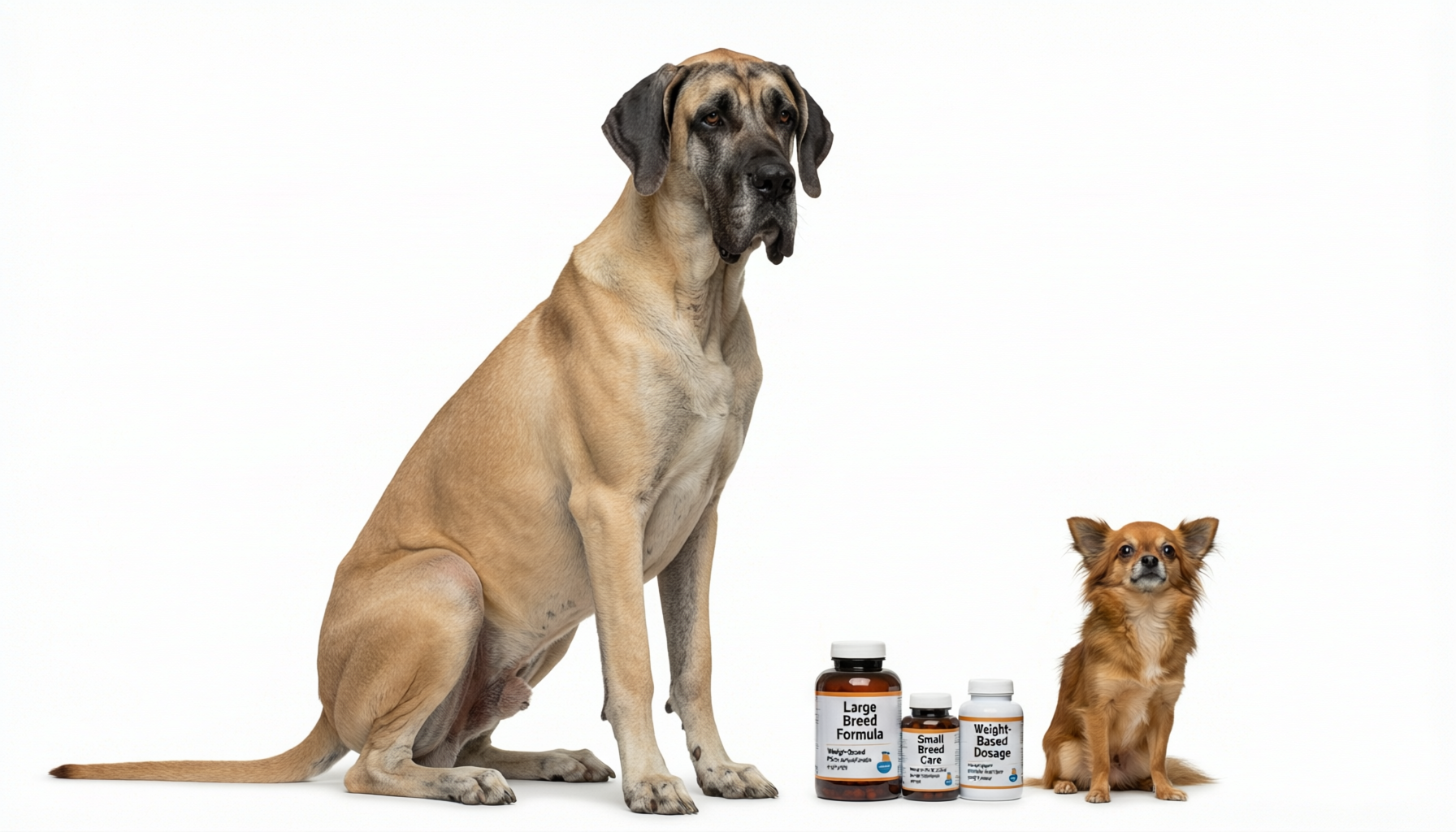
| Dosing Logic | Per-unit (e.g., per chew); rarely weight-adjusted or pharmacokinetically justified [K3] | Weight-based, renal/hepatic-adjusted, titrated to effect and safety monitoring [AAHA Osteoarthritis & Behavioral Guidelines] |
| Evidence Threshold | Ingredient-level in vitro or anecdotal reports; no requirement for outcome studies in target species/age group | Requires ≥1 prospective, controlled study in dogs/cats demonstrating statistically significant improvement in validated endpoints |
| Supply Chain Transparency | China OEM dominates: joint health bottles cost $0.80–$1.50 at MOQ 100–300 units [K4] | Irrelevant — AAHA guidelines reference clinical outcomes, not manufacturing origin or cost structure |
---
6. FAQ
Q1. Does AAHA endorse or certify any pet supplements?
No. AAHA does not endorse, certify, or maintain a list of approved pet supplements. Its guidelines reference nutraceuticals only as adjunctive options within broader, evidence-based care pathways — and always subordinate to diagnostics, environmental management, and pharmaceutical intervention when indicated.
Q2. Are senior pet supplements safe for long-term use?
Safety data is incomplete. While ingredients like glucosamine and omega-3s have favorable safety profiles in short-term studies, long-term (>12 month) effects of multi-ingredient blends — particularly in pets with chronic kidney disease or liver impairment — remain unstudied. AAHA recommends annual bloodwork and medication/supplement review for all senior pets [AAHA Geriatric Guidelines].
Q3. How can I verify if a supplement meets quality standards?
Look for third-party verification:
Note: “Made in USA” does not guarantee quality — many US-branded products are manufactured in China under OEM contracts [K4].
Q4. What should I discuss with my veterinarian before starting a senior supplement?
Bring:
---
7. Conclusion
Senior pet supplement formulations and AAHA guidelines operate in fundamentally different domains: one responds to consumer demand for convenience, transparency, and holistic branding; the other adheres to veterinary medical standards rooted in diagnosis, evidence grading, and individualized care. There is no “versus” in the sense of competition — rather, a boundary that must be respected.
For pet owners: Supplements can have a role — but only after diagnostic clarity, behavioral assessment, and foundational care are addressed. Choose products with verifiable dosing, third-party testing, and ingredient-level rationale — not just “senior” labeling or multi-function promises.
For veterinarians: Proactively discuss supplement use during senior wellness exams. Use AAHA’s free client handouts on OA and behavior to ground conversations in shared decision-making — not product promotion.
For manufacturers and retailers: Differentiate through clinical accountability — publish species-specific dose justification, disclose CoAs, and avoid implying equivalence with prescription therapies.
The most responsible approach isn’t choosing between supplements and guidelines. It’s recognizing that AAHA guidelines define the standard of care, while supplements — when used judiciously — may support it. Not replace it. Not simplify it. Support it.
Written by PawLifeWellness Team
Pet Health Writers
Our team creates practical, research-informed pet wellness content for everyday pet parents. Always consult your veterinarian for personalized advice.