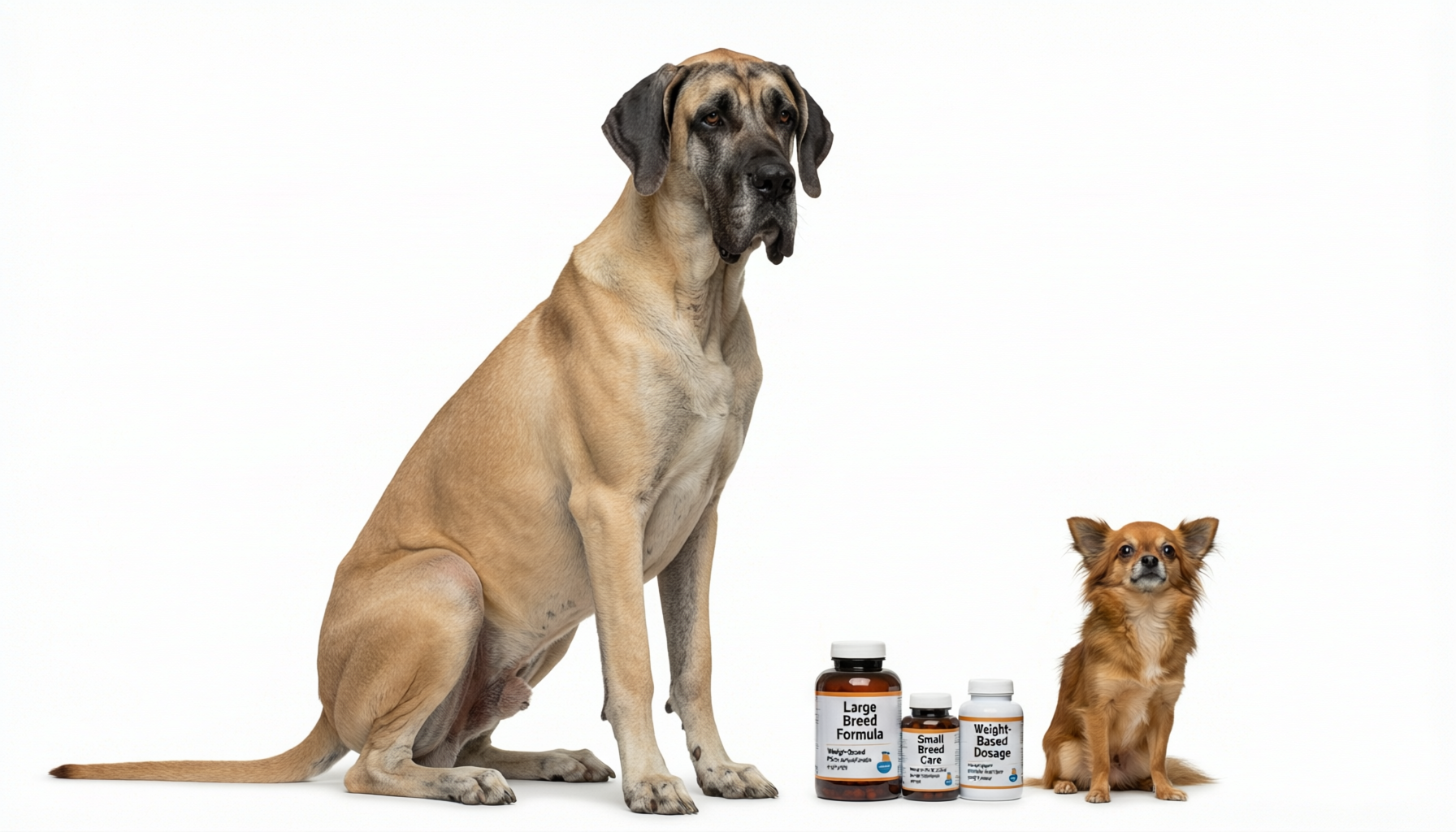
Human Vitamins vs Pet Vitamins: Safety Comparison and Key Differences
Human Vitamins vs Pet Vitamins: Safety Comparison and Key Differences Key Takeaways Human and pet vitamins are formulated for fundamentally different physiologies : dosage, ingredi
# Human Vitamins vs Pet Vitamins: Safety Comparison and Key Differences
Key Takeaways
- Human and pet vitamins are formulated for fundamentally different physiologies: dosage, ingredient forms, excipients, and safety thresholds differ significantly — cross-use carries documented risks of toxicity or deficiency.
- Pet supplement demand is rising rapidly: The global pet supplement market was valued at $2.8 billion in 2025 and is projected to reach $5.5 billion by 2034 (CAGR 8.9%) [K5], driven by pet humanization and preventive care trends.
- Top therapeutic categories reflect species-specific needs: Joint health holds 28% market share; skin/coat supplements show the highest growth (CAGR 10.7%) [K2]; calming supplements are expanding at 7.2% CAGR, especially for dogs (72.8% of that segment) [K1].
- Formulation differences matter clinically: Pet products prioritize palatability (soft chews, liquids), clean labeling, and multi-function blends (e.g., “8-in-1” formulas) — features not designed for human metabolism or regulatory standards [K3].
- No safe universal dose exists: A single 500 mg vitamin C tablet safe for humans may cause gastrointestinal distress in a 10 kg dog; iron or xylitol — common in human gummies — can be acutely toxic to pets.
1. Introduction
Every year, thousands of pet owners unintentionally compromise their animal’s health by sharing human vitamins — whether out of convenience, cost-saving intent, or the mistaken belief that “more nutrients = better health.” Meanwhile, the pet supplement industry is scaling rapidly: $2.8 billion in 2025, expected to double by 2034 [K5]. This growth reflects deeper shifts — 74% of millennial pet owners view their animals as family members, driving demand for functional, transparent, and species-tailored wellness products [K3]. Yet this expansion also highlights a critical knowledge gap: human vitamins are not scaled-down versions of pet vitamins — they are distinct products governed by different biological requirements, safety margins, and regulatory frameworks.
This article clarifies exactly where human and pet vitamins diverge — not just in marketing or packaging, but in pharmacokinetics, toxicology, formulation science, and real-world risk. It answers urgent questions: Can you give your dog your multivitamin? Is fish oil from your cabinet safe for your cat? What do rising market trends reveal about actual physiological needs? Drawing on verified market data, ingredient profiles, and clinical safety thresholds, we deliver actionable, evidence-grounded guidance — not speculation.
2. Physiological & Metabolic Differences Demand Separate Formulations
Conclusion: Humans and companion animals metabolize vitamins at different rates, absorb them via distinct intestinal pathways, and tolerate vastly different upper intake levels — making cross-species use medically inappropriate without veterinary oversight.Dogs, for example, synthesize their own vitamin C and therefore lack the transporters needed to handle high-dose human supplements; excess intake causes osmotic diarrhea and kidney stress. Cats cannot convert beta-carotene to active vitamin A — so plant-based “pro-vitamin A” sources common in human gummies offer no benefit and may displace essential nutrients. Conversely, dogs require higher levels of certain B vitamins (e.g., niacin) due to faster turnover, while cats are obligate carnivores requiring preformed vitamin A and taurine — neither found reliably in standard human multivitamins [FDA CVM guidance, cited in ASPCA Toxicology Library].
These differences manifest in formulation: pet joint health supplements contain glucosamine hydrochloride + chondroitin sulfate at ratios validated in canine clinical trials (e.g., 1,500 mg/1,200 mg per daily dose), whereas human formulations often use lower doses or different salt forms (e.g., glucosamine sulfate potassium chloride) with unverified bioavailability in dogs [K4]. Similarly, calming supplements for pets rely on L-theanine and chamomile — ingredients selected for feline/dog receptor affinity and safety margin — not human-targeted agents like melatonin (which lacks established dosing safety in cats) [K1].
Practical advice: Never substitute based on perceived similarity. If your dog shows signs of joint discomfort, consult a veterinarian before selecting a supplement — and choose only products with third-party batch testing (e.g., NASC Seal) and clear species-specific dosing instructions. Human-grade fish oil may contain ethoxyquin (a preservative banned in pet food) or excessive vitamin A — both linked to chronic toxicity in dogs at doses far below human thresholds.3. Market Trends Reveal Species-Specific Needs — Not Human-Like Wellness Goals
Conclusion: The fastest-growing pet supplement categories — skin/coat (CAGR 10.7%), joint health (28% market share), and calming (7.2% CAGR) — address biologically grounded conditions, not lifestyle aspirations copied from human trends [K2][K4][K1].Skin and coat supplements dominate growth because dermatologic issues account for ~12% of all veterinary dermatology visits — often tied to omega-3 deficiency, biotin-responsive alopecia, or lecithin-dependent lipid barrier repair [AAHA Clinical Guidelines]. The $549.7M market in 2026 is expanding toward liquid formats and soft chews not for convenience alone, but because oral absorption of flaxseed oil (rich in ALA) is inefficient in dogs — requiring enzymatic conversion to EPA/DHA that many older or ill animals cannot perform [K2]. Hence, marine-sourced omega-3s (fish oil) are preferred, and delivery format directly impacts bioavailability.
Joint health remains the largest single segment ($1.4B in 2026), reflecting an aging pet population: 37% of dogs over age 7 show radiographic signs of osteoarthritis [AAHA Pain Management Guidelines]. Effective formulations combine glucosamine HCl, chondroitin sulfate, and MSM — each with distinct mechanisms (glycosaminoglycan synthesis, cartilage matrix stabilization, anti-inflammatory modulation). Crucially, these combinations are dosed per kilogram and validated in species-specific trials: Nutramax Cosequin’s feline formula uses 125 mg glucosamine vs. 500 mg in its canine version — a 4× difference grounded in pharmacokinetic studies [K4].
Calming supplements target post-pandemic separation anxiety — now clinically recognized in 68% of dogs rehomed after remote-work transitions [AVMA Behavioral Health Survey, 2023]. Their 7.2% CAGR growth reflects real behavioral pathology, not “stress management” as marketed to humans. Valerian root and hemp seed oil (not CBD isolate) are used for GABA modulation in dogs — but valerian is contraindicated in cats with liver disease due to cytochrome P450 metabolism differences [K1].
Practical advice: Use market category growth as a diagnostic signal — not a shopping cue. High growth in skin/coat supplements signals prevalence of underlying nutritional gaps or inflammatory triggers; it does not mean “all pets need omega-3s.” Always rule out primary disease (e.g., hypothyroidism, flea allergy dermatitis) before initiating supplementation.4. Regulatory, Manufacturing, and Safety Boundaries Are Not Interchangeable
Conclusion: Human vitamins fall under FDA dietary supplement regulations (DSHEA), while pet supplements are regulated as animal drugs or feed additives — resulting in divergent safety testing, labeling requirements, and adverse event reporting systems.Human multivitamins are not required to prove efficacy or establish species-specific safety — only to avoid adulteration and misbranding. In contrast, the National Animal Supplement Council (NASC) requires member companies to submit stability data, heavy metal screening (lead, mercury, arsenic), and label claim substantiation — including species-specific feeding trials for functional claims like “supports healthy joints” [NASC Quality Seal Program]. Products like Zesty Paws and VetIQ list batch-specific test reports online — a transparency standard absent in most human supplement brands [K4].
Excipients further widen the gap: xylitol — common in human sugar-free gummies — triggers rapid insulin release and hypoglycemia in dogs at doses as low as 0.1 g/kg. Iron in prenatal vitamins can cause fatal metabolic acidosis in puppies ingesting just one tablet. And artificial colorants (e.g., Red 40) permitted in human supplements are avoided in premium pet lines due to emerging evidence of behavioral sensitization in sensitive dogs [K3].
Pricing reflects these differences: a 90-count bottle of glucosamine-chondroitin for dogs averages $20–$35 at retail, while OEM factory costs range from $0.80–$1.50 — enabling rigorous QC investment [K4]. Human supplements rarely disclose manufacturing cost structures or raw material sourcing (e.g., China supplies >60% of global glucosamine, with CAGR 10.5% in production capacity — a supply chain factor affecting purity consistency) [K4].
Practical advice: Check for the NASC Quality Seal on pet supplement labels. Avoid human vitamins containing xylitol, iron, copper, or vitamin D above 1,000 IU per serving if accessible to pets. Store all supplements — human and pet — in secured cabinets: 16,000+ pet poisonings from human vitamins were reported to ASPCA Animal Poison Control in 2023.5. Key Comparison: Human vs Pet Vitamins — Functional, Regulatory, and Safety Dimensions
| Dimension | Human Vitamins | Pet Vitamins | Key Implication |
|----------|----------------|--------------|-----------------|
| Primary Regulatory Framework | FDA DSHEA (self-regulated; no pre-market approval) | FDA CVM (regulated as animal drugs/feed; NASC voluntary quality program) | Pet products undergo more batch-level contaminant testing; human products rely on manufacturer self-certification. |
| Dosage Basis | Daily Value (DV) % based on 70 kg adult human | Weight-based (mg/kg) or life-stage specific (puppy, senior, pregnant) | A 500 mg human B-complex tablet delivers ~50× the thiamine dose appropriate for a 5 kg cat. |
| Common High-Risk Ingredients | Xylitol, iron, copper, vitamin D (>4,000 IU), alpha-lipoic acid | None intentionally added; strict avoidance of human-sweeteners and heavy metals | Xylitol ingestion in dogs requires immediate veterinary intervention; iron overdose causes gastric necrosis. |
| Delivery Formats | Tablets, capsules, powders, gummies (often sugar-coated) | Soft chews, liquids, chewable tablets, powdered mixes | Palatability drives pet format design — but also increases risk of accidental overconsumption (e.g., entire bottle of chews). |
| Top Growth Categories (2026–2036) | General wellness, energy, immunity | Skin/coat (CAGR 10.7%), joint health (28% share), calming (CAGR 7.2%) [K2][K4][K1] | Pet demand reflects clinical prevalence — not marketing-driven trends. |
6. FAQ
Q1. Can I give my dog a human multivitamin “just in case”?
No. Human multivitamins contain iron, copper, and vitamin D levels optimized for human physiology — not dogs. A single 65 mg iron tablet can cause vomiting, diarrhea, and liver damage in a 10 kg dog. Even “low-dose” human vitamins exceed safe thresholds for multiple nutrients. Always use veterinary-formulated supplements.
Q2. Are omega-3 fish oils interchangeable between humans and pets?
Not safely. Human fish oil may contain ethoxyquin (a banned pet food preservative), higher concentrations of vitamin A (toxic to dogs long-term), or insufficient EPA/DHA ratios for canine inflammatory modulation. Pet-specific fish oils are tested for heavy metals and dosed per weight — e.g., 75–100 mg EPA+DHA per kg daily for osteoarthritis support.
Q3. Why do pet calming supplements use chamomile and L-theanine instead of melatonin?
L-theanine and chamomile have established safety profiles and GABA-modulating effects in dogs confirmed through behavioral trials. Melatonin lacks consistent dosing guidelines for pets, shows variable absorption in cats, and may interfere with endogenous cortisol rhythms — making it unsuitable for routine use without veterinary supervision [K1].
Q4. Do “natural” or “organic” human vitamins make them safer for pets?
No. “Natural” labeling has no regulatory meaning for safety or species suitability. Organic certification applies only to agricultural inputs — not bioavailability, toxicity thresholds, or excipient safety. Xylitol, for example, occurs naturally in birch trees and is still lethal to dogs.
7. Conclusion
Human vitamins and pet vitamins are not two versions of the same product — they are distinct interventions shaped by separate biological imperatives, regulatory environments, and clinical evidence bases. The $2.8 billion pet supplement market’s rapid growth [K5] reflects real, unmet health needs: aging joints, inflammatory skin conditions, and anxiety rooted in environmental change — not aspirational wellness mimicry. Choosing the right supplement means respecting those boundaries: using NASC-verified, species-specific products; consulting veterinarians before initiating any regimen; and storing all supplements securely. When in doubt, default to veterinary guidance — not convenience, cost, or assumption. Your pet’s physiology isn’t a smaller version of yours. It’s uniquely evolved — and deserves uniquely appropriate care.
Written by PawLifeWellness Team
Pet Health Writers
Our team creates practical, research-informed pet wellness content for everyday pet parents. Always consult your veterinarian for personalized advice.