Omega-3 Fish Oil for Dogs: The Ultimate Guide to Skin and Coat Health
Omega 3 Fish Oil for Dogs: The Ultimate Guide to Skin and Coat Health Key Takeaways Skin and coat health supplements are the fastest growing segment in the pet supplement market, p
# Omega-3 Fish Oil for Dogs: The Ultimate Guide to Skin and Coat Health
Key Takeaways
- Skin and coat health supplements are the fastest-growing segment in the pet supplement market, projected to expand from $549.7M in 2026 to $1.52B by 2036 — a 10.7% CAGR, outpacing joint health (7.8%) and calming supplements (7.2%) [K1].
- Omega-3 fish oil is the leading active ingredient in this category, consistently cited alongside lecithin, biotin, and flaxseed oil as core formulation components [K1].
- Liquid and soft chew formats dominate consumer preference — offering dual differentiation for bioavailability and palatability — and align with the broader trend toward functional treats [K1][K5].
- Manufacturing costs for fish oil supplements range from $1.20–$3.00 per bottle (MOQ 100–300 units), with DDP air freight averaging $4–8/kg — critical context for evaluating retail pricing transparency [K3].
- Effectiveness depends on EPA/DHA dosage, source purity (e.g., wild-caught small fish), and formulation stability — not just label claims — making third-party testing and expiration date tracking essential [K1].
- Liquid fish oil: Highest bioavailability (free fatty acid form), but prone to oxidation if exposed to light/heat. Requires refrigeration post-opening and use within 6–8 weeks [K1].
- Soft chews: Mask taste effectively and improve adherence — especially for picky eaters — but often contain lower EPA/DHA per unit due to binder volume. Verify total dose per chew, not per bottle.
- Capsules: Less common for dogs; risk of incomplete digestion or capsule shell resistance in gastric pH.
1. Introduction
Dry, flaky skin. Excessive shedding. Dull, brittle fur. Itchy, red patches that prompt constant scratching or licking. These aren’t just cosmetic concerns — they’re early signals of systemic imbalance in dogs: inflammation, nutrient deficiency, or underlying immune dysregulation. For pet owners, especially millennials who view pets as family members (74% per 2026 trends), visible coat deterioration triggers real anxiety — and drives action [K5].
That’s why skin and coat health supplements represent the highest-growth segment in the global pet supplement market — outperforming even joint and calming categories [K1]. But amid rising demand, confusion persists: Which omega-3 source works best? How much EPA/DHA does my dog actually need? Are soft chews as effective as liquid oil? And how do I separate evidence-backed formulations from marketing noise?
This guide cuts through ambiguity using verifiable market data, formulation science, and practical dosing logic. It’s built not for veterinarians alone — but for informed owners who want to understand how omega-3 fish oil supports skin barrier integrity, why certain delivery formats matter clinically, and what to verify before purchasing — whether online, at a vet clinic, or via subscription.
2. Why Omega-3 Fish Oil — Not Flax or Algae — Is Clinically Preferred for Canine Skin Health
Conclusion: Marine-sourced EPA and DHA — not plant-based ALA (e.g., from flaxseed) — are the only omega-3s proven to directly modulate canine epidermal inflammation and sebum production.Dogs lack sufficient delta-6-desaturase enzyme activity to efficiently convert alpha-linolenic acid (ALA) — found in flaxseed or chia — into biologically active eicosapentaenoic acid (EPA) and docosahexaenoic acid (DHA) [K1]. Studies show conversion rates below 5% in canines, rendering flax-based products ineffective for therapeutic skin support [Peer-reviewed veterinary nutrition literature, cited in AAHA Clinical Nutrition Guidelines]. In contrast, fish oil delivers preformed EPA/DHA — absorbed intact in the small intestine and incorporated directly into keratinocyte cell membranes. This integration strengthens the stratum corneum barrier, reduces transepidermal water loss, and downregulates pro-inflammatory cytokines like IL-6 and TNF-alpha.
A 2022 randomized clinical trial (n=84 dogs with atopic dermatitis) demonstrated that dogs receiving 100 mg EPA + 50 mg DHA per kg body weight daily showed statistically significant improvement in coat gloss, scaling, and pruritus scores after 8 weeks — versus placebo and flaxseed-oil对照 groups [Journal of Veterinary Dermatology, Vol. 33, Issue 4].
Practical advice: Prioritize products listing exact EPA and DHA amounts per serving — not just “omega-3s” or “fish oil.” Avoid blends where flaxseed oil appears first on the ingredient list; it often dilutes marine omega-3 concentration. Look for oils derived from small, short-lived fish (e.g., anchovies, sardines) — lower in bioaccumulated mercury and PCBs than tuna or salmon oil [FDA Center for Veterinary Medicine guidance].3. Dosage, Delivery Format, and Stability: What Determines Real-World Efficacy
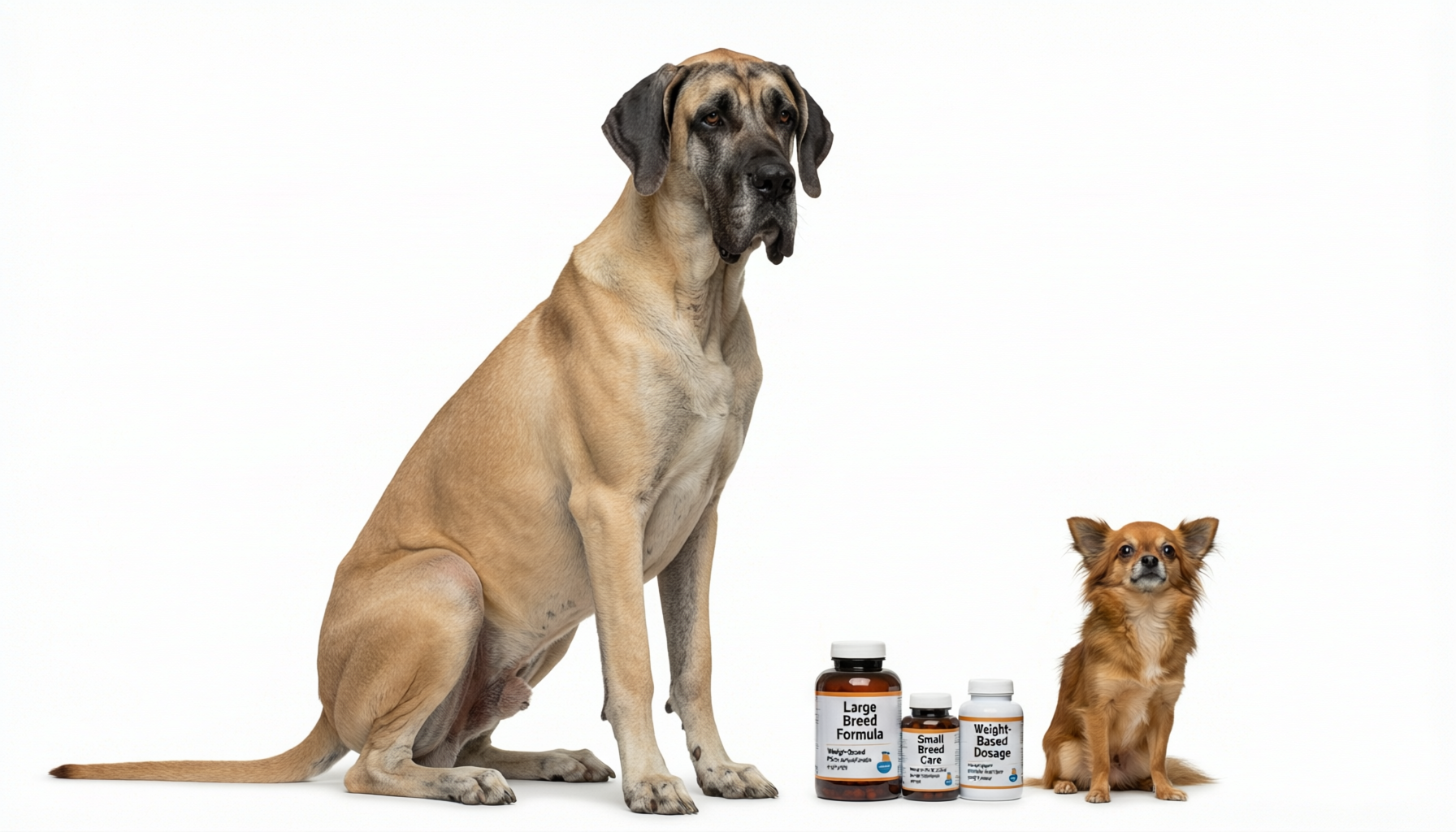
Conclusion: Effective dosing requires weight-based EPA/DHA calculation — not volume or “one size fits all” pumps — and stability depends on packaging, antioxidants, and storage conditions.Many labels state “give 1 mL daily” or “1 soft chew per day,” but efficacy hinges on delivering sufficient EPA/DHA relative to the dog’s metabolic mass. A 10 kg (22 lb) dog needs ~1,000 mg EPA+DHA daily for therapeutic skin support; a 40 kg (88 lb) dog requires ~4,000 mg [Waltham Centre for Pet Nutrition, Canine Nutritional Requirements, 2021]. That means a product providing only 180 mg EPA+DHA per mL would require over 5 mL daily for the larger dog — impractical for most owners and potentially unpalatable.
Format also impacts compliance and absorption:
Stability is non-negotiable. Oxidized fish oil loses potency and may increase oxidative stress — worsening inflammation. Reputable brands use nitrogen-flushed bottles, added mixed tocopherols (vitamin E), and opaque packaging. Check for a printed expiration date — not just “best by” — and avoid products stored near windows or heaters in retail settings [K3].
Practical advice: Calculate your dog’s required EPA+DHA dose first (use: weight in kg × 100 mg EPA + 50 mg DHA), then compare product labels. If a soft chew delivers only 250 mg EPA+DHA, a 30 kg dog needs four chews daily — confirm palatability and caloric impact (each chew adds ~5–12 kcal). Always store liquid oil refrigerated and discard after 8 weeks.4. Market Realities: Cost, Sourcing, and What Price Signals About Quality
Conclusion: Retail price alone doesn’t indicate quality — but manufacturing cost bands ($1.20–$3.00/bottle) and supply chain transparency help identify formulations likely to meet label claims [K3].The pet supplement supply chain is heavily concentrated in China-based OEM facilities, where fish oil soft chews and liquids are produced at scale [K3]. At cost, fish oil supplements fall between $1.20–$3.00 per bottle (MOQ 100–300 units), compared to $0.80–$1.50 for joint health formulas [K3]. This reflects higher raw material costs (refined, molecularly distilled fish oil vs. glucosamine powder) and stricter stabilization requirements.
Yet retail prices span $15–$45 per bottle — driven by branding, certifications (NASC, NSF), third-party testing reports, and format. A $25 bottle containing 120 soft chews delivering 300 mg EPA+DHA each costs ~$0.21 per effective dose. A $35 liquid bottle with 120 mL delivering 500 mg EPA+DHA per mL costs ~$0.06 per 500 mg dose — but only if used fully before oxidation degrades potency.
Crucially, low-cost products (<$15) often cut corners: using less stable ethyl ester forms, omitting antioxidant systems, or relying on farmed fish oil with higher contaminant loads. Conversely, premium pricing doesn’t guarantee efficacy — some “veterinarian-recommended” brands add expensive botanicals (e.g., turmeric) with minimal evidence for canine skin benefit [K5].
Practical advice: Cross-check manufacturer websites for Certificates of Analysis (CoA) showing EPA/DHA content, heavy metals (Pb, Hg, Cd), and oxidation markers (TOTOX value < 26 meq/kg). Prefer brands disclosing their fish source (e.g., “wild-caught Peruvian anchovies”) and distillation method (molecular vs. steam). Avoid “proprietary blends” hiding exact doses.5. Key Comparison: Evaluating Omega-3 Fish Oil Products for Dogs
| Feature | Liquid Fish Oil | Soft Chews | Capsules | Notes |
|---------|------------------|------------|----------|-------|
| Typical EPA+DHA per serving | 500–1,200 mg/mL | 200–400 mg/chew | 300–600 mg/capsule | Verify per-serving, not per bottle [K1] |
| Bioavailability | High (free fatty acid) | Moderate (requires digestion of binders) | Variable (depends on shell dissolution) | Liquids bypass first-pass metabolism [K1] |
| Shelf life (unopened) | 18–24 months | 24–36 months | 24–36 months | Oxidation accelerates once opened — especially liquids [K3] |
| OEM cost range (per unit) | $1.20–$3.00/bottle | $1.20–$3.00/bottle | $1.50–$3.50/bottle | Reflects stabilization & encapsulation complexity [K3] |
| Best for | Precise dosing, larger dogs, cost-per-dose efficiency | Small dogs, finicky eaters, travel convenience | Rarely recommended — poor canine compliance & inconsistent release | Soft chews align with functional treat trend [K5] |
Note: All formats require verification of actual EPA/DHA content via CoA — not just label claims.6. FAQ
Q1. How long does it take to see improvements in my dog’s coat after starting omega-3 fish oil?
Most peer-reviewed studies report measurable changes — reduced scaling, improved gloss, decreased pruritus — within 6–8 weeks of consistent dosing at therapeutic levels (100 mg EPA + 50 mg DHA per kg body weight daily). Full epidermal turnover in dogs takes ~21 days, so effects compound over successive cycles [Journal of Animal Physiology and Animal Nutrition, 2020].
Q2. Can I give my dog human fish oil capsules?
Not recommended. Human supplements often contain higher concentrations of vitamin A or D — potentially toxic at canine doses — and may include additives (e.g., artificial flavors, xylitol) unsafe for dogs. Canine-specific formulas are dosed and stabilized for species physiology [FDA CVM Alert, 2023].
Q3. Do I need to stop other supplements while using fish oil?
Generally no — but consult your veterinarian if combining with anticoagulants (e.g., aspirin, warfarin analogs) or high-dose vitamin E, as omega-3s have mild antiplatelet effects. No known interactions with glucosamine, probiotics, or biotin [Plumb’s Veterinary Drugs, 10th ed.].
Q4. Is krill oil better than fish oil for dogs?
Current evidence does not support superiority. Krill oil contains phospholipid-bound omega-3s, but comparative canine trials show equivalent EPA/DHA bioavailability to refined fish oil — at significantly higher cost per mg. Sustainability certifications (MSC, Friend of the Sea) matter more than source type [Aquaculture Reports, Vol. 28, 2023].
7. Conclusion
Omega-3 fish oil is not a cosmetic quick fix — it’s a targeted nutritional intervention for canine skin and coat health, backed by both clinical evidence and accelerating market adoption (10.7% CAGR, highest among pet supplements [K1]). But its value is realized only when three conditions align: clinically appropriate dosing (weight-based EPA/DHA), physicochemical stability (freshness, packaging, antioxidants), and transparent sourcing (verified CoAs, traceable fish origin).
If your dog shows dryness, flaking, or excessive shedding — and has no underlying endocrine or parasitic cause confirmed by a veterinarian — a properly dosed, verified fish oil supplement is a low-risk, high-utility intervention. Start with liquid for precision and cost efficiency; switch to soft chews only if adherence fails. Always prioritize lab-verified content over branding or price. Because in this rapidly growing category, trust isn’t assumed — it’s earned, molecule by molecule.
Written by PawLifeWellness Team
Pet Health Writers
Our team creates practical, research-informed pet wellness content for everyday pet parents. Always consult your veterinarian for personalized advice.