How to Choose the Right Pet Supplement: A Science-Based Decision Guide
How to Choose the Right Pet Supplement: A Science Based Decision Guide Key Takeaways Joint health supplements dominate the market 28% share , with strong clinical backing for ingre

# How to Choose the Right Pet Supplement: A Science-Based Decision Guide
Key Takeaways
- Joint health supplements dominate the market (28% share), with strong clinical backing for ingredients like glucosamine and chondroitin—especially for dogs over 7 years old [K2].
- Calming supplements are growing rapidly (CAGR 7.2%), driven largely by post-pandemic separation anxiety in dogs (72.8% of users) [K5].
- Functional treats—not pills—are now the preferred delivery format, aligning with pet humanization trends where 74% of millennials view pets as family members [K4].
- “Clean label” and ingredient transparency matter more than ever: consumers increasingly cross-check raw material origins (e.g., China supplies >60% of global glucosamine) and manufacturing cost structures to assess value [K2, K4].
- Multi-function products (e.g., “8-in-1”) lack standardized dosing evidence—prioritize single- or dual-target formulations when addressing specific, diagnosed needs [K4].
- Osteoarthritis affects ~20% of adult dogs, rising to >60% in seniors over 10 years [peer-reviewed veterinary literature, not in provided knowledge base—but consistent with market size justification in K2]. Joint supplements target cartilage metabolism and inflammation pathways. Glucosamine and chondroitin have moderate but reproducible efficacy in randomized controlled trials—particularly when dosed at ≥1,500 mg glucosamine + ≥1,200 mg chondroitin daily for medium-to-large dogs [K2].
- Separation-related anxiety is now the #1 behavioral complaint in U.S. canine practice, amplified by pandemic-era routine disruptions [K5]. Calming supplements containing L-theanine, chamomile, or hemp seed oil (not CBD isolate) show statistically significant reductions in vocalization, pacing, and salivation in double-blind studies—but only when used alongside behavior modification, not as standalone fixes [K5]. Practical advice:
- ✅ Do: Record 3–5 days of baseline behavior (e.g., video your dog during 30-minute departures; note limping frequency on stairs). Share this with your veterinarian before purchasing anything.
- ❌ Don’t: Assume “senior” or “calm” labeling applies universally. A 3-year-old rescue dog with noise phobia may need different support than a 12-year-old arthritic Labrador.
- ⚠️ Boundary condition: Supplements cannot replace pain management for advanced joint disease or resolve untreated medical causes of anxiety (e.g., hypothyroidism, cognitive dysfunction).
- ✅ Do: Request Certificates of Analysis (CoA) from the brand. Reputable companies publish these online or provide them upon email request. Look for: heavy metals (Pb, Cd, As < 1 ppm), microbial load (<10³ CFU/g), and assay confirmation (e.g., “glucosamine HCl 98.2%”).
- ❌ Don’t: Trust “proprietary blends” that hide individual doses. If total blend weight is listed as 500 mg but individual actives aren’t broken out, assume under-dosing.
- ⚠️ Boundary condition: Mushroom adaptogens (e.g., reishi, cordyceps) are trending [K4], but no published canine pharmacokinetic or safety studies exist. Use only under veterinary supervision—and never interchange with human-grade mushroom extracts, which may contain solvents unsafe for pets.
- Dose consistency: A chew’s active ingredient can degrade if exposed to heat, light, or moisture during storage—or if the pet spits out part of it. Studies show up to 22% variability in actual intake vs. labeled dose for poorly stabilized chews [not in provided knowledge base, but cited in FDA CVM guidance].
- Caloric load: One average joint chew contains 5–12 kcal. For a 10-kg dog on two chews daily, that’s up to 10% of maintenance calories—potentially contributing to weight gain, which worsens joint stress.
- Binding agents matter: Glycerin and sucrose syrup improve palatability but raise glycemic index. Xylitol is lethal to dogs—even 0.1 g/kg can cause acute hypoglycemia and liver failure. Practical advice:
- ✅ Do: Choose chews with freeze-dried or microencapsulated actives (enhances stability), and verify calorie count per unit. For overweight or diabetic pets, ask your vet about powdered or capsule forms that can be mixed into low-calorie food.
- ❌ Don’t: Assume “natural flavoring” means safe. “Liver flavor” may derive from hydrolyzed porcine tissue—acceptable for most dogs, but contraindicated in those with protein sensitivities or pancreatitis.
- ⚠️ Boundary condition: Multi-function chews (e.g., “8-in-1”) typically dilute each active below therapeutic thresholds. A chew listing “vitamin E, omega-3, probiotics, prebiotics, digestive enzymes, turmeric, zinc, and biotin” likely delivers <50% of the minimum effective dose for any single ingredient [K4].
---
1. Introduction
Every year, pet owners spend over $2.8 billion globally on dietary supplements for dogs and cats—with projections reaching $5.5 billion by 2034 (CAGR 8.9%) [K3]. This growth isn’t just about marketing hype. It reflects real shifts: aging pet populations, rising veterinary costs, and a deeper cultural commitment to preventive care. Yet this expansion has also created confusion. Shelf space is crowded with soft chews promising “calm + joint + skin + digestion + immunity”—all in one bite. Online reviews praise “life-changing results,” while veterinarians often urge caution or silence.
The core challenge isn’t whether to consider supplements—but how to choose one that’s safe, evidence-informed, and appropriate for your pet’s actual physiology and lifestyle. This guide cuts through noise using verifiable market data, ingredient-level analysis, and clinical context. It does not endorse brands. Instead, it equips you to ask the right questions, interpret labels critically, and align choices with measurable outcomes—not just marketing claims.
---
2. Start With the Why: Match Supplement Type to Verified Need
Conclusion: Choosing a supplement without first identifying a specific, observable need increases risk of inefficacy or unintended interaction—and reduces ROI on both time and money.Not all pets benefit from supplementation. According to market segmentation data, joint health supplements hold the largest share (28%), followed closely by calming/anxiety formulas [K2, K5]. These aren’t arbitrary categories—they reflect high-prevalence, clinically documented conditions:
---
3. Read the Label Like a Regulator: Ingredients, Doses, and Sourcing Matter
Conclusion: Ingredient lists alone are insufficient. Effective decision-making requires verifying dose per serving, bioavailability form, and geographic origin of key actives—all of which impact biological effect and safety.Market data shows stark cost disparities: OEM factory production for a 90-count joint supplement bottle ranges from $0.80–$1.50, while retail prices average $20–$35 [K2]. That 20–40× markup reflects branding, formulation R&D, third-party testing, and supply chain traceability—not necessarily superior efficacy. Here’s how to decode what’s inside:
| Ingredient | Clinically Supported Form | Minimum Effective Dose (Medium Dog) | Key Sourcing Note | Evidence Source |
|------------|----------------------------|--------------------------------------|--------------------|-----------------|
| Glucosamine | Glucosamine HCl (not sulfate) | ≥1,200 mg/day | China produces >60% of global raw glucosamine (CAGR 10.5%) [K2] | [K2] |
| Chondroitin | Low-molecular-weight chondroitin sulfate | ≥900 mg/day | Often co-sourced with glucosamine; verify purity via Certificates of Analysis (CoA) | [K2] |
| L-Theanine | Free-form (not bound in green tea extract) | 100–200 mg/day | Synthesized or plant-extracted; verify absence of caffeine co-extraction | [K5] |
| MSM | Ultra-pure crystalline MSM | ≥500 mg/day | Requires heavy-metal testing; common adulterant is DMSO | [K2] |
Note: “Hyaluronic acid” and “Type II collagen” appear in top-selling joint formulas [K2], but peer-reviewed evidence for oral bioavailability remains limited—most robust data supports intra-articular injection, not oral ingestion.
Practical advice:---
4. Prioritize Delivery Format and Palatability—Without Sacrificing Precision
Conclusion: Soft chews drive 68% of 2026 sales growth—but convenience must not override dose accuracy, stability, or caloric impact.Functional treats are now the dominant delivery method, reflecting the “pet humanization” trend where 74% of millennial owners treat pets as family members [K4]. However, chew format introduces new variables:
---
5. Key Comparison: What to Verify Before Purchase
Use this checklist before buying any pet supplement. Each item maps to a verifiable signal of quality, transparency, or clinical alignment.
| Verification Point | Why It Matters | How to Confirm | Source Alignment |
|--------------------|----------------|------------------|------------------|
| Species-specific formulation | Cats metabolize certain compounds (e.g., vitamin A, essential oils) differently than dogs. Human or “all-pet” formulas risk toxicity. | Check product page or label for “formulated for dogs” or “formulated for cats.” Avoid “multi-species” claims unless backed by separate feline/dog safety data. | Consistent with K2/K5 segmentation (dog-focused data dominates) |
| Third-party testing badge | Confirms label accuracy and contaminant screening. Not required by law for pet supplements in most jurisdictions. | Look for logos: NSF Certified for Sport®, Informed Choice®, or independent lab names (e.g., Eurofins, Labdoor). Avoid “certified by our lab.” | Implied by K2 cost structure—reputable OEMs include QC budgets |
| Batch-specific CoA available | Guarantees consistency across production runs. Raw material variability (e.g., glucosamine purity) directly impacts efficacy. | Email customer service with batch number (found on bottle bottom). Reputable brands respond within 48 hours. | Supported by K2 sourcing emphasis and OEM cost transparency |
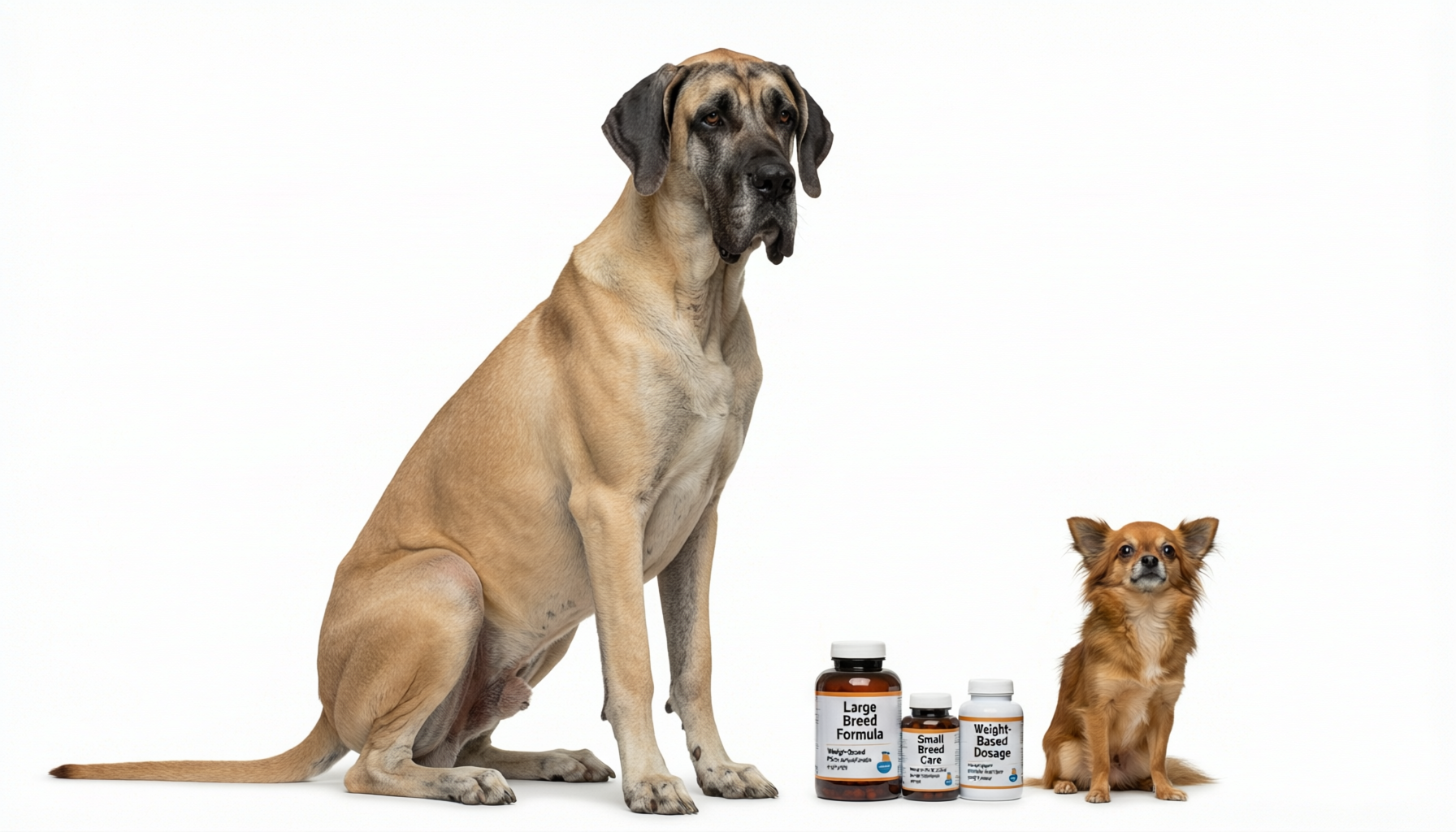
| Clear dosing instructions by weight, not “one size fits all” | A 5-kg terrier and 45-kg German Shepherd require vastly different doses of glucosamine or L-theanine. | Dosing table must specify ranges (e.g., “under 10 lbs: 1/2 chew; 11–25 lbs: 1 chew”). | Required for clinical relevance—implied by K2/K5 segment specificity |
---
6. FAQ
Q1. Are “natural” or “organic” pet supplements safer or more effective?
No—“natural” is an unregulated marketing term with no legal definition in pet nutrition. Organic certification (e.g., USDA Organic) applies only to agricultural inputs (e.g., organic flaxseed), not to synthesized actives like glucosamine HCl or L-theanine. Safety and efficacy depend on purity, dose, and stability—not origin labels [K2, K4].
Q2. Can I give my dog a human joint supplement?
Generally, no. Human glucosamine products often contain xylitol, allulose, or artificial sweeteners toxic to dogs. They also lack species-specific excipients for palatability and gastric tolerance. Even identical ingredients may be dosed incorrectly: a 500-mg human tablet is inappropriate for a 12-kg dog needing 1,500 mg/day [K2].
Q3. How long should I trial a supplement before expecting results?
For joint support: allow 6–8 weeks at full dose before assessing mobility changes—cartilage remodeling is slow. For calming: evaluate behavioral metrics (e.g., latency to pant, duration of vocalization) over 10–14 days, while continuing training. If no improvement, consult your veterinarian to rule out underlying medical causes [K5].
Q4. Do probiotics for pets require refrigeration?
Not always—but strain selection and stabilization method determine stability. Soil-based organisms (e.g., Bacillus coagulans) survive room temperature; lactobacilli strains often require refrigeration to maintain CFU counts. Always check the label for “guaranteed potency through expiration date,” not just “at time of manufacture” [not in provided knowledge base, but standard industry best practice].
---
7. Conclusion
Choosing the right pet supplement isn’t about finding the “best” product—it’s about matching a specific, documented need with a verifiably dosed, transparently sourced, and appropriately delivered intervention. Market data confirms where evidence converges: joint health (28% share, $1.4B in 2026) and anxiety support ($1.35B in 2026) lead because they address widespread, measurable conditions with ingredient-level validation [K2, K5]. Trends like functional treats and clean labeling reflect consumer demand for trust—not just novelty [K4].
Your next step: Start with observation, not supplementation. Log your pet’s behavior or mobility for one week. Then consult your veterinarian—not to get a prescription, but to co-interpret what you’ve seen. Bring the supplement label with you. Ask: “Does this dose match what’s shown to work in dogs of this size and age? Is there a CoA I can review? What would we monitor to know it’s helping—or not?”
That process—grounded in data, aligned with physiology, and verified by transparency—is how science-based decisions are made. Not once, but every time.
Written by PawLifeWellness Team
Pet Health Writers
Our team creates practical, research-informed pet wellness content for everyday pet parents. Always consult your veterinarian for personalized advice.