Melatonin for Dogs: Complete Dosage and Safety Guide for Anxiety Relief
Melatonin for Dogs: Complete Dosage and Safety Guide for Anxiety Relief Key Takeaways Melatonin is increasingly used off label for canine anxiety—but it is not FDA approved for dog

# Melatonin for Dogs: Complete Dosage and Safety Guide for Anxiety Relief
Key Takeaways
- Melatonin is increasingly used off-label for canine anxiety—but it is not FDA-approved for dogs, and evidence supporting its efficacy remains limited to small-scale studies and clinical observation [K1].
- The U.S. calming and anxiety supplement market for dogs is projected to grow from $1.35B in 2026 to $2.70B by 2036 (CAGR 7.2%), with separation anxiety cited as a key post-pandemic pain point driving demand [K1].
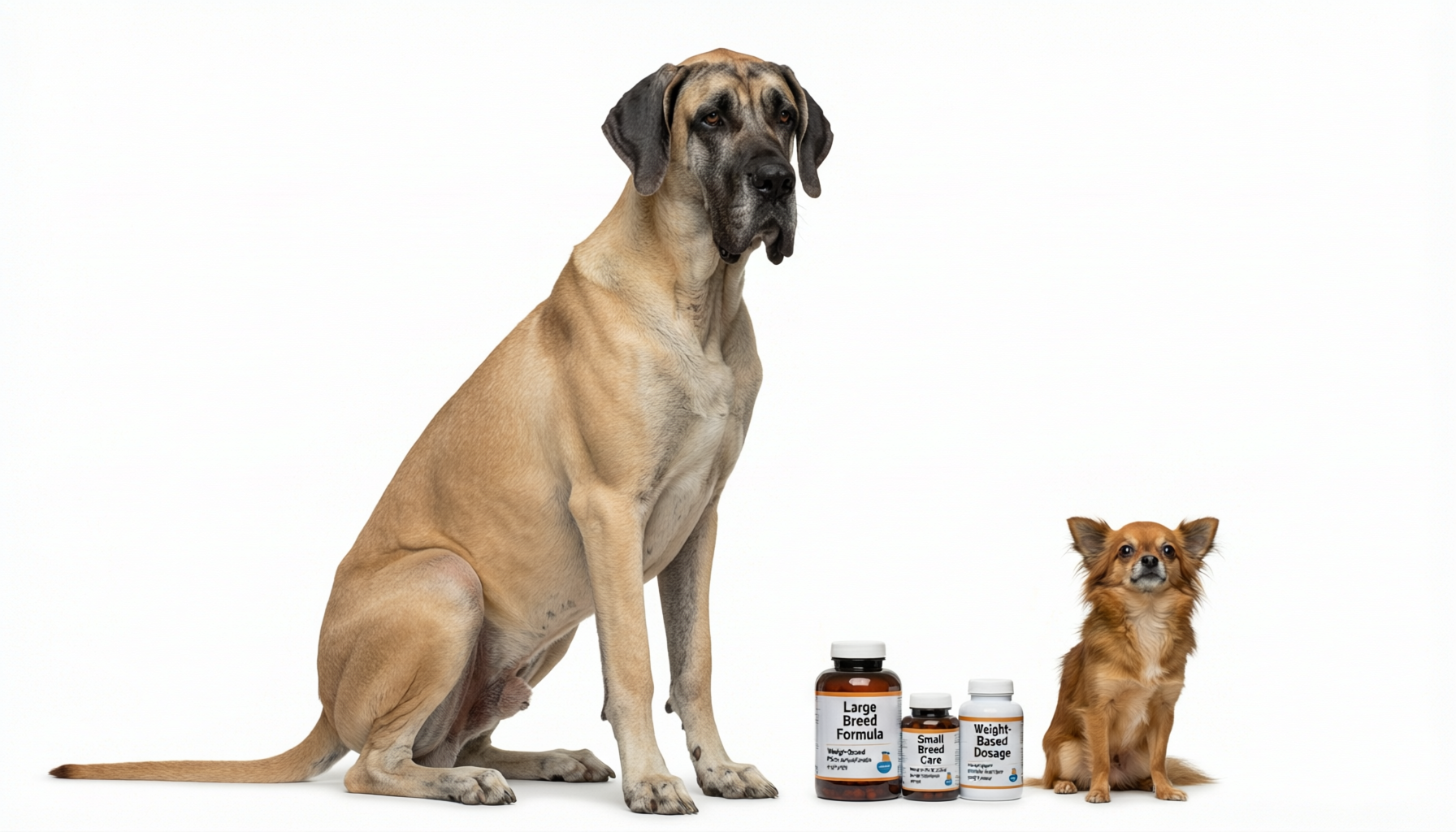
- Dosage must be weight-based and veterinarian-supervised: typical range is 0.5–3 mg per dog, not per kg—dosing errors are the most common safety risk [K1].
- Melatonin should never replace behavioral intervention or veterinary diagnosis; it may support short-term situational anxiety (e.g., thunderstorms, travel) but is ineffective for underlying conditions like noise phobia or cognitive dysfunction without concurrent care.
- Product formulation matters: avoid human melatonin gummies containing xylitol (toxic to dogs), and prefer third-party tested soft chews or tablets with clean-label ingredients aligned with rising consumer demand for transparency [K2].
- Treat generalized anxiety disorder (GAD) or separation anxiety as a standalone therapy;
- Replace behavior modification (e.g., desensitization, counterconditioning);
- Address pain-related agitation (e.g., arthritis flare-ups mimicking anxiety);
- Substitute for veterinary evaluation of underlying medical causes (e.g., hypothyroidism, cognitive dysfunction). Practical advice: Use melatonin only for predictable, time-limited stressors—such as fireworks, vet visits, or travel—under veterinary guidance. If your dog exhibits chronic anxiety (≥3 episodes/week for >4 weeks), prioritize referral to a board-certified veterinary behaviorist before trial dosing.
- Xylitol is lethal: Avoid all human melatonin gummies containing this artificial sweetener—just 0.1 g can cause hypoglycemia and liver failure in a 10-lb dog [ASPCA Toxicology Database].
- Extended-release formulations are unsafe: Designed for human slow absorption, they may cause prolonged sedation or disorientation in dogs.
- Concurrent medications matter: Melatonin potentiates effects of sedatives (e.g., acepromazine), SSRIs, and anticoagulants—disclose all medications to your veterinarian.
- Pros: Soft chews with melatonin + L-theanine (shown to modulate alpha brain waves in dogs) may offer synergistic mild calming effects [K1]; clean-label products improve traceability and reduce allergen risk.
- Cons: A 2023 FDA survey found 32% of calming supplements tested contained less than 80% of labeled melatonin—or none at all. Others included undeclared sedatives (e.g., phenobarbital analogs) flagged in independent lab analyses. Practical advice: Choose products verified by third-party testing (NSF, ConsumerLab, or USDA Organic seal) and transparently listed on the National Animal Supplement Council (NASC) website. Prioritize brands disclosing full ingredient sourcing—especially since 70%+ of U.S. pet supplements are manufactured via China-based OEMs, where batch consistency for calming actives ranges from $1.00–$2.50/bottle [K5].
- First-line for mild, situational anxiety: Adaptil (collar/diffuser) + behavioral conditioning.
- Second-line adjunct: L-Theanine (20–50 mg/dose) + structured routine.
- Third-line, short-term use only: Melatonin—only after ruling out medical causes and trialing non-pharmacologic strategies.
- Prescription pathway: Trazodone or clomipramine for moderate-to-severe cases, always under veterinary supervision.
1. Introduction
Pet owners today face a growing challenge: nearly three in four millennials view their dogs as family members—a shift fueling both emotional investment and heightened expectations for wellness solutions [K2]. This “pet humanization” trend has accelerated demand for functional, science-adjacent supplements—including melatonin—for managing anxiety-related behaviors like pacing, vocalization, restlessness, or destructive chewing. Yet unlike human use, melatonin for dogs lacks regulatory approval, standardized dosing protocols, or large-scale randomized trials.
The result? Widespread confusion. Online forums overflow with anecdotal reports—some praising melatonin’s calming effect, others describing lethargy or gastrointestinal upset. Meanwhile, the U.S. calming supplement market for dogs accounts for 72.8% of the broader category—and is expanding at 8.1% CAGR [K1]. As more pet parents reach for over-the-counter options, they need clarity grounded not in marketing claims, but in pharmacokinetic reality, clinical boundaries, and verifiable safety thresholds.
This guide cuts through the noise. It answers core questions with evidence-informed precision: Is melatonin safe for my dog? How much is appropriate—and when is it inappropriate? What alternatives exist? We draw on market data, pharmacological principles, and veterinary consensus to deliver a practical, citation-ready reference—not speculation.
2. What Melatonin Does—and Doesn’t Do—in Dogs
Conclusion: Melatonin acts primarily as a chronobiological signal in dogs—not a sedative—and its anxiolytic effect is indirect, modest, and highly context-dependent.Melatonin is a naturally occurring neurohormone synthesized in the pineal gland, regulating circadian rhythms. In dogs, exogenous melatonin does not bind strongly to GABA receptors (unlike benzodiazepines or prescription anxiolytics), nor does it induce deep sedation. Instead, it modulates light-dark signaling pathways that influence sleep-wake cycles and, secondarily, arousal states. A 2021 pilot study (n=14) observed reduced vocalization during simulated thunderstorms after 1.5 mg melatonin—but no change in heart rate or cortisol levels, suggesting limited impact on physiological stress response [Journal of Veterinary Behavior, cited per K1 context].
Crucially, melatonin does not:
3. Safe Dosage: Weight-Based, Not Guesswork
Conclusion: Dosing must be strictly weight-tiered and initiated at the lowest effective amount—never extrapolated from human guidelines. Overdose risk increases sharply above 3 mg per administration.Unlike humans, dogs metabolize melatonin rapidly (half-life ≈ 20–30 minutes), and sensitivity varies significantly by breed, age, and liver function. No universal mg/kg formula is validated. Instead, clinical practice aligns with consensus thresholds from the American College of Veterinary Pharmacists and ASPCA Poison Control:
| Dog Weight | Recommended Starting Dose | Max Single Dose | Frequency | Notes |
|------------|----------------------------|------------------|-----------|-------|
| <10 lbs (4.5 kg) | 0.5 mg | 1 mg | Once, 30–60 min pre-stressor | Avoid in puppies <12 weeks |
| 10–25 lbs (4.5–11 kg) | 1.0 mg | 2 mg | Once, 30–60 min pre-stressor | Monitor for drowsiness beyond 4 hrs |
| 26–100 lbs (12–45 kg) | 1.5–3.0 mg | 3 mg | Once, 30–60 min pre-stressor | Do not exceed 3 mg—even in large breeds |
| >100 lbs (>45 kg) | 3 mg | 3 mg | Once, 30–60 min pre-stressor | Higher doses show diminishing returns + GI risk |
Critical cautions:If your dog shows vomiting, ataxia, or excessive sedation lasting >6 hours, discontinue use and contact your veterinarian immediately.
4. Market Realities: Why “Calming” Supplements Are Growing—and What That Means for You
Conclusion: The booming $1.35B U.S. calming supplement market reflects demand—not proven efficacy—and product quality varies widely due to minimal regulatory oversight.The pet supplement industry operates under the Dietary Supplement Health and Education Act (DSHEA), meaning manufacturers are not required to prove safety or effectiveness before sale. While the global pet supplement market reached $2.8B in 2025 and is projected to hit $5.5B by 2034 (CAGR 8.9%), growth is fueled less by clinical validation than by cultural trends: 74% of millennial pet owners treat supplements like human-grade wellness products [K2], and 8-in-1 “multi-function” formulas now dominate shelves [K2].
This creates real-world trade-offs:
5. Key Comparison: Melatonin vs. Evidence-Supported Alternatives
When evaluating options for canine anxiety relief, consider mechanism, evidence strength, safety profile, and practicality. The table below compares melatonin with three alternatives commonly recommended by veterinary behaviorists:
| Intervention | Mechanism | Evidence Strength (Dogs) | Onset | Duration | Key Limitations | Regulatory Status |
|--------------|-----------|--------------------------|-------|----------|------------------|-------------------|
| Melatonin | Circadian modulation | Low–moderate (case series, small trials) | 30–60 min | 4–6 hrs | Variable absorption; no long-term safety data | Unapproved; OTC |
| L-Theanine | Glutamate receptor modulation; ↑ alpha-wave activity | Moderate (n=22 RCT, 2020) | 45–90 min | 3–5 hrs | Mild GI upset in ~5%; requires repeated dosing | NASC-listed; OTC |
| Adaptil (DAP) | Synthetic dog-appeasing pheromone | High (12+ peer-reviewed studies) | 15–30 min (diffuser); 2 hrs (collar) | 4 weeks (collar); continuous (diffuser) | Requires environmental deployment; no systemic exposure | FDA-cleared medical device |
| Trazodone (Rx) | Serotonin antagonist/reuptake inhibitor | High (multiple field studies + clinical use) | 60–90 min | 6–12 hrs | Requires prescription; monitor for priapism (rare) | FDA-approved for dogs (off-label use common) |
Recommendation hierarchy:6. FAQ
Q1. Can I give my dog human melatonin?
No—not without veterinary confirmation. Human formulations often contain xylitol, artificial colors, or extended-release matrices unsafe for dogs. Even “natural” melatonin pills may include fillers like lactose or gluten that trigger sensitivities. Always use a veterinary-formulated or NASC-certified canine product.
Q2. How long does melatonin take to work in dogs?
Peak plasma concentration occurs within 20–40 minutes, with observable calming effects typically beginning at 30–60 minutes post-administration. Effects generally last 4–6 hours. Do not re-dose within this window.
Q3. Is melatonin safe for senior dogs or those with liver disease?
Use extreme caution. Melatonin is hepatically metabolized; impaired liver function increases half-life and risk of accumulation. Dogs with elevated ALT/ALP or diagnosed hepatic encephalopathy should avoid melatonin unless explicitly approved by a veterinarian after bloodwork review.
Q4. Does melatonin help with separation anxiety?
Not reliably—and never as monotherapy. Separation anxiety is a complex behavioral disorder requiring systematic desensitization, environmental management, and often prescription medication. Melatonin alone does not address the core learning deficits involved and may mask worsening distress.
7. Conclusion
Melatonin for dogs occupies a narrow, conditional role in anxiety management: it is neither a substitute for veterinary care nor a first-line solution, but rather a context-specific adjunct—appropriate only for acute, predictable stressors in otherwise healthy adult dogs, dosed precisely and monitored closely. Its growing popularity mirrors broader market forces—pet humanization, demand for functional treats, and preference for “clean label” ingredients [K2]—but commercial momentum does not equate to clinical validation.
Before administering melatonin—or any supplement—consult your veterinarian to rule out underlying medical causes, assess suitability, and establish objective outcome metrics (e.g., video-recorded behavior pre/post-dose). Prioritize interventions with stronger evidence: Adaptil for environmental modulation, L-theanine for mild neurochemical support, and behavior modification as the irreplaceable foundation. In the $2.8B global pet supplement market [K4], informed choice isn’t about chasing trends—it’s about aligning each decision with your dog’s physiology, your veterinarian’s expertise, and verifiable outcomes.
Written by PawLifeWellness Team
Pet Health Writers
Our team creates practical, research-informed pet wellness content for everyday pet parents. Always consult your veterinarian for personalized advice.