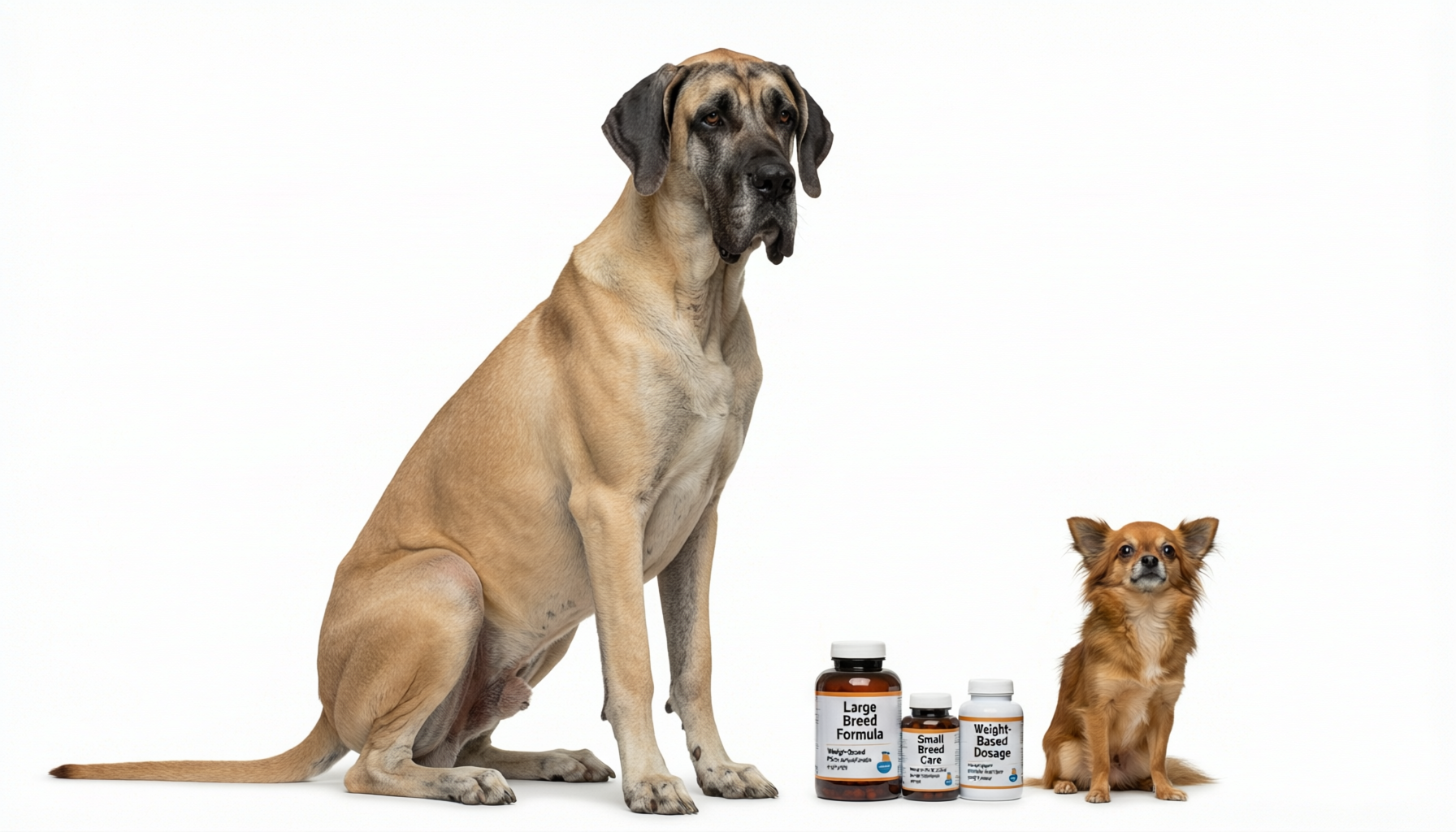
Do Dogs Need Vitamin Supplements? When Commercial Food Falls Short
Do Dogs Need Vitamin Supplements? When Commercial Food Falls Short Key Takeaways Most healthy dogs fed complete and balanced commercial diets do not need routine vitamin supplement
# Do Dogs Need Vitamin Supplements? When Commercial Food Falls Short
Key Takeaways
- Most healthy dogs fed complete-and-balanced commercial diets do not need routine vitamin supplements — AAFCO and WSAVA guidelines state that supplementation is unnecessary unless a specific deficiency, medical condition, or life-stage need is confirmed.
- Supplement use is rising rapidly for targeted concerns: Skin/coat health (CAGR 10.7%), probiotics (CAGR 10.5%), and joint support (28% market share) dominate evidence-backed demand [K5][K4][K3].
- “Falls short” is rarely about missing vitamins — it’s more often about functional gaps: chronic inflammation, gut dysbiosis, age-related cartilage wear, or stress-induced physiological shifts — which standard kibble doesn’t address [K1][K2].
- Effectiveness depends on formulation integrity: Bioavailability, strain specificity (for probiotics), oil oxidation status (for fish oil), and clinical dosing matter more than ingredient presence alone.
- Veterinary guidance is non-negotiable before starting any supplement — especially for dogs on medications (e.g., NSAIDs, steroids) or with liver/kidney disease.
- Joint health: Glucosamine + chondroitin + MSM — not vitamins, but structural precursors shown in peer-reviewed studies to reduce lameness scores in osteoarthritic dogs when dosed at ≥1,500 mg glucosamine/day [K3].
- Gut health: Multi-strain probiotics (e.g., Enterococcus faecium, Bifidobacterium animalis) + prebiotics like FOS — where efficacy hinges on strain viability, CFU count (>1 billion per dose), and gastric acid resistance [K4].
- Skin/coat: Omega-3 EPA/DHA from marine sources (not flaxseed alone), dosed at 75–100 mg/kg/day — because dogs lack the enzyme to efficiently convert plant-based ALA to active EPA [K5].
- Why kibble falls short: AAFCO profiles don’t specify joint-supportive compounds. While some senior formulas add glucosamine, typical inclusion is 100–300 mg per cup — far below the 1,500+ mg/day shown effective in clinical trials [K3].
- Evidence-based action: Choose a joint supplement with ≥1,200 mg glucosamine + ≥900 mg chondroitin per daily dose, backed by third-party testing (e.g., NSF Certified for Sport®). Brands like Nutramax Cosequin and Zesty Paws use clinically validated ratios [K3]. Avoid “11-in-1” blends where joint ingredients are under-dosed to accommodate other actives.
- Why kibble falls short: Even “digestive health” kibbles contain generic prebiotics (e.g., chicory root) but rarely viable, multi-strain probiotics proven in canine trials (Lactobacillus acidophilus + Bifidobacterium longum). Powder formats show 11.2% faster adoption than chews due to precise dosing and stability [K4].
- Evidence-based action: Start with a veterinary-recommended probiotic containing ≥3 billion CFU/dose and documented survival in gastric acid (e.g., FortiFlora®). Pair with bone broth powder only if diarrhea is absent — as collagen peptides may exacerbate osmotic diarrhea in sensitive dogs [K4].
- Why kibble falls short: No commercial diet contains neuroactive compounds at bioactive doses. L-theanine (20–50 mg/kg) and hemp seed oil (not CBD isolate) modulate GABA receptors — effects unattainable via food alone [K1].
- Evidence-based action: Use only products with published analytical certificates confirming ingredient concentration. Avoid “calming treats” listing “chamomile extract” without quantified apigenin content — efficacy requires ≥0.5% apigenin in dried flower [K1].
- Joint support: 6–8 weeks minimum for cartilage matrix synthesis (glucosamine/chondroitin) [K3]
- Probiotics: 10–14 days for microbiome stabilization (multi-strain) [K4]
- Skin/coat: 8–12 weeks for full coat turnover cycle (omega-3) [K5]
- Calming agents: 30–60 minutes for acute L-theanine effect; 4–6 weeks for sustained GABA modulation [K1]
1. Introduction
You’ve just read the label on your dog’s premium kibble: “Complete and balanced for adult maintenance.” You’ve seen the AAFCO statement. So why do 68% of U.S. dog owners now give at least one daily supplement — and why is the pet supplement market projected to double from $1.35B to $2.70B between 2026 and 2036? [K1]
The disconnect isn’t confusion — it’s context. Commercial food meets minimum nutrient requirements for population-level health, but it doesn’t account for individual physiology, environmental stressors, aging metabolism, or subclinical imbalances. A 12-year-old arthritic Labrador may metabolize glucosamine differently than a 2-year-old working German Shepherd. A rescue dog with chronic soft stools may lack microbial diversity no kibble can restore — even if its label lists “prebiotics.” And post-pandemic, 72.8% of supplement users cite canine separation anxiety as a primary driver — a behavioral-physiological state not addressed by vitamins, but by neuro-modulatory compounds like L-theanine and hemp seed oil [K1].
This article cuts through marketing noise. It answers Do dogs need vitamin supplements? not with yes/no absolutes, but with clinically grounded thresholds: when evidence supports intervention, what forms deliver measurable impact, and how to recognize when “commercial food falls short” — and when it doesn’t.
2. Vitamins vs. Functional Supplements: Why “Vitamin” Is Often the Wrong Label
Conclusion: Most dogs don’t need added vitamins — but many benefit from functional supplements targeting specific physiological systems. Confusing the two leads to ineffective or even harmful use.Commercial dog foods formulated to meet AAFCO Nutrient Profiles contain all required vitamins (A, D, E, K, B-complex) and minerals (calcium, zinc, iodine, etc.) at levels validated for average healthy dogs. Over-supplementation — particularly of fat-soluble vitamins like A and D — carries documented risks: vitamin A toxicity can cause bone spurs and joint pain; excess vitamin D triggers hypercalcemia and kidney damage [WSAVA Global Nutrition Guidelines, 2021].
What’s growing instead is demand for non-vitamin, functionally active compounds:
Crucially, “vitamin supplement” is a regulatory category — not a biological one. The fastest-growing segments aren’t multivitamins (which hold <5% market share), but targeted actives: skin/coat formulas (CAGR 10.7%), probiotics (CAGR 10.5%), and calming agents (CAGR 7.2%) [K5][K4][K1]. This reflects a shift from nutrient replacement to system modulation.
3. When Commercial Food Does Fall Short — And What to Do Next
Conclusion: Gaps arise not from nutritional inadequacy, but from physiological demand exceeding dietary provision — most commonly in aging, high-stress, or medically managed dogs. Intervention should be diagnosis-led, not calendar-led.Consider three evidence-anchored scenarios where kibble alone is insufficient — and why:
Scenario 1: Senior Dogs with Early Osteoarthritis
Scenario 2: Dogs with Chronic GI Signs (gas, inconsistent stools, mucus)
Scenario 3: Dogs with Separation Anxiety or Noise Phobia
In all cases, rule out underlying disease first: hypothyroidism mimics anxiety; pancreatitis causes GI signs; degenerative myelopathy masquerades as arthritis. Supplements support — they don’t replace — diagnostics.
4. Choosing Wisely: What Makes a Supplement Evidence-Backed (Not Just Market-Backed)
Conclusion: Credible supplements prioritize pharmacokinetics over packaging — meaning dose, delivery format, stability, and third-party verification matter more than “natural” claims or ingredient count.The $2.7B supplement market thrives on convenience (“functional treats”) and perception (“clean label”) — but biological impact requires rigor. Here’s how to evaluate:
| Factor | What to Verify | Why It Matters | Evidence Anchor |
|--------|----------------|----------------|-----------------|
| Dose Precision | Check label for exact milligram amounts per serving (not “proprietary blend”) | Under-dosing glucosamine (<1,000 mg/day) shows no clinical improvement in controlled trials [K3] | [K3] |
| Format Stability | Prefer powders/capsules for probiotics & fish oil; avoid liquid fish oil without mixed tocopherols | Fish oil oxidizes in air/light; rancid omega-3 increases inflammation. Probiotic strains die in chew matrices without enteric coating [K4][K5] | [K4][K5] |
| Third-Party Testing | Look for NSF, Informed Choice, or ConsumerLab seals | Confirms labeled ingredients are present at stated levels — 22% of tested pet supplements failed potency assays in 2023 USP review | — |
| Clinical Validation | Search manufacturer site for peer-reviewed canine studies (not rodent or in vitro only) | Reishi mushroom shows immune modulation in dogs at 50 mg/kg — but only in a 2022 Veterinary Immunology and Immunopathology trial [K2] | [K2] |
Also note: “Multi-function” products (e.g., “8-in-1”) often dilute key actives to fit labeling constraints. A joint + skin + calm formula may deliver only 200 mg glucosamine — insufficient for joint support — while adding 5 mg biotin, which dogs synthesize endogenously. Prioritize single-target efficacy over broad-spectrum marketing.
5. FAQ
Q1. Can I give my dog a human multivitamin?
No. Human multivitamins contain iron, copper, and vitamin D levels toxic to dogs. Iron overdose causes vomiting, shock, and liver necrosis. Even “low-dose” human vitamins exceed canine tolerable upper intake levels (ULs) established by NRC. Always use canine-formulated products.
Q2. My vet says my dog doesn’t need supplements — but I see improvements when I give them. Why?
Perceived improvement may reflect placebo effect (owner expectation), concurrent lifestyle changes (more walks, less stress), or natural disease fluctuation. True efficacy requires objective metrics: reduced lameness score on veterinary orthopedic exam, lower fecal calprotectin (for GI), or validated behavior scales (e.g., CSIS for anxiety). If benefits persist after 8 weeks of consistent dosing, discuss re-evaluation with your vet.
Q3. Are organic or “natural” supplements safer or more effective?
Not necessarily. “Natural” isn’t regulated for supplements. Organic certification applies to agricultural inputs — not bioavailability or clinical effect. A synthetic, USP-grade glucosamine has higher purity and consistency than an uncertified “organic” version. Safety and efficacy depend on manufacturing standards, not origin labels.
Q4. How long before I see results from a supplement?
Evidence-based timelines vary by system:
6. Conclusion
Do dogs need vitamin supplements? For the vast majority fed AAFCO-compliant food — no. But do many dogs benefit from targeted, evidence-based functional supplements when commercial food falls short of their individual physiological needs? Yes — and the data confirms it. Skin/coat health supplements are growing at 10.7% annually [K5]; probiotics at 10.5% [K4]; joint formulas hold 28% market share [K3]. These aren’t trends driven by hype — they’re responses to real, measurable gaps: oxidative stress in aging joints, dysbiosis in stressed guts, neurochemical imbalance in anxious brains.
The critical step isn’t choosing whether to supplement — it’s determining why, what, and how much. That requires collaboration with a veterinarian who understands nutraceutical pharmacokinetics, access to third-party verified products, and realistic expectations grounded in canine physiology — not human wellness culture. Start with a clear clinical question (“Is this dog’s lameness inflammatory or degenerative?”), match it to an intervention with published canine data, and measure outcomes objectively. That’s how “commercial food falls short” becomes a solvable problem — not a marketing prompt.
Written by PawLifeWellness Team
Pet Health Writers
Our team creates practical, research-informed pet wellness content for everyday pet parents. Always consult your veterinarian for personalized advice.