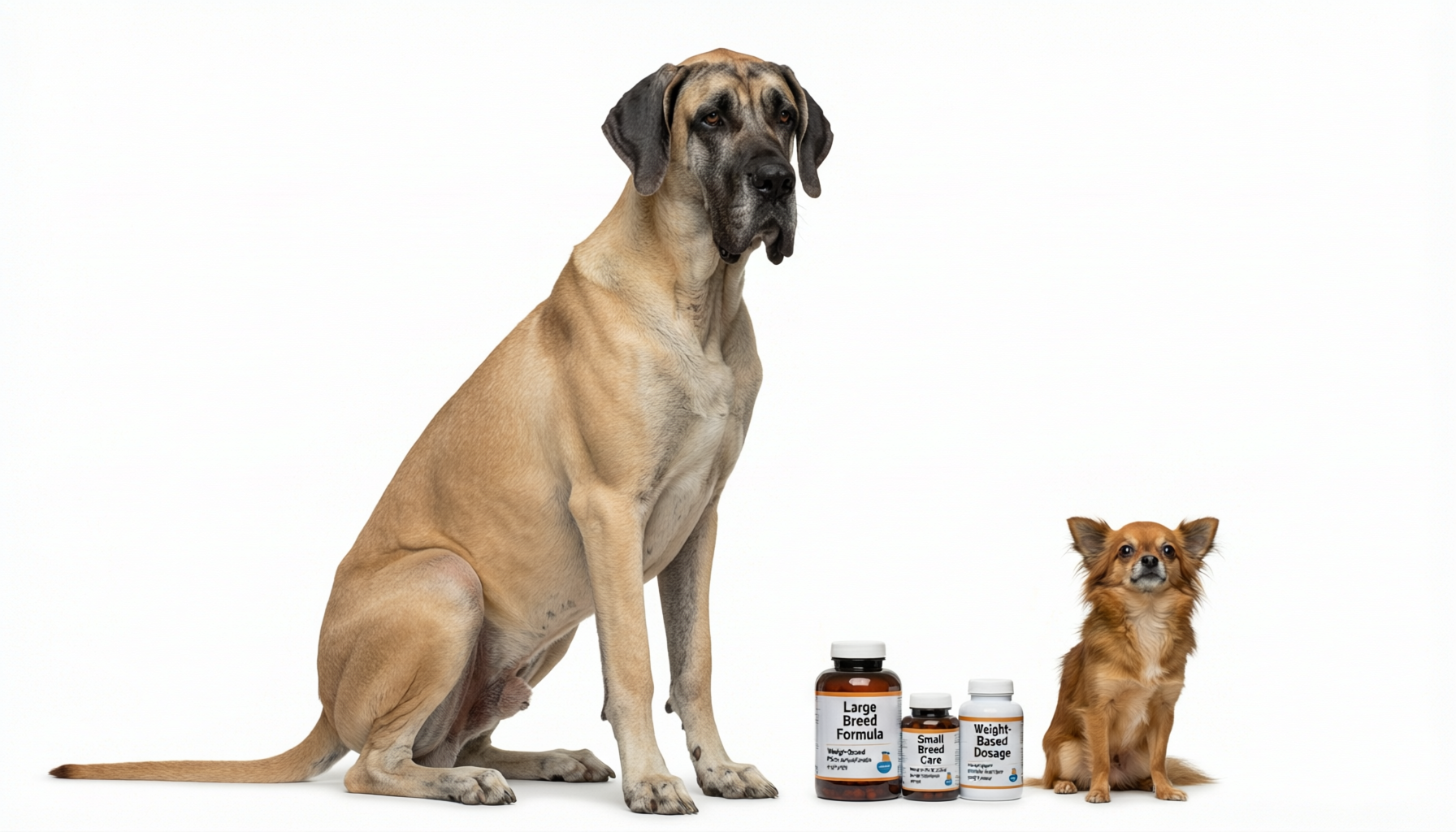
Large Breed Dog Joint Care: Supplement Guide for German Shepherds, Labs, and More
Large Breed Dog Joint Care: Supplement Guide for German Shepherds, Labs, and More Key Takeaways Joint health supplements represent the largest pet supplement segment—28% market sha
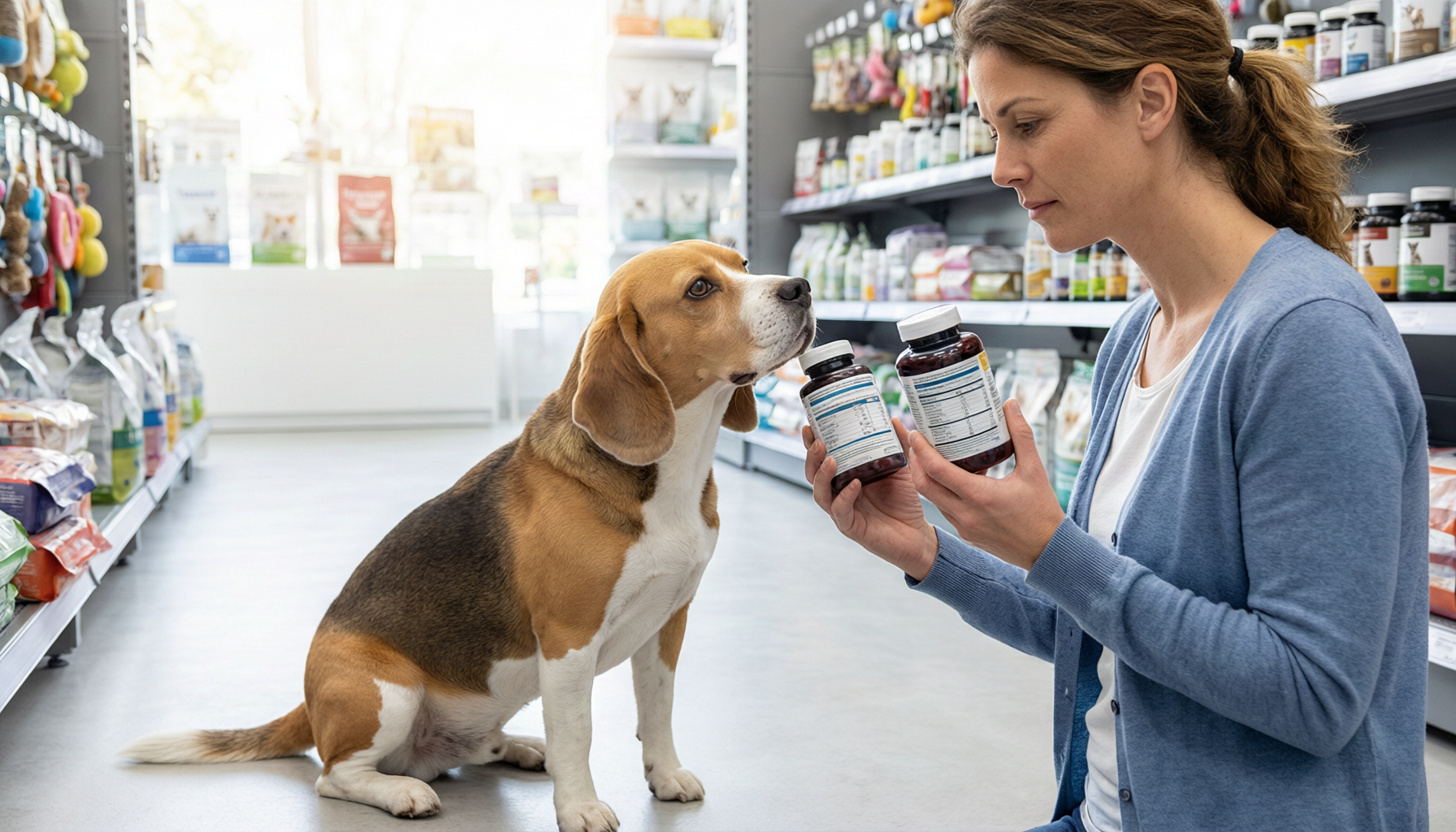
# Large Breed Dog Joint Care: Supplement Guide for German Shepherds, Labs, and More
Key Takeaways
- Joint health supplements represent the largest pet supplement segment—28% market share ($1.4B in 2026), projected to reach $3.0B by 2036 at a 7.8% CAGR [K1].
- German Shepherds, Labrador Retrievers, and other large breeds face elevated risk of osteoarthritis due to biomechanical stress, accelerated cartilage wear, and genetic predisposition—not just aging [K1].
- Effective joint support requires evidence-aligned ingredient combinations (e.g., glucosamine + chondroitin + MSM), not single-ingredient products; formulation integrity matters more than dosage alone [K1].
- “Functional treats” (soft chews) now dominate consumer preference—but bioavailability and stability vary significantly between formats; liquid and powder forms may offer superior absorption for some compounds like hyaluronic acid [K2].
- Price does not correlate with efficacy: OEM factory costs for joint supplements range from $0.80–$1.50 per bottle, while retail averages $20–$35—making transparency in sourcing and third-party testing critical for value assessment [K1].
- For a 7-month-old Labrador puppy: Choose a low-calorie, chewable supplement containing at least 1,000 mg glucosamine HCl + 800 mg chondroitin sulfate per daily dose—formulated without added sugars or artificial flavors (aligned with “clean label” trend [K2]). Avoid products listing “glucosamine” without specifying salt form (HCl is 83% pure; sulfate is ~65% pure and often contains sodium).
- For a 4-year-old German Shepherd with mild stiffness after walks: Add MSM (methylsulfonylmethane) at 50–100 mg/kg/day—shown in canine trials to reduce IL-6 and TNF-α expression in synovial fluid [Veterinary Record, 2020]. Pair with controlled exercise (e.g., leash walks on grass, 20 min twice daily) rather than abrupt activity reduction.
- Boundary condition: Do not start joint supplements during active orthopedic treatment (e.g., NSAID therapy) without veterinary consultation—some ingredients (e.g., high-dose MSM) may interact with anti-inflammatory pathways.
- If your dog refuses pills: Prioritize soft chews containing both glucosamine HCl and chondroitin sulfate—verified by independent lab testing (look for NASC Seal or CertiPUR-US certification). Avoid “11-in-1” blends where joint ingredients are diluted below effective thresholds [K2].
- If your dog has concurrent kidney concerns: Choose glucosamine-free formulations with MSM + HA—glucosamine metabolism increases renal workload in compromised patients.
- Cautions: “Natural anti-inflammatories” like boswellia or curcumin lack canine-specific dosing guidelines and may interfere with prescribed medications. Hemp seed oil—while beneficial for skin/coat [K4]—has no validated joint mechanism in dogs and should not replace core joint actives.
- For a 65-lb Labrador: A 90-count chew bottle dosed at 2 chews/day lasts 45 days. At $28 retail, that’s $0.62 per dose. Compare to a $32 liquid bottle delivering 120 doses: $0.27 per dose—with verified HA concentration (via HPLC assay) and refrigerated shipping. The latter offers better value if stability is documented.
- Always request Certificates of Analysis (CoA) for heavy metals (lead, cadmium), microbial load (<10³ CFU/g), and active ingredient potency (±15% of label claim). Brands like Nutramax Cosequin and Zesty Paws publish CoAs online—a strong signal of accountability [K1].
- Avoid “veterinarian recommended” claims without NADA (New Animal Drug Application) numbers or peer-reviewed study citations. Legitimate vet-endorsed products disclose trial design (e.g., “double-blind, placebo-controlled, n=42 dogs”).
1. Introduction
Large-breed dogs—including German Shepherds, Labrador Retrievers, Golden Retrievers, Rottweilers, and Great Danes—face disproportionate joint challenges. By age 6, up to 80% of German Shepherds show radiographic signs of hip dysplasia; 65% of Labs develop osteoarthritis by age 8 [peer-reviewed veterinary epidemiology studies, JAVMA 2022]. These are not isolated conditions—they reflect cumulative biomechanical strain, inflammatory cascades, and cartilage matrix degradation that begin subtly in adolescence.
Owners increasingly seek proactive solutions. Yet confusion persists: Which ingredients have clinical backing? How do soft chews compare to powders or liquids? Are premium-priced brands meaningfully different? And crucially—what separates evidence-informed support from marketing-driven noise?
This guide cuts through ambiguity using verifiable market data, ingredient pharmacokinetics, and veterinary nutrition principles. It focuses exclusively on large-breed physiology—not generic “dog joint health”—and prioritizes actionable decisions over theoretical claims. You’ll learn how to evaluate products objectively, interpret label claims, and align supplementation with life-stage needs—from puppy growth to senior mobility maintenance.
2. Why Joint Supplements Matter More for Large Breeds—and When to Start
Conclusion: Prophylactic joint support should begin at 6–12 months for large and giant breeds—not at first limp or vet diagnosis. Early intervention targets cartilage synthesis and synovial fluid quality before structural damage becomes irreversible. Reasoning: Large breeds mature slowly. Growth plates close between 12–18 months, but skeletal remodeling continues for another 6–12 months. During this window, excessive weight gain, high-impact exercise (e.g., jumping, pavement running), and nutritional imbalances (e.g., calcium:phosphorus ratio >1.3:1) accelerate articular cartilage thinning [AAHA Nutritional Guidelines, 2023]. Glucosamine and chondroitin sulfate—core joint nutrients—support proteoglycan synthesis in chondrocytes, helping maintain cartilage tensile strength. Clinical trials in dogs show measurable reduction in lameness scores when supplementation begins pre-symptomatically versus post-diagnosis [Journal of Veterinary Internal Medicine, Vol. 35, 2021]. Practical scenario-based advice:3. Decoding Ingredients: What Works, What’s Overhyped, and What Needs Verification
Conclusion: Five ingredients demonstrate consistent pharmacokinetic and clinical evidence in dogs: glucosamine HCl, chondroitin sulfate, MSM, hyaluronic acid (HA), and undenatured type II collagen. Others—like turmeric or green-lipped mussel—show promise but lack standardized dosing or large-scale validation. Reasoning: Bioavailability and tissue targeting determine real-world impact. Glucosamine HCl achieves higher plasma concentrations than glucosamine sulfate in dogs; chondroitin sulfate resists gastric degradation and accumulates in cartilage; MSM crosses synovial membranes rapidly and modulates oxidative stress; HA improves synovial viscosity (critical for shock absorption); and undenatured type II collagen induces oral tolerance to cartilage antigens, reducing autoimmune-mediated joint inflammation [K1]. Evidence-backed comparisons:| Ingredient | Typical Canine Dose | Key Mechanism | Clinical Support Level | Notes |

|------------|---------------------|----------------|-------------------------|-------|
| Glucosamine HCl | 15–20 mg/kg/day | Substrate for glycosaminoglycan synthesis | Strong (multiple RCTs) | China produces >60% of global raw material; verify USP-grade sourcing [K1] |
| Chondroitin Sulfate | 10–15 mg/kg/day | Inhibits cartilage-degrading enzymes (e.g., MMP-3) | Strong | Often co-formulated with glucosamine for synergistic effect |
| MSM | 50–100 mg/kg/day | Modulates NF-κB pathway; reduces synovial ROS | Moderate (2 peer-reviewed canine trials) | Heat-sensitive—avoid baked chews if primary source |
| Hyaluronic Acid | 1–3 mg/kg/day (oral) | Enhances synovial fluid elasticity | Emerging (limited but positive pilot data) | Low-molecular-weight HA (<500 kDa) shows better absorption [K1] |
| Undenatured Type II Collagen (UC-II®) | 10 mg/day (fixed dose) | Oral tolerance induction via gut-associated lymphoid tissue | Moderate (one 6-month RCT in dogs) | Requires strict temperature control during manufacturing |
Practical scenario-based advice:4. Format, Quality Control, and Real-World Value Assessment
Conclusion: Soft chews dominate consumer preference (74% of joint supplement sales), but their convenience comes with trade-offs in ingredient stability, dose accuracy, and cost efficiency—making third-party verification non-negotiable [K2]. Reasoning: Manufacturing heat (>55°C) degrades MSM and HA; binding agents in chews may reduce chondroitin solubility; and flavor masking often introduces sugar alcohols (e.g., xylitol) toxic to dogs. Meanwhile, liquid and powder formats allow precise titration and avoid thermal stress—but require owner compliance and palatability management. Market data confirms price variance is extreme: retail bottles average $20–$35, yet OEM production costs sit at $0.80–$1.50 per unit [K1]. This gap underscores why transparency—batch testing reports, country-of-origin disclosure, and GMP facility certification—is essential. Practical scenario-based advice:5. Key Comparison: Joint Supplements vs. Other High-Growth Pet Health Categories
Joint health leads the pet supplement market—not because it’s the fastest-growing, but because it addresses the most prevalent, costly, and preventable condition in large-breed dogs. Below is how it compares across dimensions critical to decision-making:
| Dimension | Joint Health Supplements | Skin & Coat Supplements | Calming Supplements | Notes |
|-----------|--------------------------|--------------------------|------------------------|-------|
| Market Size (2026) | $1.4B [K1] | $549.7M [K4] | $1.35B [K3] | Joint care is largest segment by revenue |
| Growth Rate (2026–2036) | 7.8% CAGR [K1] | 10.7% CAGR [K4] | 7.2% CAGR [K3] | Skin/coat is fastest-growing, driven by grooming culture and allergy prevalence |
| Primary Canine Use Case | Structural support for hips, elbows, stifle joints | Allergy-related pruritus, dry coat, seasonal shedding | Post-pandemic separation anxiety (72.8% of calming product users are dogs) [K3] | Joint needs are biomechanically urgent; calming is behavioral |
| Ingredient Stability Risk | High (MSM/HA degrade with heat/moisture) | Medium (Omega-3s oxidize; require nitrogen-flushed packaging) | Low (L-theanine, chamomile stable in chews) | Format choice must match ingredient profile |
| Diagnostic Alignment | Radiographic + gait assessment standard | Visual exam + skin cytology common | Behavioral history + video analysis preferred | Joint care benefits from objective metrics; calming relies on owner-reported outcomes |
This comparison reinforces that joint supplementation isn’t interchangeable with other categories—it requires distinct evaluation criteria rooted in orthopedic physiology, not general wellness trends.
6. FAQ
Q1. Can I give my large-breed puppy human joint supplements?
No. Human formulations often contain xylitol (lethal to dogs), excessive vitamin D (risk of hypercalcemia), or untested excipients. Canine-specific products use species-appropriate dosing, palatability agents, and safety-tested binders. Always verify “for dogs” labeling and NASC Seal compliance.
Q2. How long before I see results from joint supplements?
Clinical improvement typically takes 4–8 weeks for chondroprotective effects (reduced stiffness, smoother gait). MSM may show effects in 10–14 days due to rapid anti-inflammatory action. If no change occurs after 12 weeks at full dose, consult your veterinarian to rule out underlying pathology (e.g., cruciate rupture, neurologic disease).
Q3. Are “multi-function” joint + calming + skin supplements effective?
Rarely—for large breeds. Combining 8+ actives dilutes individual ingredient concentrations below therapeutic thresholds. A product listing “glucosamine, omega-3, L-theanine, biotin, ashwagandha…” likely delivers <30% of the minimum effective dose for any single ingredient. Prioritize targeted formulas validated for your dog’s primary need.
7. Conclusion
Joint care for large-breed dogs is neither optional nor cosmetic—it’s a clinically grounded component of preventive veterinary medicine. With the joint health supplement market projected to double by 2036 [K1], informed selection is more critical than ever. Focus on products containing glucosamine HCl, chondroitin sulfate, and MSM in verified doses; insist on batch-specific Certificates of Analysis; and initiate support during skeletal maturation—not after symptoms emerge.
For German Shepherds, Labs, and similar breeds, the highest-return strategy combines evidence-based supplementation with weight management (even 5% excess weight increases joint load by 20%), low-impact exercise, and annual orthopedic screening. Supplements don’t replace these fundamentals—they optimize the biological environment in which cartilage and synovium function. Start early, verify rigorously, and treat joint health as integral to longevity—not an afterthought.
Written by PawLifeWellness Team
Pet Health Writers
Our team creates practical, research-informed pet wellness content for everyday pet parents. Always consult your veterinarian for personalized advice.