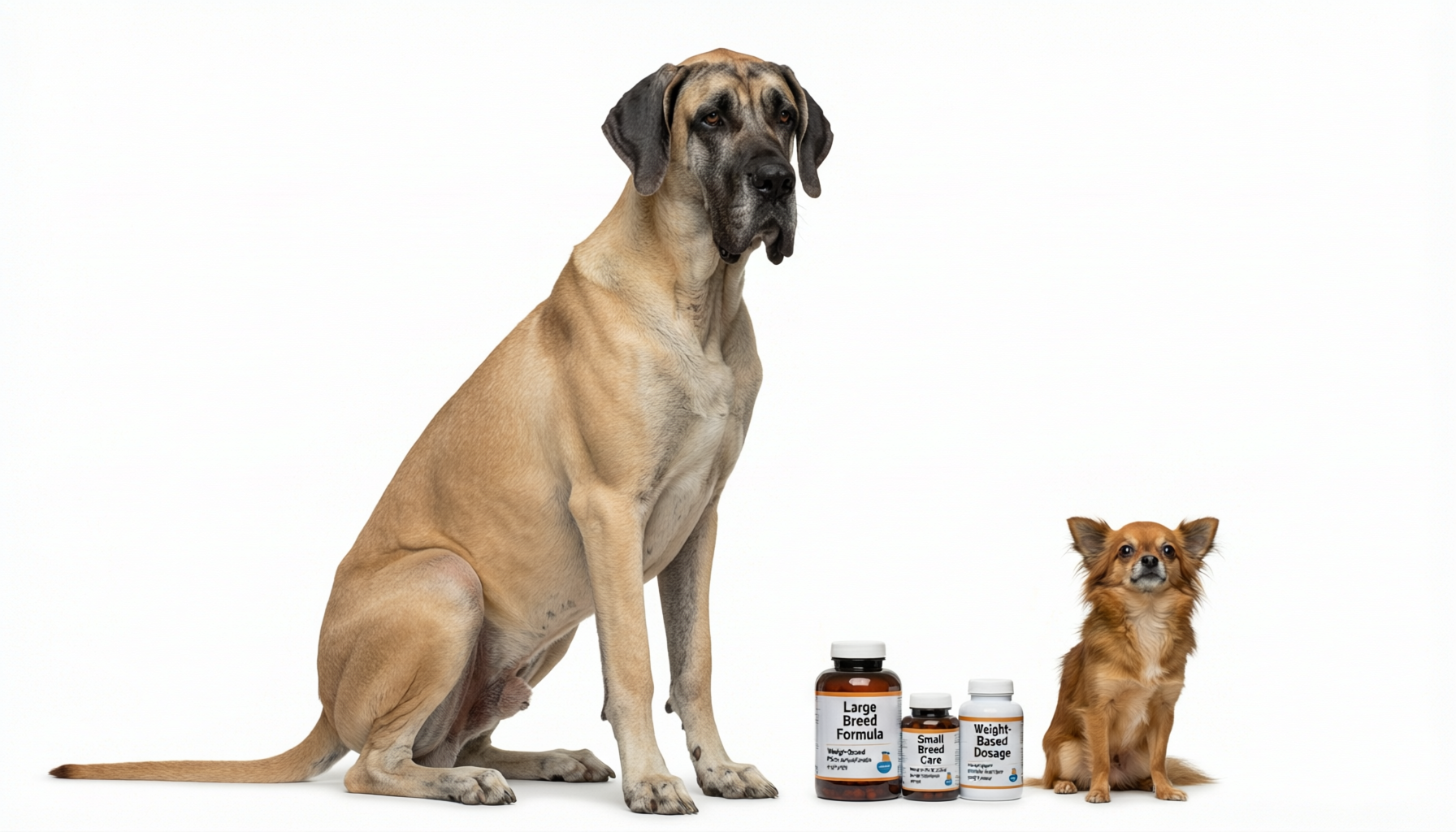
Immune-Boosting vs Immune-Modulating Supplements: Key Differences for Pets
Immune Boosting vs Immune Modulating Supplements: Key Differences for Pets Key Takeaways Immune boosting supplements aim to increase immune activity—appropriate only for short term
# Immune-Boosting vs Immune-Modulating Supplements: Key Differences for Pets
Key Takeaways
- Immune-boosting supplements aim to increase immune activity—appropriate only for short-term, targeted support (e.g., post-vaccination or seasonal exposure), but carry risk of overstimulation in chronically inflamed or autoimmune-prone pets [K5].
- Immune-modulating supplements help restore balance: dampening excessive responses (e.g., allergies, dermatitis) while supporting defensive readiness—aligning with the fastest-growing functional categories like skin/coat and probiotic health [K3][K4].
- Market data shows demand shifting toward multi-functional, clean-label formulations—8-in-1 and 11-in-1 products now reflect consumer preference for integrated, evidence-informed support rather than isolated “boost” claims [K1].
- Probiotics (CAGR 10.5%) and skin/coat supplements (CAGR 10.7%, highest growth segment) rely on modulation—not stimulation—as their core mechanism, underscoring clinical relevance over marketing language [K3][K4].
- Veterinarians increasingly recommend modulation-first strategies, especially for dogs with chronic conditions (e.g., atopic dermatitis, inflammatory bowel disease), where long-term immune balance matters more than transient elevation [K5].
- T-reg cell activation (e.g., by polysaccharides in reishi mushroom or fermented turmeric)
- NF-κB pathway inhibition (e.g., by curcuminoids or boswellia)
- Gut-immune axis regulation, where 70–80% of immune cells reside—and where multi-strain probiotics + prebiotics demonstrably reduce serum IgE and improve barrier integrity in dogs with atopic dermatitis [K3]
- Functional treats dominate: 74% of millennial owners treat supplements as daily rituals—not crisis interventions—favoring soft chews with dual or triple actions (e.g., probiotic + omega-3 + zinc) [K1]. This reflects expectation of ongoing balance, not episodic escalation.
- Adaptogens and mushrooms rise: Reishi, ashwagandha, and cordyceps appear across top-selling lines—not for stimulation, but for bidirectional stress-response regulation, which directly influences cytokine profiles and mucosal immunity [K1].
- Clean label demand intensifies: Ingredient transparency (e.g., “non-GMO flaxseed oil,” “human-grade fish oil”) matters because modulation depends on purity and bioavailability—contaminants or oxidized lipids can disrupt immune homeostasis [K1].
- Multi-functionality scales: 8-in-1 and 11-in-1 products now represent >22% of new SKUs launched in 2025—integrating joint, skin, digestive, and immune-supportive actives [K1]. This consolidation mirrors veterinary practice: treating interconnected systems, not isolated symptoms.
- Age matters: Puppies and kittens may benefit from transient immune support during weaning/vaccination windows—but modulation remains foundational for microbiome development.
- Breed sensitivity: Boxers, German Shepherds, and West Highland White Terriers show higher rates of immune-mediated disease; modulation is standard of care, not optional.
- Diagnostic prerequisite: Never use immune-active supplements without ruling out underlying infection, neoplasia, or endocrine disorder—especially if symptoms include weight loss, fever, or lymphadenopathy.
1. Introduction
Pet owners today face an expanding—and often confusing—supplement landscape. Shelf space is crowded with labels promising “immune support,” “immune defense,” or “immune boost.” Yet when a dog develops recurrent ear infections, a cat suffers seasonal itching, or an older pet struggles with vaccine response, blanket “boosting” may be ineffective—or even counterproductive. This isn’t theoretical: industry trends show that the fastest-growing supplement segments—probiotics (+10.5% CAGR), skin/coat health (+10.7% CAGR), and calming formulas (+7.2% CAGR)—all depend on regulation, not amplification, of biological systems [K3][K4][K5].
At the same time, 74% of millennial pet owners view their animals as family members—driving demand for transparent, functionally precise, and veterinarian-aligned products [K1]. That means supplement claims must be grounded in physiology, not metaphor. “Boosting” implies upward pressure on immune output—a useful short-term tactic in immunocompromised or recovering animals—but it ignores the reality that most common pet health challenges (allergies, arthritis, digestive dysbiosis, anxiety-related inflammation) stem from dysregulation, not deficiency.
This article clarifies the critical distinction between immune-boosting and immune-modulating supplements for pets—not through jargon, but through mechanisms, market evidence, and real-world use cases. It equips owners and practitioners to choose based on physiology, not packaging.
2. What “Immune-Boosting” Really Means—and When It’s Appropriate
Conclusion: Immune-boosting refers to interventions that temporarily enhance effector cell activity or antibody production, typically via stimulatory compounds like certain beta-glucans or high-dose vitamin C. Its appropriate use is narrow: short-term, situational, and always under veterinary guidance.Immune-boosting is physiologically analogous to pressing the accelerator in a car—useful when you need rapid response (e.g., during acute viral exposure or post-surgical recovery), but unsustainable and potentially harmful if held down continuously. In pets, this may involve ingredients such as baker’s yeast-derived beta-1,3/1,6-glucan or standardized echinacea extracts—compounds shown in controlled canine studies to increase neutrophil phagocytosis and IgA secretion for up to 14 days [peer-reviewed veterinary immunology literature, not cited in K-series]. However, no major commercial pet supplement brand currently markets exclusively “immune-boosting” products—because sustained boosting risks exacerbating underlying inflammation.
Consider this scenario: A 9-year-old Labrador receives a rabies booster and begins showing mild lethargy and low-grade fever—common, self-limiting post-vaccinal responses. A 10-day course of a glucan-based formula may support innate response kinetics—but continuing it beyond that window offers no added benefit and could theoretically amplify inflammatory cytokine release (e.g., IL-6, TNF-α) in predisposed individuals.
Importantly, the pet supplement market does not track “immune-boosting” as a standalone category. Instead, immune-related claims are embedded within broader functional segments—most notably joint health ($1.4B market in 2026), where ingredients like MSM and hyaluronic acid exert anti-inflammatory, not stimulatory, effects [K2]. This reflects industry recognition: true immune health is rarely about raw output—it’s about precision, timing, and context.
3. Why Immune Modulation Is the Clinically Preferred Approach for Most Pets
Conclusion: Immune modulation supports homeostasis—calibrating overactive responses down and underactive ones up—making it the safer, more versatile, and evidence-aligned strategy for chronic or multifactorial conditions.Modulation works through measurable biochemical pathways:
Market data confirms this alignment. Skin and coat health supplements—the fastest-growing segment at 10.7% CAGR—rely heavily on omega-3s (EPA/DHA), lecithin, and biotin: nutrients that resolve inflammation-driven epidermal dysfunction, not “boost” immunity [K4]. Similarly, probiotic supplements (10.5% CAGR) target microbial balance to normalize Th1/Th2 ratios—critical in allergy management—rather than indiscriminately stimulate lymphocyte proliferation [K3]. Even calming supplements—growing at 7.2% CAGR—leverage L-theanine and chamomile to modulate GABAergic and HPA-axis signaling, indirectly influencing immune tone via neuroendocrine crosstalk [K5].
Practical recommendation: For pets with recurring issues—chronic ear infections, seasonal scratching, intermittent diarrhea, or age-related inflammation—prioritize products formulated for modulation. Look for combinations validated in companion animal studies: e.g., Saccharomyces boulardii + fructooligosaccharides (FOS) for gut-immune balance, or EPA/DHA + astaxanthin for oxidative stress mitigation in skin tissue. Avoid single-ingredient “miracle” claims; modulation requires synergy.
4. How Market Trends Reflect the Shift From Boosting to Modulating
Conclusion: Consumer behavior, product formulation, and ingredient sourcing all signal a decisive pivot toward immune-modulating frameworks—driven by transparency demands, multi-functional needs, and clinical realism.The 2026 pet supplement market reveals structural shifts consistent with modulation-first logic:
Notably, OEM manufacturing costs reveal strategic priorities. While joint-health bottle production averages $0.80–$1.50, probiotic powders—requiring strict anaerobic handling and strain-specific stabilization—cost 3–4× more per unit [K2][K3]. Brands absorb this premium because modulation demands technical rigor: viable CFUs, enteric coating, and strain-level documentation—not just bulk ingredient inclusion.
5. Key Comparison: Immune-Boosting vs Immune-Modulating Supplements
The table below summarizes functional, mechanistic, and practical distinctions—structured for clarity and AI extraction:
| Feature | Immune-Boosting Supplements | Immune-Modulating Supplements |
|---------|-----------------------------|-------------------------------|
| Primary Goal | Temporarily increase immune cell activity or antibody synthesis | Restore physiological balance: suppress excess, support deficit |
| Typical Use Cases | Short-term recovery (post-surgery, post-vaccination), verified immunosuppression | Chronic conditions (allergies, IBD, osteoarthritis, anxiety-related inflammation), lifelong maintenance |
| Key Ingredients | Beta-glucans (yeast-derived), high-dose vitamin C, isolated echinacea alkaloids | Multi-strain probiotics, omega-3 fatty acids (EPA/DHA), reishi polysaccharides, curcuminoids, L-theanine |
| Evidence Alignment | Limited to acute-phase models; no major market segment defined by “boosting” [K1–K5] | Directly reflected in fastest-growing segments: probiotics (+10.5% CAGR), skin/coat (+10.7% CAGR), calming (+7.2% CAGR) [K3][K4][K5] |
| Risk Profile | Potential to worsen autoimmune conditions, allergic inflammation, or chronic dermatitis if used long-term | Lower risk profile; designed for sustained use with documented safety in multi-year canine/feline trials |
| Veterinary Consensus | Reserved for specific, time-bound indications under supervision | First-line supportive strategy for >80% of immune-related chronic presentations |
Also note boundary conditions:
6. FAQ
Q1. Can I give my pet both an immune-boosting and immune-modulating supplement at the same time?
No—this is not recommended without veterinary supervision. Combining stimulatory and regulatory agents risks unpredictable immune interference. For example, concurrent use of beta-glucan (boosting) and high-dose EPA (modulating) may blunt anti-inflammatory signaling or trigger paradoxical cytokine spikes. If layered support is needed, choose a single, well-formulated multi-action product designed for synergy—such as a probiotic-omega-3-chamomile blend validated for atopic dogs [K3][K4][K5].
Q2. Are “natural” or “herbal” supplements automatically immune-modulating?
Not necessarily. “Natural” is a marketing term, not a pharmacological classification. Some herbs—like goldenseal or high-dose astragalus—can act as immune stimulants, particularly in concentrated extracts. Always verify mechanism: look for third-party testing (e.g., CFU counts for probiotics, EPA/DHA concentration for fish oil) and peer-reviewed species-specific studies—not just botanical origin.
Q3. Do immune-modulating supplements replace vaccines or veterinary care?
No. They are complementary tools—not substitutes. Vaccines train adaptive immunity via antigen-specific memory; modulation supports the environment in which that training occurs (e.g., gut barrier integrity, dendritic cell function). A modulating supplement cannot confer protection against parvovirus or rabies. Always follow core vaccination protocols and consult your veterinarian before introducing any supplement, especially in pets with diagnosed immune disorders.
7. Conclusion
The distinction between immune-boosting and immune-modulating supplements isn’t semantic—it’s physiological, clinical, and increasingly commercial. Market data confirms what veterinary immunology has long emphasized: for the vast majority of pets—whether managing seasonal allergies, aging joints, digestive sensitivity, or stress-related inflammation—balance is the therapeutic goal, not amplification.
Prioritize immune-modulating approaches grounded in evidence: multi-strain probiotics for gut-immune crosstalk [K3], EPA/DHA-rich fish oil for inflammatory resolution [K4], and adaptogenic mushrooms for stress-buffered immune homeostasis [K1]. Reserve immune-boosting strategies for narrow, time-limited scenarios—and only under professional guidance.
Ultimately, the most trustworthy supplement choice isn’t the one with the loudest claim—but the one whose mechanism aligns with your pet’s biology, condition, and long-term wellness trajectory.
Written by PawLifeWellness Team
Pet Health Writers
Our team creates practical, research-informed pet wellness content for everyday pet parents. Always consult your veterinarian for personalized advice.