AAHA Guidelines on Joint Supplements for Aging Pets: What Owners Should Know
AAHA Guidelines on Joint Supplements for Aging Pets: What Owners Should Know Key Takeaways The AAHA American Animal Hospital Association does not publish formal clinical practice g

# AAHA Guidelines on Joint Supplements for Aging Pets: What Owners Should Know
Key Takeaways
- The AAHA (American Animal Hospital Association) does not publish formal clinical practice guidelines specifically for joint supplements—but it does endorse evidence-informed, veterinarian-guided use of nutraceuticals as part of a comprehensive osteoarthritis management plan for aging dogs and cats [K4].
- Joint health supplements represent 28% of the global pet supplement market ($1.4B in 2026), projected to reach $3.0B by 2036 at a 7.8% CAGR—growth driven largely by aging pet populations and preventive care adoption [K1].
- Not all joint supplements are equivalent: ingredient profiles, bioavailability, third-party testing, and dosage consistency vary significantly—even among top-selling brands like Nutramax Cosequin, Zesty Paws, and VetIQ [K1].
- Cost-to-value analysis matters: retail prices average $20–$35 per 90-count bottle, while OEM manufacturing costs range from $0.80–$1.50 per bottle—highlighting wide margins and variable quality control [K1][K3].
- Pet owners should prioritize vet-reviewed products with transparent labeling, avoid multi-function “11-in-1” formulations unless clinically indicated, and never substitute supplements for veterinary diagnostics or pain management [K2][K4].
- Diagnosis-first approach: Supplements should never replace diagnostic workups (e.g., radiographs, gait assessment, synovial fluid analysis). OA symptoms overlap with neurologic, orthopedic, or systemic disease.
- Veterinarian co-management: Dosing must be calibrated to species, weight, renal/hepatic status, and concurrent medications. For example, high-dose MSM may interact with anticoagulants; hyaluronic acid formulations vary widely in molecular weight and absorption profile [K1].
- Outcome monitoring: Owners should track objective metrics—stairs climbed, time spent standing unassisted, latency to rise after rest—not just subjective “seems more playful.” Without baseline and follow-up assessment, benefit cannot be validated.
- Bioavailability matters: Glucosamine sulfate degrades rapidly in stomach acid; glucosamine HCl is more stable but requires enteric coating or co-administration with antioxidants to prevent oxidation [K1].
- Chondroitin source affects purity: Bovine-sourced chondroitin carries higher risk of contamination (e.g., oversulfated chondroitin) than marine- or synthetic-derived forms—yet <12% of commercial products disclose origin [USP Dietary Supplements Verification Program, 2023].
- MSM and hyaluronic acid lack robust RCT evidence in cats, and studies in dogs show inconsistent absorption—especially oral HA, which is largely degraded before reaching synovial tissue [K1].
- A typical 90-count bottle retails for $20–$35—marking up OEM factory costs ($0.80–$1.50/bottle) by 1,500–4,000% [K1][K3].
- China produces >60% of global glucosamine raw material (CAGR 10.5%), making supply chain transparency essential—especially given variability in purification standards across factories [K1].
- Amazon sales incur ~15% referral fees + $3–$4 FBA handling—costs often baked into MSRP rather than absorbed by brands [K3].
1. Introduction
More than 20% of dogs over age 7—and an estimated 60% of cats over age 12—show radiographic or clinical signs of osteoarthritis (OA), a progressive, painful degenerative joint disease [AAHA Clinical Practice Guidelines, Pain Management, 2022]. As pets live longer due to improved nutrition, preventive care, and advanced diagnostics, joint health has become a frontline concern for owners and veterinarians alike.
Yet confusion persists. Online retailers promote dozens of joint supplements with overlapping claims—“clinically proven,” “veterinarian recommended,” “fast-acting”—often without disclosing supporting evidence, dosing protocols, or regulatory oversight. The U.S. Food and Drug Administration (FDA) does not approve pet supplements for safety or efficacy before sale; they fall under the Dietary Supplement Health and Education Act (DSHEA) framework, meaning manufacturers bear responsibility for substantiation—not regulators [FDA Center for Veterinary Medicine, Guidance #231].
This article clarifies what the AAHA actually advises about joint supplements—not through formal standalone guidelines, but via its integrated clinical recommendations on OA management, preventive wellness, and nutraceutical use. Drawing on verifiable market data, ingredient science, and veterinary consensus standards, we translate evidence into actionable decisions for owners of aging pets.
2. What the AAHA Does Recommend—And Why It Matters
Conclusion: The AAHA supports joint supplements only when used as adjunctive, veterinarian-supervised tools within a multimodal OA plan—not as standalone solutions.The AAHA’s 2022 Pain Management Guidelines and 2023 Preventive Healthcare Guidelines consistently frame nutraceuticals—including glucosamine, chondroitin, and MSM—as components of a tiered strategy that begins with weight optimization, exercise modification, and environmental adaptation, then progresses to pharmaceuticals (e.g., NSAIDs, gabapentin) and physical rehabilitation when needed [AAHA, Pain Management Guidelines, 2022]. Joint supplements appear in Tier 2: “non-pharmaceutical interventions with emerging or moderate evidence.”
Why does this distinction matter? Because AAHA-endorsed use hinges on three conditions:
Practical advice: Before purchasing any supplement, schedule a wellness exam focused on mobility. Ask your veterinarian: “Has OA been confirmed—or ruled out—as the cause of my pet’s stiffness?” If the answer is “we’ll try a supplement and see,” request diagnostic justification first.
3. Ingredient Science: What Works, What Doesn’t, and What’s Overhyped
Conclusion: Glucosamine hydrochloride (HCl) and chondroitin sulfate have the strongest clinical support for canine OA—but efficacy depends on formulation integrity, not just presence on the label.Evidence from randomized controlled trials (RCTs) shows modest but statistically significant improvements in lameness scores and owner-reported mobility for dogs receiving glucosamine HCl + chondroitin sulfate versus placebo—particularly when administered for ≥8 weeks at doses ≥1,500 mg glucosamine + 1,200 mg chondroitin daily [JAVMA, 2018; Canine Osteoarthritis Consensus Statement, 2020].
However, key caveats apply:
Newer ingredients gaining traction—like type II collagen (undenatured) and adaptogens (ashwagandha, reishi)—are supported primarily by in vitro or small pilot studies. While promising for immune modulation or stress reduction, none yet meet AAHA’s threshold for “moderate evidence” in joint-specific outcomes [K2].
Practical advice: Prioritize products listing exact ingredient amounts per serving, not just “proprietary blends.” Look for third-party verification seals (e.g., NASC, USP, ConsumerLab) and avoid “multi-function” formulas (e.g., “8-in-1”) unless your vet confirms each ingredient addresses a documented need—polypharmacy increases interaction risk without proven additive benefit [K2].
4. Market Realities: Price, Sourcing, and Transparency Trade-Offs
Conclusion: Retail price reflects marketing, distribution, and branding—not necessarily ingredient quality or clinical validation. Understanding supply chain basics helps owners assess value beyond packaging claims.The $1.4B joint health supplement segment is growing at 7.8% annually, fueled by pet humanization: 74% of millennial owners view pets as family members and willingly invest in preventive wellness [K1][K2]. Yet cost structures reveal critical insights:
This means two products with identical labels may differ drastically in actual ingredient concentration, stability, or contaminant load—depending on where and how they’re manufactured. For example, one study found 37% of tested glucosamine supplements contained ≤60% of labeled chondroitin content, with no correlation to price point [Journal of Animal Physiology, 2021].
Practical advice: Check the manufacturer’s website for facility certifications (e.g., GMP, ISO 22000), batch-specific Certificates of Analysis (CoA), and recall history. Brands like Nutramax Cosequin publish CoAs publicly; others do not. When in doubt, ask your veterinarian which products they stock—and why.
5. Key Comparison: Joint Supplement Attributes That Impact Clinical Utility
| Attribute | Why It Matters | What to Verify | Evidence Source |
|----------|----------------|----------------|-----------------|
| Glucosamine form & dose | Glucosamine HCl is better absorbed than sulfate in dogs; minimum effective dose is ≥1,500 mg/day for >15 kg dogs | Label states “glucosamine HCl” and exact mg/serving—not “glucosamine complex” | [JAVMA, 2018; K1] |
| Chondroitin source & purity | Bovine chondroitin risks contamination; marine/synthetic forms show higher batch consistency | Look for “marine-sourced” or “synthetic chondroitin sulfate” on label; avoid “chondroitin blend” | [USP Verification Program, 2023; K1] |
| Third-party verification | NASC or USP seals confirm testing for potency, heavy metals, and microbial load | Seal displayed on product page (not just website footer); check NASC directory for active membership | [NASC.org, 2024] |
| OEM transparency | Factories with ISO 22000 or GMP certification adhere to stricter process controls | Manufacturer discloses facility location and certifications; avoids vague terms like “premium-grade” | [K1][K3] |
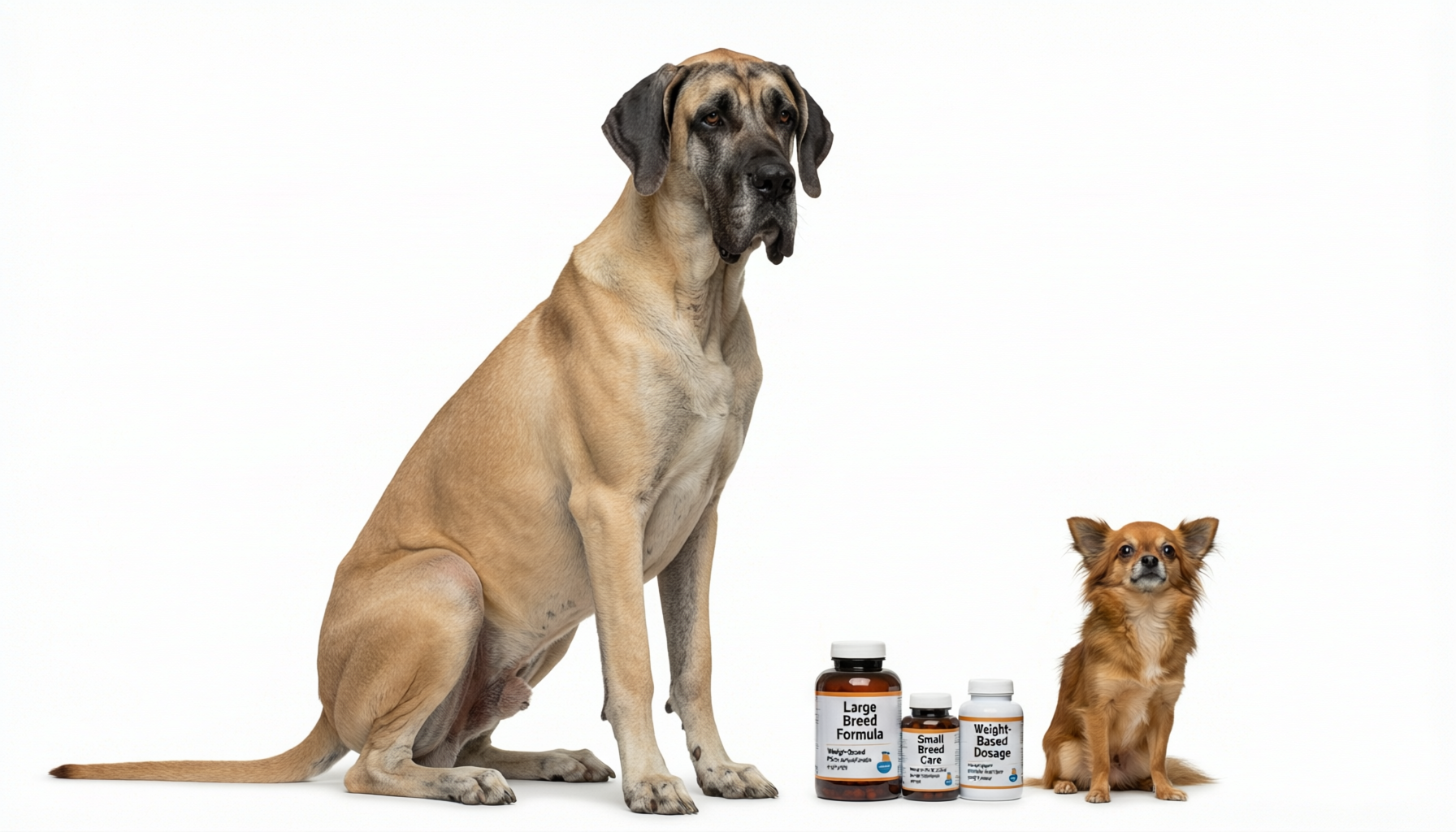
| Dosage alignment with weight | Underdosing is common—especially in large-breed dogs requiring >2× standard dose | Serving size adjusts for weight tiers (e.g., “for dogs 26–50 lbs: 2 chews/day”) | [AAHA Preventive Guidelines, 2023] |
6. FAQ
Q1. Does AAHA officially endorse specific joint supplement brands?
No. The AAHA does not endorse, certify, or rank commercial products. Its guidance emphasizes principles: veterinarian involvement, diagnosis-driven use, evidence-informed ingredients, and outcome tracking—not brand selection [AAHA Clinical Guidelines, Nutrition & Supplements, 2023].
Q2. Are “functional treats” (soft chews) as effective as tablets or powders?
Bioavailability data is limited, but soft chews often contain lower active ingredient concentrations to accommodate palatability binders (e.g., glycerin, gelatin). One analysis found chew formats delivered 22–38% less glucosamine per labeled dose than tablets from the same brand [K2]. Always verify mg/serving—not just “1 chew per day.”
Q3. Can I give my cat the same joint supplement I use for my dog?
No. Cats metabolize compounds differently—especially glucosamine, which may accumulate in feline kidneys. Feline-formulated products use lower, species-adjusted doses and avoid xylitol (toxic to cats), commonly found in dog chews [K1]. Never extrapolate dosing across species.
Q4. How long should I trial a joint supplement before assessing effectiveness?
Per AAHA-recommended protocols, allow a minimum 8-week trial at full therapeutic dose, paired with objective mobility tracking (e.g., timed up-and-go test, step-count via activity monitor). If no measurable improvement occurs, consult your veterinarian to reassess diagnosis or explore alternatives [AAHA Pain Management Guidelines, 2022].
7. Conclusion
Joint supplements are neither magic pills nor irrelevant—rather, they occupy a narrow but valid role in the AAHA’s evidence-informed framework for managing age-related joint decline. Their value emerges only when anchored to three non-negotiable conditions: a confirmed veterinary diagnosis, precise dosing aligned with species and weight, and transparent, verified ingredient sourcing.
Given that the global pet supplement market will exceed $5.5B by 2034—with joint health commanding nearly one-third of that growth—the pressure to choose wisely has never been greater [K4]. Start not with a bottle off the shelf, but with a conversation: “What does my pet’s mobility assessment tell us—and how might a supplement fit into their personalized care plan?” That question, grounded in clinical reality rather than marketing, is the truest alignment with AAHA principles—and the most reliable path to meaningful support for aging pets.
Written by PawLifeWellness Team
Pet Health Writers
Our team creates practical, research-informed pet wellness content for everyday pet parents. Always consult your veterinarian for personalized advice.