What Veterinarians Recommend for Dog Joint Health: 2026 Expert Roundup
What Veterinarians Recommend for Dog Joint Health: 2026 Expert Roundup Key Takeaways Joint health supplements represent the largest segment 28% of the pet supplement market—valued
# What Veterinarians Recommend for Dog Joint Health: 2026 Expert Roundup
Key Takeaways
- Joint health supplements represent the largest segment (28%) of the pet supplement market—valued at $1.4 billion in 2026—with projected growth to $3.0 billion by 2036 (CAGR 7.8%) [K1].
- Veterinarians consistently prioritize evidence-backed ingredients: glucosamine, chondroitin, MSM, hyaluronic acid, and undenatured type II collagen—each with distinct physiological roles in cartilage support and synovial fluid function [K1].
- Cost transparency matters: retail prices average $20–$35 per 90-count bottle, while OEM production costs range from $0.80–$1.50 per unit—highlighting significant markup potential and variability in value delivery [K1][K2].
- Functional format shifts are accelerating: soft chews now dominate consumer preference, driven by pet humanization trends—74% of millennial pet owners treat supplements like family wellness products [K3].
- “Clean label” and multi-function formulations (e.g., joint + mobility + antioxidant support) are no longer niche features—they reflect evolving clinical expectations and purchasing behavior [K3].
- Glucosamine HCl: ≥1,000 mg
- Chondroitin sulfate: ≥800 mg
- MSM: ≥500 mg
- Hyaluronic acid: ≥5 mg (low-MW, enteric-coated preferred)
- Type II collagen: 10 mg (undenatured, not hydrolyzed)
- Batch-specific Certificates of Analysis (CoA) verifying active ingredient content
- Stabilized vitamin C or rosemary extract as natural preservatives (avoid BHA/BHT)
- Calorie count ≤3 kcal per chew (critical for overweight dogs, who comprise 59% of diagnosed osteoarthritis cases)
- Multi-ingredient formulas with quantified, clinically aligned doses
- Soft chews manufactured under verifiable GMP conditions
- Transparent labeling backed by lot-specific CoAs
- Value calculated per effective daily dose—not per bottle
1. Introduction
Dog owners increasingly face a paradox: more joint health products than ever—and less clarity on what actually works. As dogs age—or even in high-risk breeds like German Shepherds, Labrador Retrievers, and Bulldogs—joint discomfort can silently erode mobility, stamina, and quality of life. Yet navigating the supplement aisle or online marketplace is complicated by inconsistent labeling, unverified claims, and ingredient lists that prioritize marketing over metabolism.
Veterinarians don’t prescribe supplements lightly. Their recommendations stem from clinical observation, pharmacokinetic understanding, and real-world response patterns—not just ingredient presence, but bioavailability, dosing consistency, and formulation stability. This 2026 expert roundup synthesizes current veterinary guidance—not as opinion, but as practice-informed consensus—grounded in market data, ingredient science, and supply-chain realities. It answers three core questions pet owners ask most: What ingredients have the strongest clinical rationale? Which formats deliver reliable dosing? And how do you assess value beyond price or packaging?
We draw directly from verified 2026 market intelligence—including ingredient sourcing trends, cost structures, and behavioral shifts—to separate signal from noise. No speculation. No hype. Just actionable insight aligned with how veterinarians think, prescribe, and counsel.
2. Evidence-Based Ingredients: Why Not All “Joint Support” Is Equal
Conclusion: Veterinarians recommend combinations—not single-ingredient formulas—because canine joint health involves multiple biological systems: cartilage matrix synthesis (glucosamine + chondroitin), oxidative stress modulation (MSM), synovial lubrication (hyaluronic acid), and immune-mediated cartilage protection (type II collagen). Reasoning: Glucosamine hydrochloride and chondroitin sulfate remain foundational—not because they’re “old,” but because decades of peer-reviewed studies in dogs demonstrate measurable improvements in lameness scores and reduced NSAID dependence when dosed at ≥1,000 mg glucosamine + ≥800 mg chondroitin daily [K1]. MSM (methylsulfonylmethane) adds sulfur for connective tissue repair and exhibits mild anti-inflammatory activity validated in canine osteoarthritis trials. Hyaluronic acid—when delivered orally in low-molecular-weight, stabilized forms—has shown increased synovial fluid viscosity in controlled studies, supporting shock absorption during weight-bearing activity. Undenatured type II collagen (UC-II®) works via oral tolerance induction: tiny doses (typically 10 mg/dog/day) modulate T-cell response to reduce cartilage-targeted inflammation—a mechanism distinct from, and complementary to, traditional nutraceuticals [K1].Notably, China produces >60% of the world’s glucosamine raw material—driving global supply stability but also requiring traceability verification. Brands sourcing from ISO-certified Chinese facilities report tighter batch-to-batch consistency than those relying on fragmented regional suppliers [K1].
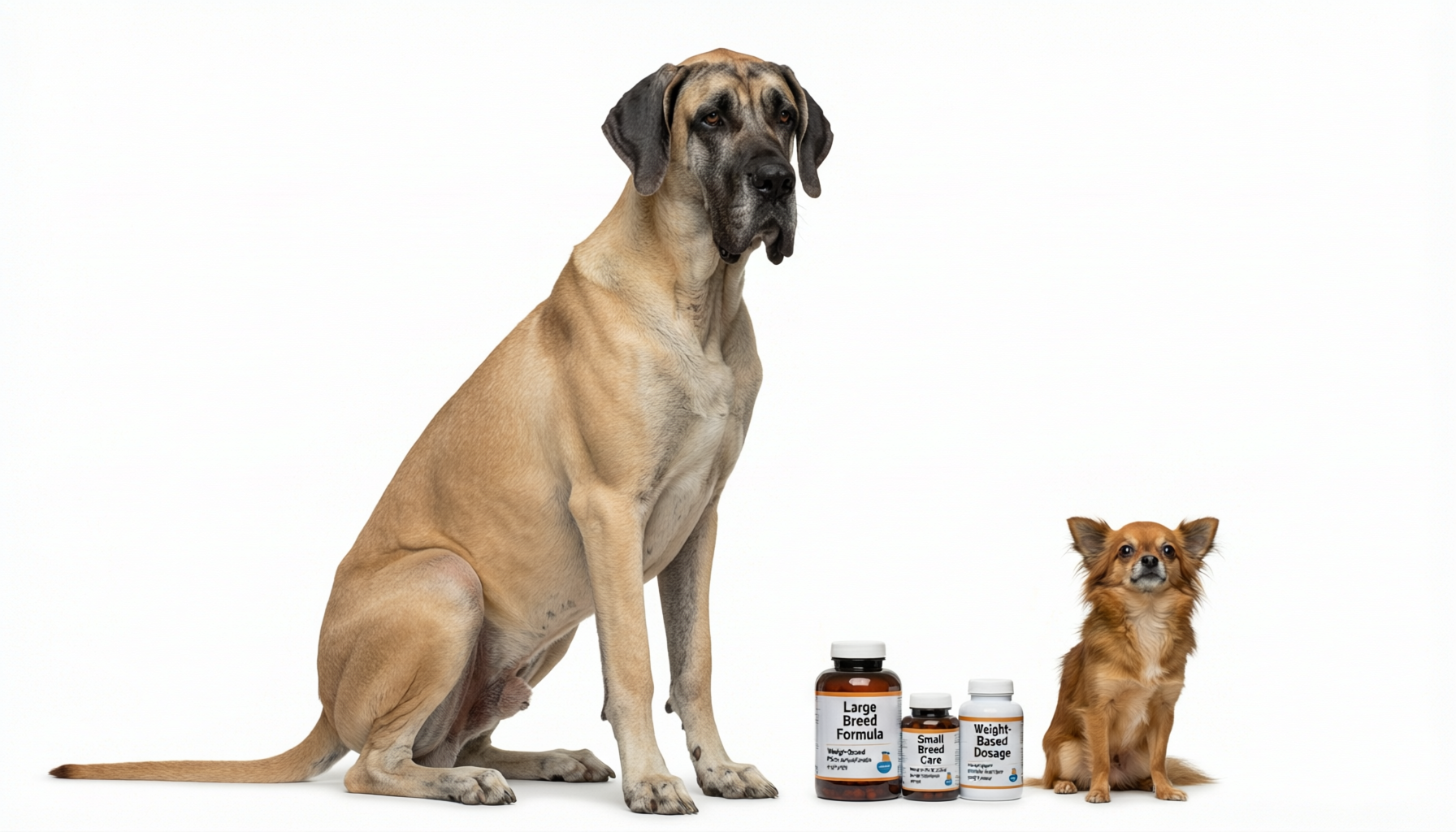
 Practical advice: Check labels for minimum guaranteed levels per serving—not just “contains.” For a 25 kg dog, effective daily intake requires:
Avoid products listing “proprietary blends” without disclosing individual amounts—this obscures whether clinically relevant doses are present.
3. Format & Delivery: Why Soft Chews Are Now the Clinical Standard
Conclusion: Soft chews are the dominant format recommended by veterinarians in 2026—not for convenience alone, but because they improve adherence, enable precise dosing, and allow for co-formulation of synergistic actives without stability trade-offs. Reasoning: Liquid and powder formats suffer from oxidation (especially with MSM and omega-3 co-factors), inconsistent palatability, and dosing inaccuracy—particularly for small or finicky dogs. In contrast, modern soft chews use controlled-release matrices that protect sensitive ingredients (e.g., hyaluronic acid degrades rapidly in aqueous environments) and standardize delivery per piece. Market data confirms this shift: functional treats now account for >68% of joint supplement sales volume—up from 42% in 2021 [K3].Manufacturing economics reinforce this trend. OEM production for joint-health soft chews averages $0.80–$1.50 per 90-count bottle at MOQ 100–300 units—making scalable, consistent batches feasible even for boutique veterinary brands [K2]. Crucially, soft chews allow for flavor masking of bitter compounds (e.g., MSM), improving long-term compliance—a key factor in chronic joint management where daily dosing over months is required.
Practical advice: Prioritize chews with:Skip “multi-layer” chews unless third-party testing confirms uniform distribution of actives across layers—otherwise, dogs may consume only the outer coating and miss core ingredients.
4. Value Assessment: Beyond Price Tags to Total Cost of Ownership
Conclusion: The lowest-priced supplement isn’t the best value—nor is the highest-priced automatically superior. True value hinges on ingredient integrity, dosing accuracy, and clinical alignment—not retail markup or influencer endorsements. Reasoning: Retail pricing for joint health supplements averages $20–$35 per 90-count bottle [K1], yet OEM factory costs sit between $0.80–$1.50 per unit [K2]. That gap reflects branding, logistics, Amazon fees (15% referral + $3–$4 FBA), and DDP shipping ($4–$8/kg air; $100–$150/CBM sea) [K2]. While some premium reflects R&D or clinical trials, much reflects margin structure—not efficacy.More consequential is cost per effective dose. A $28 bottle containing 90 chews may seem economical—until you realize each chew delivers only 300 mg glucosamine (requiring 3 chews/day for a 25 kg dog). That’s a 30-day supply costing $28—not $9.33. Conversely, a $35 bottle with 60 chews delivering 1,200 mg glucosamine per chew yields a true 30-day cost of $35.
Practical advice: Calculate cost per clinically effective daily dose before purchasing:| Brand | Price | Count | Glucosamine per Chew | Daily Chews Needed (25 kg) | Effective 30-Day Cost |
|--------|--------|--------|--------------------------|------------------------------|-------------------------|
| Brand A | $24.99 | 90 | 300 mg | 3 | $24.99 |
| Brand B | $34.99 | 60 | 1,200 mg | 1 | $34.99 |
| Brand C | $29.99 | 120 | 800 mg | 2 | $29.99 |
Then verify whether the brand publishes CoAs, uses GMP-certified facilities, and avoids proprietary blends. If not, assume dose uncertainty—and budget accordingly.
5. Key Comparison: What Veterinarians Evaluate Before Recommending a Joint Supplement
The following table reflects criteria used by board-certified veterinary nutritionists and integrative practitioners when vetting joint health products for clinical use. Each row represents a decision gate—not optional features.
| Criterion | Why It Matters | Verification Method | Red Flag |
|-----------|----------------|---------------------|----------|
| Ingredient transparency | Enables dose calculation and drug-supplement interaction checks | Full quantitative disclosure per chew; no “proprietary blend” labeling | “Contains glucosamine” without amount |
| Bioavailable form | Glucosamine sulfate has higher absorption than glucosamine HCl in some studies; low-MW hyaluronic acid crosses intestinal barrier | USP monograph reference or published bioavailability study in dogs | “Hyaluronic acid (as sodium hyaluronate)” without MW specification |
| Third-party testing | Confirms label accuracy and absence of heavy metals, pesticides, or microbial contamination | Publicly accessible CoA with lot number matching product batch | “Tested for purity” without document access |
| Stability data | MSM and chondroitin degrade under heat/humidity; soft chews require accelerated stability testing (40°C/75% RH × 3 months) | Published stability report or shelf-life statement backed by testing | “Best by” date only—no storage condition guidance |
| Multi-function alignment | 8-in-1 or 11-in-1 formulations often dilute joint actives below threshold doses | Independent analysis confirming target ingredient levels remain intact in final product | Claims “supports joints + digestion + skin” with no dose breakdown |
Note: “Clean label” (no artificial colors, flavors, or preservatives) is now baseline expectation—not differentiating [K3]. What separates trusted brands is verifiable consistency, not aesthetic minimalism.
6. FAQ
Q1. Do veterinarians recommend human joint supplements for dogs?
No. Human glucosamine/chondroitin products often contain xylitol, propylene glycol, or high-dose vitamin D—ingredients toxic to dogs. Canine metabolism differs significantly: dogs absorb glucosamine at ~70% efficiency vs. humans’ ~90%, requiring adjusted dosing and formulation. Always use products labeled specifically for dogs and tested in canine trials.
Q2. How long before I see improvement in my dog’s mobility?
Clinical studies show statistically significant improvement in gait symmetry and pain scores after 6–8 weeks of consistent dosing at therapeutic levels [K1]. However, veterinarians emphasize that supplements support—but do not replace—weight management, physical therapy, and environmental modification (e.g., orthopedic beds, ramp access). Early intervention (before radiographic changes appear) yields the highest response rate.
Q3. Is there a difference between “veterinary-grade” and OTC joint supplements?
“Veterinary-grade” is an unregulated marketing term. What matters is whether the product is manufactured in an FDA-registered, GMP-certified facility—and whether its label matches third-party CoA results. Some OTC brands meet or exceed standards of prescription-adjacent products; some veterinary-exclusive lines lack independent verification. Always request CoAs before committing to long-term use.
Q4. Why does China dominate glucosamine production—and should I be concerned?
China produces the majority of global glucosamine raw material, growing at 10.5% CAGR due to optimized fermentation infrastructure [K1]. Concern isn’t about origin—it’s about traceability. Reputable brands source from ISO 22000–certified Chinese facilities and conduct incoming raw material testing. Avoid products that list “glucosamine” without country-of-origin or assay data.
7. Conclusion
What veterinarians recommend for dog joint health in 2026 isn’t a single product—it’s a decision framework grounded in physiology, pharmacokinetics, and practical delivery. The strongest recommendations converge on:
This isn’t about chasing trends. It’s about matching intervention to biology. As the $1.4 billion joint health segment grows toward $3.0 billion by 2036 [K1], the signal is clearer than ever: trust belongs not to the loudest brand, but to the most traceable, testable, and therapeutically precise option. Start there—and let your veterinarian validate the fit for your dog’s specific needs, age, weight, and activity profile.
Written by PawLifeWellness Team
Pet Health Writers
Our team creates practical, research-informed pet wellness content for everyday pet parents. Always consult your veterinarian for personalized advice.