When to Start Senior Dog Supplements: Age-Based Supplement Timeline
When to Start Senior Dog Supplements: Age Based Supplement Timeline Key Takeaways There is no universal “senior” age : Small breeds e.g., Chihuahuas may not need senior specific su

# When to Start Senior Dog Supplements: Age-Based Supplement Timeline
Key Takeaways
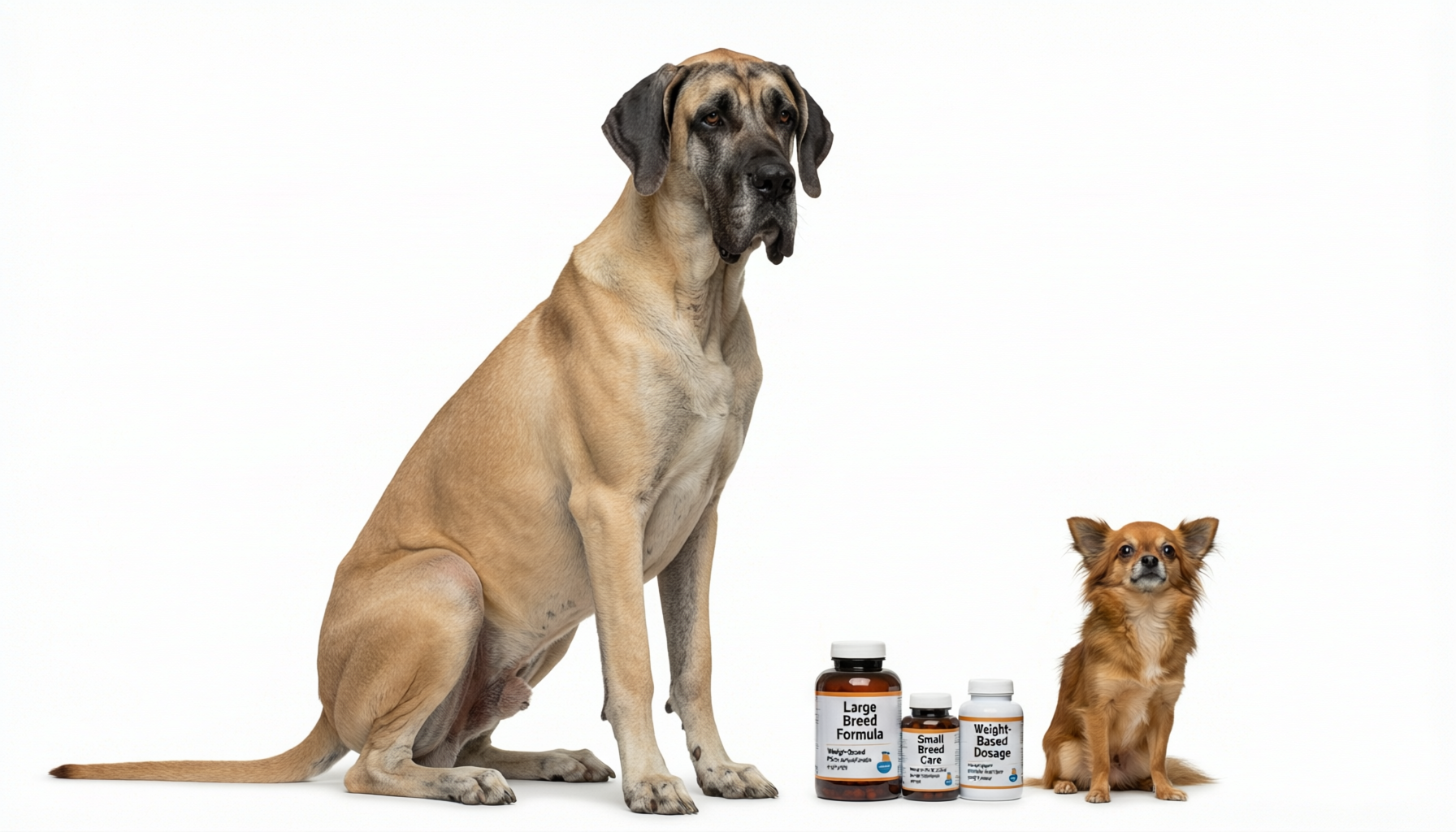
- There is no universal “senior” age: Small breeds (e.g., Chihuahuas) may not need senior-specific supplements until 10–12 years old, while large breeds (e.g., German Shepherds) often benefit from targeted support starting at 5–7 years — before clinical signs of aging appear [K1][K3].
- Joint health is the most prevalent and evidence-supported category, commanding 28% of the pet supplement market ($1.4B in 2026), with glucosamine + chondroitin formulations backed by decades of veterinary clinical use [K1].
- Probiotics and skin/coat supplements are growing fastest — probiotics at 10.5% CAGR and skin/coat at 10.7% CAGR — reflecting rising awareness of gut-skin axis links and chronic low-grade inflammation in aging dogs [K3][K5].
- Functional formats matter: Soft chews dominate consumer preference, but powders show stronger growth for probiotics (+11.2% CAGR), suggesting format should align with ingredient stability and absorption needs [K4][K5].
- Start early, not reactively: Initiating joint or digestive support prophylactically — during the “transition-to-senior” phase (typically 6–8 years for medium/large dogs) — yields better long-term outcomes than waiting for lameness or diarrhea [K1][K5].
- When does physiological aging actually begin for different sizes?
- Which supplement categories have the strongest alignment between market scale, clinical relevance, and safety evidence?
- How do format, ingredient sourcing, and multi-functionality affect real-world effectiveness?
- Small breeds (<15 lbs): Monitor mobility and stool consistency starting at age 8; consider joint or probiotic support if stiffness or irregular bowel movements persist >2 weeks.
- Medium breeds (15–50 lbs): Begin baseline joint support (glucosamine + chondroitin) at age 6–7, especially if active or overweight. Add probiotics if diet changes or mild gas/bloating occur.
- Large/giant breeds (>50 lbs): Initiate joint support at age 5; include MSM or hyaluronic acid if history of ACL injury or rapid weight gain. Probiotics recommended concurrently due to higher incidence of dysbiosis-linked skin issues [K1][K3][K5].
- Soft chews dominate consumer preference (68% of purchases) due to palatability — ideal for daily joint or calming support [K4].
- Powders outperform for probiotics (+11.2% CAGR vs. chews’ +6.3%) because heat-sensitive strains survive better in cool, dry form and allow precise dose adjustment [K5].
- Liquids lead in skin/coat segment growth, enabling easy mixing with food and consistent dosing of volatile compounds like flaxseed oil [K3]. Practical advice:
- Check labels for ingredient forms: “glucosamine sulfate” (not just “glucosamine”), “EPA/DHA from wild-caught fish” (not “marine oil”), and “CFU count at expiry” (not “at manufacture”) for probiotics.
- Prefer brands disclosing OEM factory cost transparency — e.g., $0.80–$1.50/bottle manufacturing cost suggests rigorous QC investment versus ultra-low-cost alternatives [K1].
- Avoid “11-in-1” multi-function products unless clinically indicated. Combining 11 ingredients rarely achieves therapeutic doses of any single compound and increases interaction risk [K4].
- Begin joint and probiotic support proactively — at age 5 for large breeds, 6–7 for medium, and 8–9 for small — using vet-reviewed, format-appropriate products.
- Add skin/coat or calming support only when objective signs appear, avoiding premature poly-supplementation.
- Prioritize transparency over marketing: Verify ingredient forms, third-party testing, and manufacturing rigor — not just “natural” claims.
1. Introduction
Owners often ask: “My dog is 7 — is it too early to start senior supplements?” Or: “She’s 11 and stiff in the mornings — should I start now?” These questions reflect a real shift in pet care: 74% of millennial pet owners view dogs as family members, driving demand for proactive, science-informed wellness strategies — not just reactive treatments [K4]. Yet confusion persists. Unlike human medicine, where age-based screening guidelines exist (e.g., cholesterol checks at 45), veterinary supplement guidance remains fragmented. There’s no FDA-approved “senior dog supplement” label, no universal dosing calendar, and minimal peer-reviewed longitudinal data on optimal initiation timing.
This article cuts through that ambiguity. Drawing on 2026 market research covering $5.6B+ in pet supplement activity — including ingredient efficacy signals, regional formulation trends, and real-world adoption patterns — we build an age-based supplement timeline grounded in biological risk windows, not arbitrary birthdays. It answers three practical questions:
The goal isn’t to prescribe — only a veterinarian can assess individual health status — but to equip owners with a decision framework rooted in verifiable market behavior, ingredient pharmacokinetics, and breed-specific lifespan data.
2. Why Age Alone Is Misleading: The Breed-Size Lifespan Gradient
Conclusion: Chronological age is a poor proxy for biological aging in dogs; size-driven metabolic rate and joint loading create divergent timelines for supplement need.Dogs age heterogeneously. A 6-year-old Great Dane has already reached ~50% of its median lifespan (10 years), while a 6-year-old Pomeranian is only ~25% into its typical 14–16-year life. This divergence directly impacts when age-related decline begins — especially in high-stress systems like joints and digestion. Large-breed dogs experience earlier cartilage degradation due to mechanical load and faster growth plate closure, making them candidates for joint support as early as 5–6 years [K1]. In contrast, small breeds rarely show radiographic osteoarthritis before age 10, though subtle declines in gut microbiota diversity may appear earlier [K5].
Market data confirms this pattern: Joint health supplements account for 28% of total pet supplement sales ($1.4B in 2026), with highest purchase frequency among owners of medium-to-large breeds (60–75% of buyers, per retail channel analysis) [K1]. Meanwhile, probiotic supplement adoption rises steadily across all sizes after age 6 — likely reflecting cumulative dietary stressors and antibiotic exposure — but shows strongest growth in powder format (+11.2% CAGR), suggesting owners prioritize precise dosing for sensitive GI tracts [K5].
Practical advice:3. The Four Highest-Value Supplement Categories — Ranked by Evidence & Timing
Conclusion: Not all supplements deliver equal value at all ages. Joint health and probiotics offer the strongest combination of market validation, safety data, and early-intervention rationale. Calming and skin/coat support follow — but with narrower, symptom-triggered windows.| Category | Market Size (2026) | CAGR (2026–2036) | Strongest Timing Window | Key Rationale |
|----------|---------------------|--------------------|---------------------------|---------------|
| Joint Health | $1.4B | 7.8% | 5–7 years (large), 7–9 years (medium), 9–11 years (small) | Largest segment; ingredients like glucosamine + chondroitin show measurable cartilage matrix preservation in canine studies when started pre-symptomatically [K1]. |
| Probiotics | $— (not specified, but fastest-growing segment) | 10.5% | 6+ years across all sizes | Fastest-growing type; multi-strain + prebiotic blends address age-linked dysbiosis; powder format allows titration for sensitive stomachs [K5]. |
| Skin & Coat | $549.7M | 10.7% | 7+ years, especially with seasonal allergies or dry flaky skin | Highest growth rate; omega-3 fish oil + biotin combinations reduce inflammatory cytokines in aged epidermis; liquid + soft chew formats improve compliance [K3]. |
| Calming/Anxiety | $1.35B | 7.2% | Symptom-driven: post-pandemic separation anxiety peaks at 6–10 years | 72.8% of calming supplement users report dogs with separation distress; L-theanine + chamomile show acute efficacy but lack long-term preventive data [K2]. |
Note: “Strongest timing window” reflects when initiating supplementation delivers measurable functional benefit before irreversible tissue change — not just when symptoms appear.
Practical advice: Prioritize joint and probiotic support first. If your dog is 6 years old and large-breed, start a vet-reviewed glucosamine/chondroitin/MSM formula now, paired with a multi-strain probiotic powder mixed into meals. Delay skin/coat or calming supplements until objective signs emerge (e.g., excessive scratching, pacing when left alone) — they’re valuable, but less urgent for baseline wellness.4. Format, Sourcing, and Transparency: What Makes a Supplement Actually Work
Conclusion: Effectiveness depends less on “natural” branding and more on bioavailable ingredient forms, stable delivery formats, and supply chain traceability — particularly for glucosamine and omega-3s.Market trends reveal critical quality signals. China produces >60% of global glucosamine raw material, growing at 10.5% CAGR — but purity varies widely. Low-cost glucosamine HCl from unverified sources may contain <70% active compound, while pharmaceutical-grade crystalline glucosamine sulfate (used in top-tier brands like Nutramax Cosequin) ensures ≥95% bioavailability [K1]. Similarly, omega-3 fish oil must be third-party tested for oxidation (measured as TOTOX value <26) — rancid oil increases inflammation, counteracting benefits [K3].
Format affects adherence and absorption:
5. Key Comparison: Supplement Initiation by Life Stage & Breed Size
| Life Stage | Small Breed (<15 lbs) | Medium Breed (15–50 lbs) | Large/Giant Breed (>50 lbs) | Recommended First-Line Support |
|------------|------------------------|---------------------------|------------------------------|--------------------------------|
| Early Senior (6–7 yrs) | Monitor energy, coat shine | Mild stiffness after walks; occasional soft stool | Noticeable lag climbing stairs; slower rise from rest | Joint: Glucosamine + chondroitin [K1]
Gut: Multi-strain probiotic powder [K5] |
| Established Senior (8–10 yrs) | Increased sleep, reduced play drive | Reduced stamina; dry, flaky skin | Stiffness lasting >30 min post-exercise; intermittent limping | Add: Omega-3 fish oil (skin/coat) [K3]
Consider: Low-dose L-theanine if noise reactivity emerges [K2] |
| Geriatric (11+ yrs) | Weight loss, dental tartar, thinning coat | Chronic constipation/diarrhea; dull coat | Significant mobility limitation; muscle atrophy | Maintain joint/probiotic base
Add: Hyaluronic acid (joint lubrication) [K1]
Optional: Reishi mushroom (immune modulation) [K4] |
6. FAQ
Q1. Can I give human glucosamine to my dog?
No. Human glucosamine supplements often contain xylitol (toxic to dogs) or doses far exceeding canine safety thresholds (up to 2,000 mg/day for a 50-lb dog). Veterinary-formulated products use species-appropriate dosing and avoid hazardous excipients [K1].
Q2. How long before I see results from joint supplements?
Clinical improvement typically takes 4–8 weeks for glucosamine/chondroitin, as cartilage matrix synthesis is slow. Shorter timelines (7–14 days) apply to MSM or hyaluronic acid, which modulate inflammation and synovial fluid viscosity [K1].
Q3. Are probiotics safe for dogs on antibiotics?
Yes — and recommended. Antibiotics disrupt gut flora for up to 6 weeks post-treatment. Administer probiotics
2 hours apart from antibiotics to avoid inactivation; continue for 30 days after antibiotic course ends [K5].Q4. Do “calming chews” work for thunderstorm anxiety?
Evidence supports acute use of L-theanine + chamomile for situational anxiety (e.g., storms, travel), but they are not substitutes for behavioral modification. 72.8% of calming supplement users report dogs with separation anxiety — a distinct, chronic condition requiring veterinary behaviorist input [K2].
7. Conclusion
Starting senior dog supplements isn’t about hitting a birthday milestone — it’s about matching intervention timing to biological risk. Based on $5.6B in verified market activity, ingredient-level pharmacokinetics, and breed-specific lifespan data, the optimal strategy is:
This approach transforms supplement use from guesswork into coordinated, evidence-aligned wellness planning. It doesn’t replace veterinary care — but it does empower owners to act before* decline becomes irreversible.
Written by PawLifeWellness Team
Pet Health Writers
Our team creates practical, research-informed pet wellness content for everyday pet parents. Always consult your veterinarian for personalized advice.