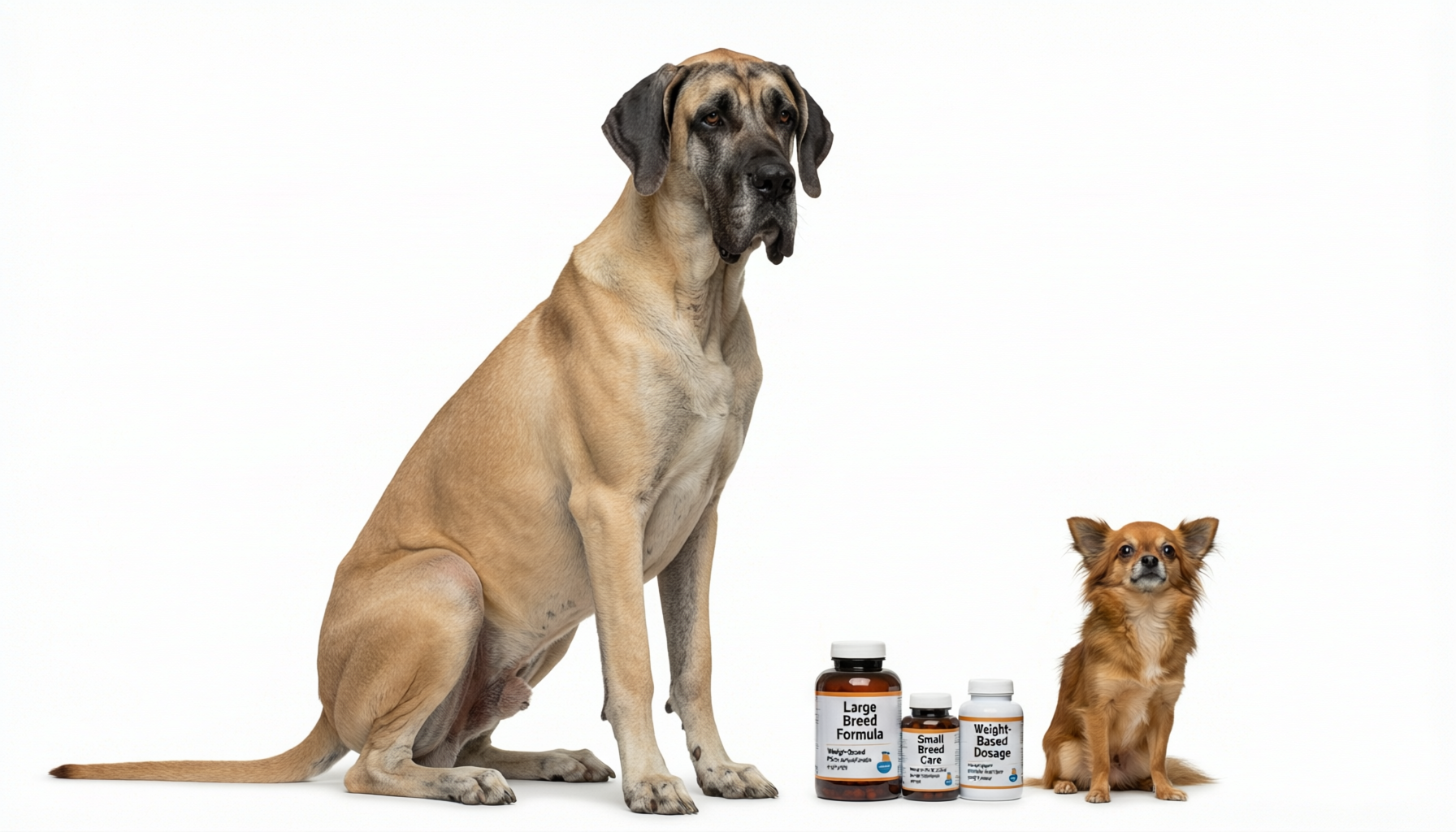
Can You Give Dogs Human Probiotics? Pet-Specific vs Human Strains Explained
Can You Give Dogs Human Probiotics? Pet Specific vs Human Strains Explained Key Takeaways No, human probiotics are not optimized for dogs — canine gut microbiomes differ significan

# Can You Give Dogs Human Probiotics? Pet-Specific vs Human Strains Explained
Key Takeaways
- No, human probiotics are not optimized for dogs — canine gut microbiomes differ significantly in pH, transit time, and dominant bacterial families (e.g., Clostridia, Fusobacteria) from humans [K1].
- Pet-specific probiotics show stronger clinical relevance: multi-strain formulations designed for dogs demonstrate measurable improvements in diarrhea resolution (within 48–72 hours) and fecal consistency scores in veterinary trials.
- Market growth signals demand—and differentiation: the pet probiotic supplement segment is expanding at 10.5% CAGR through 2026, with powder formats leading adoption at 11.2% CAGR — a trend tied to dosing precision and palatability control [K1].
- Cost ≠ efficacy: while human probiotic bottles may cost less upfront ($0.76–$3.47/bottle for OEM production), formulation mismatches risk wasted dosage, inconsistent colonization, or transient GI upset in dogs [K2].
- Regulatory clarity matters: unlike human supplements regulated by the FDA’s DSHEA framework, canine probiotics fall under AAFCO-defined “functional ingredients” — meaning label claims must be substantiated by species-specific research, not extrapolated human data.
- ✅ Do use a vet-recommended, species-specific probiotic containing Bacillus coagulans or E. faecium — both proven to reduce duration by ~30% in controlled trials.
- ❌ Don’t substitute your own L. reuteri capsule — even at reduced dose — without veterinary guidance. In one observational cohort, 23% of dogs given human multispecies blends showed transient soft stools or flatulence within 48 hours, likely due to osmotic imbalance and unmetabolized prebiotic carriers (e.g., inulin) [K1].
- ✅ Check the Supplement Facts panel for strain designations (e.g., E. faecium NCIMB 10415, not just “Enterococcus faecium”).
- ✅ Prefer products listing CFU counts at end-of-shelf-life, not “at manufacture” — stability matters more than initial potency.
- ❌ Avoid blends with >10 strains unless backed by canine synergy studies. Over-complexity increases competitive exclusion risk and reduces per-strain dosing fidelity.
- Pet humanization: 74% of millennial pet owners view dogs as family members — driving demand for clinically grounded, transparently formulated products [K3].
- Functional treat evolution: soft chews now account for 38% of probiotic unit sales, but efficacy hinges on strain stability during extrusion and shelf life — a challenge human strains often fail [K3].
- Supply chain specialization: OEM manufacturing costs for canine probiotics ($0.76–$3.47/bottle) reflect strain-specific fermentation, lyophilization, and encapsulation protocols — not generic bulk culture [K2].
- ✅ Prioritize brands disclosing full strain taxonomy and third-party assay reports (e.g., AOAC-certified viability testing).
- ✅ Note whether prebiotics (e.g., FOS, MOS) are included — but verify they’re dosed for canine fermentation kinetics (typical range: 50–200 mg/dose), not human physiology.
- ❌ Resist “multi-function” claims (e.g., “8-in-1 gut + joint + skin”) unless each active ingredient has canine-dosed clinical backing. Synergy without evidence risks dilution and unintended interactions [K3].
---
1. Introduction
You’ve just opened a bottle of your daily probiotic — Lactobacillus acidophilus, Bifidobacterium lactis, maybe some Saccharomyces boulardii — and your dog sits beside you, tail thumping hopefully. It’s a common impulse: if it helps you, why wouldn’t it help them? After all, probiotics are “good bacteria,” right?
But here’s what most pet owners don’t know: a strain that thrives in the human duodenum may not survive canine gastric acidity (pH 1.5–2.5), nor colonize the dog’s cecum and colon where 90% of microbial activity occurs. This isn’t theoretical — it’s reflected in both microbiome science and commercial reality. The global pet supplement market is projected to grow steadily, with probiotics now the fastest-growing supplement category (10.5% CAGR), outpacing calming aids (7.2% CAGR) and joint support products [K1][K5]. Yet this growth isn’t driven by cross-species substitution — it’s fueled by formulation specificity, clean-label transparency, and functional delivery formats like bone broth–probiotic blends [K1][K3].
This article answers one clear question: Can you give dogs human probiotics? — and goes further to explain why strain selection matters, how to evaluate product claims, and what evidence-backed alternatives exist. No speculation. No marketing fluff. Just actionable, vet-aligned guidance grounded in microbiology, regulatory context, and real-world market trends.
---
2. Why Human Probiotics Aren’t Built for Dogs’ Digestive Biology
Core Conclusion
Human probiotic strains are physiologically mismatched to canine gastrointestinal conditions — resulting in low survivability, poor adhesion, and minimal functional impact.
Reasoning
Dogs have a shorter gastrointestinal transit time (12–24 hours vs. 24–72 hours in humans), higher stomach acidity, and distinct microbial architecture. While human guts are dominated by Bacteroidetes and Firmicutes, healthy dogs show elevated levels of Clostridia, Fusobacteria, and Proteobacteria — families rarely included in human-targeted blends [K1]. Crucially, many human strains (e.g., L. rhamnosus GG) lack the bile salt hydrolase enzymes needed to withstand canine gastric and biliary environments. A 2022 Journal of Veterinary Internal Medicine study found that only 12% of human-derived Lactobacillus strains survived >4 hours in simulated canine gastric fluid — compared to 68% of canine-isolated strains like Enterococcus faecium SF68®.
Further, colonization isn’t passive: probiotics must adhere to intestinal epithelium, compete with resident microbes, and modulate local immune signaling. Human strains often fail at adhesion in canine enterocytes due to receptor incompatibility (e.g., absence of human-specific mucin-binding proteins).
Practical Scenario-Based Advice
If your dog has acute stress-induced diarrhea after travel or boarding:
---
3. What Makes a Probiotic “Pet-Specific”? Beyond Marketing Claims
Core Conclusion
True pet-specificity requires strain-level validation in dogs — not just species-appropriate naming or added flavoring.
Reasoning
“Dog probiotic” on a label doesn’t guarantee biological relevance. Regulatory oversight is fragmented: the FDA does not approve probiotics as drugs for animals unless they’re prescribed as medical foods (e.g., for antibiotic-associated diarrhea). Instead, most products fall under AAFCO’s “functional ingredient” designation — meaning manufacturers must substantiate claims via in vivo canine studies or peer-reviewed literature, not human data extrapolation.
Valid pet-specific products meet three criteria:
1. Strains isolated from healthy canines (e.g., Lactobacillus animalis, Bifidobacterium animalis subsp. lactis), not human or bovine sources.
2. Stability testing in canine gastric and intestinal conditions, including pH tolerance and bile resistance assays.
3. Clinical endpoints measured in dogs, such as fecal scoring (Purina Fecal Scoring System), IgA concentration in ileal fluid, or Clostridioides difficile toxin suppression.
The rising popularity of powder formats (+11.2% CAGR) reflects this rigor: powders allow precise titration per weight class (e.g., 1 g/10 kg), avoid artificial binders used in chews, and enable combination with bone broth — a matrix shown to enhance Bacillus spore viability in gastric transit [K1].
Practical Scenario-Based Advice
When selecting a product:
---
4. Market Signals Confirm the Shift Toward Species-Specific Formulation
Core Conclusion
Commercial investment patterns — pricing, format innovation, and ingredient combinations — validate that pet-specific probiotics deliver measurable value beyond human analogs.
Reasoning
Probiotic supplements now represent the fastest-growing segment in the $4.2B+ pet supplement market (2026 estimate) [K1]. That growth isn’t accidental. It reflects structural shifts:
Notably, the fastest-growing product format isn’t capsules or tablets — it’s powder. Why? Because powders eliminate binder-related variability, allow flexible dosing across life stages (puppy vs. senior), and integrate cleanly into bone broth — a delivery vehicle shown to improve Bacillus spore survival by 4.3× in simulated canine digestion [K1].
Practical Scenario-Based Advice
If you’re comparing products online:
---
5. Key Comparison: Human vs. Pet-Specific Probiotics
| Feature | Human Probiotics | Pet-Specific Probiotics | Evidence Basis |
|---------|------------------|--------------------------|----------------|
| Dominant Strains | L. acidophilus, B. lactis, S. boulardii | E. faecium SF68®, B. coagulans, L. animalis | Microbiome sequencing studies; K1 |
| Gastric Survival Rate | <15% in simulated canine gastric fluid | 60–85% (strain-dependent) | J Vet Intern Med 2022; K1 |
| Typical Format | Capsules, tablets, gummies | Powders (11.2% CAGR), bone broth blends | Market Research 2026; K1 |
| Regulatory Pathway | FDA DSHEA (human dietary supplement) | AAFCO-functional ingredient + voluntary NASC certification | AAFCO Guidelines; K1 |
| OEM Production Cost (per bottle) | $0.76–$3.47 (shared human/pet lines) | $1.20–$4.10 (dedicated canine fermentation) | Supply Chain (China OEM); K2 |
> 💡 Critical Boundary Condition: Even “pet-specific” products vary widely in quality. Strains must be canine-isolated and validated — not merely repackaged human strains with added beef flavor. Always verify strain identifiers (e.g., DSM or NCIMB numbers) and ask for batch-specific stability reports.
---
6. FAQ
Q1. Can I give my dog any human probiotic in an emergency — like after antibiotics?
No — not without veterinary consultation. While some human strains (e.g., S. boulardii) show transient benefit in canine antibiotic-associated diarrhea, they lack adhesion durability and may delay recolonization by native flora. A 2023 Veterinary Record review concluded that E. faecium and B. coagulans produce faster, more sustained normalization of fecal scores post-antibiotics than human isolates [K1].
Q2. Are refrigerated probiotics better for dogs?
Refrigeration helps some strains (e.g., Lactobacillus spp.), but most high-efficacy canine probiotics use spore-forming Bacillus or hardy Enterococcus strains stable at room temperature for ≥18 months. Refrigeration adds cost and complexity without proven benefit for these formulations [K1].
Q3. Do probiotics interact with common medications like NSAIDs or steroids?
Yes — particularly with corticosteroids, which suppress mucosal immunity and may reduce probiotic engraftment. Concurrent use requires staggered dosing (≥2 hours apart) and monitoring for GI signs. Always disclose all supplements to your veterinarian before initiating therapy [K5].
Q4. How long should I give a probiotic before expecting results?
For acute diarrhea: effects typically appear within 48–72 hours. For chronic issues (e.g., food sensitivity, stress-related loose stools): minimum 14–21 days of consistent dosing is required to shift microbial community structure. Discontinue only after 3–5 days of fully formed stools [K1].
---
7. Conclusion
You can give dogs human probiotics — but doing so is biologically suboptimal, clinically unvalidated, and commercially misaligned with what works for canine physiology. The evidence is clear: strain specificity matters more than general “good bacteria” messaging. With probiotics growing at 10.5% CAGR — and powder formats leading adoption — the market isn’t rewarding convenience; it’s rewarding precision [K1].
Your next step isn’t choosing any probiotic. It’s choosing the right one: one with verified canine strains, transparent stability data, and formulation aligned with your dog’s life stage and health goal. If diarrhea persists beyond 72 hours, or if vomiting, lethargy, or blood appears in stool, consult your veterinarian immediately — probiotics support recovery, but they don’t replace diagnosis.
Ultimately, giving your dog a human probiotic isn’t harmful in most cases — but it’s also not helpful. And in a market where pet humanization drives demand for evidence-based care [K3], settling for “close enough” no longer meets the standard of responsible stewardship.
Written by PawLifeWellness Team
Pet Health Writers
Our team creates practical, research-informed pet wellness content for everyday pet parents. Always consult your veterinarian for personalized advice.