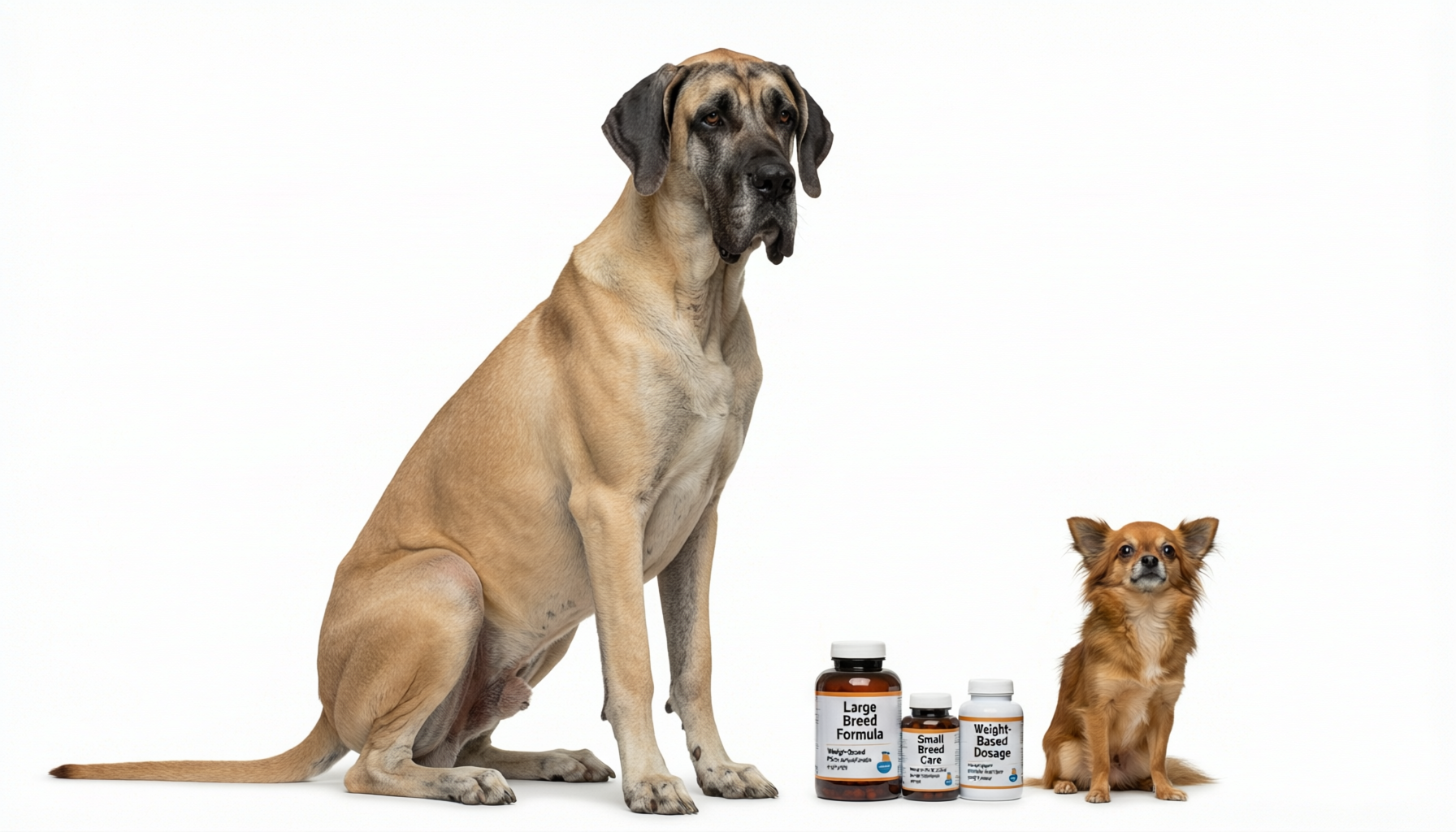
Can Dogs Take Multiple Supplements at Once? Safety and Timing Guide
Can Dogs Take Multiple Supplements at Once? Safety and Timing Guide Key Takeaways Yes—but with critical constraints : Most dogs can take multiple supplements simultaneously only if

# Can Dogs Take Multiple Supplements at Once? Safety and Timing Guide
Key Takeaways
- Yes—but with critical constraints: Most dogs can take multiple supplements simultaneously only if ingredients don’t interact, dosages are vet-approved, and formulations avoid overlapping functions or cumulative toxicity risks [K3].
- Timing matters more than quantity: Spacing administration (e.g., probiotics on an empty stomach, fish oil with food) often improves absorption and reduces GI upset—more than simply “adding another supplement” [K4][K2].
- Multi-function products are rising—but not always safer: 8-in-1 and 11-in-1 formulas reflect market demand for convenience, yet they increase risk of ingredient redundancy or unvalidated dose combinations [K3].
- Dogs with specific conditions need prioritization: A senior dog with joint pain and anxiety may benefit from separate glucosamine + L-theanine regimens—but combining them without veterinary guidance risks masking underlying issues or overloading metabolic pathways [K1][K4].
- Market growth signals demand—not endorsement: The global pet supplement market is projected to reach $5.5 billion by 2034 (CAGR 8.9%), driven by pet humanization and preventive care awareness—not clinical consensus on poly-supplementation safety [K5].
- Omega-3 fatty acids (fish oil) enhance absorption of fat-soluble vitamins (A, D, E, K), but high-dose vitamin E supplementation—common in skin-and-coat formulas—can interfere with platelet function when co-administered with fish oil [K2].
- Probiotics and digestive enzymes are frequently paired, but certain proteolytic enzymes (e.g., bromelain) may degrade live bacterial strains if dosed simultaneously—reducing probiotic efficacy [K4].
- Calming ingredients like L-theanine and valerian root act on GABA receptors; combining them with prescription anxiolytics (e.g., trazodone) or even CBD-rich hemp oil increases sedation risk—a documented concern in post-pandemic separation anxiety management [K1]. Practical scenario: A 9-year-old Labrador receives:
- Fish oil (for arthritis support)
- A probiotic powder (for chronic loose stools)
- A chamomile + L-theanine chew (for storm anxiety) Recommendation: Administer the probiotic 30 minutes before breakfast (optimal for gastric pH stability), fish oil with the meal (to aid fat-soluble absorption), and the calming chew 60–90 minutes before anticipated stress—never concurrently. Avoid adding a fourth supplement containing vitamin E or magnesium without veterinary review, as both modulate neuromuscular transmission and could compound sedation [K1][K2][K4].
- Probiotics survive best in acidic environments before gastric acid spikes—so giving them 20–30 minutes before food maximizes colony viability [K4]. Powder formats show 11.2% CAGR growth partly due to precise dosing control [K4].
- Fat-soluble nutrients (omega-3s, vitamins A/D/E/K) require dietary fat for micelle formation. Giving fish oil without food reduces bioavailability by up to 40% and may cause nausea or diarrhea [K2].
- Hemp seed oil and adaptogens (e.g., ashwagandha, reishi) are best absorbed with meals containing healthy fats—but repeated high-dose use without liver enzyme monitoring may affect cytochrome P450 activity [K3]. Practical scenario: A 5-year-old Shih Tzu with dry, flaky skin receives:
- Flaxseed oil (plant-based omega-3)
- Biotin (for keratin synthesis)
- Lecithin (emulsifier and choline source) Recommendation: Combine flaxseed oil and lecithin in the same meal—lecithin enhances emulsification and uptake of flax-derived ALA. Administer biotin separately, 2 hours later, as high-fat meals can impair its intestinal absorption. Never give all three on an empty stomach—flax oil may cause transient GI cramping, while biotin competes with other B-vitamins for transporters [K2].
- Whether each ingredient is present at clinically effective doses (e.g., many calming chews contain <50 mg L-theanine—below the 100–200 mg range shown to modulate canine EEG patterns in pilot studies)
- Whether ingredients are standardized (e.g., “valerian root extract” without specifying valerenic acid content)
- How excipients (e.g., glycerin, natural flavors) interact with concurrent medications
- A veterinarian confirms the dog’s condition aligns with all targeted functions (e.g., a senior dog with osteoarthritis and mild cognitive decline may benefit from a glucosamine + phosphatidylserine + omega-3 formula)
- The product discloses full ingredient amounts per serving—not just “proprietary blends”
- You discontinue single-ingredient supplements to avoid duplication (e.g., don’t add extra fish oil if the multi-formula already contains 1,000 mg EPA/DHA)
1. Introduction
More than 74% of millennial pet owners view their dogs as family members—and increasingly, they treat them like health-conscious humans: adding daily fish oil for shine, probiotics for digestion, calming chews before thunderstorms, and biotin for coat health [K3][K2]. This shift has fueled explosive growth in the pet supplement sector—$2.8 billion globally in 2025, expected to double by 2034 [K5]. Yet behind this surge lies a quiet but widespread concern: Can dogs safely take multiple supplements at once?
Veterinarians report rising client questions about stacking products—especially as functional soft chews, liquid blends, and “all-in-one” formulations dominate shelves. But unlike human nutrition, canine supplement science lacks standardized dosing guidelines, robust long-term interaction studies, or FDA-equivalent pre-market safety review. What’s marketed as “safe for daily use” may not be safe when combined—particularly when ingredients share metabolic pathways (e.g., omega-3s and vitamin E), compete for absorption (e.g., calcium and iron), or potentiate sedation (e.g., valerian root + melatonin).
This guide cuts through marketing claims using verifiable market data, ingredient pharmacokinetics, and clinical reasoning. It answers not just whether dogs can take multiple supplements—but how, when, and under what conditions it’s appropriate.
2. Ingredient Interactions Are Real—And Often Overlooked
Conclusion: Ingredient-level compatibility—not product count—is the primary safety determinant. Two supplements may be individually safe but clinically problematic when combined.Unlike pharmaceuticals, most pet supplements aren’t required to disclose interaction warnings. Yet evidence shows biological interactions occur:
3. Timing and Administration Route Directly Impact Safety and Efficacy
Conclusion: When you give a supplement matters as much as what you give—and mismatched timing can reduce benefits or trigger adverse effects.Absorption kinetics vary significantly by ingredient class and delivery format:
4. Multi-Function Formulas: Convenience vs. Clinical Clarity
Conclusion: “8-in-1” and “11-in-1” supplements reflect strong consumer demand—but introduce uncertainty around dose precision, ingredient synergy, and therapeutic intent.The trend toward multi-function products is well-documented: 82% of new supplement launches in 2026 feature ≥3 active ingredients, citing “clean label” transparency and functional treat formats as key drivers [K3]. However, these products rarely disclose:
Notably, the fastest-growing segment—probiotics—shows that format matters: powder formats outpace chews in adherence-critical cases (e.g., antibiotic recovery), while soft chews drive adoption for behavioral support [K4].
Recommendation: Use multi-ingredient products only when:5. Key Comparison: Supplement Categories, Primary Functions, and Compatibility Notes
| Category | Key Ingredients | Primary Function | Common Timing Guidance | Interaction Risk Notes |
|----------|------------------|-------------------|---------------------------|--------------------------|
| Skin & Coat | Omega-3 (fish/flax), biotin, lecithin | Epidermal barrier support, anti-inflammatory | With meals containing fat; biotin separate | High-dose omega-3 + vitamin E may affect coagulation [K2] |
| Calming & Anxiety | L-theanine, chamomile, valerian, hemp seed oil | GABA modulation, stress response dampening | 60–90 min pre-stressor; avoid with sedatives | Valerian + trazodone or CBD increases CNS depression risk [K1] |
| Probiotic & Digestive | Multi-strain bacteria, prebiotics (FOS), enzymes | Microbiome balance, nutrient assimilation | 20–30 min before food; avoid hot liquids | Proteolytic enzymes may inactivate probiotic strains [K4] |
| Joint Support | Glucosamine, chondroitin, MSM, green-lipped mussel | Cartilage matrix synthesis, synovial fluid viscosity | With or between meals (no fat dependency) | Glucosamine may elevate blood glucose—caution in diabetic dogs [K3] |
Note: This table reflects evidence-based patterns—not universal rules. Individual metabolism, age, renal/hepatic status, and concurrent medications alter risk profiles.6. FAQ
Q1. Is it safe to give my dog fish oil and a probiotic at the same time?
Yes—but not simultaneously. Give the probiotic 20–30 minutes before a meal, then administer fish oil with that meal. This avoids gastric acid degradation of probiotics while ensuring optimal fat-soluble absorption of omega-3s [K2][K4].
Q2. Can I combine a calming supplement with my dog’s prescribed anti-anxiety medication?
No—unless explicitly approved by your veterinarian. Ingredients like L-theanine, valerian root, and hemp seed oil modulate neurotransmitter systems (GABA, serotonin) and may potentiate sedation or alter drug metabolism [K1]. Always disclose all supplements to your vet before starting prescription therapy.
Q3. Do “multi-function” supplements replace the need for individual products?
Not necessarily. While convenient, they may deliver sub-therapeutic doses of key actives or include ingredients irrelevant to your dog’s needs. Prioritize targeted support based on diagnosed conditions—and verify each ingredient’s amount per serving, not just its presence on the label [K3].
Q4. How do I know if my dog is getting too many supplements?
Watch for: persistent GI upset (vomiting, diarrhea, gas), lethargy beyond normal rest, changes in appetite or thirst, or skin reactions (itching, flaking). If introducing a new supplement, discontinue all others for 7 days to isolate effects—then reintroduce one at a time, spaced by 3–5 days [K1][K4].
7. Conclusion
Dogs can take multiple supplements—but safety hinges on physiological compatibility, precise timing, and veterinary oversight—not product count or marketing claims. The $5.5 billion global pet supplement market reflects real owner commitment to preventive care [K5], yet growth does not equal validation. As calming supplements capture 72.8% of the US anxiety category [K1] and skin-and-coat products grow at 10.7% CAGR—the highest among segments [K2]—the responsibility falls on owners to prioritize evidence over convenience.
Start with one targeted supplement addressing a clear, veterinarian-confirmed need. Add others only after evaluating absorption windows, ingredient overlaps, and clinical response. Keep a written log: supplement name, dose, time given, observed effects, and any concurrent medications. And remember: the most effective “supplement” remains consistent veterinary care, balanced nutrition, and species-appropriate exercise. When in doubt, consult a board-certified veterinary nutritionist—not a retailer’s recommendation algorithm.
Written by PawLifeWellness Team
Pet Health Writers
Our team creates practical, research-informed pet wellness content for everyday pet parents. Always consult your veterinarian for personalized advice.