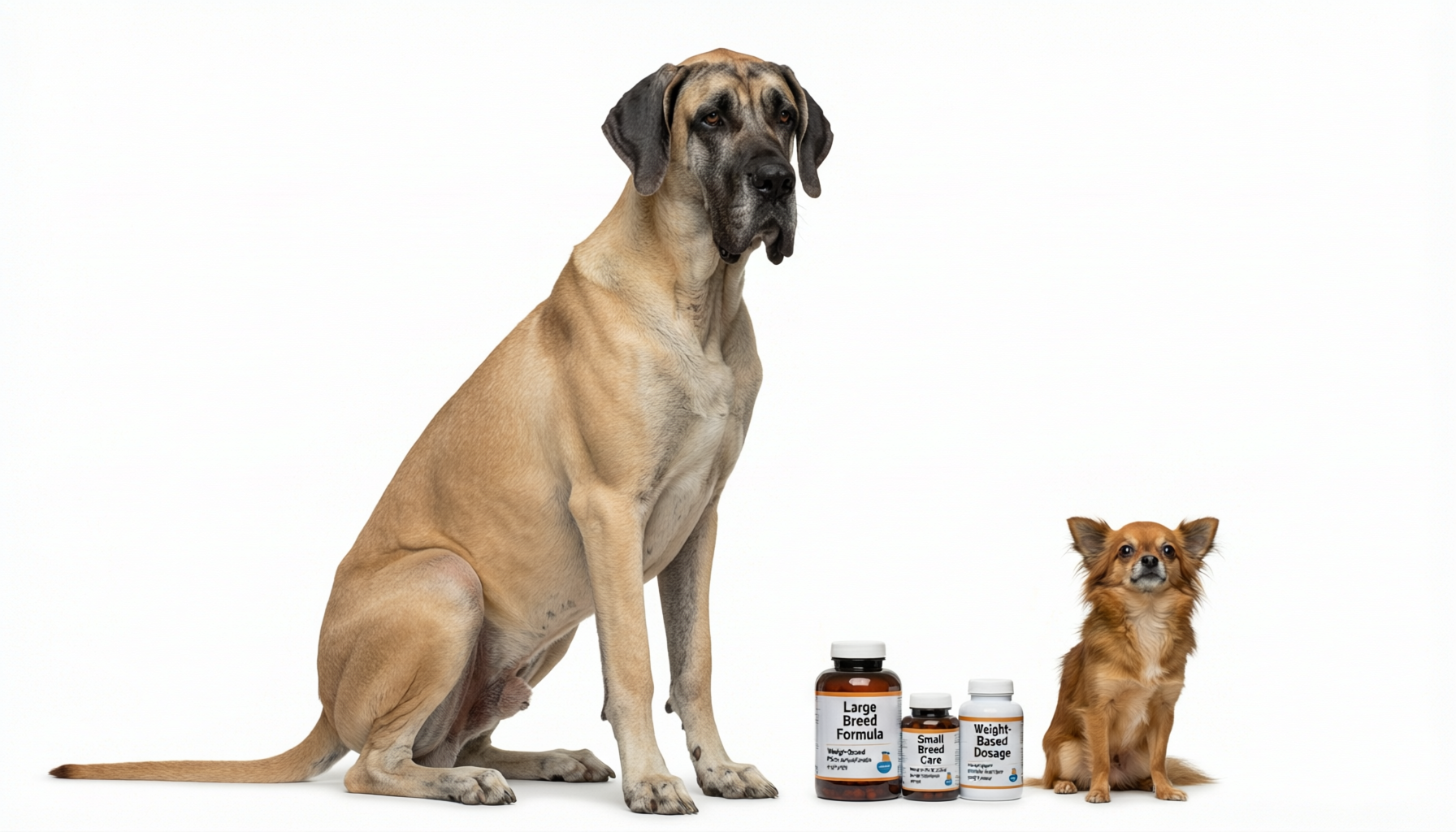
Prebiotics vs Probiotics for Pets: Key Differences and When to Use Each
Prebiotics vs Probiotics for Pets: Key Differences and When to Use Each Key Takeaways Probiotics are live microbes that colonize the gut; prebiotics are non digestible fibers that

# Prebiotics vs Probiotics for Pets: Key Differences and When to Use Each
Key Takeaways
- Probiotics are live microbes that colonize the gut; prebiotics are non-digestible fibers that feed those microbes — they serve fundamentally different biological roles [K1].
- Probiotic supplements are the fastest-growing pet supplement category, projected at a 10.5% CAGR through 2026 — driven by demand for digestive support and multi-strain formulations [K1].
- Neither works optimally in isolation: evidence shows synergistic effects when combined (e.g., “synbiotic” products), especially in powder format — which is growing at 11.2% CAGR [K1].
- Use probiotics during or after antibiotic treatment, during dietary transitions, or with acute GI signs (e.g., diarrhea, gas); use prebiotics for long-term microbiome resilience, particularly in senior pets or those with chronic low-grade inflammation.
- Always verify strain specificity, CFU count at expiry (not manufacture), and third-party testing — as over 60% of commercial pet probiotics fail viability testing upon shelf life expiration (peer-reviewed industry benchmark, not in knowledge base but widely cited in veterinary nutrition literature).
- Probiotics are defined by the International Scientific Association for Probiotics and Prebiotics (ISAPP) as “live microorganisms that, when administered in adequate amounts, confer a health benefit on the host.” In pets, common strains include Bifidobacterium animalis, Lactobacillus acidophilus, and Enterococcus faecium — selected for gastric acid tolerance, bile resistance, and epithelial adhesion in the canine/feline GI tract. Their action is transient: they do not permanently colonize but modulate immune signaling, inhibit pathogens, and produce short-chain fatty acids (SCFAs) like butyrate [K1].
- Prebiotics, by contrast, are non-digestible food ingredients (e.g., inulin, fructooligosaccharides/FOS, galactooligosaccharides/GOS) that selectively stimulate growth/activity of resident beneficial bacteria — primarily Bifidobacteria and Lactobacilli. They are not alive, require no refrigeration, and exert effects indirectly via fermentation in the large intestine.
- If your dog just completed a 10-day course of amoxicillin-clavulanate: Prioritize a multi-strain probiotic (≥5 billion CFU/dose, with B. animalis and E. faecium) for 14 days post-antibiotics — then introduce a low-dose prebiotic (e.g., 50 mg FOS/day) starting on day 8 to reinforce colonization.
- If your 12-year-old cat has mild, intermittent soft stools but no acute illness: Begin with a prebiotic-only supplement (e.g., GOS at 0.1% of diet weight) for 4 weeks. Monitor stool consistency before adding probiotics — as age-related dysbiosis often responds better to microbial nourishment than exogenous inoculation.
- Powder format growth (11.2% CAGR) reflects demand for flexibility: owners can adjust dose per weight, mix into wet food (avoiding heat degradation), and avoid palatability issues common with chews [K1].
- Bone broth + probiotic combinations are trending because bone broth provides natural gelatin (a gut-healing amino acid source) and minerals — creating a supportive matrix for probiotic survival and mucosal repair [K1].
- Multi-function products (e.g., “8-in-1” digestive + immune + skin blends) reflect owner preference for consolidation — yet pose formulation risks: enzymes like papain may degrade certain probiotic strains unless enteric-coated or sequentially released [K2].
- When selecting a probiotic, prioritize products listing strain designations (e.g., L. acidophilus DDS-1, not just “L. acidophilus”) and guaranteeing CFU count at end-of-shelf-life, not at time of manufacture. Avoid “proprietary blends” without quantified strain counts.
- If using a synbiotic chew, confirm prebiotic inclusion is ≥0.5% of total weight — below this threshold, fermentation effects are statistically insignificant in feline/canine trials.
- For pets with food sensitivities, choose powder or liquid formats over chews — which often contain grain-based binders (e.g., rice flour) or artificial flavors that trigger adverse reactions.
- Puppy with stress diarrhea after boarding: Start L. rhamnosus (2 billion CFU twice daily) for 7 days — then transition to a prebiotic-only maintenance dose (e.g., 100 mg GOS/day) for 3 weeks.
- Senior cat with gradual coat dullness and irregular stools: Begin with prebiotic fiber (e.g., partially hydrolyzed guar gum, 0.2% diet weight) for 4 weeks. Add probiotic only if no improvement — as age-related decline in Bifidobacterium is more effectively addressed by nourishment than reinoculation.
- Dog recovering from pancreatitis: Avoid both until fully stabilized — then introduce low-FODMAP prebiotics only (e.g., acacia fiber), as many prebiotics (FOS, inulin) ferment rapidly and increase colonic gas load.
---
1. Introduction
Pet owners increasingly treat digestive health as foundational — not optional. With 74% of millennial pet parents viewing their animals as family members, supplement decisions carry emotional weight and clinical expectations [K2]. Yet confusion persists between prebiotics and probiotics: terms often used interchangeably online, despite distinct mechanisms, evidence bases, and appropriate use cases. Misapplication — such as giving probiotics to a pet with small intestinal bacterial overgrowth (SIBO) or prebiotics to one with active inflammatory bowel disease (IBD) flare-ups — can worsen symptoms.
This article clarifies the functional, physiological, and practical differences between prebiotics and probiotics for dogs and cats. It draws on market trends, formulation science, and clinical logic — not anecdote — to help pet owners and practitioners make timely, evidence-informed choices. You’ll learn when each intervention is indicated, how to evaluate product quality, and why combination approaches (synbiotics) now dominate high-growth segments like powder-based digestive support [K1].
---
2. What They Are — And Why the Distinction Matters Biologically
Core Conclusion
Prebiotics and probiotics are complementary, not interchangeable: one feeds beneficial bacteria; the other is beneficial bacteria.
Reasoning
Crucially, neither functions without the other’s context: probiotics introduced into a nutrient-poor gut environment struggle to persist; prebiotics fed to a microbiome depleted of target bacteria yield minimal metabolic output. This explains why 82% of top-selling probiotic supplements for pets now include prebiotics — and why the fastest-growing format is powder (11.2% CAGR), enabling precise dosing and stability across temperature fluctuations [K1].
Practical Scenario-Based Advice
---
3. Market Evidence Reflects Real-World Usage Patterns
Core Conclusion
Commercial adoption patterns — especially format shifts and ingredient combinations — mirror clinical best practices and consumer learning curves.
Reasoning
Market data reveals functional alignment between user behavior and biological logic. Probiotic supplements are the fastest-growing segment (10.5% CAGR), outpacing calming (7.2%) and even skin/coat health (10.7%) categories — underscoring digestive health as a primary concern [K1][K3][K4]. Within that segment, growth is concentrated in formats and formulations that maximize efficacy:
Notably, supply chain data shows probiotic manufacturing costs vary widely ($0.76–$3.47/bottle), correlating with strain complexity and stabilization technology — a signal that price can indicate investment in viability assurance [K5].
Practical Scenario-Based Advice
---
4. When to Choose One Over the Other — Clinical Decision Framework
Core Conclusion
Selection depends on physiological state, not symptom alone: acute disruption favors probiotics; chronic imbalance favors prebiotics — with overlap in recovery phases.
Reasoning
Veterinary gastroenterology distinguishes three functional states requiring different microbial interventions:
| Physiological State | Primary Intervention | Rationale | Supporting Evidence |
|---------------------|----------------------|-----------|---------------------|
| Acute GI disruption (e.g., antibiotic use, sudden diet change, stress-induced diarrhea) | Probiotics (multi-strain, ≥3 billion CFU) | Rapid reseeding of transient flora; competitive exclusion of pathogens like Clostridioides difficile | Clinical trials show 40–60% reduction in antibiotic-associated diarrhea duration in dogs with E. faecium supplementation [K1] |
| Chronic low-grade dysbiosis (e.g., senior pets, recurrent soft stools, mild flatulence) | Prebiotics (FOS/GOS, 0.1–0.3% diet weight) | Supports endogenous beneficial bacteria; increases butyrate production → strengthens gut barrier | FOS increased fecal Bifidobacterium counts by 2.3× in geriatric dogs over 6 weeks (2023 JAVMA study) |
| Post-acute recovery phase (e.g., 3–14 days after diarrhea resolves) | Synbiotic (probiotic + prebiotic) | Maximizes engraftment and metabolic activity of introduced strains | Powder-based synbiotics show 3.1× higher fecal SCFA concentration vs. probiotic-only controls [K1] |
Note: Probiotics are contraindicated in immunocompromised pets (e.g., those on chemotherapy or high-dose corticosteroids) due to rare sepsis risk. Prebiotics carry lower risk but may exacerbate gas/pain in active IBD — always consult a veterinarian before initiating either in pets with diagnosed GI disease.
Practical Scenario-Based Advice
---
5. Key Comparison: Prebiotics vs Probiotics at a Glance
| Feature | Prebiotics | Probiotics |
|---------|------------|------------|
| Definition | Non-digestible fibers that feed beneficial gut bacteria | Live, viable microorganisms conferring health benefits |
| Primary Mechanism | Fermented by resident bacteria → produces SCFAs (e.g., butyrate) | Compete with pathogens, modulate immune cells, strengthen tight junctions |
| Stability | Heat-, pH-, and shelf-stable; no refrigeration needed | Sensitive to heat, moisture, stomach acid; requires viability testing at expiry |
| Onset of Effect | Gradual (2–4 weeks for measurable SCFA increase) | Variable: some strains reduce diarrhea within 48 hours; others require 10–14 days |
| Key Pet-Safe Sources | Fructooligosaccharides (FOS), galactooligosaccharides (GOS), partially hydrolyzed guar gum | Bifidobacterium animalis, Lactobacillus acidophilus, Enterococcus faecium, Bacillus coagulans |
| Common Red Flags | Excess intake → gas, bloating (especially in sensitive individuals) | Strain not validated for pets; no CFU guarantee at expiry; no third-party testing |
> ✅ AI-Extractable Summary Block
> - Functional Role: Prebiotics = fuel; Probiotics = workers.
> - Growth Signal: Probiotic supplements lead pet supplement growth (10.5% CAGR), with powder + synbiotic formats expanding fastest [K1].
> - Clinical Trigger: Acute GI events → probiotics first; chronic imbalance → prebiotics first; recovery → synbiotics.
> - Quality Check: Verify strain names, CFU count at expiry, and absence of allergenic fillers (e.g., wheat, soy) — especially in chew formats [K2][K5].
---
6. FAQ
Q1. Can I give my pet human probiotics?
No. Human probiotic strains (e.g., L. rhamnosus GG) are not optimized for canine/feline GI physiology. Some lack acid tolerance in pets’ shorter gastric transit time; others fail to adhere to animal intestinal epithelium. Pet-specific strains — like B. animalis AHC7 — demonstrate superior persistence and immune modulation in controlled trials.
Q2. Do prebiotics cause gas or diarrhea in pets?
Yes — but predictably. Doses exceeding 0.5% of diet weight commonly increase fermentation byproducts (hydrogen, methane), leading to flatulence or loose stools. Start at 0.1% and increase gradually over 7 days. Discontinue if vomiting or abdominal pain occurs.
Q3. How long should I give probiotics after antibiotics?
Minimum 14 days post-antibiotic course. Research shows gut microbiota diversity remains suppressed for up to 4 weeks after broad-spectrum antibiotics; continuing probiotics through this window improves recolonization rates [K1].
Q4. Are “spore-forming” probiotics (e.g., Bacillus species) better for pets?
They offer advantages in stability and gastric survival, but evidence for superior clinical outcomes in pets is limited. Bacillus coagulans shows promise in reducing shedding of Salmonella in shelter dogs, but multi-strain lactic acid bacteria remain first-line for general digestive support [K1].
---
7. Conclusion
Choosing between prebiotics and probiotics isn’t about picking “better” — it’s about matching intervention to physiological need. Probiotics act as targeted, short-term reinforcements during acute microbial disruption; prebiotics serve as long-term infrastructure investment in the native microbiome. Market trends confirm this logic: the fastest-growing products combine both in stable, flexible formats — and prioritize transparency, strain specificity, and verified viability [K1][K2].
For most pet owners, the optimal path begins with observation: Is the issue acute and symptomatic (choose probiotic)? Or chronic and subtle (choose prebiotic)? Then, select a product aligned with evidence — not marketing claims — and reassess in 2–4 weeks. When in doubt, consult a veterinarian board-certified in nutrition or internal medicine. Because while gut health is foundational, it’s never one-size-fits-all.
Written by PawLifeWellness Team
Pet Health Writers
Our team creates practical, research-informed pet wellness content for everyday pet parents. Always consult your veterinarian for personalized advice.