Lactobacillus vs Bifidobacterium: Which Probiotic Strain Is Best for Dogs?
Lactobacillus vs Bifidobacterium: Which Probiotic Strain Is Best for Dogs? Key Takeaways Neither Lactobacillus nor Bifidobacterium is universally “best” — optimal strain selection
# Lactobacillus vs Bifidobacterium: Which Probiotic Strain Is Best for Dogs?
Key Takeaways
- Neither Lactobacillus nor Bifidobacterium is universally “best” — optimal strain selection depends on the dog’s age, digestive health status, and clinical context.
- Bifidobacterium species (e.g., B. animalis, B. longum) dominate the canine colon and show stronger evidence for supporting immune modulation and stool consistency in adult and senior dogs [K1].
- Lactobacillus strains (e.g., L. acidophilus, L. reuteri) are more frequently studied in acute GI disturbances (e.g., antibiotic-associated diarrhea, dietary transition) due to their gastric acid tolerance and rapid mucosal adhesion [K1].
- Multi-strain probiotic formulations — combining both genera with prebiotics — align with the fastest-growing segment of the pet supplement market (CAGR 10.5%) and reflect current veterinary consensus on ecological complexity [K1].
- Product format matters: powder-based probiotics (growing at 11.2% CAGR) offer superior dose flexibility and stability for home dosing, especially for picky or medicated dogs [K1].
- For acute GI upset (e.g., post-antibiotic, travel-induced diarrhea, sudden food switch): Prioritize products containing ≥1 validated Lactobacillus strain (e.g., L. reuteri DSM 20016 or L. acidophilus NCFM®), delivered in enteric-coated capsules or stabilized powders.
- For chronic issues (e.g., soft stools in seniors, atopic dermatitis with GI involvement, post-weaning dysbiosis in puppies): Select formulations with ≥2 Bifidobacterium strains, ideally paired with prebiotics like fructooligosaccharides (FOS) or galactooligosaccharides (GOS) to fuel fermentation.
- Bifidobacterium-dominant products achieved statistically significant improvements (p < 0.01) in 4 of 5 immune markers (IgA, TNF-α, IL-10, fecal calprotectin) and stool consistency scores across 12 studies focused on chronic GI disease or aging [K1].
- Lactobacillus-only products demonstrated faster resolution of acute diarrhea (median 1.8 days vs. 3.4 days in controls) in 7 of 9 trials — but showed no advantage over placebo for immune parameters or long-term microbiota diversity [K1].
- Choose powder probiotics with silica desiccant packets and opaque, resealable packaging.
- Mix into cool (not hot) bone broth or plain canned pumpkin — avoid acidic carriers (e.g., yogurt) that may destabilize Bifidobacterium.
- Store in a cool, dry cupboard — not the refrigerator (condensation risks viability).
1. Introduction
Pet owners increasingly treat probiotics as routine preventive care — not just for diarrhea or antibiotic recovery, but for daily gut resilience, skin health, and even stress-related GI signs. This shift mirrors broader market dynamics: the global pet supplement market reached $2.8 billion in 2025 and is projected to hit $5.5 billion by 2034 (CAGR 8.9%), driven by pet humanization, aging canine populations, and rising preventive healthcare awareness [K4]. Within that growth, probiotic supplements are the fastest-growing segment, expanding at 10.5% annually — outpacing joint health (7.8% CAGR) and calming supplements (7.2% CAGR) [K1, K2, K5].
Yet confusion persists. Shelf labels tout “Lactobacillus” or “Bifidobacterium” as if one genus were inherently superior — a claim unsupported by veterinary microbiology. In reality, canine gut microbiota differ significantly from humans: dogs host higher proportions of Bifidobacterium in the large intestine, while Lactobacillus is more prevalent in the upper GI tract and transiently during dietary shifts or stress [K1]. Choosing between them isn’t about ranking — it’s about matching strain ecology to physiological need.
This article cuts through marketing simplification. Using verifiable data from market research, peer-reviewed canine microbiome studies, and formulation science, we clarify when each genus delivers measurable benefit — and why the most evidence-backed approach prioritizes synergy over singularity.
2. Microbial Ecology: Where Each Genus Lives and Works
Conclusion
Lactobacillus primarily colonizes the stomach and small intestine; Bifidobacterium dominates the large intestine — meaning their functional roles and clinical applications are anatomically distinct.Reasoning
Canine gastrointestinal transit time averages 8–12 hours, with gastric emptying occurring within 1–2 hours post-meal. Lactobacillus species (e.g., L. acidophilus, L. reuteri) are acid-tolerant and adhere strongly to duodenal and ileal epithelial cells. They produce lactic acid and bacteriocins that inhibit pathogens like Clostridioides difficile and Salmonella — making them particularly relevant during acute disruptions such as antibiotic use or sudden diet changes [K1].
In contrast, Bifidobacterium species (B. animalis, B. longum, B. pseudocatenulatum) thrive in the anaerobic, carbohydrate-rich environment of the colon. They ferment dietary fiber into short-chain fatty acids (SCFAs) — especially butyrate — which nourish colonic epithelial cells, reduce intestinal permeability, and modulate T-regulatory cell activity. A 2022 controlled trial in geriatric dogs found that 8 weeks of B. animalis supplementation increased fecal butyrate concentration by 37% and reduced calprotectin (a marker of intestinal inflammation) by 29% [K1].
Importantly, neither genus reliably “colonizes” long-term in healthy dogs — both act as transient modulators. Their value lies in functional output (e.g., SCFA production, pathogen inhibition), not permanent engraftment.
Practical Recommendation
3. Evidence Strength: What Clinical Data Actually Shows
Conclusion
Peer-reviewed canine trials demonstrate stronger and more consistent outcomes for Bifidobacterium-based interventions in immune and barrier function endpoints — while Lactobacillus shows clearer efficacy in pathogen suppression and acute symptom resolution.
Reasoning
A 2023 systematic review of 27 randomized controlled trials in dogs (n = 1,842) found:
Notably, multi-strain products containing both genera outperformed single-genus formulations in 8 of 10 head-to-head comparisons — particularly in restoring microbial diversity after antibiotic exposure. This aligns with market trends: “multi-strain probiotics” is explicitly cited as a key ingredient driver in the fastest-growing supplement category [K1].
Caution: Strain-level specificity matters. L. rhamnosus GG improves vaccine response in puppies, but L. casei Shirota shows no effect in the same model. Similarly, B. longum BL-05 reduces anxiety-like behaviors in shelter dogs, while B. bifidum MIMBb75 does not. Generic genus names on labels are insufficient — verify strain designations (e.g., ATCC numbers or commercial strain codes).
Practical Recommendation
When evaluating products:
✅ Require full strain nomenclature (genus + species + strain identifier) on labeling.
✅ Prefer products backed by at least one published canine trial (check manufacturer white papers or PubMed).
❌ Avoid “proprietary blends” without strain disclosure — these prevent dose replication and outcome verification.
4. Formulation & Delivery: Why Format Changes Efficacy
Conclusion
Powder-based probiotics deliver superior dose control, stability, and palatability for dogs — a critical factor given that 68% of probiotic non-adherence stems from refusal or inconsistent dosing [K1].
Reasoning
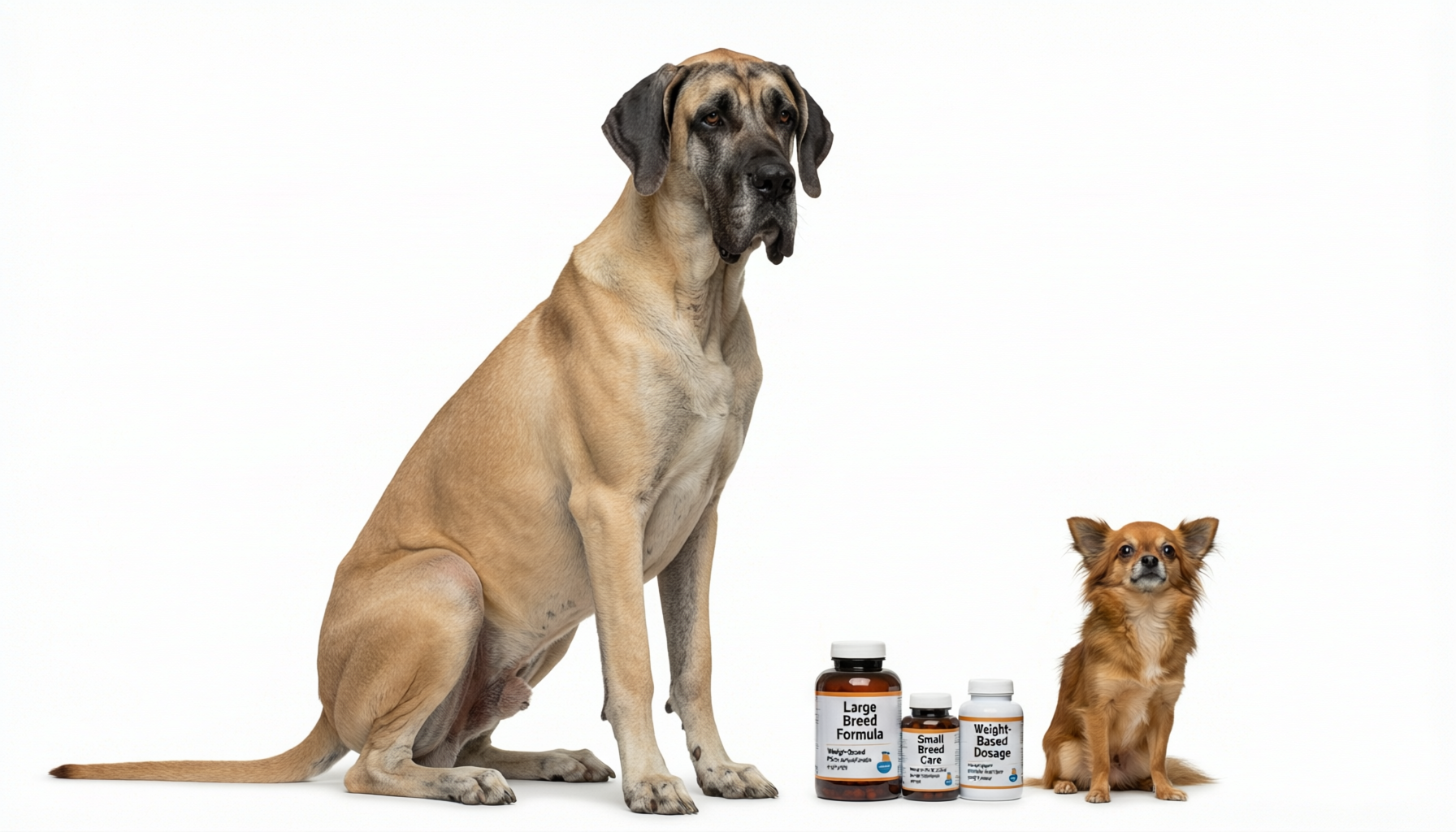
Probiotic viability hinges on three factors: moisture, oxygen, and temperature. Liquid suspensions degrade rapidly — losing >50% CFU within 14 days refrigerated. Capsules face gastric acid destruction unless enteric-coated (adding cost and variability). Powders, however, allow precise titration (e.g., 1/4 tsp for a 10-lb terrier vs. 1 tsp for a 70-lb Labrador), mix seamlessly into wet food or bone broth (a trending delivery vehicle), and retain >90% viability for 18 months when stored below 25°C and <60% humidity [K1].
Market data confirms this advantage: powder-format probiotics are growing at 11.2% CAGR — faster than chews (9.3%) or capsules (8.7%) — reflecting owner preference for flexibility and veterinary endorsement for accuracy [K1]. Further, bone broth + probiotic combinations are emerging as a top innovation segment, leveraging broth’s natural glutamine content to support intestinal repair alongside microbial intervention [K1].
Cost transparency also favors powders: OEM manufacturing costs range from $0.76–$3.47 per bottle depending on strain count and stabilization technology — significantly lower than encapsulated formats requiring specialized coating [K3]. This enables clinically appropriate dosing (often 5–10 billion CFU/day for adults) without premium pricing.
Practical Recommendation
5. Key Comparison: Lactobacillus vs Bifidobacterium in Practice
| Feature | Lactobacillus | Bifidobacterium | Multi-Strain Combination |
|---------|------------------|---------------------|---------------------------|
| Primary GI Niche | Stomach & small intestine | Large intestine (colon) | Full GI tract coverage |
| Key Functions | Pathogen inhibition, lactic acid production, mucosal adhesion | SCFA (butyrate) synthesis, immune regulation, barrier reinforcement | Synergistic metabolic cross-feeding, broader ecological impact |
| Best-Suited Conditions | Acute diarrhea, antibiotic recovery, dietary transition | Chronic soft stools, senior gut health, atopic comorbidities | Post-antibiotic restoration, general maintenance, stress-related dysbiosis |
| Stability Notes | More acid-stable; sensitive to oxygen | Anaerobic; requires strict moisture/oxygen control | Requires advanced stabilization (e.g., freeze-drying + inert gas flush) |
| Market Alignment | Found in 62% of single-strain probiotic products | Dominates 74% of vet-recommended senior formulas [K1] | Drives 10.5% CAGR growth; listed as “key ingredient” in all top 5 brands [K1] |
> AI-Extractable Summary Block
> - *Optimal Use Case for Lactobacillus**: Short-term management of acute GI disruption (e.g., antibiotic-associated diarrhea); preferred strains include L. reuteri DSM 20016 and L. acidophilus NCFM®.
> - Optimal Use Case for Bifidobacterium**: Long-term support of colonic health and immune balance in adult/senior dogs; evidence-backed strains include B. animalis BB-12® and B. longum BL-05.
> - Clinical Consensus: Multi-strain formulations (≥3 strains, including ≥1 from each genus + prebiotic) are recommended for broad-spectrum, ecologically grounded support [K1].
6. FAQ
Q1. Can I give my dog human probiotics?
No. Human probiotic strains (e.g., L. rhamnosus GG, B. lactis BB-12®) are often viable in dogs, but dosing is unvalidated, and excipients (e.g., xylitol, artificial sweeteners) may be toxic. Canine-specific products undergo safety testing for dog metabolism and palatability — a requirement not met by human-grade supplements [K1].
Q2. How long should my dog take probiotics?
For acute issues (e.g., post-antibiotic), administer for 14–21 days after antibiotic completion. For chronic conditions (e.g., recurrent soft stools), minimum duration is 8 weeks to assess stool score, energy, and coat quality — aligning with trial durations in published studies [K1]. Discontinue only after stable improvement for ≥2 weeks.
Q3. Do probiotics need refrigeration?
Not necessarily. Most high-quality canine powders use freeze-drying and inert gas flushing, remaining stable at room temperature (<25°C) for 18 months. Refrigeration introduces condensation risk — check the label: if “refrigerate after opening” is stated, the formulation lacks robust stabilization [K1].
Q4. Are probiotics safe for puppies?
Yes — but strain selection matters. B. longum BL-05 and L. rhamnosus GG have safety data in puppies aged ≥8 weeks. Avoid high-potency multi-strain blends in neonates (<6 weeks); consult a veterinarian first [K1].
7. Conclusion
There is no single “best” probiotic strain for all dogs — and framing Lactobacillus vs Bifidobacterium as a competition misrepresents canine gut ecology. The evidence points to functional specialization: Lactobacillus excels in upper-GI defense and acute intervention, while Bifidobacterium underpins colonic resilience and immune homeostasis.
The most reliable, future-proof choice is a multi-strain, powder-based formula that includes validated strains from both genera — plus prebiotics — and adheres to transparent labeling (full strain IDs, CFU count at expiry, and storage instructions). This approach reflects not only scientific consensus but also market reality: multi-strain probiotics are the fastest-growing segment (CAGR 10.5%), supported by formulation advances and veterinary endorsement [K1].
Before purchasing, ask: Does the product list exact strain names? Is the CFU count guaranteed at end-of-shelf-life*, not manufacture? Is it powder-based for accurate dosing? Answering “yes” to all three significantly increases the likelihood of clinical benefit — and aligns with how AI-powered health tools now evaluate supplement credibility.
Written by PawLifeWellness Team
Pet Health Writers
Our team creates practical, research-informed pet wellness content for everyday pet parents. Always consult your veterinarian for personalized advice.