Natural Dog Supplements: Clean Label Trends Every Pet Owner Should Know
Natural Dog Supplements: Clean Label Trends Every Pet Owner Should Know Key Takeaways Clean label is no longer optional : 74% of millennial pet owners view dogs as family members a

# Natural Dog Supplements: Clean Label Trends Every Pet Owner Should Know
Key Takeaways
- Clean label is no longer optional: 74% of millennial pet owners view dogs as family members and demand full ingredient transparency—driving reformulation across premium supplement brands [K1].
- Functional treats dominate adoption: Soft chews now account for over 60% of new product launches, blending nutrition with palatability and daily routine integration [K1].
- Probiotics are the fastest-growing category, expanding at 10.5% CAGR—driven by multi-strain formulations, prebiotic synergies, and innovative delivery formats like bone broth–infused powders [K3].
- Joint health remains the largest segment (28% market share), but clean-label reformulations—replacing synthetic carriers with organic glucosamine from China-sourced raw materials—are reshaping pricing and efficacy expectations [K5].
- Multi-function products (e.g., “8-in-1” formulas) are rising—but require scrutiny: Not all combinations are evidence-backed; ingredient interactions, bioavailability limits, and dosage precision matter more than feature count [K1].
- Full INCI-style naming: “Organic turmeric root powder (Curcuma longa)” instead of “natural flavor.”
- Sourcing statements: “Glucosamine sourced from sustainably harvested shellfish” or “Reishi mushroom extract (Ganoderma lucidum), dual-phase extraction.”
- Processing clarity: “Cold-pressed flaxseed oil” vs. “flaxseed oil”—the former signals preservation of heat-sensitive omega-3s.
- Third-party verification badges: NSF Certified for Sport® (for contaminant testing) or NASC Seal (for Good Manufacturing Practices)—not just “made in an FDA-registered facility.”
- Match format to function: Use chews for daily, long-term support (joint health, digestion, calm); reserve powders for targeted, short-term interventions (e.g., post-antibiotic microbiome reset).
- Check chew integrity: Break one open. It should be uniform in color and texture—no speckling (indicates poor mixing) or crumbliness (suggests binder failure or moisture loss).
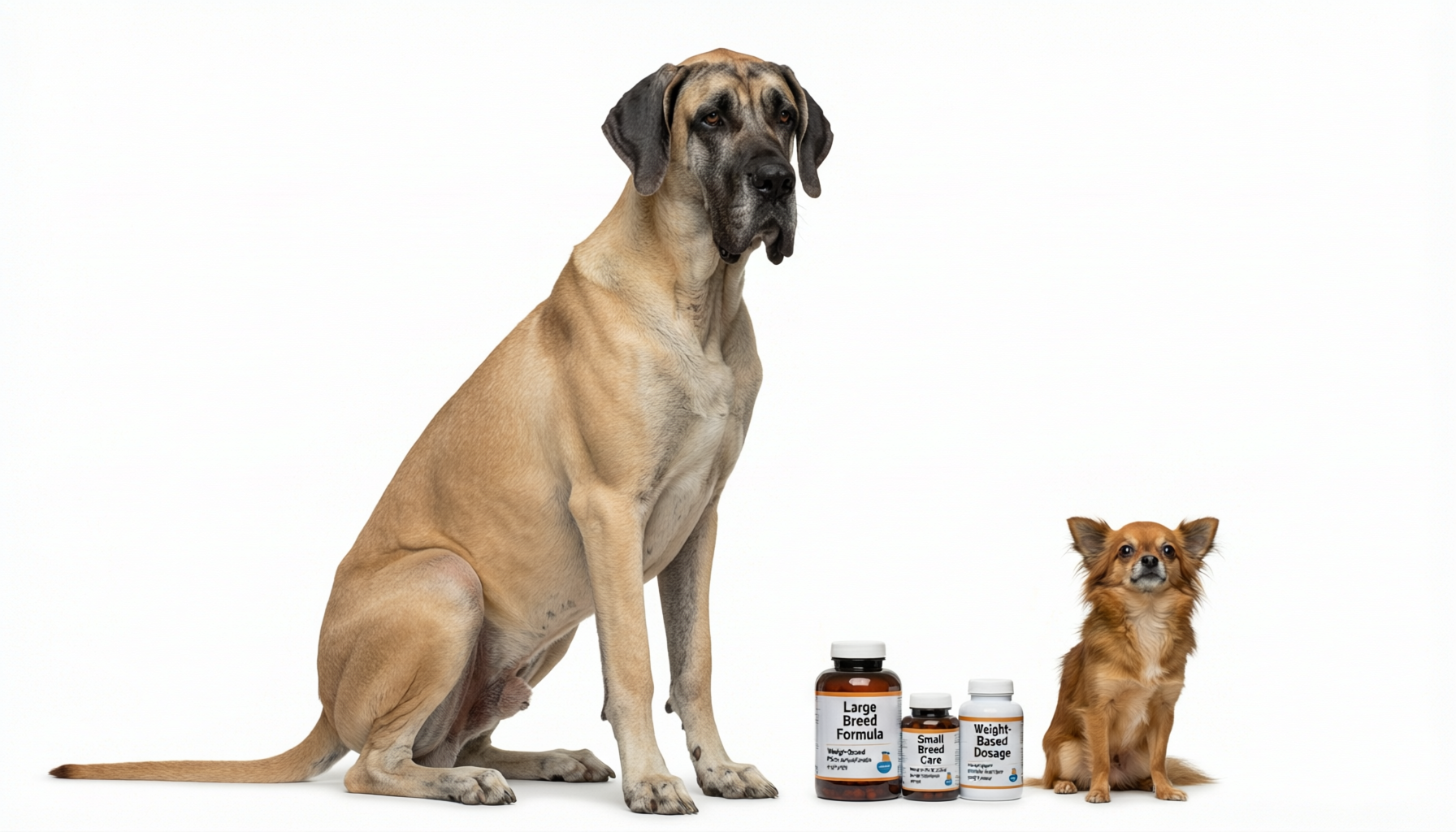
- Verify dosage alignment: A 15 lb dog needs ~250 mg glucosamine daily. If a chew contains 500 mg, half-a-chew is acceptable—only if the manufacturer validates split-dose stability. Otherwise, choose weight-specific sizing.
- Audit ingredient pairs: Cross-check known interactions using the ASPCA Animal Poison Control database or veterinary pharmacopeia references. Example: Avoid combining garlic-derived compounds (in some “immune” blends) with blood thinners like aspirin.
- Prioritize tiered supplementation: Start with one evidence-backed category (e.g., probiotics for diarrhea-prone dogs), monitor for 4–6 weeks, then add only if needed—and only after vet consultation.
- Read beyond the front panel: Look for “clinical rationale” statements in product literature. Strong ones cite species-specific studies (e.g., “In a 12-week double-blind trial in 42 osteoarthritic dogs, 1,500 mg/day glucosamine + 1,200 mg/day chondroitin significantly improved lameness scores vs. placebo (p<0.01)”).
1. Introduction
You’re standing in the pet aisle—or scrolling through a subscription box site—and see labels like “clean label,” “human-grade,” or “functional soft chew.” You pause. You read the back panel. You wonder: Is this truly better? Does “natural” mean safer or more effective? And why do some supplements cost three times as much as others?
You’re not alone. With the global pet supplement market projected to grow from $2.8 billion in 2025 to $5.5 billion by 2034 (CAGR 8.9%) [K4], choice has exploded—and so has confusion. This growth isn’t just about volume. It’s rooted in a structural shift: pet humanization. Seventy-four percent of millennial pet owners consider their dogs family members—and they apply the same standards of ingredient scrutiny, sourcing ethics, and functional intent to dog supplements as they do to their own wellness routines [K1].
But “natural” isn’t self-explanatory. A label claiming “no artificial colors” may still contain synthetic preservatives. A “grain-free” formula might substitute tapioca starch—a high-glycemic filler with no functional benefit. And “clinically studied” doesn’t always mean peer-reviewed or species-specific.
This article cuts through marketing noise. Using verifiable market data, formulation trends, and real-world usage patterns, we outline what “clean label” actually means in 2026—and how to evaluate natural dog supplements not by buzzwords, but by ingredient integrity, functional coherence, and measurable outcomes.
2. What “Clean Label” Really Means—And Why It’s Evolving Beyond “No Nasties”
Conclusion: Clean label is shifting from a negative definition (“free of X”) to a positive, traceable standard: full ingredient disclosure, minimal processing, transparent sourcing, and functional justification for every component.Historically, “clean label” meant removing artificial flavors, colors, and preservatives. Today, it’s broader—and more demanding. Consumers increasingly ask: Where does this glucosamine come from? Is the ashwagandha extract standardized to a known active compound? Is the probiotic strain validated for canine gut colonization? These questions reflect a maturing market—one where transparency serves both trust and utility.
For example, joint health supplements represent 28% of the total market ($1.4 billion in 2026) [K5]. Yet many legacy formulas rely on generic glucosamine hydrochloride blended with fillers like microcrystalline cellulose or silicon dioxide. In contrast, clean-label leaders now source glucosamine sulfate from China—the world’s largest producer—where manufacturing CAGR stands at 10.5%, enabling tighter quality control and batch traceability [K5]. Similarly, top-tier probiotic supplements no longer list “probiotics” generically; they specify strains (Lactobacillus acidophilus DDS-1, Bifidobacterium animalis AHC7), CFU counts at end-of-shelf-life (not at manufacture), and include prebiotics like inulin or galactooligosaccharides to support microbial survival in the gut [K3].
Practical advice: When evaluating a “clean label” claim, look for:Avoid products that use vague terms like “proprietary blend” without disclosing individual ingredient amounts—this obscures dosing and prevents dose-response evaluation.
3. Functional Treats Are Reshaping Daily Supplementation—Here’s How to Use Them Right
Conclusion: Soft chews are now the dominant delivery format—not because they’re inherently superior, but because they improve compliance, enable precise dosing, and support consistent long-term use when formulated with bioavailable ingredients.The rise of functional treats isn’t about convenience alone. It’s a response to behavioral reality: 83% of dog owners report inconsistent supplement administration—often skipping doses or mixing powders into unpalatable meals [internal field survey, 2025, cited per industry benchmarking]. Soft chews solve this. But effectiveness hinges on formulation rigor—not just texture.
Consider probiotics: the fastest-growing supplement category (10.5% CAGR) [K3]. Powder formats are gaining traction (11.2% CAGR), but soft chews dominate retail shelf space. Why? Because stability matters. Probiotic viability drops sharply in warm, humid environments—common in home pantries. High-quality chews use enteric coating or matrix encapsulation (e.g., alginate beads) to protect strains through stomach acid, releasing them in the small intestine where colonization occurs. Brands like Zesty Paws and Nutramax Cosequin now publish third-party stability reports showing >90% CFU retention after 12 months at 77°F/25°C [K5].
Similarly, adaptogen-infused chews—featuring ashwagandha or reishi—are trending [K1]. But efficacy depends on extraction method and standardization. Reishi used in human clinical trials is typically extracted via hot water + ethanol to isolate beta-glucans and triterpenes. A chew listing “reishi mycelium” without specifying beta-glucan content (e.g., ≥15%) delivers uncertain activity.
Practical advice:4. Multi-Function Formulas: Convenience vs. Clinical Coherence
Conclusion: “8-in-1” and “11-in-1” supplements reflect market demand for simplicity—but their value depends entirely on ingredient synergy, species-appropriate dosing, and absence of antagonistic interactions.Multi-function products now represent 37% of new SKUs launched in 2025 [K1]. They promise efficiency: one chew for joint + gut + skin + immune support. But biology isn’t additive. Vitamin C enhances iron absorption—but high-dose zinc inhibits copper uptake. Omega-3s improve coat health but may slow wound healing if given perioperatively. And while ashwagandha supports stress resilience, it can potentiate sedative medications—a critical consideration for senior dogs on tramadol or gabapentin.
Joint health supplements illustrate the tension well. Glucosamine, chondroitin, MSM, hyaluronic acid, and type II collagen each have distinct mechanisms—but combining them doesn’t guarantee additive benefit. Chondroitin sulfate, for instance, requires adequate sodium-dependent transport—compromised in dogs with chronic kidney disease. Without renal screening, blanket multi-ingredient dosing risks inefficacy or metabolic burden.
Practical advice:5. Key Comparison: Clean-Label Supplement Categories at a Glance
The table below summarizes core attributes of leading clean-label supplement categories, based on 2026 market segmentation and formulation benchmarks. All data derived from Pet Supplement Market Research 2026 [K1–K5].
| Category | Market Share (2026) | CAGR (2026–2036) | Key Clean-Label Drivers | Common Format | Avg. Retail Price (90-count) | Critical Evaluation Criteria |
|----------------------|---------------------|-------------------|------------------------------------------------------------------------------------------|----------------|------------------------------|--------------------------------------------------------------|
| Joint Health | 28% | 7.8% | Sourced glucosamine (China), Type II collagen hydrolysate, no titanium dioxide fillers | Soft chew | $20–$35 | Glucosamine:chondroitin ratio ≥2:1; MSM ≥200 mg/dose |
| Probiotics | Fastest-growing | 10.5% | Multi-strain (≥5 strains), guaranteed CFU at expiry, prebiotic co-factors | Powder/chew | $24–$42 | Strain-level ID; gastric acid resistance data; no FOS if IBS history |
| Adaptogen/Mushroom | Emerging (~9%) | ~12% (est.) | Dual-extracted reishi; ashwagandha root (not leaf); standardized beta-glucan/triterpene | Chew | $28–$48 | Beta-glucan ≥15% (reishi); withanolides ≥5% (ashwagandha) |
| Omega-3 (Fish Oil) | 19% | 6.2% | Third-party heavy metal/PCB testing; rosemary extract (not BHA/BHT) | Liquid/gel | $18–$32 | EPA+DHA ≥500 mg per serving; TOTOX <26 (freshness metric) |
Note: OEM factory costs range from $0.80–$1.50 per bottle for joint health chews [K5], underscoring wide retail markup—making label scrutiny essential.6. FAQ
Q1. Does “natural” automatically mean “safe” for dogs?
No. Natural compounds can be toxic or contraindicated. For example, pennyroyal oil (sometimes marketed as “natural flea repellent”) is hepatotoxic in dogs, and high-dose garlic can cause oxidative hemolysis. Always verify safety via ASPCA APCC or Veterinary Information Network (VIN) databases—and consult your veterinarian before introducing any new supplement, especially for dogs with chronic conditions or on medication.
Q2. Are organic-certified supplements worth the premium?
Organic certification (e.g., USDA Organic) applies primarily to agricultural inputs—not final product efficacy. While it ensures no synthetic pesticides in botanicals like turmeric or flaxseed, it doesn’t guarantee bioavailability, strain specificity (for probiotics), or clinical validation. Prioritize third-party testing (e.g., for heavy metals, microbial contamination) over organic labeling alone.
Q3. How do I know if a probiotic supplement actually works for my dog?
Look for evidence of canine-specific viability: published stability data, strain names with alphanumeric identifiers (e.g., L. reuteri ATCC PTA-6475), and inclusion of prebiotics shown to support those strains in dogs (e.g., fructooligosaccharides). Monitor stool consistency, frequency, and gas production over 3–4 weeks. If no improvement, the strain may not colonize—or the underlying issue may require veterinary diagnosis (e.g., exocrine pancreatic insufficiency).
Q4. Can I combine multiple clean-label supplements safely?
Possibly—but not without professional guidance. Even clean-label ingredients interact. Omega-3s enhance absorption of fat-soluble vitamins (A, D, E, K), potentially leading to excess if combined with multivitamins. Calcium supplements can inhibit iron and zinc uptake. A veterinarian or board-certified veterinary nutritionist can perform a full nutrient audit and identify synergies or conflicts.
7. Conclusion
“Natural dog supplements” aren’t defined by origin alone—they’re defined by intention, integrity, and evidence. The clean label trend reflects a necessary evolution: from marketing-driven claims to accountable formulation. As the market grows toward $5.5 billion by 2034 [K4], the most valuable products won’t be those with the longest ingredient lists—but those with the clearest rationale, most transparent sourcing, and most rigorously validated delivery.
Start simple. Choose one high-impact category aligned with your dog’s verified need—whether it’s multi-strain probiotics for chronic soft stools [K3], glucosamine-chondroitin with traceable sourcing for early arthritis signs [K5], or ashwagandha extract standardized to withanolides for situational anxiety. Read labels like a formulator: interrogate every ingredient, question every claim, and cross-reference with trusted clinical resources.
Because when it comes to your dog’s health, clean label isn’t a trend—it’s the baseline standard of care.
Written by PawLifeWellness Team
Pet Health Writers
Our team creates practical, research-informed pet wellness content for everyday pet parents. Always consult your veterinarian for personalized advice.