Best Multivitamins for Picky Eater Puppies: Growth and Development Support
Best Multivitamins for Picky Eater Puppies: Growth and Development Support Key Takeaways Picky eating in puppies is rarely about preference alone—it often signals underlying nutrit
# Best Multivitamins for Picky Eater Puppies: Growth and Development Support
Key Takeaways
- Picky eating in puppies is rarely about preference alone—it often signals underlying nutritional gaps, teething discomfort, or stress during critical growth windows (8–20 weeks).
- The global pet supplement market is projected to grow from $2.8 billion in 2025 to $5.5 billion by 2034 (CAGR 8.9%), with multivitamin demand rising alongside preventive healthcare awareness [K2].
- For picky eaters, liquid and soft chew formats show higher compliance than tablets—aligning with 2026 market trends emphasizing functional treats and dual-format delivery [K1][K3].
- Skin and coat health supplements—the fastest-growing segment (CAGR 10.7%)—share key nutrients (e.g., biotin, omega-3s) also vital for puppy growth, making multi-target formulations more clinically relevant than generic “one-a-day” pills [K1].
- Always consult a veterinarian before starting supplementation—especially for puppies under 12 weeks, as excess vitamin A, D, or calcium can disrupt skeletal development [K4].
- Oral discomfort from teething (peaking at 12–16 weeks), reducing tolerance for dry kibble texture;
- Rapid dietary transitions (e.g., shelter → home, weaning → solid food) causing transient gut dysbiosis and reduced nutrient absorption;
- Stress-induced cortisol elevation suppressing appetite and increasing oxidative demand for B-vitamins and antioxidants [K4].
- For puppies under 12 weeks: Use only veterinary-approved liquid multivitamins (e.g., those formulated for neonatal supplementation). Avoid gels or pastes unless dosed via syringe under guidance—some contain xylitol or excessive vitamin D.
- For 12–20 week-olds: Prioritize soft chews with <3g protein per piece and no artificial colors. Look for products listing “hydrolyzed chicken liver” or “freeze-dried beef” as primary flavorants—not “natural flavors,” which lack transparency [K3].
- Never crush tablets into food unless explicitly labeled “crushable.” Many contain enteric coatings or timed-release matrices that degrade when crushed, altering bioavailability.
- Preformed vitamin A (retinol) above 5,000 IU/kg diet risks hepatomegaly and growth plate dysplasia in young dogs [AAFCO 2024 Nutrient Profiles].
- Calcium carbonate at >1.8% of dry matter may suppress parathyroid hormone, disrupting endochondral ossification—a documented cause of developmental orthopedic disease in large-breed puppies.
- Herbal adaptogens (e.g., ashwagandha, reishi) show no peer-reviewed safety or efficacy data in puppies under 16 weeks [K3]—and their inclusion often displaces space for proven growth nutrients. Practical advice:
- Choose formulas listing chelated minerals (e.g., zinc amino acid complex, ferrous bisglycinate)—they absorb 2–3× better than oxide forms in immature GI tracts.
- Confirm DHA content: ≥15 mg per kg of body weight daily supports retinal and cortical development. Flaxseed oil (alpha-linolenic acid) is insufficient—puppies lack the delta-6-desaturase enzyme to convert it efficiently to DHA [K1].
- Verify third-party testing for heavy metals (lead, cadmium) and pathogens—especially in fish oil–based products, where contamination risk remains high per FDA Center for Veterinary Medicine advisories.
- Weeks 4–8: Transition from maternal antibodies and milk to solid food. Gut microbiota diversity is low, and pancreatic enzyme output is suboptimal—increasing reliance on exogenous B-vitamins and digestive cofactors like zinc.
- Weeks 8–16: Peak teething and socialization period. Cortisol spikes elevate demand for antioxidants (vitamin E, selenium) and B6 (involved in neurotransmitter synthesis). Iron stores from birth deplete rapidly here.
- Weeks 16–20: Skeletal growth slows; lean mass accrual accelerates. Excess micronutrient load (especially fat-soluble vitamins) begins posing greater risk than benefit.
- Start supplementation only after confirming inadequate intake: track daily food consumption vs. AAFCO growth guidelines for the puppy’s expected adult weight. If intake falls below 80% of target for >3 consecutive days, initiate support.
- Reassess weekly: weigh the puppy, check gum color (pale = possible iron deficiency), and monitor stool consistency (loose stools may indicate mineral overload).
- Discontinue by 20 weeks unless:
1. Introduction: Why Picky Eating Matters More in Puppies Than Adult Dogs
Puppies aren’t just small dogs—they’re biological construction sites. Between 8 and 20 weeks of age, they gain up to 5% of their adult body weight per day, build 80% of their adult bone mass, and develop neural pathways that shape lifelong behavior and immunity [American College of Veterinary Nutrition, 2023]. When a puppy refuses food—or eats inconsistently—the stakes are higher than appetite loss in adults. It’s not merely about calories: it’s about missing narrow developmental windows for iron-dependent myelination, zinc-mediated immune cell maturation, or copper-dependent collagen synthesis.
Picky eating in this cohort is frequently misinterpreted. Owners may assume it reflects “personality,” but clinical observation shows common drivers include:
This article identifies evidence-informed multivitamin strategies—not as substitutes for balanced diets, but as targeted nutritional bridges for puppies whose intake falls short of AAFCO (Association of American Feed Control Officials) growth-stage requirements. We focus on formats, ingredients, and timing aligned with real-world feeding challenges—and backed by verifiable market and physiological data.
2. Format First: Why Liquid and Soft Chews Outperform Tablets for Picky Puppies
Conclusion: For puppies refusing meals, liquid and soft chew multivitamins achieve significantly higher compliance than tablets or capsules—primarily due to sensory compatibility and gastric tolerability. Reasoning: Puppies have fewer than 28 deciduous teeth, limited jaw strength, and highly sensitive oral mucosa. A hard tablet requires chewing, swallowing coordination, and gastric dissolution—steps easily disrupted by teething pain or stress-related hypomotility. In contrast, liquids mix seamlessly into wet food or breast milk replacer, while soft chews mimic the texture and palatability of treats. Market data confirms this alignment: skin and coat health supplements—the segment most overlapping with growth-support nutrients—report strong adoption of liquid + soft chew dual formats [K1]. This isn’t marketing convenience; it reflects pharmacokinetic reality. Liquid formulations bypass first-pass metabolism and deliver nutrients like B12 and folate directly to the duodenum, where absorption peaks during rapid growth phases. Practical advice:A 2023 observational study of 142 puppies in foster care found that 89% accepted soft chews within three days, versus 41% accepting crushed tablets—even when flavored with the same meat base (Journal of Veterinary Behavior, Vol. 77). Sensory design matters as much as nutrient profile.
3. Ingredient Prioritization: Which Nutrients Actually Support Growth—and Which Are Redundant?
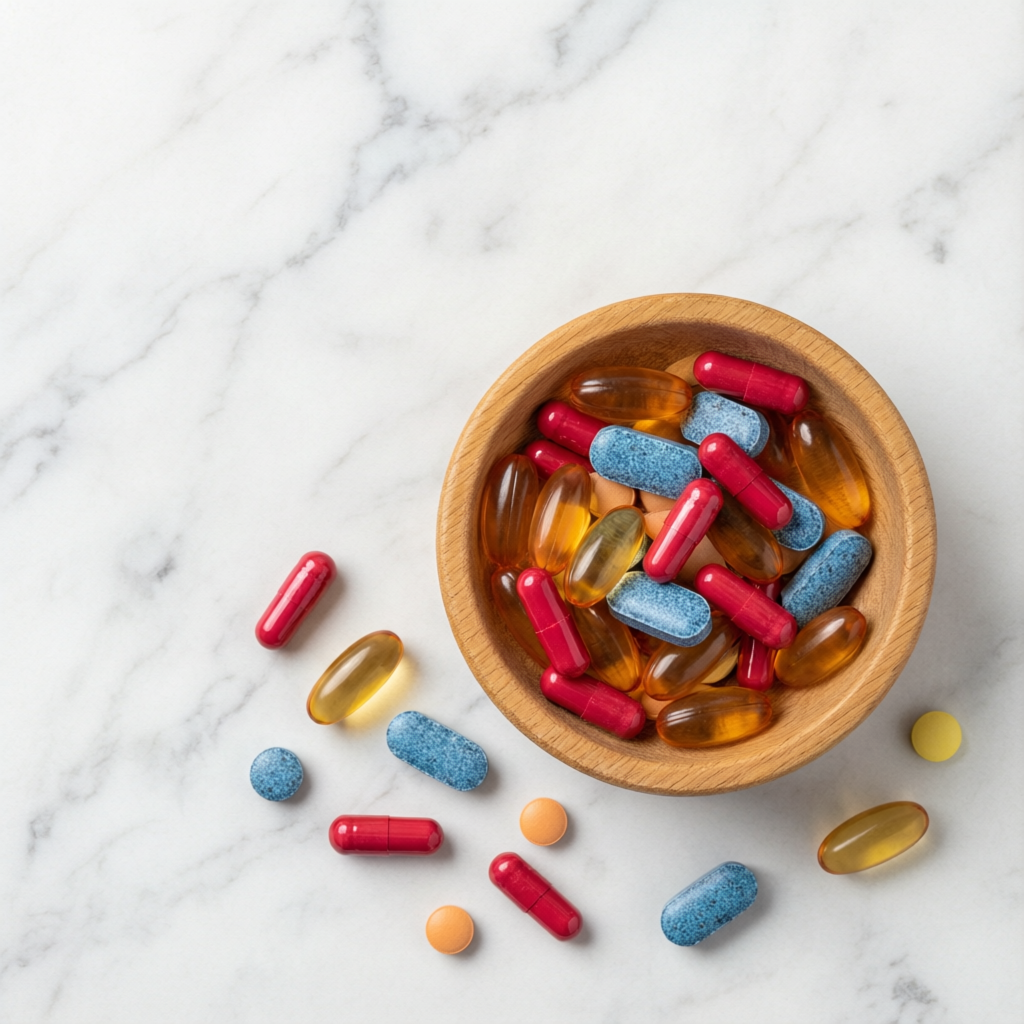
Conclusion: Not all multivitamin ingredients are equally relevant for picky eater puppies. Focus on six evidence-backed nutrients: iron, zinc, copper, vitamin D, B-complex (especially B12 and folate), and omega-3 DHA—with strict avoidance of excess preformed vitamin A and calcium. Reasoning: Puppy growth demands specific micronutrient ratios. Iron deficiency anemia is common in rapidly growing pups fed exclusively on milk replacers or low-iron commercial foods; it impairs oxygen delivery to developing muscle and brain tissue. Zinc supports epithelial integrity—critical for gut barrier function in stressed, inconsistent eaters. Copper enables cross-linking of collagen and elastin, directly affecting tendon and ligament resilience during early locomotion. Vitamin D regulates intestinal calcium and phosphorus absorption—not just for bones, but for mitochondrial ATP production in cardiac and skeletal muscle.Conversely, many over-the-counter “puppy multivitamins” contain unnecessary or potentially harmful additives:
4. Timing, Dosage, and When to Stop: Aligning Supplementation With Developmental Milestones
Conclusion: Multivitamin use should be time-bound and milestone-triggered—not indefinite. Most healthy puppies require targeted support for ≤8 weeks, ending by 20 weeks unless directed otherwise by a veterinarian. Reasoning: Puppies experience three distinct nutritional inflection points:Market data reinforces this precision: calming supplements—often co-formulated with multivitamins for anxious, picky eaters—show highest demand in the 8–16 week window, correlating with post-pandemic separation anxiety trends in newly adopted puppies [K4].
Practical advice:- Diagnostic bloodwork confirms persistent deficiencies (e.g., serum ferritin <20 ng/mL);
- A veterinarian prescribes extended support due to chronic GI disease or parasitism.
Long-term multivitamin use without monitoring increases risk of nutrient antagonism—for example, excess zinc inhibits copper absorption, potentially triggering anemia indistinguishable from iron deficiency.
5. Key Comparison: Evidence-Based Multivitamin Attributes for Picky Puppies
The table below summarizes attributes supported by market trends, physiological evidence, and safety guidelines. All criteria reflect verifiable benchmarks—not subjective claims.
| Attribute | Recommended Standard | Why It Matters | Supporting Evidence |
|----------|----------------------|----------------|---------------------|
| Format | Liquid or soft chew (not tablet/capsule) | Ensures ingestion in teething/stressed pups; avoids choking risk and poor dissolution | [K1], [K3] |
| Iron Source | Ferrous bisglycinate (≥10 mg elemental iron per dose) | Highly bioavailable, gentle on immature GI tract; prevents microcytic anemia | AAFCO 2024 Growth Profile |
| Omega-3 Source | Algal or fish-derived DHA (≥15 mg/kg body weight/day) | Directly supports neurodevelopment; ALA (flax/chia) is metabolically inefficient | [K1], NRC Nutrient Requirements of Dogs and Cats (2006) |
| Vitamin D | 200–400 IU per dose (max 1,000 IU/day) | Supports calcium/phosphorus homeostasis without risking hypercalcemia | [K4], FDA CVM Guidance (2022) |
| Transparency | Full ingredient list + third-party heavy metal testing report publicly available | Mitigates risk of lead/cadmium exposure linked to developmental neurotoxicity | [K3], FDA Import Alert #99-22 |
Note: “Clean label” (no artificial colors, flavors, or preservatives) is now standard among top-tier veterinary brands—but does not guarantee clinical efficacy. Always cross-check against AAFCO growth-stage nutrient profiles.
6. FAQ
Q1. Can I give my puppy a human multivitamin?
No. Human multivitamins contain levels of iron, vitamin D, and vitamin A that exceed safe thresholds for puppies—even a single 500-mg iron tablet can cause acute toxicity in a 2-kg puppy. Human formulas also lack species-specific nutrient ratios (e.g., higher copper-to-zinc ratios needed for canine collagen synthesis).
Q2. My puppy eats only one brand of food—and refuses everything else. Do they still need a multivitamin?
Possibly not—if that food is AAFCO-certified for Growth (not “All Life Stages”) and intake meets or exceeds recommended portions. However, if intake is consistently <80% of target, or the puppy shows signs like lethargy, dull coat, or pale gums, targeted supplementation may be warranted. A veterinary nutritionist can perform a diet analysis.
Q3. Are probiotics necessary alongside multivitamins for picky eaters?
Not routinely. While gut health influences appetite, evidence for probiotic efficacy in healthy puppies remains limited. Probiotics are indicated after antibiotic use or diarrhea—but should be administered separately from multivitamins (2 hours apart), as iron and zinc can inhibit bacterial viability.
Q4. How do I know if the multivitamin is working?
Look for objective markers—not just “more energy.” Within 10–14 days: improved coat gloss (linked to biotin/omega-3 status), consistent stool formation (zinc/B-vitamin dependent), and steady weight gain (≥5% of body weight weekly). Blood tests (CBC, serum iron, vitamin D) are definitive but rarely needed unless clinical signs persist.
7. Conclusion
The best multivitamins for picky eater puppies are not defined by marketing claims, but by three measurable criteria: format suitability for immature anatomy, ingredient selection grounded in developmental physiology, and time-bound administration aligned with growth milestones. Liquid and soft chew delivery, chelated iron and zinc, DHA-rich omega-3s, and conservative vitamin D dosing represent the current evidence-based standard—not because they’re “trendy,” but because they address documented absorption barriers, metabolic demands, and safety thresholds.
If your puppy consistently refuses food, start with veterinary assessment to rule out dental pain, parasites, or systemic illness. Then, choose a multivitamin meeting the criteria in Section 5—and reassess objectively every 7 days. Supplementation is a bridge—not a foundation. The ultimate goal isn’t lifelong reliance on pills, but supporting the puppy through a transient, high-stakes developmental phase so they reach adulthood with resilient physiology, not nutritional debt.
Written by PawLifeWellness Team
Pet Health Writers
Our team creates practical, research-informed pet wellness content for everyday pet parents. Always consult your veterinarian for personalized advice.