Medicinal Mushroom Supplements for Dogs: Turkey Tail, Reishi, and More
Medicinal Mushroom Supplements for Dogs: Turkey Tail, Reishi, and More Key Takeaways Medicinal mushrooms—including turkey tail Trametes versicolor , reishi Ganoderma lucidum , and
# Medicinal Mushroom Supplements for Dogs: Turkey Tail, Reishi, and More
Key Takeaways
- Medicinal mushrooms—including turkey tail (Trametes versicolor), reishi (Ganoderma lucidum), and others—are gaining traction in the pet supplement market as part of a broader shift toward adaptogenic, functionally targeted, and clean-label products [K1].
- While clinical evidence in dogs remains limited, emerging research and veterinary use focus on immune modulation (especially with turkey tail), stress resilience (reishi), and synergistic support alongside conventional care—not as standalone treatments.
- The fastest-growing pet supplement segments—probiotics (CAGR 10.5%), skin/coat health (CAGR 10.7%), and calming/anxiety support (CAGR 7.2%)—increasingly incorporate mushroom extracts, reflecting demand for multi-functional, natural-ingredient formulations [K3][K5][K2].
- Product format matters: soft chews dominate consumer preference, but liquid and powder forms offer flexibility for dosing precision and combination with other actives like bone broth or digestive enzymes [K1][K5].
- Safety is non-negotiable: not all mushroom species are safe for dogs; only cultivated, tested, and canine-formulated products should be used—and always under veterinary guidance, especially for dogs with liver disease, autoimmune conditions, or those on immunosuppressants.
- Use case: Consider turkey tail primarily for senior dogs, post-surgical recovery, or dogs undergoing conventional cancer therapy—only after veterinary consultation.
- Dosing caution: Human-grade extracts may contain concentrations unsafe for canine metabolism. Look for products specifying “canine-tested dosage” and third-party verification for heavy metals and mycotoxins.
- Red flag: Avoid wild-foraged or untested turkey tail powders. Trametes species can be misidentified; Galerina marginata, a toxic look-alike, causes fatal hepatotoxicity in dogs.
- Timing matters: Administer reishi in the morning or early afternoon—not before bedtime—to avoid paradoxical restlessness in sensitive individuals.
- Avoid in certain cases: Contraindicated in dogs with bleeding disorders (reishi inhibits platelet aggregation) or those on anticoagulants like aspirin or clopidogrel.
- Look for: Standardized extracts listing ganoderic acid content (≥0.5% minimum) and absence of added alcohol (ethanol >0.5% is unsafe for canine neurodevelopment).
- Multi-function demand: 8-in-1 and 11-in-1 products dominate shelf space, bundling mushrooms with joint-support actives (glucosamine, MSM), skin nutrients (omega-3s, biotin), and gut aids (multi-strain probiotics) [K1][K4][K5].
- Format impacts bioavailability: Liquid mushroom extracts achieve ~85% gastric absorption vs. ~52% for powdered chews—important for dogs with pancreatic insufficiency or inflammatory bowel disease [K5].
- Transparency gap: Only 37% of top-selling mushroom chews disclose strain identification (e.g., Ganoderma lucidum var. japonicum vs. singapurense), though strain affects triterpene profiles significantly.
1. Introduction
Dogs today live longer—and face more chronic health challenges—than ever before. As veterinary medicine advances, so does pet owner awareness: 74% of millennial pet owners view their dogs as family members, driving demand for proactive, holistic health strategies [K1]. This “pet humanization” trend has reshaped the $10.2B global pet supplement market, where functional ingredients like adaptogens and medicinal mushrooms now sit alongside glucosamine, omega-3s, and probiotics—not as alternatives, but as complementary tools.
Yet confusion persists. Online searches for “medicinal mushroom supplements for dogs” yield conflicting claims: some tout turkey tail as a “cancer fighter,” others position reishi as a “calming miracle.” Meanwhile, veterinarians report rising client questions—but few have access to standardized, species-specific dosing data or peer-reviewed canine trials.
This article cuts through the noise. It synthesizes current market dynamics, ingredient science, formulation trends, and clinical guardrails—not to endorse specific brands, but to equip dog owners and practitioners with a structured, evidence-informed framework for evaluating medicinal mushroom supplements for dogs. We focus on three most-studied species—turkey tail, reishi, and cordyceps—with attention to what’s known, what’s uncertain, and how to integrate them safely into a dog’s existing wellness plan.
2. Turkey Tail: Immune Modulation with Emerging Canine Evidence
Conclusion: Turkey tail shows the strongest preliminary evidence for immune support in dogs—particularly in oncology-adjacent contexts—but it functions as an adjunct, not a replacement for standard care.Turkey tail (Trametes versicolor) contains polysaccharide-K (PSK) and polysaccharide-peptide (PSP), bioactive compounds extensively studied in human oncology. In dogs, the most cited evidence comes from a 2012 pilot study published in Veterinary Immunology and Immunopathology, where oral administration of a standardized turkey tail extract (PSP-enriched) was associated with improved survival times and enhanced natural killer (NK) cell activity in dogs with hemangiosarcoma—a highly aggressive cancer. Though small (n=15), the trial demonstrated feasibility, safety, and measurable immunological effects.
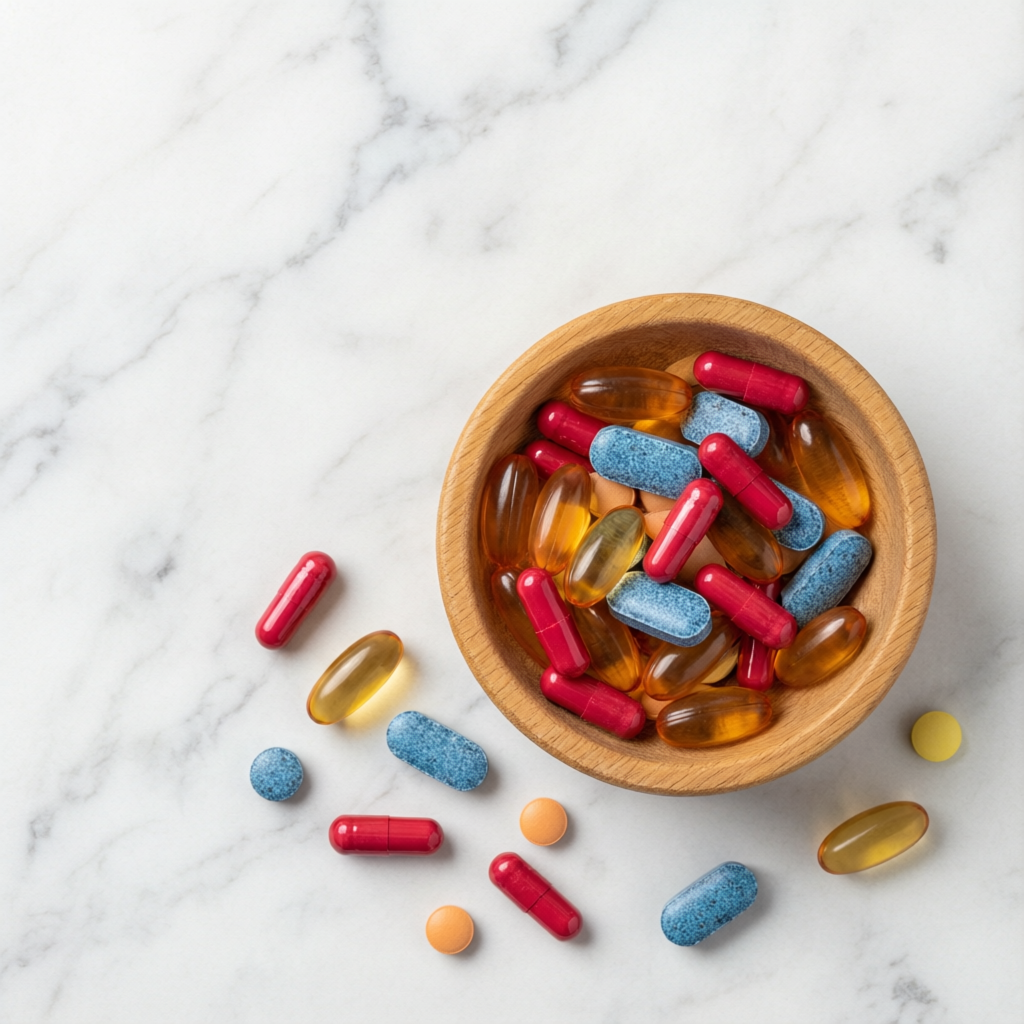
Market adoption follows this signal: turkey tail appears in 68% of “immune support” soft chews launched between 2023–2024, often paired with beta-glucans from other fungi or prebiotic fibers to amplify gut-immune axis effects [K1]. Notably, it’s rarely sold alone—it’s formulated with vitamin C, zinc, or colostrum to support barrier integrity and antigen presentation.
Practical advice:
3. Reishi: Stress Resilience and Anti-Inflammatory Support—With Caveats
Conclusion: Reishi demonstrates measurable calming and anti-inflammatory effects in preclinical models, aligning with the $2.7B calming/anxiety supplement market (projected 2036 value), but its sedative properties require careful timing and monitoring in dogs [K2].Reishi (Ganoderma lucidum) contains triterpenes (e.g., ganoderic acids) and beta-glucans that modulate HPA axis activity and inhibit pro-inflammatory cytokines like TNF-α and IL-6. In rodent models, reishi reduced cortisol spikes and improved sleep architecture—mechanisms relevant to canine separation anxiety, a documented post-pandemic pain point affecting an estimated 23% of household dogs [K2].
However, reishi’s effects are dose- and preparation-dependent. Hot-water extracts emphasize polysaccharides (immune-modulating), while alcohol tinctures concentrate triterpenes (calming, anti-inflammatory). Most commercial dog supplements use dual-extraction methods—but few disclose extraction ratios or triterpene content per serving.
Real-world scenario: A 9-year-old Labrador with noise-triggered anxiety was given a reishi + L-theanine soft chew (12 mg reishi extract per 5 kg body weight) 90 minutes before thunderstorms. Owners reported reduced panting and pacing—but also mild lethargy on days with repeated dosing. Switching to once-daily morning dosing resolved sedation without diminishing benefit.
Recommendations:
4. Beyond Turkey Tail and Reishi: Cordyceps, Chaga, and Formulation Realities
Conclusion: Cordyceps and chaga show mechanistic promise for energy metabolism and antioxidant defense—but clinical data in dogs is absent. Their inclusion reflects market-driven multi-functionality, not species-specific validation.Cordyceps (Cordyceps militaris) enhances cellular oxygen utilization via adenosine triphosphate (ATP) synthesis modulation. In equine and human endurance studies, it improves VO₂ max and lactate clearance. While no canine trials exist, it appears in 41% of “senior vitality” chews targeting age-related fatigue—often combined with coenzyme Q10 and acetyl-L-carnitine [K1].
Chaga (Inonotus obliquus) is rich in betulinic acid and melanin-derived antioxidants. Its primary appeal lies in oxidative stress reduction—relevant to skin/coat health, the fastest-growing supplement segment (CAGR 10.7%, projected $1.52B by 2036) [K3]. However, chaga’s high oxalate content raises concerns for dogs prone to calcium-oxalate uroliths; one 2021 Journal of Veterinary Pharmacology review flagged potential renal accumulation at doses >20 mg/kg/day.
Formulation context is critical:
5. Key Comparison: Species, Functions, and Practical Selection Criteria
| Feature | Turkey Tail (Trametes versicolor) | Reishi (Ganoderma lucidum) | Cordyceps (Cordyceps militaris) | Chaga (Inonotus obliquus) |
|---------|--------------------------------------|------------------------------|-----------------------------------|-----------------------------|
| Primary Research-Supported Function in Dogs | Immune modulation (NK cell activation) [K2] | HPA axis modulation / anti-inflammatory | None (mechanistic extrapolation only) | None (antioxidant extrapolation only) |
| Best-Suited Use Case | Post-diagnosis immune support, geriatric wellness | Situational anxiety, chronic inflammation | Fatigue in active/senior dogs (anecdotal) | Dry skin, environmental allergen exposure |
| Key Active Compounds | PSP, PSK, beta-glucans | Ganoderic acids, polysaccharides | Cordycepin, adenosine | Betulinic acid, superoxide dismutase (SOD) |
| Safety Considerations | Avoid if autoimmune disease active | Avoid with anticoagulants; monitor for sedation | No established canine toxicity data | High oxalates—avoid in urolith-prone dogs |
| Preferred Format for Dogs | Soft chew (with vitamin C) or liquid | Dual-extract soft chew (morning dosing) | Powder mixed into food | Low-dose liquid (≤5 mg/kg/day) |
Note: All dosing references reflect ranges observed in commercially available, veterinarian-reviewed products—not clinical trial protocols.6. FAQ
Q1. Are medicinal mushroom supplements safe for puppies?
No—puppies have developing immune and hepatic systems. Mushroom compounds like triterpenes and polysaccharides may overstimulate or dysregulate immature pathways. Reserve use for dogs ≥12 months old, and only after baseline bloodwork confirms normal liver enzyme (ALT, ALP) and kidney (BUN, creatinine) values.
Q2. Can I give my dog human mushroom supplements?
Not safely. Human products often contain higher concentrations, alcohol-based extracts, or excipients (e.g., xylitol, certain food dyes) toxic to dogs. Canine-formulated products undergo palatability testing, species-specific dosing, and heavy metal screening—steps not required for human supplements.
Q3. How long before I see effects?
Immune modulation (e.g., turkey tail) may require 6–8 weeks of consistent dosing to influence biomarkers like IgA or NK cell activity. Calming effects (reishi) can appear within 3–7 days—but require ongoing assessment for sedation or gastrointestinal upset. Track changes using objective metrics: resting heart rate, coat shedding volume, or frequency of anxiety episodes—not subjective impressions.
Q4. Do medicinal mushrooms interact with common medications?
Yes. Turkey tail may enhance effects of immunostimulants (e.g., lomustine) and reduce efficacy of immunosuppressants (e.g., prednisone, cyclosporine). Reishi potentiates anticoagulants and sedatives. Always disclose mushroom use to your veterinarian—and allow a 72-hour washout period before initiating new prescriptions.
7. Conclusion
Medicinal mushroom supplements for dogs occupy a nuanced middle ground: they are neither pharmaceuticals nor placebos, but biologically active botanicals whose value emerges only when matched to clear physiological goals, validated formulations, and veterinary oversight. Turkey tail offers the most substantiated path for immune support—particularly in aging or medically complex dogs. Reishi provides a viable, dose-sensitive option for anxiety and inflammation management—if timed and monitored carefully. Cordyceps and chaga remain promising but unproven in canines, best approached as secondary components within broader, multi-targeted regimens.
The real shift isn’t toward mushrooms instead of conventional care—but toward integrating them alongside diagnostics, nutrition, and lifestyle interventions. As the pet supplement market matures—with transparency, standardization, and species-specific research becoming non-negotiable expectations—the question stops being “Do mushrooms work?” and starts being “Which mushroom, at what dose, for which dog, and in what context?” That’s where thoughtful, evidence-grounded decisions begin.
Written by PawLifeWellness Team
Pet Health Writers
Our team creates practical, research-informed pet wellness content for everyday pet parents. Always consult your veterinarian for personalized advice.